Cristal Champagne has quietly become one of the most-coveted prestige cuvées in serious wine collecting. Behind that sleek, transparent bottle lies a story of precision, heritage, and limited production that speaks directly to collectors who understand what genuine scarcity and craftsmanship actually represent.
- Cristal has quietly become one of the most-coveted prestige cuvees in serious wine collecting, with structural pricing momentum across the past decade.
- Liv-ex's Champagne 50 has tracked Cristal's structural firming, with the 2008 vintage outperforming both Dom Perignon and Krug Vintage at comparable maturity points.
- The combination of brand consistency, critical acclaim, and disciplined production makes it one of the few Champagnes treated as a serious cellar position.
- Roederer's vineyard control is structurally distinct, with the house owning roughly 240 hectares across the Champagne region's grand cru villages.
- Cristal Rose has built a parallel apex position, with the 2008 and 2012 vintages clearing at meaningful premiums over the standard Cristal at auction.
- For serious cellars Cristal occupies a structural Champagne position alongside Krug, Dom Perignon, and Salon at the apex of vintage Champagne.
- Who is this for?
- Cellar builders evaluating Champagne positions at the apex tier, and serious collectors weighing Cristal against Dom Perignon, Krug, and Salon.
- What is happening?
- We work through what makes Cristal one of the most-collectible Champagnes today, with the structural pricing, vineyard control, and apex-tier variables that anchor it.
- When did this emerge?
- The piece reads the contemporary post-2020 market, with the Liv-ex Champagne 50 trajectory and the apex Champagne secondary-market data as live context.
- Where is this happening?
- The Champagne region, with Roederer's grand cru vineyard control and the international apex Champagne market as the structural reference.
- Why does it matter?
- Cristal has earned a place alongside the canonical apex Champagne tier, and understanding its structural pricing momentum matters for serious cellar architecture.
Liv-ex's Champagne 50 has tracked Cristal's structural firming across the past five years, with the 2008 vintage in particular outperforming both Dom Pérignon and Krug Vintage at comparable maturity points.
Whether you already track fine wines or focus on watches or vintage cars, Cristal is one of those names that keeps showing up in serious-collector conversations. The combination of brand consistency, critical acclaim, and disciplined production makes it one of the few Champagnes treated as a serious cellar position rather than purely a celebration bottle.
Over the past decade, Champagne has seen a quiet but steady rise in collector interest. Cristal sits right at the top of that trend. Think of it the way serious collectors think about discontinued Audemars Piguet watches: scarcity meets desirability, and prices follow.
Some vintages have appreciated by more than 70% in under five years according to Liv-ex's reports, and magnums regularly outperform standard bottles by a wide margin at major auctions. Sotheby's, Christie's, and Acker now run dedicated Champagne calendars in which Cristal vintages anchor consistent clearing prices.
This is our editorial read on what makes Cristal one of the most-coveted Champagnes in serious cellars today.
What Cristal is and why it has earned its reputation
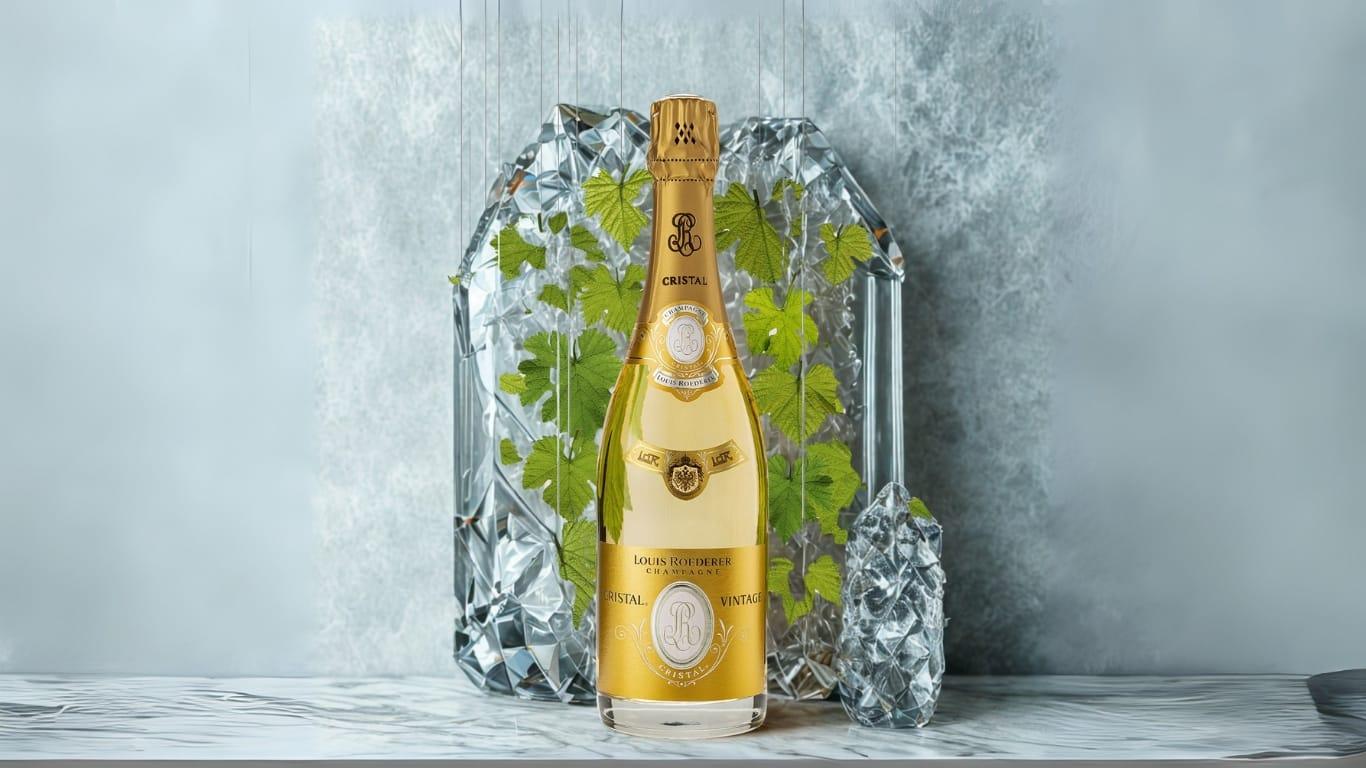
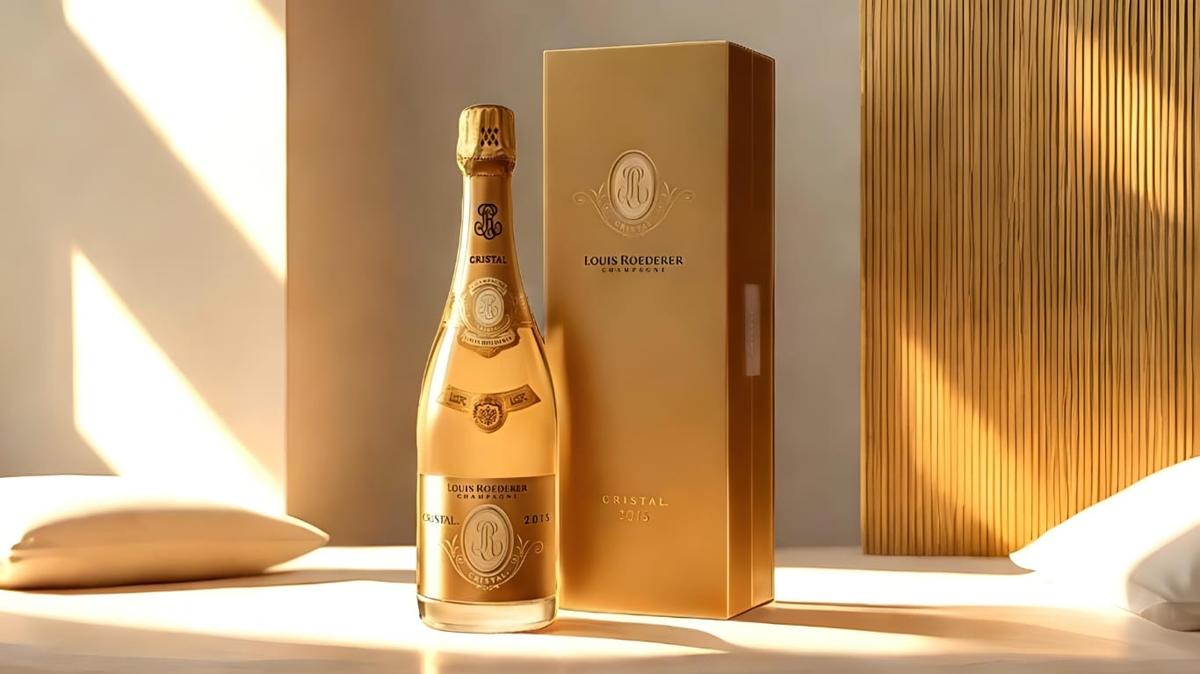
Cristal Champagne was born in 1876 when Louis Roederer created it exclusively for Tsar Alexander II of Russia. The Tsar requested a Champagne that was not only exceptional in taste but also presented in clear glass, free of any concealed threats. For royalty at the time, that was a genuine security concern rather than a stylistic choice.
That bottle, crystal-clear, flat-based, and free of foil, still defines Cristal's visual identity today. It remains immediately recognisable across a crowded room.
Its appeal runs much deeper than design. Cristal is a prestige cuvée, a top-tier vintage Champagne produced only in the strongest years. Every grape comes from Roederer's own grand cru vineyards, which is a rarity even among high-end producers.
Most houses source from multiple growers. Roederer does not.
Only the finest Pinot Noir and Chardonnay grapes make the cut, and the wine is aged for up to six years on the lees before it ever reaches the market. This level of care and restraint has positioned Cristal as a benchmark in fine Champagne.
Cristal isn't released every year. If conditions aren't right, as was the case in 2010 and 2001, it simply doesn't get made. That commitment to quality over quantity reinforces both its reputation and the scarcity that makes it so collectible.
How Cristal is made and what sets it apart
One of the main reasons Cristal stands out as a collectible isn't just its history. It's how the wine is made. From vineyard to cellar, Cristal is produced with a level of precision that rivals the best in the world, not just in Champagne but across all fine wine categories.
Every detail is tightly controlled, and that level of craftsmanship is what turns a bottle into a serious cellar piece.
Cristal is made by Louis Roederer, one of the few family-owned Champagne houses still operating out of Reims. Unlike most major producers, Roederer owns 100% of the vineyards used for Cristal. That's a meaningful distinction.
It means the house controls every step, from how the vines are treated to the exact moment the grapes are harvested.
The vineyards aren't ordinary plots either. All of them carry Grand Cru or Premier Cru classifications, the highest quality designations in the Champagne region. The real turning point came in the early 2000s when Louis Roederer began converting these vineyards to biodynamic farming.
Cristal has been fully biodynamic since the 2012 vintage, making it one of the most environmentally advanced wines in its category. Decanter has documented the broader move toward biodynamic viticulture across Champagne, and Roederer's commitment sits at the front of that conversation.
Once harvested, the grapes are handled with extreme care. Cristal is a blend of around 60% Pinot Noir and 40% Chardonnay, all sourced from low-yielding vines. Fermentation takes place partly in oak and partly in stainless steel, depending on the vintage character and individual vineyard plots.
The wine is aged on the lees for at least six years. After disgorgement, it rests for another 8 to 12 months in bottle before release.
How much Cristal is produced each year
One of the most important reasons Cristal has become so collectible comes down to how little of it actually exists. Unlike many prestige cuvées that chase global saturation, Cristal keeps its production tight, usually between 300,000 and 400,000 bottles per year depending on the vintage.
That may sound like a meaningful volume, but in the world of fine wine, it's genuinely limited, especially when you factor in global demand across collectors and luxury hospitality venues competing for the same supply. By contrast, Moët et Chandon can release millions of bottles annually under its flagship Dom Pérignon label.
Cristal enters the market with built-in scarcity from day one. Scarcity is one of the key reasons Cristal prices tend to hold up even during broader market softening, much like blue-chip art that retains value precisely because supply never expands.
What makes it even more interesting is that Cristal isn't produced every year. If growing conditions don't meet the house's standards, the team skips the vintage entirely. No compromises, no shortcuts.
There was no Cristal released in 2001, 2003, or 2010.
That kind of discipline keeps supply unpredictable and reinforces the brand's absolute commitment to quality. For collectors, unpredictable supply on top of already limited production is exactly the structural picture they want to see.
Louis Roederer has been very deliberate about this strategy. Cellar Master Jean-Baptiste Lécaillon has framed the philosophy in trade interviews as making Cristal when the vineyard is ready, not when the market demands more bottles.
Why certain Cristal vintages are more coveted than others
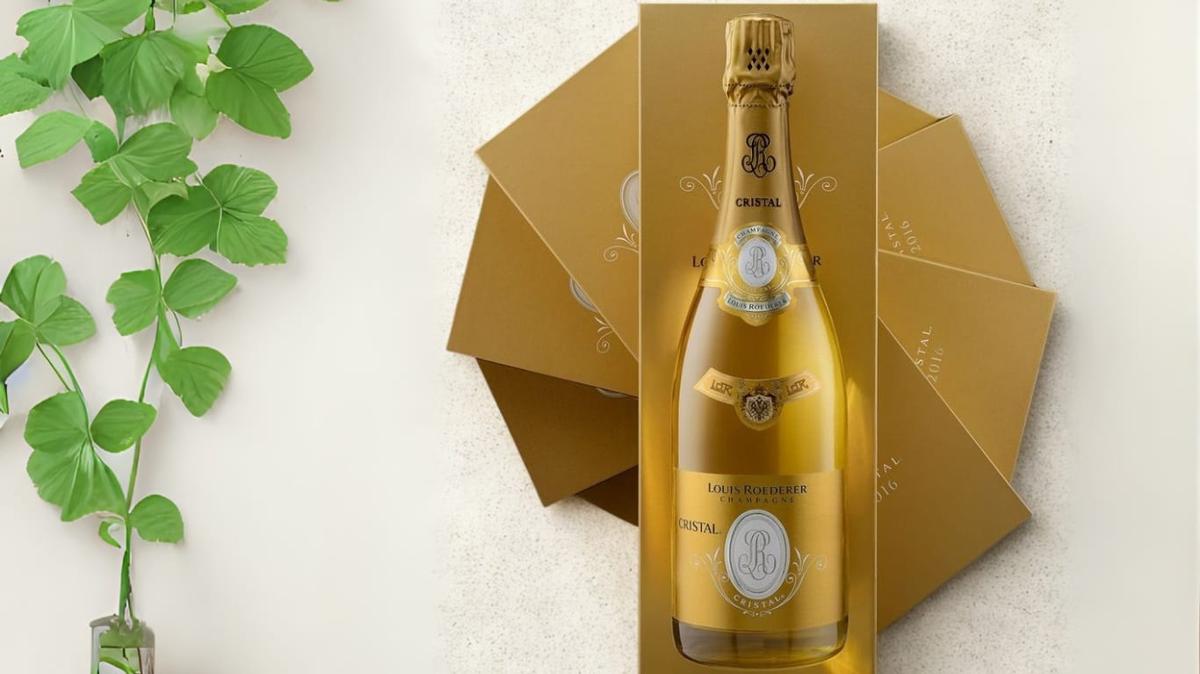
Cristal is only released in top years, but some vintages stand out more than others, both in quality and secondary-market performance. These are the ones serious collectors track closely because they tend to deliver consistently strong clearing prices over time.
The 2008 vintage is one of the most important Cristal releases to date. It earned perfect or near-perfect scores from critics including James Suckling and Antonio Galloni at Vinous, and it's widely regarded as one of the best Champagnes of the decade. Bottles that retailed for around $250 to $300 are now trading above $500, and magnums often reach $1,200 or more depending on condition and provenance.
The 2009 magnum has also become a standout. Liv-ex's data shows it delivered a meaningful return over 3. 5 years, making it one of the top-performing large formats in the entire Cristal range.
That kind of compounding is rare in Champagne, which typically moves more slowly than red wine markets.
Another vintage worth attention is 2012, Cristal's first fully biodynamic release. It came with strong critical scores across multiple publications, and prices moved quickly. As of 2026, the 2012 magnum has appreciated more than 25% since release, with further firming expected as available supply tightens.
The value of a vintage isn't purely about taste. It reflects weather conditions during the growing season, critical scores, and long-term cellaring potential. Great Cristal vintages can age for 20 to 30 years, which makes them attractive for long-hold cellar positions.
As more bottles get consumed or locked inside private collections, market scarcity pushes prices higher over time.
How Cristal performs on the secondary market
Cristal isn't just respected for its craftsmanship. It performs consistently well on the secondary market, and for collectors, that matters just as much as what's inside the bottle. Over the last five years, Cristal has become one of the most reliable positions in the fine wine segment, especially compared against other prestige cuvées.
According to Liv-ex, Cristal ranks among the top-performing Champagnes in the Champagne 50 Index, which tracks price movement across the most-traded labels. Between 2019 and 2023, Cristal's average growth across key vintages outpaced Dom Pérignon, Krug, and even Salon in certain cases.
Take the 2008 Cristal as the benchmark. Since release, it has more than doubled in value on most trading platforms. The 2008 Dom Pérignon, while also well-reviewed, has appreciated at a noticeably slower pace over the same period.
Collectors recognise that Cristal isn't just rare. It's dependable. When a bottle appears at auction or on a trading platform, it sells.
That kind of liquidity is genuinely uncommon in fine wine, and it's one of the reasons serious collectors keep coming back to it.
Even more telling is how Cristal behaved during market corrections. In 2022 and early 2023, when parts of the fine wine market softened, especially in Burgundy and certain Italian labels, Cristal held its value better than most. It didn't spike, but it didn't fall either.
That resilience makes it a useful structural position in a diversified cellar, similar to how gold and real estate function as stores of value when other categories come under pressure.
Why collectors prefer Cristal magnums and rare formats
In the world of collectible Champagne, format matters enormously. With Cristal, magnums and rare bottle sizes consistently outperform their standard 750ml counterparts. It's not just about presentation.
Larger formats age better, offer even greater scarcity, and tend to deliver stronger compounding over time.
Cristal magnums (1.5L bottles) are especially attractive to collectors because they allow the wine to evolve more slowly. The result is a finer, more layered flavour profile that builds over years, which drives desirability among serious collectors.
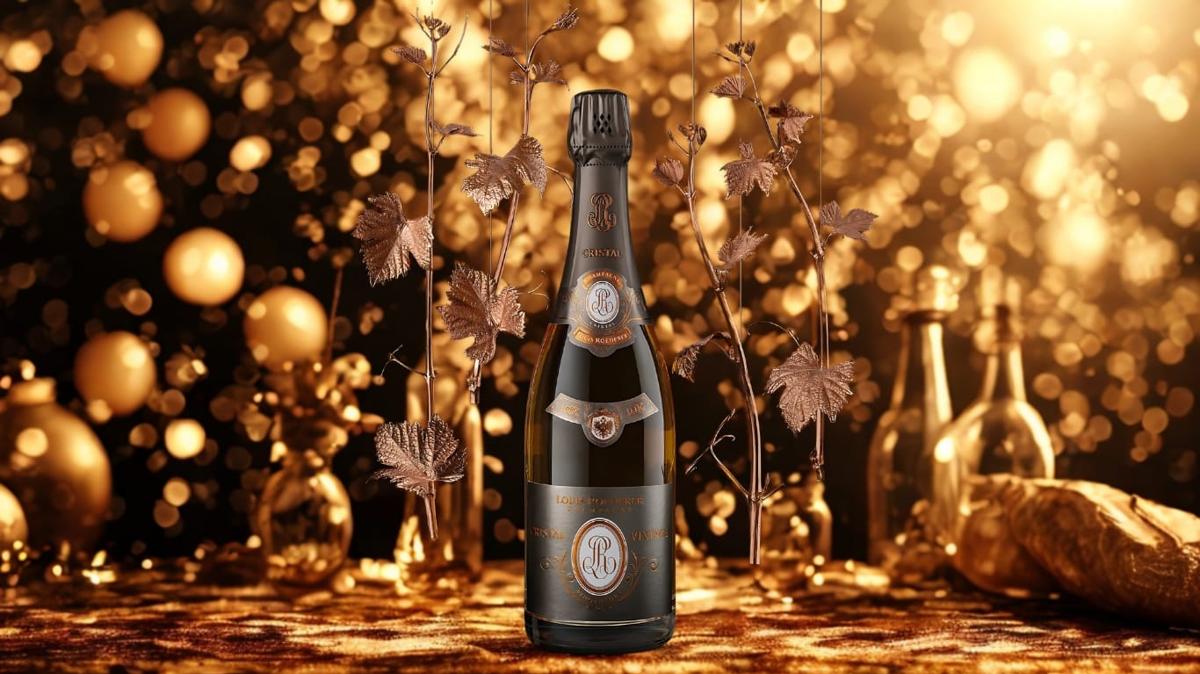
Cristal magnums make up only a small fraction of total production in any given vintage. That limited release translates directly into price premiums on the secondary market, often well above what bottle-size alone would suggest. Magnums of top vintages often command 50% to 80% higher prices than the same vintage in standard format depending on market timing and condition.
Even more exclusive are formats like jeroboams at 3 litres or methuselahs at 6 litres, produced in extremely small numbers and often reserved for select partners or major events. These bottles rarely appear on the open market, and when they do (usually at Sotheby's and Christie's auctions) they generate serious attention and serious bids.
Their value sits at the intersection of collectibility and visibility. For high-net-worth collectors, they are statement pieces as much as they are cellar holdings.
What this means for collectors
Cristal sits where it sits because Roederer has built one of the most disciplined production models in fine Champagne. Estate-grown vineyards, biodynamic farming, vintage-only releases when conditions justify them, and long ageing on the lees all converge into a wine that the serious-cellar conversation treats as a structural Champagne anchor alongside Dom Pérignon and Krug.
The cellars built around Cristal's strong recent vintages (2008, 2009, 2012, 2013) have been quietly proved right by the past five years' secondary-market trajectory. The combination of disciplined supply, deep international demand, and consistent critical recognition keeps the category in the structural conversation around fine Champagne for serious cellars.
We last reviewed this analysis in May 2026.