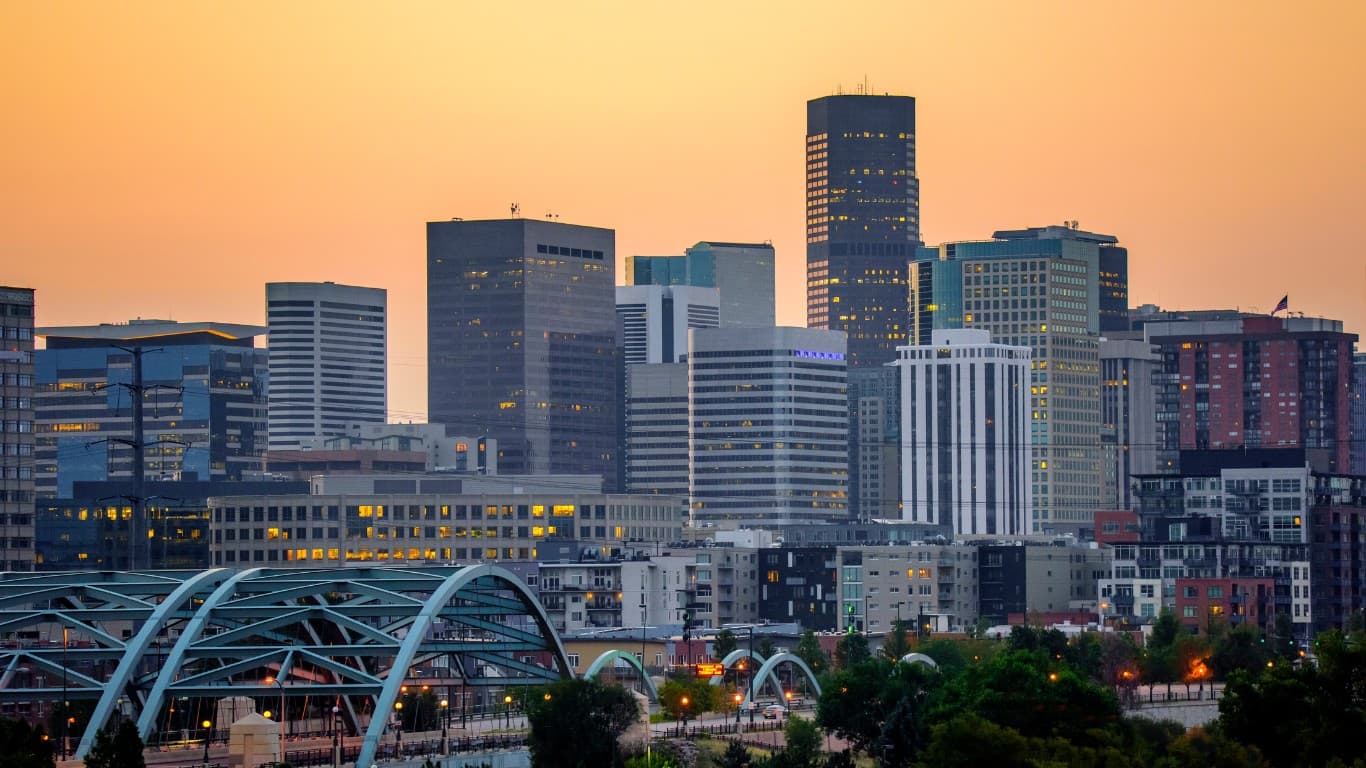
The 2026 Denver real estate market reflects the city's identity as a dynamic and fast-evolving urban center. After a stretch of real volatility driven by rising interest rates and post-pandemic adjustments, the market has stabilized through Q1 2026 with a clearer trajectory. Knight Frank's 2026 US Cities Prime Index flags Denver as a top-tier Mountain West prime market.
For context on how Denver fits the broader picture of where global real estate markets compare, the metro reads as one of the more compelling US mountain-region options.
The Denver Metro Association of Realtors data, alongside the brokerages tracking the prime side (Compass, LIV Sotheby's International Realty, Coldwell Banker Realty, Berkshire Hathaway HomeServices Colorado), describes a market that has worked through the post-2022 rate adjustment. Mansion Global has profiled the Cherry Creek and Washington Park corridors as among the most resilient Mountain West prime submarkets.
For comparison with international growth markets, our analysis of Comparing Denver to other growing markets like Zaragoza covers parallel dynamics in a smaller European metro context.
This analysis covers: Overview of The Denver Housing Market | Neighborhood Analysis | Denver Rental Market Overview | Factors Influencing the Denver Housing Market | Denver Housing Market Forecast for 2026 | Is It Worth Buying a Property in Denver? | FAQ.
- Denver continues to attract steady in-migration from coastal markets, with the lifestyle, outdoor access and relatively reasonable cost of living supporting housing demand into 2026.
- We see median prices having stabilised after the pandemic-era appreciation, with the market now settling into a more sustainable growth trajectory across most price tiers.
- Cherry Creek, Hilltop, Washington Park and the broader Cherry Hills Village continue to anchor the upper end of the market with the most desirable luxury inventory.
- Inventory has improved materially through 2025 and 2026, with months-of-supply moving into balanced or buyer-favourable conditions across most metropolitan submarkets.
- Colorado property tax structure including the Gallagher Amendment legacy keeps effective residential rates moderate, with the recent reforms shaping the going-forward burden landscape.
- For most considered buyers we view Denver as a structurally attractive long-term hold given the demographic tailwinds and the reasonable cost of ownership relative to peer mountain-west markets.
- Who is this for?
- Buyers and investors evaluating Denver for primary residence or income property, alongside relocation clients and the brokers, lenders and tax advisers supporting Denver-area transactions.
- What is happening?
- A market overview and 2026 forecast for the Denver real estate market, covering price levels, inventory dynamics, in-migration demand drivers and the property tax considerations.
- When did this emerge?
- The article covers conditions through 2025 and 2026, with reference to the post-pandemic inventory cycle and the latest Colorado property tax framework reforms.
- Where is this happening?
- The piece focuses on the Denver metropolitan area, including Cherry Creek, Hilltop, Washington Park, Cherry Hills Village and the broader Front Range submarket landscape.
- Why does it matter?
- Denver offers structural lifestyle migration support with reasonable cost of ownership in 2026, which is why the long-term hold case deserves explicit consideration here.
Overview of The Denver Housing Market
Denver enters 2026 with a property market that has stabilized through the rate cycle. The median home price across the metro sits at $625,000, up 3. 4 percent year-on-year, with the prime corridors (Cherry Creek, Washington Park, Country Club) trading materially higher.
Mansion Global has tracked the Denver prime tier as one of the more disciplined Mountain West recoveries through 2025-2026.
Anchor employment (the broader healthcare cluster led by UCHealth, the federal government Denver workforce, the energy-sector and renewables footprint, and the rapidly expanding aerospace and defense presence) anchors the demand floor.

Days on market average 36, with the prime corridor moving meaningfully faster. The sale-to-list ratio of 98.6 percent confirms that quality stock continues to trade close to asking.
Realtor.com's 2026 absorption tables place Denver in the upper-middle range of large-metro buyer activity. Bloomberg has tracked the Mountain West's post-pandemic rebalancing as the cleanest US regional story.
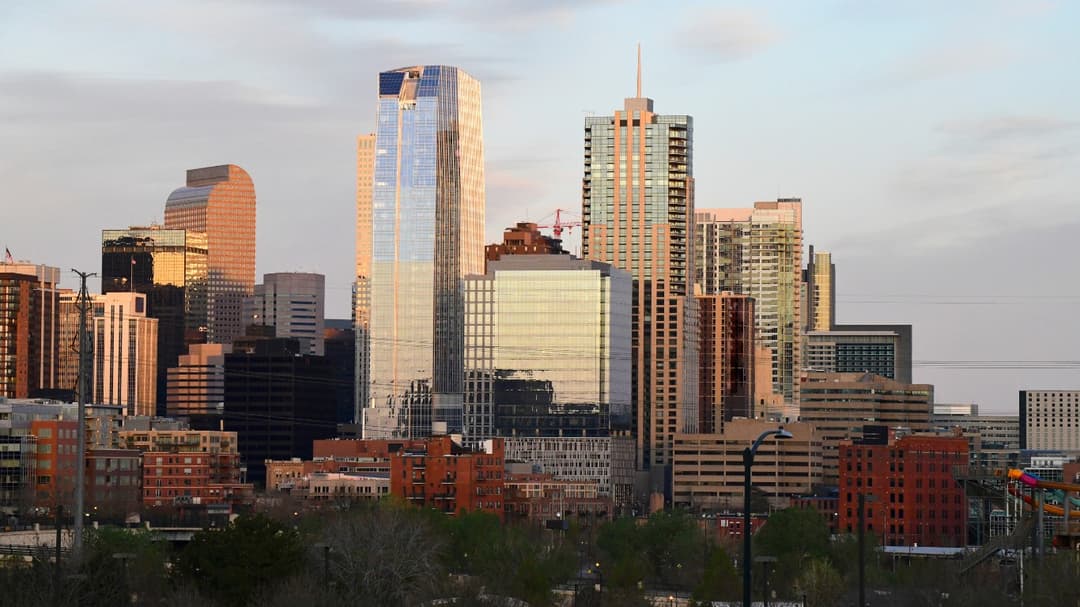
Key Market Indicators, Q1 2026
- Median Sale Price: $625,000 (up 3.4 percent YoY)
- Price per Sq Ft: $345
- Days on Market: 36 days
- Sale-to-List Ratio: 98.6 percent
- Active Listings: up 5.8 percent YoY
Denver's positioning against peer Mountain West metros gives the market unusual depth. The combination of healthcare, federal, energy, aerospace and tech employment provides resilience against single-sector shocks. The Financial Times has outlined the fundamentals supporting Denver's prime-tier resilience.
Neighborhood Analysis
Denver operates as several distinct submarkets stacked across the Front Range metro footprint. The prime Cherry Creek, Washington Park and Country Club corridors anchor the high end, while the design-driven RiNo and Highlands stories carry the mid-market. The brokers tracking the prime side flag five neighborhoods carrying the citywide narrative.
Cherry Creek
Cherry Creek remains the city's most coveted urban prime address. Median home prices sit at $2. 45 million, up 4.
2 percent year-on-year. Walkable retail, the Cherry Creek Country Club and proximity to the broader healthcare cluster anchor demand. Compass and LIV Sotheby's track Cherry Creek as the most stable prime Denver submarket.
Washington Park
Washington Park, the family-buyer prime corridor around the eponymous park south of downtown, has been one of the city's most consistent prime tiers. Median home prices clear $1. 45 million, up 4.
4 percent year-on-year. Strong public schools, the park itself and walkable streets sustain demand.
Country Club
Country Club, the smaller enclave between Cherry Creek and Washington Park, runs similarly tight. Median home prices clear $2. 15 million.
The combination of mature housing stock, the Denver Country Club footprint and limited inventory sustains the scarcity premium.
RiNo (River North Art District)
RiNo has been the city's most consistent gentrification story for a decade. Median home prices sit at $625,000, up 4. 6 percent year-on-year.
Restored warehouse-loft conversions and contemporary infill dominate, with the buyer profile skewing toward creative-sector professionals and design-oriented buyers.
The Highlands
The Highlands, the urban-walkable corridor northwest of downtown, anchors the city's strongest mid-market story. Median home prices sit at $785,000, up 4. 1 percent year-on-year.
The combination of restored Victorian stock, walkable retail and proximity to LoHi (Lower Highland) sustains demand.

Denver Rental Market Overview
The Denver rental market remains relatively tight through 2026, driven by sustained population growth, a healthy job market and rising homeownership costs. Average rent across the metro sits at $1,895 per month, up 3. 4 percent year-on-year.
The Denver tenant base skews toward healthcare professionals, federal-government employees, energy-sector engineers and creative-sector workers.
Rental demand has grown across all property types as affordability challenges keep some would-be buyers on the sidelines. Urban redevelopment programs in Denver have accelerated rental absorption across the downtown corridor.
Average Rent Prices
- Studio Apartments: Approximately $1,395 per month
- One-Bedroom Apartments: Around $1,795 per month
- Two-Bedroom Apartments: About $2,195 per month
- Three-Bedroom Apartments: Approximately $2,895 per month
RiNo, the Highlands and downtown carry the tightest rental absorption. JLL's 2026 Mountain West Multifamily Outlook flags Denver as one of the more resilient large-metro rental markets through the second half of the decade.
Factors Influencing the Denver Housing Market
Three structural forces drive Denver demand. Population growth (the metro added roughly 22,000 residents in 2024) provides a steady demand floor. Anchor employment in healthcare (UCHealth, the broader Anschutz Medical Campus cluster), federal government (Denver Federal Center, NORAD operations), energy and renewables, and aerospace (Lockheed Martin, Sierra Nevada Corporation, the broader Front Range defense corridor) sustains the inbound capital flow.
The cost-of-living differential against the coastal large metros remains a structural migration driver. London’s wealthiest investors, and similar institutional patterns are now playing out at smaller scale in Denver's multifamily corridor.
Mortgage rates in the 6.5 to 7 percent range have rebalanced first-time buyer activity but not the prime tier, where cash-buyer share regularly clears 25 percent. The 2022-2024 correction was modest (around 5 to 7 percent peak-to-trough), and the post-correction floor reads as stable.
Lifestyle and infrastructure matter too. The continued FasTracks transit expansion, the RiNo and downtown redevelopment, and the broader Front Range corridor investment continue to reshape buyer attention across the metro.
Denver Housing Market Forecast for 2026
The Denver 2026 outlook is solid. Home prices are projected to rise 3 to 4.5 percent through 2026, with the strongest gains in the prime corridor (Cherry Creek, Washington Park) and the design-driven gentrification stories (RiNo, the Highlands).
Rents are forecast to climb 3 to 4 percent across the metro. Inventory below $500,000 will stay competitive, keeping pressure on the entry tier.
Is It Worth Buying a Property in Denver?
For long-tenure buyers, yes. The structural tailwinds (healthcare and federal employment depth, energy and aerospace presence, population growth, lifestyle appeal) sustain price stability. Denver's mid-tier positioning gives buyers an unusually clean combination of value, climate and economic fundamentals.
For shorter-horizon buyers, the picture is more nuanced. The 2022-2024 correction was modest and largely complete. The post-correction floor reads as stable rather than accelerating.
The prime corridor remains the most resilient segment.
We last reviewed this analysis in May 2026.
FAQ
Is Denver a good real estate market in 2026?
Yes. Population growth of around 22,000 residents in 2024, the deep healthcare and federal-government employment base, the energy and aerospace presence, and the post-correction stabilization all sustain demand. Knight Frank's 2026 US Cities Prime Index flags Denver as a top-tier Mountain West prime market.
Which Denver neighborhoods are appreciating fastest?
RiNo leads the citywide rate at 4. 6 percent, followed by Washington Park at 4. 4 percent.
Cherry Creek and Country Club appreciate more slowly at higher absolute prices and remain the city's prime anchors per Compass and LIV Sotheby's International Realty.
How does Denver compare to other Mountain West markets?
Denver offers materially deeper employment diversification than peer Mountain West metros like Salt Lake City or Boise, with comparable lifestyle appeal. The post-correction floor reads as more stable than peer Sun Belt metros that overshot during the 2021-2022 cycle.
Is Denver a good rental market?
Yes. Average rent of $1,895 with vacancy around 5. 5 percent gives reasonable rent-to-price ratios.
RiNo, the Highlands and downtown carry the tightest absorption per JLL's 2026 Mountain West Multifamily Outlook.


Savvas Agathangelou
Savvas Agathangelou co-founded The Luxury Playbook and has spent years reporting from the prime postcodes the magazine covers — Mayfair, Knightsbridge, the Athens Riviera, Dubai's Palm crescents, and the southern Mediterranean coastlines where the world's wealthy keep coming back. His background is in international hospitality, and that frame shapes how he writes about property: the developer's choices, the architect's signature, the agency's bench of named brokers, the building's service standard once the buyer moves in. He files developer spotlights, agency profiles, and the seasonal "Properties That Defined" listicles, and he hosts the magazine's founder-and-leadership interviews on the Voices side.