Dry and sweet sit on opposite ends of the wine spectrum, and the assumption among casual drinkers is that the dry side is where the serious cellars live. That assumption is mostly right, and entirely incomplete. The world's most ageworthy white wine is Château d'Yquem, a Sauternes so sweet it has more residual sugar than a soda.
- Serious cellars sit predominantly on the dry end, but ignoring the sweet category entirely closes off some of the longest-lived wines in the world.
- Dry reds and whites build the structural spine of nearly every collecting cellar we track, with Bordeaux, Burgundy, and Champagne dominating allocations.
- Yquem and the great Sauternes routinely outage most dry reds, with documented drinking windows beyond a century in the strongest vintages.
- Tokaji Aszu and Trockenbeerenauslese Rieslings occupy a parallel sweet apex tier that quietly outperforms most Bordeaux on the ageing curve.
- The secondary-market liquidity for sweet wines is materially thinner, with fewer Liv-ex listings and longer time-to-sale at auction.
- For most collectors the question is not dry or sweet, but how much sweet to weight against the dry spine.
- Who is this for?
- Collectors weighing how much of a cellar should sit on the sweet-wine side, and dry-wine cellars considering an opening Sauternes or Tokaji position.
- What is happening?
- We read the structural contrast between dry and sweet wines as cellar positions, with the producers, vintages, and market dynamics that distinguish each.
- When did this emerge?
- The piece works from the contemporary post-2020 market, where sweet-wine demand has softened relative to dry reds but apex Yquem remains liquid.
- Where is this happening?
- Sauternes and Barsac for sweet Bordeaux, Tokaji in Hungary, the Mosel and Rheingau for Riesling, and the broader dry-wine canon globally.
- Why does it matter?
- Most collectors underweight sweet wines and lose the cellar's longest-living positions, but overweighting them creates liquidity problems that take years to unwind.
Yquem 1811, the so-called comet vintage, set the modern benchmark when a single bottle sold for £75,000 at Bonhams in 2011. The most patient buyers in the German wine market are sitting on Egon Müller Trockenbeerenauslese that won't fully open until the 2050s. Sweet, when it is done at the highest level, is one of the longest-evolving categories in the cellar.
This is our cellar comparison for collectors weighing both sides. We will work through the regions, the producers, the drink windows, and where each style actually earns its place.
What makes a wine sweet or dry
The technical answer is residual sugar. During fermentation, yeast converts the grape's natural sugar into alcohol; if fermentation is allowed to complete, very little sugar remains and the wine is dry. If fermentation is stopped early, whether by chilling, by adding spirit (fortification), or because the yeast can't process the remaining sugar, residual sugar stays in the wine and reads as sweetness on the palate.
The thresholds are roughly the following. Under 4 grams per litre is bone dry, 4–12 g/L is off-dry, 12–45 g/L is medium-sweet, above 45 g/L is sweet, and the great Sauternes and Tokaji Essencia bottlings can clear 200 g/L. Yquem typically runs 120–150 g/L, while Tokaji Essencia has been measured above 700.
What the sugar number doesn't capture is balance. A great Sauternes is balanced by acidity; without it, the wine reads as cloying. The German Rieslings of the Mosel achieve their famous tension precisely because the sugar sits over a spine of acidity that keeps everything alive on the palate, as Jancis Robinson and Decanter both regularly note.
The grapes behind each style
The dry side is dominated by the canonical red and white varieties. Cabernet Sauvignon, Merlot, Pinot Noir, Syrah, Chardonnay, Sauvignon Blanc, dry Riesling, Nebbiolo, Sangiovese, Tempranillo. These grapes form the spine of most serious cellars and supply the wines collectors hold long-term.
The sweet side is more specialised. The greatest sweet wines are made from grapes that lend themselves to one of three concentration techniques. Botrytis cinerea, or noble rot, affects Sémillon, Sauvignon Blanc, and Riesling in the right humidity conditions, dehydrating the grape and concentrating sugar; this is how Sauternes, Barsac, the great German Beerenauslese and Trockenbeerenauslese, and Hungarian Tokaji Aszú are made.
Late-harvest wines push grapes well past normal ripeness on the vine. Ice wine (Eiswein) uses grapes frozen on the vine, pressed while still solid so that the water is excluded as ice and only the concentrated sugar liquid is recovered. Fortified wines (Port, Madeira, Sherry, Marsala) stop fermentation by adding distilled spirit, leaving residual sugar behind.
Appearance, aromas, tasting notes
Dry red wines occupy the full visual range, from pale ruby Pinot Noir through opaque Petite Sirah. The aromatic profile leads with red and black fruit, secondary notes of oak (vanilla, cedar, smoke), and tertiary notes that develop in the cellar (truffle, leather, dried fig, forest floor). Dry whites range from pale straw to deep gold, with the great mature Burgundies developing the rich amber colour and honeyed, nutty depth that defines them at peak.
Sweet wines tend to be more visually distinctive. Sauternes is golden in youth, turning to deep amber and old-gold with age. The great German Trockenbeerenauslese and Tokaji Essencia bottles can look almost mahogany after 30 years.
Aromatically, the noble-rot wines lead with apricot, honey, marmalade, beeswax, candied citrus, saffron, and ginger. Late-harvest Riesling carries petrol and stone-fruit characters that develop dramatically with age. Vintage Port shifts from dense black-fruit and chocolate in youth to dried fig, walnut, and spice in maturity, a transformation Wine Spectator's vintage retrospectives have mapped repeatedly across the past three decades.
The price spectrum
Entry-level wine, $10 to $25, covers most of the volume on both sides. These are wines for current consumption, not the cellar conversation.
The mid-tier, $30 to $100, covers serious dry wines from named producers across most regions, and quality sweet wines from second-tier Sauternes properties, German Auslese, and the better young Vintage Ports. Wines in this band reward cellaring and routinely show 10–25% secondary-market price movement within five years for strong vintages, in line with Liv-ex's Fine Wine 1000.
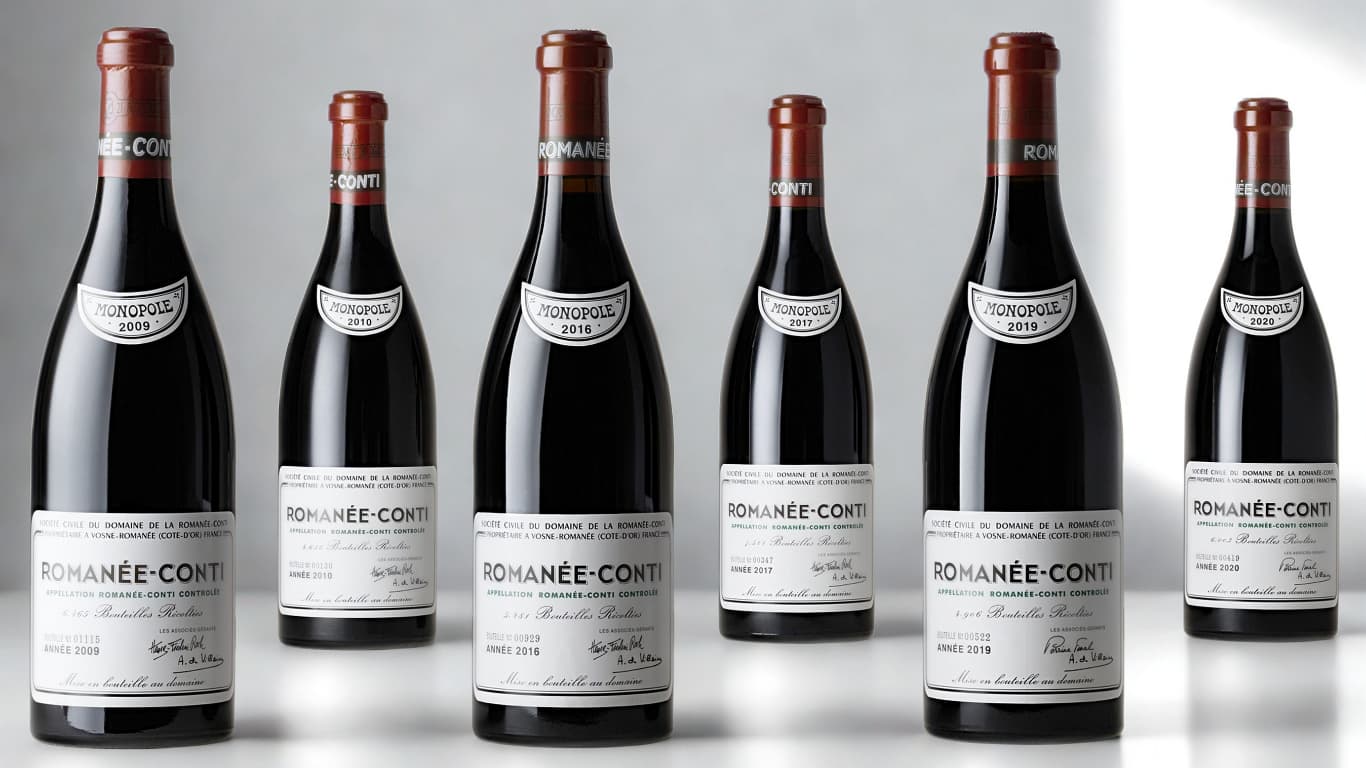
The premium tier on the dry side is dominated by Burgundy's grand crus, Bordeaux's first growths, Domaine de la Romanée-Conti, the top Napa Cabernet, and the iconic Italians (Sassicaia, Solaia, Tignanello). Release prices range from a few hundred to several thousand dollars, with mature DRC bottlings clearing five figures at major auctions routinely. A bottle of Romanée-Conti 1945 sold for $558,000 at Sotheby's New York in 2018, the modern auction-record bottle.
The premium tier on the sweet side has its own icons. Château d'Yquem release prices currently sit around $400–$600 a bottle for current vintages, with mature library releases (particularly 1921, 1947, 1967, 1990, 2001) clearing five figures and the 1811 Yquem reaching £75,000 at Bonhams in 2011. Egon Müller Scharzhofberger Trockenbeerenauslese is the most expensive German wine in the world; recent vintages have released at over €10,000 a bottle.
Royal Tokaji Essencia, produced in microscopic quantities, sells in handcrafted crystal flacons at similar levels. Vintage Port from a declared year (Taylor's, Fonseca, Graham's, Quinta do Noval Nacional) runs $100–$300 on release and substantially higher with age.
How each side ages
Dry red wine ageing is the most-discussed cellar topic in the wine-collecting world. Top Bordeaux first growths, Burgundy grand crus, Brunello, Barolo, top Napa Cabernet, and Penfolds Grange routinely peak 25–50 years from a strong vintage. Mature dry whites from Burgundy's Côte de Beaune (Le Montrachet, Bâtard-Montrachet) can age 20–30 years.
The drink windows are well-documented and widely understood, with Vinous and Wine Spectator running periodic retrospective tastings that map them in detail.
Sweet wines age longer. Sauternes from a great vintage (1929, 1937, 1959, 1967, 1989, 2001) can hold its line for 50 to 100 years. Tokaji Essencia has been opened from the 17th century and found drinkable.
Madeira's heating-and-oxidation production technique makes it functionally indestructible; bottles from the 18th and 19th centuries appear at major auctions regularly and remain alive on the palate. Vintage Port from a declared year typically rewards 30–50 years; the great vintages of 1945, 1948, 1963, 1977, 1985, 1994, 2003, 2007 are still developing, with Christie's Wine and Sotheby's Wine selling them in single-bottle lots most seasons.
The most coveted sweet reds
The category leader is Vintage Port from declared years. Quinta do Noval Nacional, made only from ungrafted vines on the Quinta do Noval estate, is the rarity within the rarity, declared in approximately one year per decade. The 1931 Nacional is widely treated as the greatest Vintage Port ever made and clears tens of thousands of dollars at Acker, Zachys and Sotheby's Wine auctions.
Fonseca, Taylor's, Graham's, Dow's, and Warre's anchor the broader Vintage Port market. Beyond Port, recioto-style sweet reds from the Veneto (Recioto della Valpolicella from producers like Quintarelli) and Italy's late-harvest Aleatico bottlings make occasional appearances at serious auctions but live in a much thinner secondary market.
The most coveted dry reds
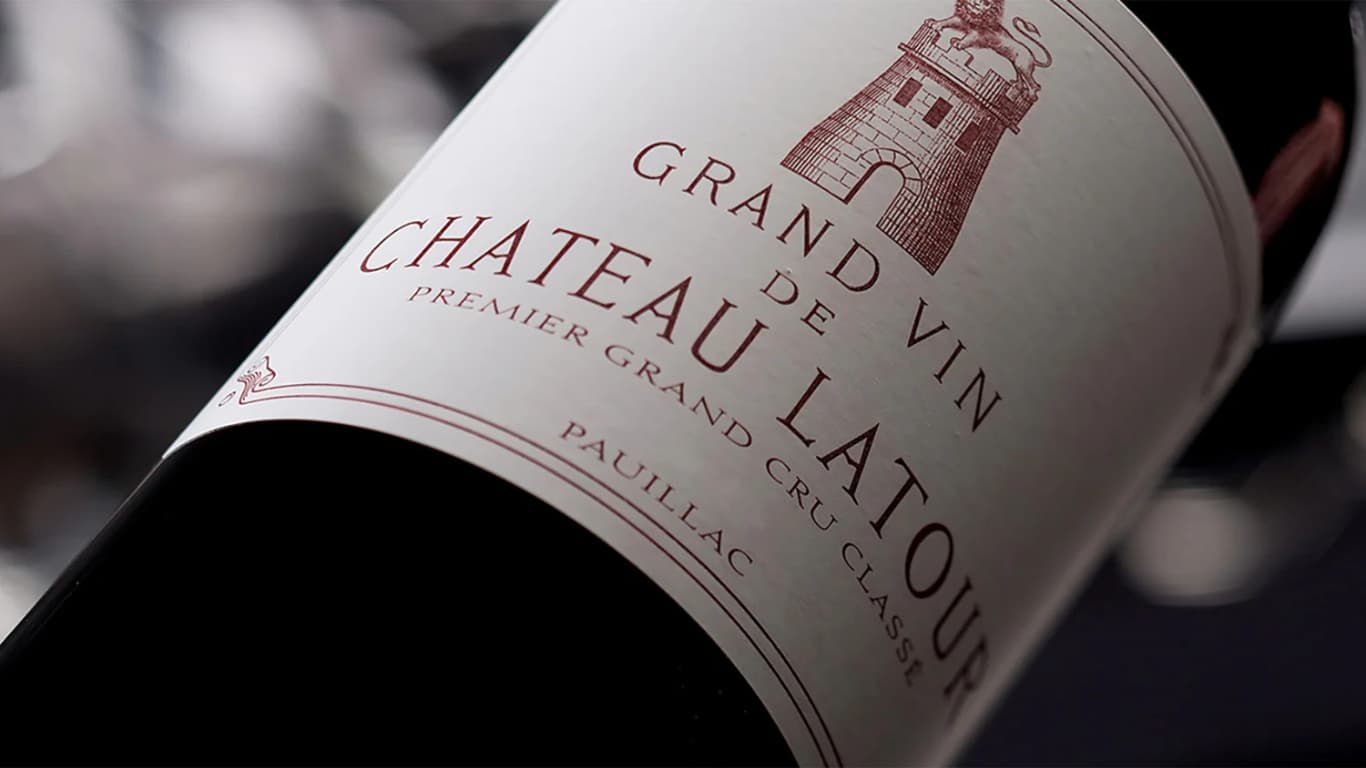
The cellar canon is unchanged. Bordeaux first growths (Lafite, Latour, Margaux, Mouton, Haut-Brion) plus the Right Bank icons (Pétrus, Le Pin, Cheval Blanc, Lafleur, Ausone). Burgundy grand crus led by Domaine de la Romanée-Conti, Domaine Leroy, Domaine Leflaive, Henri Jayer's library releases.
Tuscany contributes Sassicaia, Solaia, Tignanello, Masseto. Piedmont supplies Barolo and Barbaresco from Giacomo Conterno, Bartolo Mascarello, Bruno Giacosa, Gaja. California's First Growth equivalents are Screaming Eagle, Harlan Estate, Scarecrow, Schrader.
These are the wines that define the dry-red side of any serious cellar.
The most coveted sweet whites
Sauternes from Château d'Yquem (the only Premier Cru Supérieur in the appellation), Château Climens, Château Suduiraut, Château Coutet, and Rieussec anchor the category. German Trockenbeerenauslese and Eiswein come from Egon Müller, J.J. Prüm, Joh. Jos.
Christoffel, and Dönnhoff.
Hungarian Tokaji Aszú at the higher Puttonyos levels, and the rare Tokaji Essencia from Royal Tokaji and Disznókő, complete the central European set. Loire Valley Chenin Blanc late-harvest from Coulée de Serrant and Domaine Huet's Vouvray Moelleux adds another set of long-hold positions. Madeira from Blandy's, Henriques & Henriques, and Barbeito rounds out the canonical sweet whites.
The most coveted dry whites
Burgundy's Côte de Beaune grand crus dominate. Domaine Leflaive, Domaine de la Romanée-Conti's Montrachet, Coche-Dury's Meursault, Comte Lafon, Henri Boillot, Pierre-Yves Colin-Morey lead the band. The greatest Chablis from Raveneau and François Raveneau anchor the cooler end.
From the Loire, Sancerre and Pouilly-Fumé from Dagueneau and Cotat carry the river's serious dry-white tradition. Riesling has its own canon, with the great dry expressions from the Mosel, Rheingau, Pfalz, and Austria's Wachau. Australia's serious Hunter Valley Semillon ages remarkably well in the 20-year-plus window, a point Vinous has made repeatedly in its Australia coverage.
What this means for collectors
Both, ideally, is the short answer. A serious wine collection without sweet wine is missing one of the longest-evolving and most distinctive categories in the cellar, and one of the most food-versatile, particularly with cheese, foie gras, and dessert pairings the dry wines can't accommodate. A serious collection without dry wine is, frankly, not a serious collection.
The smarter framing isn't sweet versus dry. It is depth across both, weighted toward the dry side for everyday cellaring and the sweet side for occasion bottles, dessert pairings, and the long-hold positions that reward patience the way few other wines do. A small handful of Yquem from the great vintages, a few Vintage Ports laid down for grandchildren, and a Tokaji Essencia in the corner: that is the sweet allocation a serious cellar wants, and the rest of the cellar takes care of itself.
We last reviewed this analysis in May 2026.

Frequently Asked Questions
- What are the benefits of sweet wine?
- Sweet wines offer longer aging potential, low volatility, and high rarity premiums. Top-tier labels like Château d’Yquem and Egon Müller are prized by collectors for their complexity, cellar endurance, and auction performance.<br><br>
- Is sweet wine less expensive than dry wine?
- Generally, yes. Sweet wines have lower entry prices, but rare vintages can surpass dry wines in value when provenance and aging align. Top Sauternes and Tokaji Essencia can fetch thousands per half bottle.<br><br>
- Do sweet wines age longer than dry wines?
- Yes. The natural sugar and acidity in sweet wines act as preservatives, allowing them to age 50–100 years or more, outperforming most dry wines in cellar longevity.<br><br>

Stefanos Moschopoulos
Stefanos Moschopoulos founded The Luxury Playbook in Athens and has spent the better part of a decade following the auction calendar, the en primeur releases, and the watchmakers, gallerists, and shipyards the magazine covers. He writes the field guides and listicles that anchor the Connoisseur section — pieces built on Phillips and Christie's results, Liv-ex movements, and conversations with collectors he has met across Geneva, Bordeaux, Basel, and Monaco. His own collecting habits sit closer to watches and wine than art, and it shows in the level of detail in the magazine's coverage of those categories. Under his direction, The Luxury Playbook now publishes long-form field guides, market-defining year-end listicles, and the Voices interview series with the founders behind the houses and the brands.