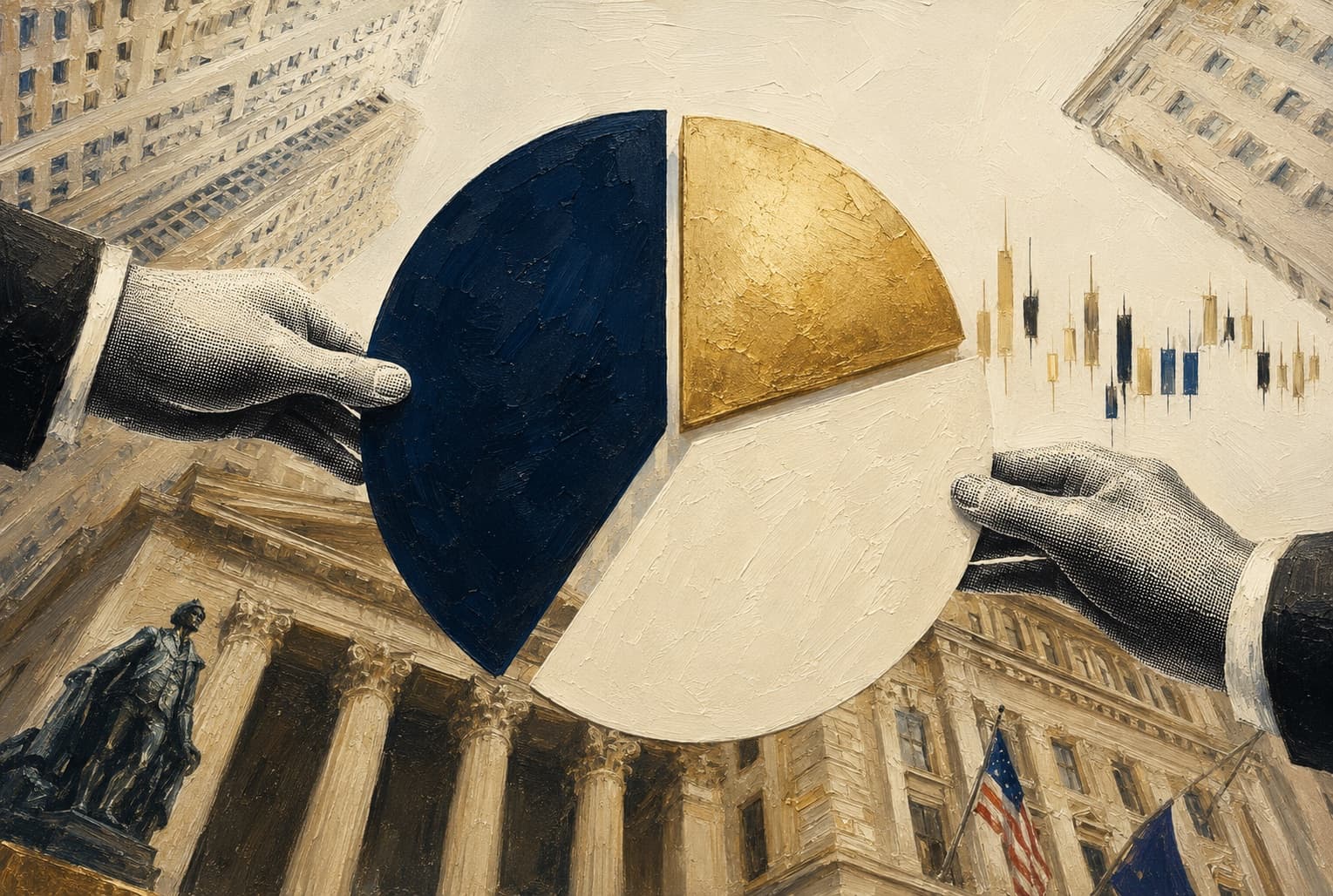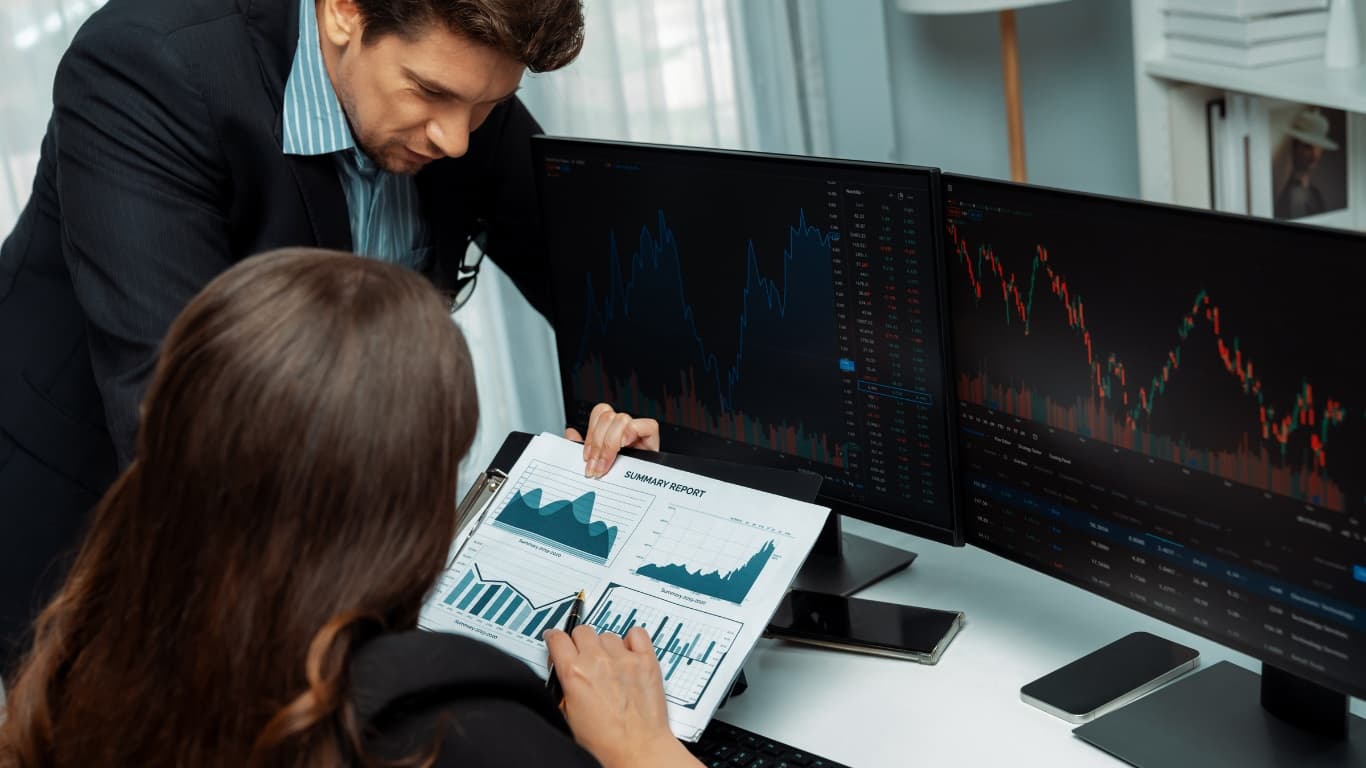
The hedge fund industry has always thrived on finding an edge, whether through complex algorithms, deep market analysis, or elite talent. But in 2026, that edge increasingly comes from artificial intelligence. Hedge funds are now deploying AI not just as a supporting tool, but as a core driver of investment decisions, capable of analyzing billions of data points in real time and adjusting strategies faster than any human team ever could.
The scale of this shift is striking. According to Preqin, more than $1 trillion in hedge fund assets under management are now linked to quantitative and AI-driven strategies, a figure that has doubled in less than five years. What was once an experiment confined to a few pioneering funds has become mainstream.
Firms are leaning on AI to optimize portfolios, spot hidden correlations, and forecast price movements in ways traditional analysts simply cannot match.
This transformation is not just about efficiency. It is about survival. With markets moving faster and competition more intense, funds that fail to embrace AI risk being left behind.
As Manoj Narang, founder of quant hedge fund Mana Partners, once put it, “The edge in this industry is fleeting. If you’re not using the latest tools, you’re already behind.”

For you as an investor, this evolution raises real questions worth sitting with. Will AI-driven funds outperform traditional managers over the long run? Can algorithms truly replace human intuition?
And what risks come with trusting black-box systems to manage billions in assets?
The AI-in-hedge-funds story is grounded in disclosure data and institutional research. SEC filings reveal which managers are systematic versus discretionary, and Goldman Sachs's prime-brokerage research tracks the broader shift in capital toward quantitative strategies.
Mainstream financial media maps the strategic shift. Bloomberg and The Financial Times both run recurring features on machine-learning-driven funds, and Reuters tracks the talent-flow patterns underneath the headline shift.
Traditional Hedge Fund Investment Strategies Explained
For deeper context, the breakdown in how institutional investors are quietly backing AI-driven industries is worth reading alongside this analysis.
Before artificial intelligence began shaping the industry, hedge funds relied on a mix of human expertise, statistical models, and market intuition. Portfolio managers built their strategies around macroeconomic themes, company fundamentals, and technical signals, supported by teams of analysts running spreadsheets and regression models.
The most common approaches included long-short equity, where managers bought undervalued stocks and shorted overvalued ones, and global macro strategies, which made big bets on currencies, interest rates, and commodities based on geopolitical and economic trends.
Quantitative funds, long before AI, used algorithmic trading too. But those systems were rule-based, relying on pre-programmed models rather than adaptive learning.
These methods produced strong returns in certain periods, but they also had real limitations. Human decision-making could be slow, biased, or overly dependent on past experiences. Traditional models, meanwhile, struggled with the sheer volume of data in modern markets.
A single hedge fund analyst might track 50 to 100 companies at most. Today’s AI-driven systems can simultaneously process millions of data points across thousands of assets in real time.
That reliance on manual analysis meant hedge funds were often reactive rather than predictive. By the time a trend became visible in earnings reports or economic indicators, much of the upside was already gone. As financial markets grew more complex, the industry started searching for tools that could provide a sharper, faster edge, and that opened the door for AI to step in.
If you want to understand how professional money management has evolved alongside this shift, the path to becoming a successful asset manager looks very different today than it did a decade ago.

Benefits of Artificial Intelligence in Hedge Fund Investing
The adoption of AI in hedge funds is not just about keeping up with technology trends. It is about unlocking advantages that traditional strategies cannot match. At its core, AI brings speed, accuracy, and scale to investment decision-making, giving funds the ability to react to market changes in milliseconds and identify opportunities that human analysts would never see.
One of the biggest benefits is big data processing. Markets today are shaped by far more than earnings reports or interest rate changes. Satellite images, shipping data, and social media sentiment all move prices.
An AI model can scan millions of data points in real time, extracting patterns across asset classes that humans simply cannot digest fast enough.
That gives hedge funds a sharper edge in predicting both short-term movements and long-term trends.
Another advantage lies in pattern recognition. Unlike traditional models that rely on predefined rules, AI and machine learning algorithms adapt over time. They learn from new market conditions, which is especially valuable during periods of high volatility.
During the pandemic, funds with AI-driven systems recalibrated their trading models in days, while traditional funds often took weeks to adjust.
And then there is the risk management benefit. AI does not just chase returns. It continuously runs simulations to test portfolios against different scenarios, from interest rate shocks to currency crises.
According to a PwC report, funds using AI-enhanced risk systems reduced drawdowns by an average of 12% compared to non-AI funds during volatile periods.
As one analyst put it, “AI doesn’t replace human judgment. It enhances it by giving us tools to see risks and opportunities we would otherwise miss.”
For you as an investor, that combination of speed, adaptability, and risk control is exactly what makes AI-driven funds increasingly worth your attention.
Examples of Hedge Funds Using AI to Improve Performance
AI in hedge funds is no longer an experiment. It is delivering measurable results. Some of the most successful funds in recent years have leaned heavily on artificial intelligence to sharpen performance and stay ahead of the competition.
Take Renaissance Technologies, often described as the gold standard of quantitative investing. While the firm keeps its methods closely guarded, industry analysts widely believe its Medallion Fund, famous for annualized returns exceeding 35% before fees, has integrated machine learning models that continuously adapt to changing market conditions. Renaissance’s track record shows how AI-driven analysis can outperform even in highly efficient markets.
Another example is Point72 Asset Management, led by Steve Cohen. The firm has invested heavily in AI and data science teams, using machine learning to spot trading signals in unconventional data such as credit card transactions and logistics flows. According to a Bloomberg report, Point72 grew its quantitative team by more than 40% since 2020, which tells you just how central AI has become to its strategy.
On a more specialized level, Two Sigma Investments, which manages over $60 billion in assets, has built its reputation on combining big data with machine learning. Their systems analyze everything from satellite imagery of retail parking lots to weather data, all to gauge corporate performance and predict price moves. That kind of alternative data analysis has given Two Sigma an early edge in identifying market inefficiencies.
These examples show that the biggest funds are not just experimenting with AI. They are structuring entire investment divisions around it. And the trend is not limited to giants.
Smaller hedge funds are also using third-party AI platforms to compete with global players, often achieving performance that surprises the market. That dynamic is part of why smart money has been moving away from private equity and toward hedge funds in recent years.
How AI Improves Risk Management in Hedge Funds
For hedge funds, success is not just about chasing returns. It is about protecting capital. This is where AI has proven its worth most clearly.
By analyzing massive datasets and running millions of simulations, AI-driven risk systems can anticipate potential threats long before traditional models detect them.
One of the most powerful applications is predictive stress testing. Instead of relying solely on historical scenarios, AI models simulate thousands of what-if conditions across interest rates, currency fluctuations, and geopolitical shocks.
A report by Deloitte found that hedge funds using AI-based stress testing reduced unexpected portfolio drawdowns by 10 to 15% compared to conventional approaches during volatile markets in 2022 and 2023.
AI also plays a critical role in real-time portfolio monitoring. Traditional risk models often update daily or weekly, leaving blind spots in fast-moving markets. AI systems, by contrast, continuously process live market feeds and flag risks within seconds.
That speed gives portfolio managers the ability to adjust positions quickly and avoid costly exposures.
Another area where AI excels is managing correlation risks. In times of crisis, assets that typically behave differently can suddenly move in the same direction, magnifying losses. AI can detect these hidden correlations before they become a problem.
Machine learning models at funds like Two Sigma have successfully identified when commodities, equities, and currencies were becoming more tightly linked, allowing managers to rebalance early.
As one senior risk officer put it, “AI gives us a radar that sees turbulence before we hit it. It doesn’t stop volatility, but it gives us more time to react.”
The Role of Machine Learning in Identifying Market Opportunities
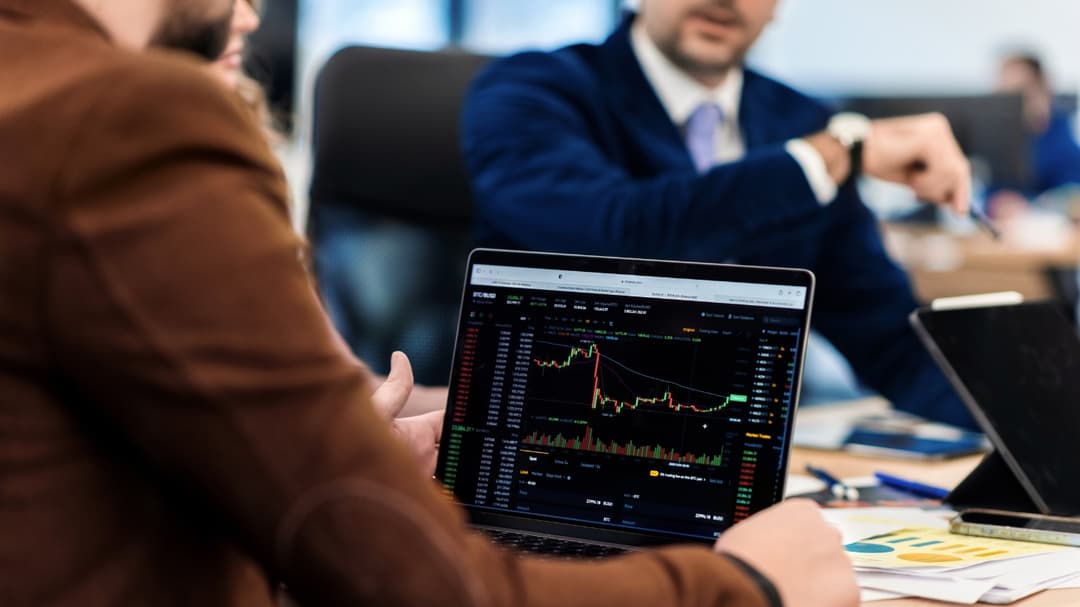
Traditional hedge fund strategies often rely on economic indicators or company earnings. Machine learning opens the door to something far more powerful, patterns that humans could never detect on their own. By processing enormous datasets, these algorithms uncover subtle signals across markets that, when aggregated, create genuinely profitable trading opportunities.
One of the clearest advantages is in alternative data analysis. Hedge funds now feed algorithms everything from credit card spending patterns to satellite images of retail parking lots. A well-trained model can predict whether a retailer is about to report strong earnings weeks before the official announcement.
According to a 2024 survey by PwC, over 65% of hedge funds now incorporate alternative data into their machine learning systems, a figure expected to climb further as competition for unique insights intensifies.
Machine learning also excels at identifying short-lived inefficiencies. In highly liquid markets like U.S. equities or forex, inefficiencies may last only seconds or minutes before disappearing. AI systems can process thousands of variables in real time, spotting these micro-opportunities and executing trades faster than any human team.
Understanding how brokers and market makers operate gives you useful context for why speed at this level matters so much.
That edge has helped firms like Citadel and Two Sigma capture consistent gains even in crowded markets.
And then there is the benefit of adaptive learning. Unlike static trading models, machine learning algorithms evolve as new data becomes available. During the pandemic, some funds reported that AI models adjusted to volatility within days, while traditional quant strategies took weeks to recalibrate.
That adaptability can make a decisive difference when markets move in ways nobody predicted.
Risks and Challenges of Using AI in Hedge Fund Strategies
For all its advantages, AI in hedge funds is not without serious risks. Many of the same qualities that make AI powerful, its speed, complexity, and reliance on massive datasets, also create new challenges you should be fully aware of before putting capital into these funds.
One of the most pressing concerns is overreliance on black-box models. Many AI-driven strategies are so complex that even fund managers do not fully understand how decisions are being made. That lack of transparency can create trust issues with investors and regulators, especially when large sums are at stake.
A 2024 EY survey found that 48% of institutional investors cite explainability as their top concern with AI-based investment funds.
Another issue is data bias. Machine learning systems are only as good as the data they are trained on. If the input data is skewed, whether due to market anomalies, incomplete datasets, or biased sources, the model may produce misleading signals.
That can result in systematic mispricing and unexpected losses.
Regulatory risk is also real. As AI becomes more central to financial markets, global regulators are paying much closer attention. The U.S. SEC has already signaled its intent to increase oversight of AI-based trading strategies, particularly around algorithmic fairness and market stability.
Abrupt regulatory changes could increase compliance costs or restrict certain AI-driven practices entirely.
Finally, there is the danger of crowded trades. If multiple hedge funds use similar AI models, they may end up making the same trades at the same time. That can amplify market volatility, especially in less liquid assets.
Some analysts argue this dynamic was partly visible in the sharp market swings of 2022, when many quant funds exited positions simultaneously. The lesson for you as an investor is simple. Understanding where transparency sits in this equation matters, and transparency is fast becoming the ultimate currency in global investing for exactly this reason.
We last reviewed this analysis in May 2026.


Alex Tzoulis
Alex Tzoulis is Co-Owner and Markets Analyst at The Luxury Playbook, specializing in equities, crypto, forex, and global financial markets. His work focuses on analyzing macroeconomic trends, geopolitical developments, and monetary policy, translating them into actionable insights across both traditional and digital asset classes. He leads the platform's financial market coverage, providing structured analysis across stock market investing, trading strategies, and cryptocurrency markets. His expertise strengthens the publication's authority in financial markets and capital allocation, bridging traditional finance with emerging digital investment ecosystems.