Limited-edition prints are routinely dismissed as the small-format category for collectors who cannot afford the canvas. We would argue the framing is wrong. The 2024 Hiscox Online Art Trade Report tracked the prints and editions market at meaningful and growing share of total contemporary trading volume, with Picasso, Warhol, Hockney, Banksy, KAWS and Murakami all sustaining genuinely deep secondary-market depth across their print and edition programmes.
Serious collections hold editions for reasons that have nothing to do with affordability. They hold them because the edition is often the most accurate documentation of an artist's practice across periods, the cleanest way to track the technical achievement, and a structurally different liquidity profile to the unique work.
- Limited-edition prints are routinely dismissed as the small-format category for collectors who cannot afford the canvas, but the framing is wrong.
- The 2024 Hiscox Online Art Trade Report tracked the prints and editions market at meaningful and growing share of total contemporary trading volume.
- Picasso, Warhol, Hockney, Banksy, KAWS and Murakami all sustain genuinely deep secondary-market depth across their print and edition programmes.
- The traditional print categories of etching, lithograph, screenprint and woodblock carry centuries of catalogue scholarship and an established framework for evaluation.
- Major museums including MoMA, the Met, the Tate, the British Museum and the Pompidou all maintain dedicated prints-and-drawings departments with century-deep collecting histories.
- Christie’s, Sotheby’s and Phillips run dedicated prints and editions sales four to six times a year, with total volume running into hundreds of millions of pounds annually.
- Who is this for?
- Collectors, advisors and curators interested in why serious collections hold limited-edition prints alongside unique work as part of a disciplined long-term programme.
- What is happening?
- An editorial read on why serious collectors buy limited-edition prints, covering the institutional argument, the market depth, the verification requirements and the cohort that defines the category.
- When did this emerge?
- Most relevant around the dedicated prints and editions sales at Christie’s, Sotheby’s and Phillips four to six times a year and during major print-focused museum survey cycles.
- Where is this happening?
- Centred on the New York, London and Hong Kong editions sales at the three major houses, with institutional reference holdings at MoMA, the Met, the Tate and the British Museum.
- Why does it matter?
- Reading the editions category correctly matters because the depth, the scholarship and the liquidity profile are very different from unique work and require their own collecting framework.
What an edition actually is
The term covers a wider range than most buyers realise. The traditional print categories (etching, lithograph, screenprint, woodblock) carry centuries of catalogue scholarship and an established framework for evaluation. The contemporary editions (digital prints, sculpture editions, multiples) carry a less standardised framework but, increasingly, equally serious institutional and market engagement.
The defining feature is the existence of a documented edition, a number per impression, an artist signature, and (for the contemporary cohort) a certificate of authenticity. The catalogue raisonné of the artist's print work, where one exists, is the primary reference.
For an artist like Picasso, the print catalogue runs to several thousand entries across multiple media, and the secondary market for that body of work is one of the deepest in 20th-century art.
The institutional argument
The major museums hold prints in their collection at scale. MoMA, the Met, the Tate, the British Museum, the Pompidou and the major university museums all maintain dedicated prints-and-drawings departments with collecting histories that go back over a century. The institutional engagement with the medium is not a recent phenomenon.
The scholarship has thickened accordingly. The catalogue raisonné projects for Picasso, Matisse, Hockney, Warhol, Lichtenstein and a growing list of contemporary names form the documentary backbone for the secondary market. The major auction houses have built dedicated print specialist teams (Christie's, Sotheby's and Phillips all run separate editions sales calendars) that work with the documentary record directly.
The market depth question
The numbers are clearer than the dismissive framing suggests. Christie's, Sotheby's and Phillips run dedicated prints and editions sales four to six times a year between them, and the total volume across those sales runs into the hundreds of millions of pounds annually. The depth of comparable lots is one of the highest of any contemporary market segment.
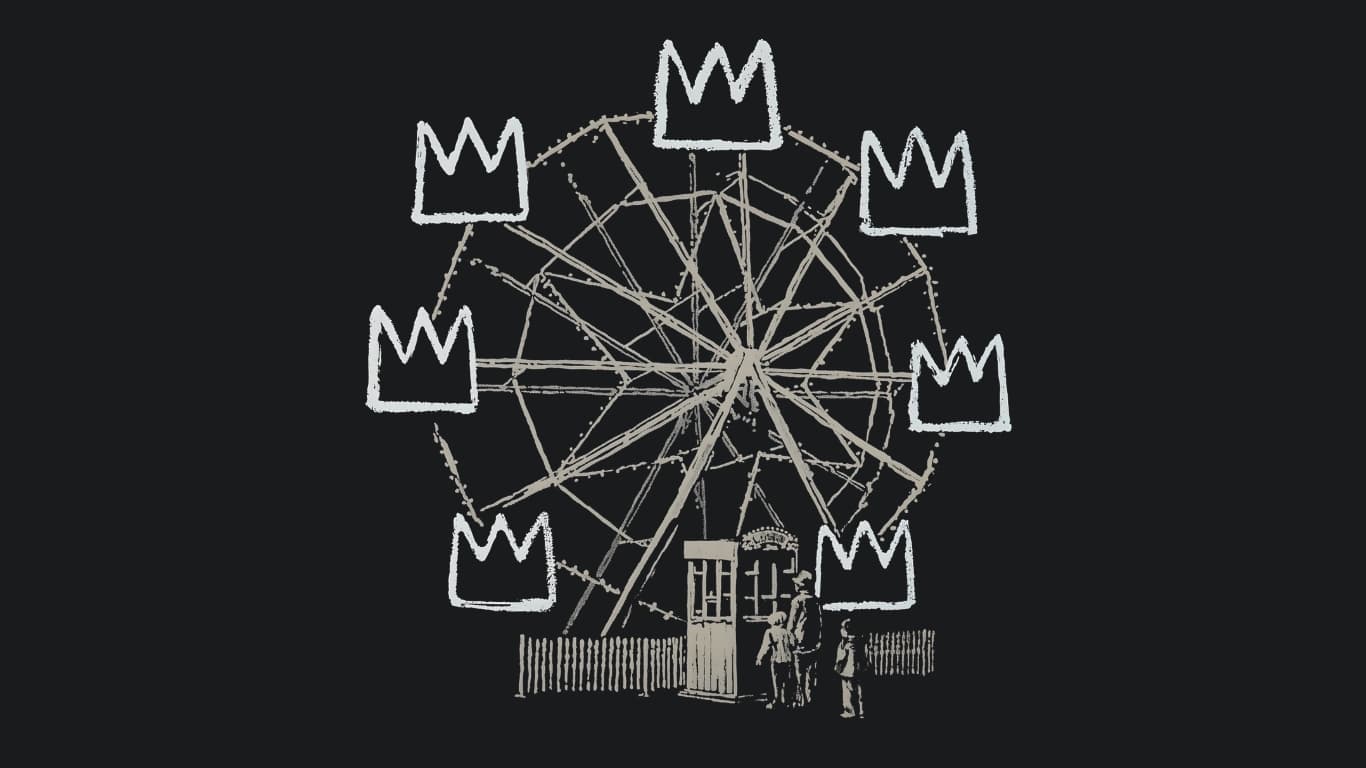
The contemporary names with deep editions markets read like a contemporary art canon in their own right. Warhol's edition programme across the screenprints. Banksy's print market at scale. Hockney's iPad and traditional prints. The KAWS figure and edition programme.
Murakami's flower programme. Each one has a documented edition record and a clear secondary-market depth.
What to verify before buying
Edition diligence is more documentary-driven than canvas diligence and rewards a careful checklist. The first step is the catalogue raisonné entry where one exists. The second is the edition size and the specific impression number, with confirmation that the impression is within the documented edition rather than an outside-edition proof.
The third is the signature and the chop or blindstamp (the workshop mark, often hidden in the lower margin or the verso). The fourth is the condition: editions, particularly works on paper, can have condition issues (foxing, mat burn, light damage) that materially affect value. A condition report from a recognised paper conservator is worth its weight on any significant acquisition.
The fifth is provenance, particularly for older work. The print market has historically been less rigorous on provenance than the unique-work market, and the documentation gap is one of the more reliable sources of pricing inefficiency in segments where collectors do the work.
Where the categories sit relative to each other
Print editions and figure editions occupy different parts of the same broader category. The traditional print categories (etching, lithograph, screenprint) carry the deepest scholarship and the most established frameworks. The contemporary digital and inkjet editions are still in the middle of their institutional legitimisation.
The sculpture editions sit closer to unique-work pricing logic, particularly the small-edition bronze and resin work.
Our contemporary art field guide covers the framework, and the broader category sits alongside the building a digital art collection conversation in interesting ways.
How serious collectors actually use editions
Three patterns recur in collections we have watched closely. The first is documenting an artist's career through the edition programme alongside the unique work, building a more complete record than the unique work alone can provide. Picasso's print programme functions this way for serious Picasso collections.
The second is using editions to engage with artists whose unique work has moved past the collector's budget. The right print or edition can offer a genuine engagement with the practice at a fraction of the unique-work cost, with documentation that supports long-term holding.
The third is the cross-period or cross-medium edition: the artist working in a print medium they do not typically use, the collaboration edition, or the period edition that sits outside the artist's main output. These are often the segments where the catalogue scholarship is thinnest and where careful diligence finds the most pricing inefficiency.
What this means for collectors
Limited-edition prints belong in serious collections on their own terms, not as a budget substitute for unique work. The institutional record, the auction depth, the catalogue scholarship and the documentary framework all sustain the category as a credible parallel conversation to the unique-work market.
The discipline required is documentary. Edition records, condition reports, catalogue raisonné references, signature and impression verification, and provenance documentation are the load-bearing elements of any serious print acquisition. The collectors who do the work consistently find the pricing inefficiencies that the dismissive framing of the category produces.
Editions are the part of the market where institutional rigour and accessible price points overlap most directly. That overlap is exactly what makes them worth paying attention to.
Frequently asked questions
How are limited-edition prints valued at auction?
Editions are valued against the documented record per impression: the catalogue raisonné entry, the edition size, the impression number, the condition, and the depth of recent comparable lots. The major houses (Christie's, Sotheby's, Phillips) publish dedicated prints sales catalogues that document the framework for each lot.
What is the difference between an edition and a reproduction?
An edition is an original print made within an artist-authorised, documented run, signed and numbered by the artist (in most contemporary practice). A reproduction is a photographic copy of an existing work, generally not signed, not numbered, and without the catalogue documentation. The market value gap between the two is structural.
Do contemporary digital editions hold their value?
The market is younger but the documentary framework is increasingly established. Hockney's iPad prints, the Murakami digital editions and the Banksy authentication-certified prints all carry documented edition records and meaningful secondary depth. The cohort of works without authentication or clear edition documentation remains structurally more volatile.
How should a first-time buyer approach the editions market?
Through documented impressions of established artists, with full catalogue raisonné reference, edition documentation, condition report and provenance. The dealer or auction house should be willing to walk through every documentary element of the acquisition. If the documentation is incomplete, the acquisition is not ready.
We last reviewed this analysis in May 2026.


Stefanos Moschopoulos
Stefanos Moschopoulos founded The Luxury Playbook in Athens and has spent the better part of a decade following the auction calendar, the en primeur releases, and the watchmakers, gallerists, and shipyards the magazine covers. He writes the field guides and listicles that anchor the Connoisseur section — pieces built on Phillips and Christie's results, Liv-ex movements, and conversations with collectors he has met across Geneva, Bordeaux, Basel, and Monaco. His own collecting habits sit closer to watches and wine than art, and it shows in the level of detail in the magazine's coverage of those categories. Under his direction, The Luxury Playbook now publishes long-form field guides, market-defining year-end listicles, and the Voices interview series with the founders behind the houses and the brands.