The Abu Dhabi property market remains the institutional capital of the UAE, politically, economically, and increasingly culturally. As of early 2026, the emirate's residential prices have risen 3. 9 percent year on year, with the median listing price at AED 1.
55 million and the median sold price at approximately AED 1. 48 million. Properties are moving faster, averaging 42 days on market against 51 a year ago.
The picture brokers describe (Aldar Properties, Bloom Holding, and the prime side covered by Knight Frank's regional team) is one of measured growth. The cycle is supported by the freehold expansion at Al Reem Island, Saadiyat Island and Yas Island, and the continuing buildout of the Saadiyat Cultural District.
The architectural ambition that defines the Abu Dhabi prime-residential offer extends well beyond the Burj Mohammed bin Rashid towers. The Saadiyat Cultural District (the Louvre Abu Dhabi by Jean Nouvel, the upcoming Guggenheim Abu Dhabi by Frank Gehry, the Zayed National Museum by Foster and Partners, the Sheikh Zayed Grand Mosque) places the prime-residential conversation alongside the most consequential cultural-architecture investment any global capital has made this century. Knight Frank's Wealth Report tracks Saadiyat Island as one of the world's most consequential ultra-prime residential locations, and Mansion Global has profiled the island repeatedly as the prime story of the UAE cycle.
- Abu Dhabi has emerged as the steadier counterpart to Dubai's headline market, with Saadiyat Island, Al Reem Island and Yas Island anchoring the upper end of the local prime segment.
- We see Aldar Properties leading the institutional development pipeline, with the cultural and educational anchors on Saadiyat supporting the prime residential value proposition.
- Property prices in Abu Dhabi typically trade at meaningful discounts to comparable Dubai stock, reflecting different supply dynamics and the more institutional buyer mix.
- Yields on well-located Abu Dhabi rental stock remain attractive, particularly in Saadiyat and Al Reem where international tenant demand continues to deepen.
- Golden Visa eligibility for Abu Dhabi property investors mirrors the broader UAE framework, with the AED 2 million threshold supporting cross-border buyer flows.
- For most considered international investors we view Abu Dhabi as offering the steadier UAE property profile, with appreciation tied to the city's broader economic diversification.
- Who is this for?
- International investors evaluating Abu Dhabi as an alternative to Dubai, alongside the advisers, brokers and family office staff framing UAE allocation decisions.
- What is happening?
- A market read of Abu Dhabi property in 2026, covering Saadiyat, Al Reem, Yas Island, Aldar Properties leadership, yields and the Golden Visa framework.
- When did this emerge?
- The article reflects 2026 market conditions through Dubai Land Department equivalents, Property Monitor and Knight Frank UAE data alongside our observations.
- Where is this happening?
- The piece focuses on Abu Dhabi, including Saadiyat Island, Al Reem Island and Yas Island, with reference to broader UAE prime market dynamics.
- Why does it matter?
- Abu Dhabi offers a distinct value proposition versus Dubai within the UAE complex, which is why understanding the comparison matters for any Gulf property allocation decision.
The Abu Dhabi housing market today
The average price per square metre sits at approximately AED 15,900 (around US$4,328), with sharp variation by neighborhood. Premium locations such as Saadiyat Island and Al Maryah Island exceed AED 18,000 per sqm; emerging zones like Al Ghadeer and Masdar City sit under AED 9,000. About 33 percent of listings close at or above asking, with the strongest competition concentrated on Yas Island and Al Reem.
- Residential prices up 3.9 percent YoY
- Median listing price: AED 1.55 million
- Average days on market: 42 (down from 51)
- 33 percent of listings closing at or above asking
- Price per sqm range: AED 9,000 to 18,000+
Abu Dhabi neighborhoods defining the prime tier in 2026
Al Reem Island
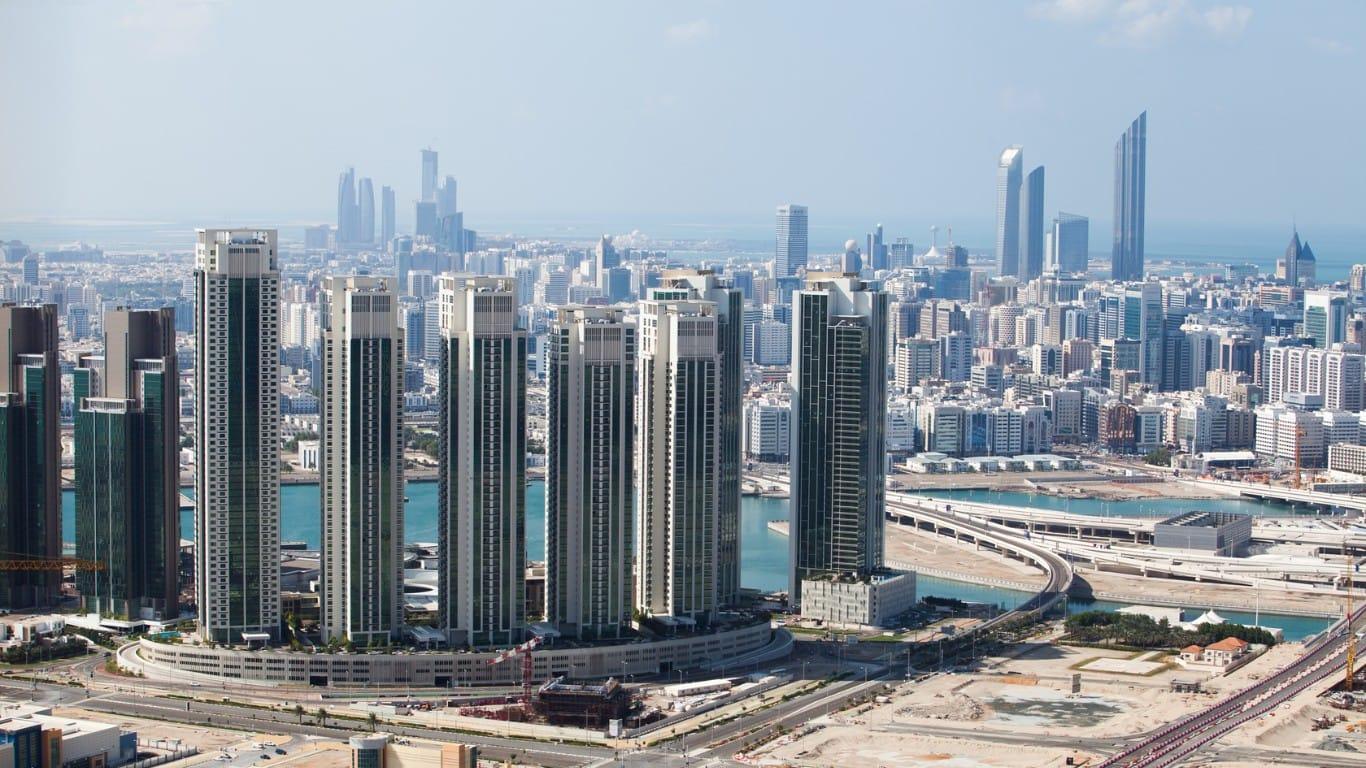
Al Reem Island ranks among the most in-demand residential zones in Abu Dhabi, with high-rise towers, waterfront views and proximity to the central business district. The median home price sits at approximately AED 1. 4 million, up 4.
2 percent year on year. Apartments in newly completed towers lease quickly, with Engel and Volkers and Sotheby's International Realty handling most of the prime listings.
Yas Island
Yas Island has evolved from a leisure destination (Yas Mall, Ferrari World, the Etihad Arena, the Yas Marina Circuit) into a well-integrated residential and cultural hub. The median home price stands at AED 2. 3 million, up 5.
1 percent year on year.
Saadiyat Island
Saadiyat Island sits at the luxury end of the Abu Dhabi market, with the Cultural District (Louvre Abu Dhabi, Guggenheim Abu Dhabi, Zayed National Museum), beachfront resorts and elite residential enclaves. The median property price currently sits at AED 5. 6 million, up 3.
6 percent year on year. Limited supply and the cultural-institution positioning sustain pricing through cycles. Christie's International Real Estate and Sotheby's International Realty rank Saadiyat Island among their global flagship UAE addresses.
Al Ghadeer and Masdar City
Al Ghadeer and Masdar City represent the more accessible end of the Abu Dhabi map. Masdar City, the Foster and Partners-master-planned sustainable development, has become a meaningful residential community for buyers prioritising sustainability credentials.
The Abu Dhabi rental landscape
Several neighborhoods have reported year-on-year rent growth exceeding 5 percent. Demand is concentrated in mixed-use developments and amenity-rich communities, particularly Al Reem and Yas Island. Population growth and a steady inflow of expatriate professionals choosing long-term leasing keep absorption tight.
Asteco's Abu Dhabi residential rental index has been tracking the same trajectory.
What is shaping the Abu Dhabi property market in 2026
Several structural forces define the market. Government-led economic diversification (beyond oil and gas, into healthcare, defense, technology, finance, and culture) has reshaped the demand profile. The Saadiyat Cultural District continues to add globally significant institutions through 2026 and beyond, with the Guggenheim Abu Dhabi and Zayed National Museum among the most-watched cultural openings on the international calendar.
The Etihad Rail freight network, the expansion of Abu Dhabi International Airport's Midfield Terminal, and continuing infrastructure works around Al Maryah Island are reshaping demand around specific corridors. The UAE Golden Visa pathway continues to support international buyer activity, with the 10-year visa requiring AED 2 million in property and the two-year residence visa available at AED 750,000.
Where the Abu Dhabi property market reads now
Prices are projected to climb 4 to 6 percent through the back half of 2026. Growth is expected to concentrate in Saadiyat Island, Yas Island and the redevelopment-driven submarkets along Al Maryah. The rental market is forecast to remain firm, with the steady expatriate professional flow providing the structural support.
What this means for buyers
For the buyer who values the most ambitious cultural-architecture investment of any global capital this century, one of the most stable institutional employment economies in the Middle East, and a tax framework that has structurally reshaped global wealthy migration patterns, Abu Dhabi continues to read as a structurally important property market. The neighborhoods responding most distinctly to the design-led international buyer shift (Saadiyat Island, Yas Island and Al Reem) are quietly outperforming the headline averages. We last reviewed this analysis in May 2026.
Frequently asked
How is the Abu Dhabi property market evolving in 2026?
Prices are projected to climb 4 to 6 percent through 2026, supported by the continuing buildout of the Saadiyat Cultural District and structural government-led diversification. Knight Frank's Wealth Report and Mansion Global both track this trajectory.
Which Abu Dhabi neighborhoods are seeing the most buyer attention?
Saadiyat Island, Yas Island and Al Reem Island are drawing the most consistent international demand. Sotheby's International Realty and Christie's International Real Estate rank Saadiyat Island among their global flagship UAE addresses.
Can foreign nationals buy property in Abu Dhabi?
Yes, in designated freehold zones (Al Reem Island, Saadiyat Island, Yas Island, Al Raha Beach). The Golden Visa pathway provides residency for buyers above specified thresholds: AED 2 million for the 10-year visa and AED 750,000 for the two-year residence visa.
What distinguishes Abu Dhabi's prime market from Dubai's?
Abu Dhabi's market is more institutionally driven and shaped by the Saadiyat Cultural District's ongoing global cultural-architecture investment. Prime pricing on Saadiyat Island, while high, still trades meaningfully below comparable Palm Jumeirah villa stock.