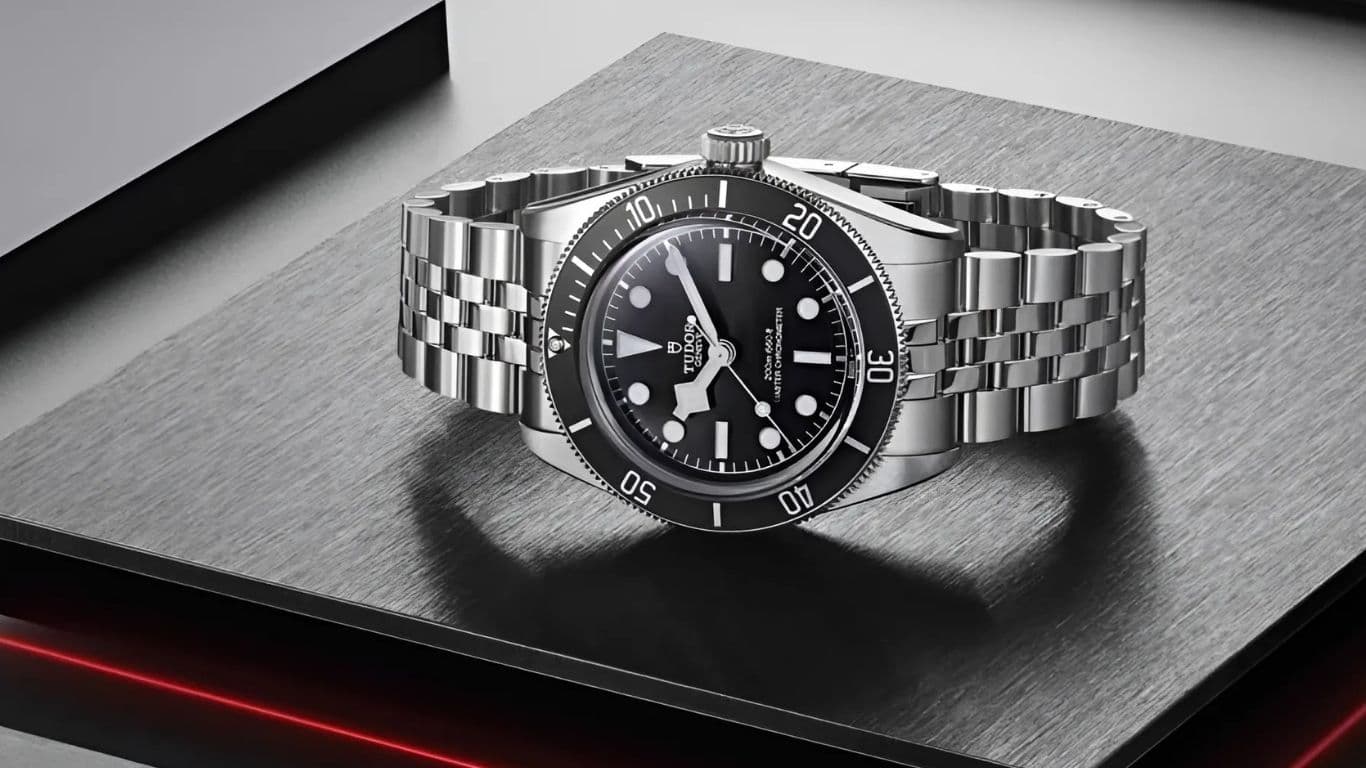
The Tudor Black Bay has captured serious attention from collectors around the world, riding a wave of enthusiasm for its vintage-inspired look and genuinely capable modern movement technology. If you’ve been watching the watch world closely, you’ve probably noticed this one keeps coming up. It occupies that sweet spot between accessible luxury and real horological credibility, and that’s a hard balance to strike.
Unlike mainstream luxury brands that lean purely on prestige, or entry-level Swiss makers that lead with affordability, Tudor has carved out something genuinely its own. You get the traits serious enthusiasts care about without paying the premium that comes with its more famous siblings. That’s not a small thing.
But the real question worth asking is whether the Black Bay offers genuine investment potential, or whether collector enthusiasm has built expectations the numbers simply can’t support.
Table of Contents
Key Takeaways
Navigate between overview and detailed analysisKey Takeaways
- The Tudor Black Bay has become a rising star in the watch world, admired for its Rolex heritage, vintage design cues, and modern technical capabilities.
- It occupies a middle ground between affordability and horological credibility, making it appealing to collectors priced out of Rolex but seeking more than entry-level Swiss brands.
- Design details like the snowflake hands, domed crystals, and in-house movements give the Black Bay authenticity that resonates with enthusiasts.
- While it competes with more expensive luxury watches on quality, the mass production and broad availability limit its ability to generate consistent long-term investment returns.
- For most buyers, the Black Bay should be viewed as a collector’s choice and lifestyle piece first, with selective models (e.g., limited editions) offering potential investment upside.
The Five Ws Analysis
- Who:
- Collectors and enthusiasts who want a blend of Rolex heritage, Swiss craftsmanship, and affordability.
- What:
- A popular vintage-inspired dive watch line that has built credibility in the mid-luxury segment but offers mixed results as an investment asset.
- When:
- Especially relevant in 2025, as the Black Bay continues to dominate Tudor’s lineup and attract attention from both first-time buyers and seasoned collectors.
- Where:
- Global watch markets, with strong traction across Europe, North America, and Asia where demand for accessible luxury is growing.
- Why:
- Because the Black Bay provides a balance of style, craftsmanship, and value retention, but should be approached more as a collector’s favorite than a guaranteed investment vehicle.
The Heritage of the Tudor Black Bay and Its Rolex Connection
The Tudor story starts with deliberate strategy, not happy accident. Research into the best luxury watches for collectors shows that Rolex founder Hans Wilsdorf registered the Tudor brand in 1926, then ran it as a subsidiary from 1946 onward. The mission was clear from day one: build robust tool watch designs at price points more people could actually reach.
The Black Bay line draws direct inspiration from Tudor’s own archive, specifically the early Tudor Submariners produced in the 1950s. That lineage is real, and collectors know it.
The 1916 Company and Teddy Baldassarre note how current models incorporate authentic design cues like domed crystals, oversized crowns, and vintage proportions that reference genuine horological heritage rather than manufactured nostalgia.
The Rolex connection brings immediate credibility through shared heritage, technology, and brand association. But Tudor has been careful to develop its own distinctive identity rather than simply coasting on the family name. The signature snowflake hands and in-house calibers documented by Fratello Watches give Tudor its own visual language while keeping enough family resemblance to matter.
For anyone thinking about the investment angle, that authentic lineage is worth paying attention to. Genuine horological history tends to support sustained collector demand over time. Brands that manufacture their heritage through marketing alone rarely hold the same appeal once the story gets scrutinized.
Design and Craftsmanship: What Sets the Black Bay Apart
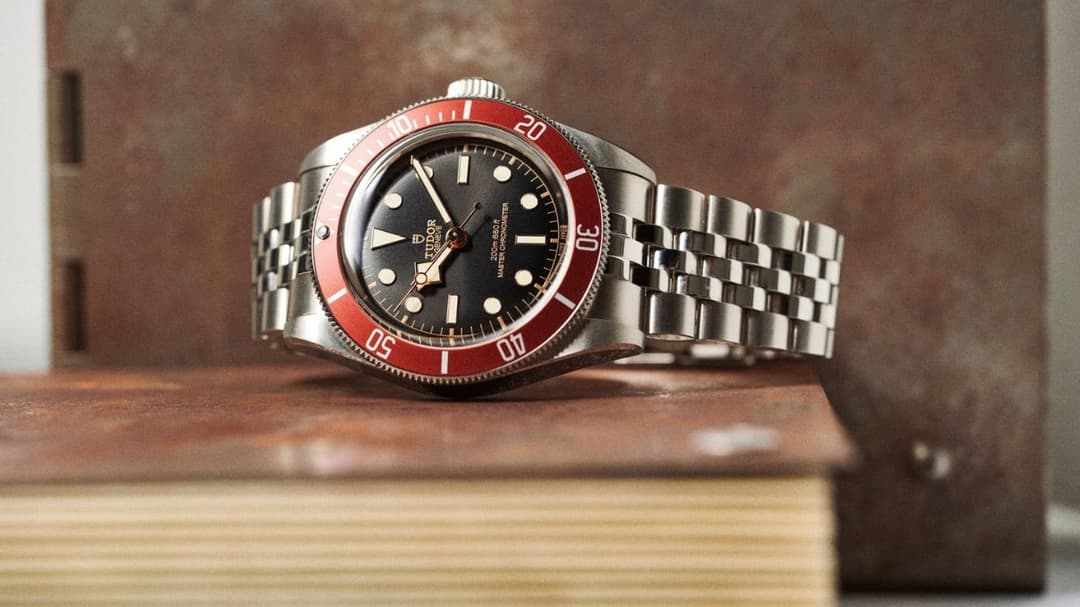
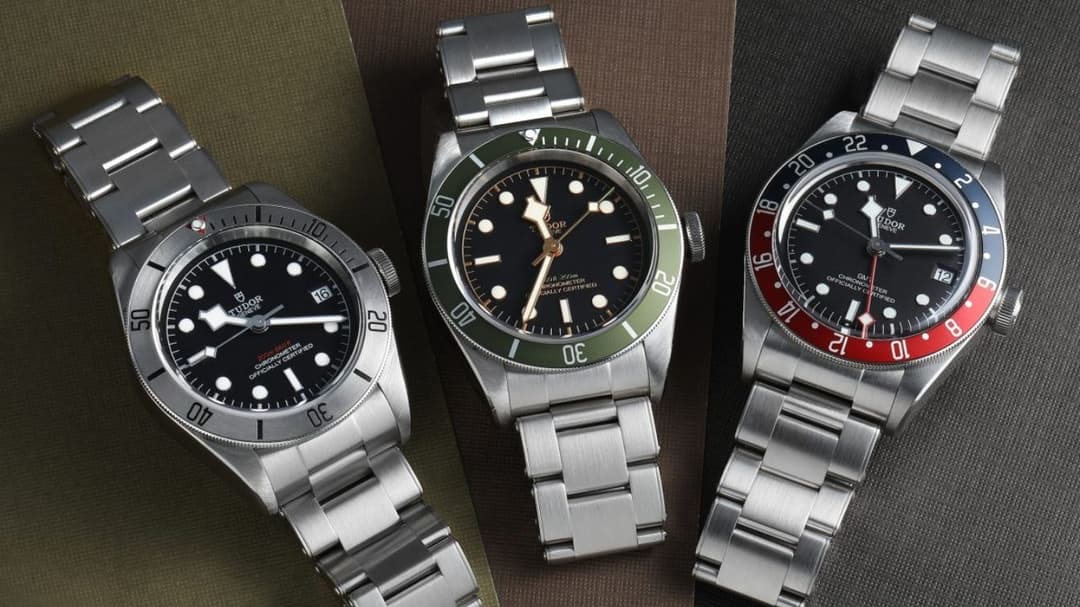
The Black Bay’s design has a few signatures you’ll recognize instantly once you know what to look for. Those snowflake hands with their square tips create immediate visual recognition, and collectors value that for both aesthetics and authenticity. You always know what you’re looking at.
Vintage-inspired details run through the entire design philosophy. Domed sapphire crystals, matte dial finishes, aged luminous materials, and oversized crowns work together to create period-appropriate aesthetics without sacrificing the functionality you’d expect from a modern piece. Fratello Watches and Teddy Baldassarre have both documented how cohesive this approach really is.
On the technical side, Tudor has moved decisively toward in-house calibers across much of the Black Bay lineup. The MT series movements offer 70-hour power reserves, which rivals or beats what plenty of luxury competitors are putting out at significantly higher price points.
The newer Black Bay 58 Mark 2 update shows Tudor isn’t standing still either, with enhanced clasp micro-adjustments and improved bezel grip among the refinements noted by Fratello Watches. Small details, but the kind serious collectors notice.
Model variety gives the Black Bay broad market reach through smart segmentation. You can go with the Black Bay Fifty-Eight if you prefer a vintage-sized case, the GMT if you travel constantly, the Chrono if timing functions matter to you, or the Ceramic if modern materials are your thing. Chrono24 listings give you a clear picture of just how wide the catalog runs.
Limited editions add the exclusivity factor that investment-minded collectors tend to chase. The 2026 Black Bay Chrono Carbon, limited to 2,026 pieces with an MSRP in the $7,500 range, shows Tudor pushing into higher-value, rarer territory. That kind of deliberate scarcity is exactly what can support appreciation potential over time.
Many collectors feel this combination of design care and technical ambition lets the Black Bay punch well above its mid-luxury positioning in actual craftsmanship quality. That said, perception alone doesn’t automatically translate into investment returns, and it’s worth keeping that distinction clear in your thinking.
Market Prices and Resale Performance
Current retail pricing tells you a lot about how Tudor positions itself across different buyer segments. Black Bay Chrono models run from roughly $5,950 up to around $8,675 depending on materials and bracelet choice, while limited editions push that ceiling higher. Understanding where these sit relative to competitors is part of the picture, and it’s worth comparing notes with what entry-level Rolex models are trading at to appreciate the gap.
The secondary market tells a more complicated story about actual demand versus what retail pricing might suggest.
WatchCharts data puts the average Black Bay price at around $3,000, with the full range spanning roughly $2,000 to $10,000 depending on the specific variant. That’s a wide spread, and where your piece lands matters a great deal.
Looking at specific Chrono24 listings, Black Bay 41mm new and unworn pieces trade around $4,575, Bronze models appear near $2,899, and Fifty-Eight steel versions with black dials command approximately $3,900 on a textile strap or $4,100 on a bracelet. Those numbers give you a real-world benchmark for what the market is actually willing to pay.
But resale reality introduces challenges you need to factor in honestly. Community feedback on Reddit includes reports of real difficulty moving certain Black Bay models, with one collector struggling to sell a recently popular Black Bay Monochrome complete set at €3,500. That’s a signal worth noting.
This suggests that popularity doesn’t automatically translate into liquidity or strong resale performance.
Historical context adds another layer. Reddit discussions point out that older Tudor Submariners from the 1980s and 1990s frequently failed to hold resale value. The recent uptick in Tudor valuations is relatively new behavior, not a decades-long established trend. That matters when you’re projecting forward.
Fratello Watches reports that used BB58 pricing currently looks flat, which suggests limited upward momentum in the near term. You could read that as a value opportunity ahead of future updates, or as a sign that the market has absorbed available supply. Either interpretation is defensible right now.
Why the Black Bay Competes With More Expensive Luxury Watches
The Black Bay’s competitive positioning comes down to a straightforward value equation. You’re getting luxury characteristics at a cost that’s meaningfully lower than premium alternatives, and for a lot of buyers, that math is genuinely compelling.
Analysis from Fratello Watches, Luxury Watches USA, and Bobswatches.com consistently highlights the Black Bay’s ability to deliver vintage styling, in-house movements, and strong finishing quality at a substantial discount versus top-tier names. The secondhand market data from Bob’s Watches shows this pattern holding across multiple model variants.
The price comparison makes the value proposition concrete. Tudor Black Bay retail pricing runs from roughly $3,700 to $4,225, while a Rolex Submariner sits between $9,200 and $10,400. That’s roughly a 2.5x premium gap. For buyers who want the aesthetic and the credibility without stretching that far, Tudor makes a strong case.
If you’ve been priced out of Rolex or similar tier brands, the Black Bay gives you genuine prestige, solid performance, and real collector appeal without demanding extreme financial commitment. And broader accessibility could actually work in its favor by supporting wider market adoption and more sustained demand over time.
The Swiss luxury ecosystem provides its own credibility advantages worth considering.
Because Tudor operates within established Swiss luxury frameworks and carries those Rolex associations, it carries more inherent prestige than most independent brands. That’s an edge purely standalone companies genuinely struggle to replicate, no matter how good their product is. If you’re thinking about how watch heritage drives long-term investment returns, the brand ecosystem matters more than most people realize.
Is the Tudor Black Bay a Good Investment or Just a Collector’s Favorite?
The investment case for the Black Bay cuts both ways, and you owe it to yourself to look at both sides clearly before committing capital.
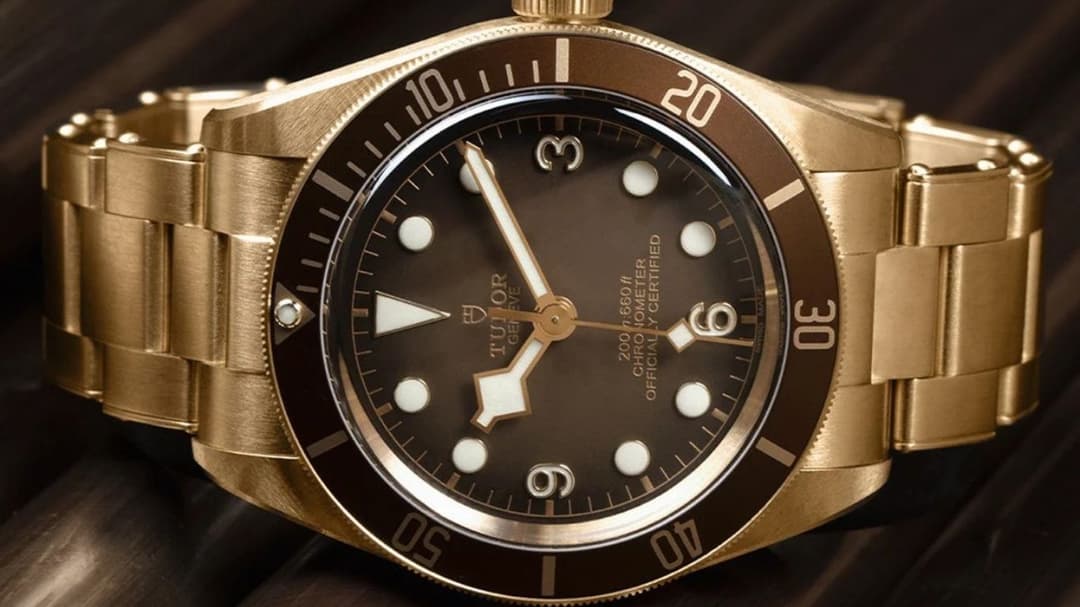
The arguments for investment potential center on scarcity and collector interest in specific variants. Limited editions like the Carbon 25 may appreciate because production numbers are deliberately restricted. Discontinued or early variants like initial BB58 releases and Smiley dial Black Bay models could gain collector interest over time as original-condition examples become genuinely hard to find.
The combination of in-house movements, growing popularity, and authentic heritage makes the Black Bay more likely than many mid-luxury watches to hold relative value. That matters especially when you compare it to fashion-driven alternatives that lack real horological substance and tend to fade from collector interest faster.
Still, the arguments against investment expectations are equally hard to dismiss. Core Black Bay models are widely available through normal retail channels right now, and mass production creates supply pressure that works directly against appreciation dynamics. Without allocation constraints or artificial scarcity, basic supply and demand economics limit how much upside you can realistically expect.
The price band creates its own mathematical challenge. Most Black Bay variants trade in the $3,000 to $5,000 range, which means the room for large percentage gains is genuinely smaller than with premium brands that start from higher baselines and can achieve more dramatic absolute appreciation when market conditions align.
Community reports of resale difficulty add another cautionary note. When passionate collectors struggle to find buyers for recently popular models like the Monochrome Black Bay, it suggests underlying demand may not fully match the enthusiasm levels you see online. Hype and liquidity are very different things, and understanding the difference between genuine value and speculative enthusiasm is essential before treating any asset as an investment.
And perhaps most crucially, many buyers in the Black Bay demographic are buying for design, heritage, and personal enjoyment rather than calculated ROI. That’s not a criticism. It just means the market dynamic here is driven more by passion than financial logic, and when emotional value is doing the heavy lifting, investment fundamentals tend to take a back seat.
FAQ
Is the Tudor Black Bay a good investment in 2025?
Yes, the Tudor Black Bay is a strong investment in 2025. It holds its value well and offers solid appreciation, especially for models like the Fifty-Eight, GMT, and Ceramic. Limited editions and rare configurations deliver even higher returns on the secondary market.
What is the typical ROI for a Tudor Black Bay?
The historical ROI for most Black Bay models averages 5–8% annually. Limited editions, like the Bronze Blue, can appreciate by 10–20% or more, depending on demand and rarity.
Which Tudor Black Bay models should I invest in?
Focus on Black Bay Fifty-Eight, GMT Pepsi Bezel, and Ceramic for steady growth. For higher ROI, invest in limited editions like the Bronze Blue or special configurations.
How does the Black Bay compare to Rolex for investment?
The Black Bay offers better affordability with consistent value retention, making it a great entry point. While Rolex generally appreciates faster, Tudor provides a strong ROI at a lower price point.

Stefanos Moschopoulos
Stefanos Moschopoulos is the Founder and Head of Editorial at The Luxury Playbook, specializing in fine assets and alternative investments. His work focuses on analyzing luxury asset classes such as art, watches, collectibles, and yachting as structured investment vehicles, aligning them with broader wealth-building strategies. He leads the editorial direction of the publication, ensuring all content around alternative assets is data-driven, macro-aware, and investment-focused. His expertise lies in translating niche luxury markets into clear frameworks for portfolio diversification, long-term capital preservation, and asymmetric returns within non-traditional asset classes.