The first luxury watches serious collectors recommend tend to be the same handful of references, and the advice tends to carry the same handful of cautions. The first watch, really the first significant watch, sets the register for the collection that follows.
- Most serious collectors recommend the same first-watch list, anchored on Rolex Submariner, Omega Speedmaster, and a vintage-style dress reference from the Holy Trinity adjacent tier.
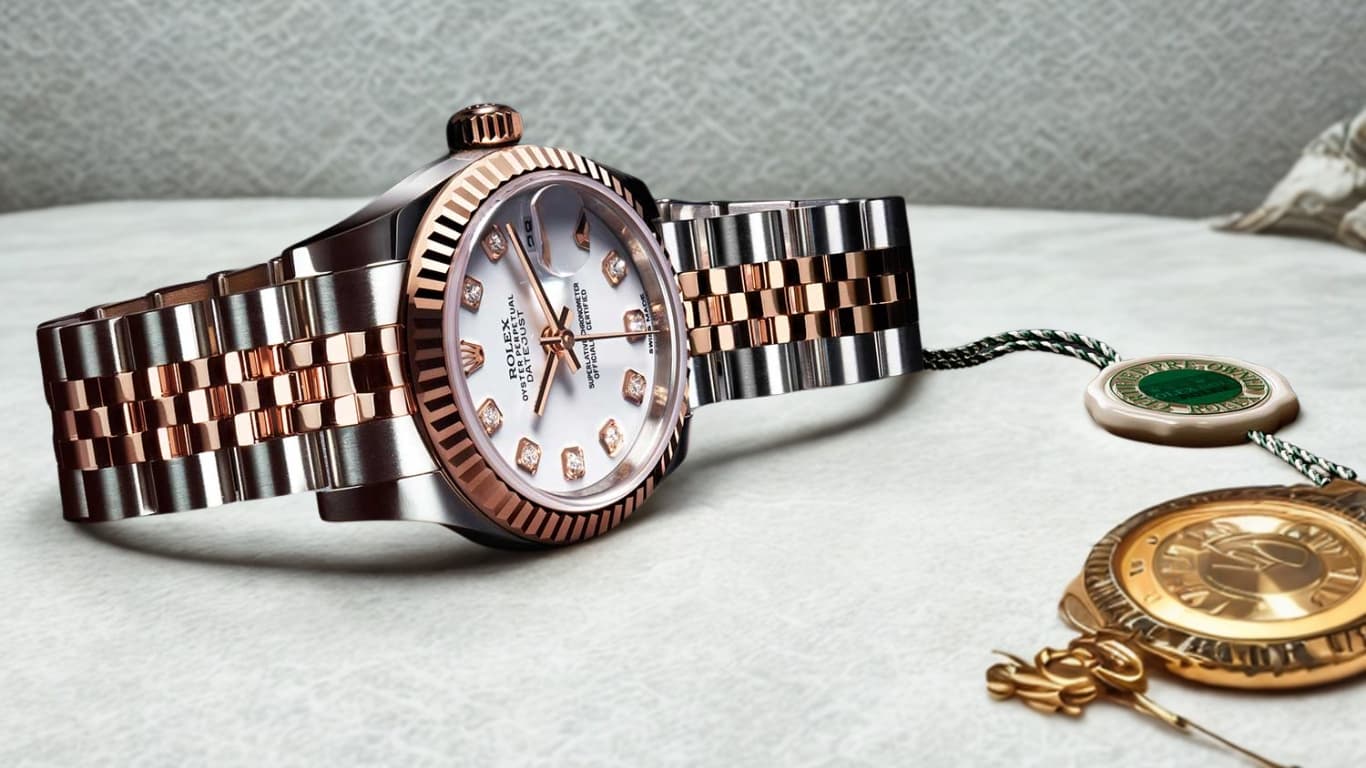
- The Rolex Datejust still draws the most consistent first-watch recommendations from established collectors, because it covers dress and casual wear with one piece.
- A Speedmaster Professional answers the question of horological history with a piece that costs a fraction of the equivalent vintage chronograph education.
- We see Cartier Tank as the strongest dress watch first pick, particularly the Tank Must and Solo references, with quartz and mechanical options across budget tiers.
- Tudor Black Bay 58 has emerged as the consensus alternative to a first Submariner, with manufacturer movement and proportions that wear better on smaller wrists.
- A Grand Seiko SBGA or SBGW reference rewards collectors who want the high-grade Japanese alternative to the obvious Swiss first purchases.
- Who is this for?
- New collectors planning a first serious purchase, gift buyers, and established collectors advising friends entering the category.
- What is happening?
- A consensus list of the first luxury watches serious collectors recommend, covering Rolex, Omega, Cartier, Tudor, and Grand Seiko across budget bands.
- When did this emerge?
- The recommendations have held across cycles, with brand-specific picks adjusting as new in-house calibres and design refreshes have rolled out.
- Where is this happening?
- Authorised dealers globally stock the recommended references, with pre-owned specialists offering depth on older calibre versions at meaningful discounts.
- Why does it matter?
- A well-chosen first watch builds the foundation for everything that follows, and the wrong first purchase often gets traded out within a year at a meaningful cost.
The collectors whose collections hold up over a decade tend to start with pieces that earn their place. References with credible heritage, deep secondary-market depth, and the kind of cross-generational design that doesn't read as dated when collecting tastes shift. The collectors who chase the loudest current reference tend to discover, three years later, that the noise has moved elsewhere.
The five or six references that come up most consistently in this conversation are predictable enough. Rolex Submariner, Omega Speedmaster Professional, Tudor Black Bay, Patek Philippe Calatrava or Aquanaut depending on budget, Cartier Tank, Jaeger-LeCoultre Reverso. Each anchors a different register of collecting.
Each is supported by enough secondary-market depth to let a collector eventually move on without significant friction.
The Rolex Submariner: the structural first watch
The Submariner is the reference more first-watch collectors choose than any other, and the choice tends to hold up well across years. The current no-date Submariner reference 124060 retails at around $9,100 from authorised dealers.
Clean pre-owned examples trade between $10,500 and $12,000 on Chrono24 and WatchCharts. Discontinued earlier references (the 16610 and earlier 14060) carry a small collector premium for the era-specific case geometry.
Hodinkee, Phillips and the major dealers all read the Submariner as the deepest-trading sport reference in modern watch collecting. The combination of trading depth and design consistency is what makes the reference such a structural first choice.
Why the Submariner wears across decades
What makes the Submariner the structural choice is the consistency of the design across decades. A watch a collector buys at thirty still looks credible at fifty, in a way most contemporary references can't promise.
The bracelet engineering, the case proportions, the dial geometry have been refined gradually rather than reinvented. The result is a piece that wears across registers (suit, weekend, formal) without reading as out of place.
The Omega Speedmaster Professional: the historical anchor
The Speedmaster Moonwatch is the other defining first-watch choice. The watch NASA flight-qualified for Apollo, worn on the lunar surface in 1969, and produced in a continuous line from 1957 onwards with the manual-wind Calibre 3861 in the current reference.
Hesalite-crystal version retails around $7,800. Sapphire-crystal sandwich version slightly higher. Pre-owned full-set examples cluster between $6,300 and $7,000.
The Speedmaster carries the weight of genuine cultural history that few contemporary watches can match. The production discipline (Omega has produced the Moonwatch in essentially continuous form for nearly seven decades) keeps the reference credibly anchored. It's also the most accessible entry into a brand with serious technical credentials at every price point above it.
The Tudor Black Bay: the credible entry tier
For collectors working below the $5,000 line, the Tudor Black Bay is the most credible entry into Swiss tool watchmaking. The current Black Bay 58 retails between $4,000 and $4,500. The broader Black Bay range runs to roughly $6,800.
METAS Master Chronometer certification across the upper end of the line gives Tudor technical credentials that very few competitors match at the price. The Black Bay 58 reference 79030N has the deepest secondary-market trading data in the brand: WatchCharts logs over 2,000 sales annually with median time-to-sell around 17 days.
The Black Bay isn't a watch that climbs dramatically on the secondary market. Most current Tudor production trades at or just below retail in the pre-owned market. It holds its value reliably and provides genuine Swiss tool watchmaking at a price that doesn't ask for the kind of capital the Submariner now requires.
Patek Philippe and Audemars Piguet: when the budget allows
For collectors with the budget to start at the trinity tier, the Patek Philippe Calatrava in the entry-tier references and the Audemars Piguet Royal Oak (in the discontinued 16202 reference at roughly €70,000 to €85,000 secondary, or the current generation if boutique allocation is available) are the two pieces most commonly cited as defining trinity entries.
The Patek Aquanaut sits between these and the sport-luxury register. The Royal Oak Jumbo is the architectural-design defining piece. Both anchor catalogues with enough depth to support a collection that extends from the first significant purchase through subsequent acquisitions over years.
Where the Nautilus sits
The Patek Nautilus reference 5711, discontinued in 2022 and now trading between roughly €100,000 and €130,000 on the secondary market, sits beyond entry territory but anchors the contemporary sport-luxury conversation.
Most collectors don't start here. Collectors who have built up to the trinity tier through a few years of considered acquisition tend to. The 5811 successor and the rare 5811/1A variants in current production are the references that most boutique trinity entries flow toward in 2026.
The Cartier Tank and Jaeger-LeCoultre Reverso: the dress register
For collectors whose first significant watch sits in the dress register rather than the sport register, the Cartier Tank Louis Cartier (around €12,000 to €15,000 in the current production) and the Jaeger-LeCoultre Reverso Classic (from around €8,000 to €15,000 depending on case size and configuration) are the two references that come up most often.
Both have the kind of cross-generational design credibility that supports long-term collecting. Both anchor brand catalogues with the depth to support more advanced collecting later.
The Reverso particularly, with its flippable case design dating to 1931, originally for polo players, is the rare modern piece that genuinely reads as historical design rather than as styling exercise. Hodinkee and the major auction houses have been giving the Reverso increasing page space across the past three years.
What serious collectors look for in a first watch
The pattern across these references is consistent. They're all pieces with credible heritage that runs at least two decades. They're all supported by deep secondary-market trading depth.
They're all from brands whose production discipline has held over generations.
The references that come up consistently in serious collector first-watch advice tend to share these attributes. The references that don't get this advice tend to fail on one or more of them.
Why patience matters most in the first purchase
The discipline new collectors most often skip is patience. The most considered first watches are bought after months of catalogue reading, dealer-floor visits, and ideally an in-person handling of two or three competing references.
The collectors who buy fastest tend to buy worst. The collectors who take their time tend to make first-watch choices that anchor decades of collecting that follows. The catalogue reading and the in-person handling are where the working knowledge actually accumulates.
What this means for collectors building their first significant piece
The structural first watches haven't changed dramatically across the past decade, and they're unlikely to change dramatically across the next one. The Submariner, the Speedmaster, the Black Bay, the entry-tier Patek and AP references, the Tank and the Reverso all earn their place through the same combination of heritage, design consistency and secondary-market depth.
For new collectors approaching their first significant purchase, the path is straightforward enough: read auction catalogues for six months, visit boutiques and specialist dealers in person, handle two or three competing references, and buy when the choice feels considered rather than urgent. The collections that hold up over decades almost universally start that way.
We last reviewed this analysis in May 2026.


Stefanos Moschopoulos
Stefanos Moschopoulos founded The Luxury Playbook in Athens and has spent the better part of a decade following the auction calendar, the en primeur releases, and the watchmakers, gallerists, and shipyards the magazine covers. He writes the field guides and listicles that anchor the Connoisseur section — pieces built on Phillips and Christie's results, Liv-ex movements, and conversations with collectors he has met across Geneva, Bordeaux, Basel, and Monaco. His own collecting habits sit closer to watches and wine than art, and it shows in the level of detail in the magazine's coverage of those categories. Under his direction, The Luxury Playbook now publishes long-form field guides, market-defining year-end listicles, and the Voices interview series with the founders behind the houses and the brands.