Japan's quiet watch revolution has built collector depth that serious modern collecting can no longer afford to ignore. The shift is no longer a niche conversation among Japan-resident enthusiasts or a small set of Tokyo dealer relationships. Grand Seiko's structural rise has changed the trinity-or-nothing assumption that anchored serious collecting through most of the 2000s and 2010s, and the independents working in Tokyo and the surrounding region have moved from collector curiosity to credible auction-house category.
- Japan's quiet watch revolution continues to reshape global collecting, with Grand Seiko, Credor, and the broader Seiko Prospex line drawing serious international collector attention.
- Grand Seiko Spring Drive references, including the SBGA011 Snowflake and the SBGY007 Omiwatari, have established the brand as a credible Swiss-tier alternative across the dial-finishing category.
- Credor Eichi II and the broader high-grade Credor catalogue serve the high-end of Japanese collecting, with hand-finishing standards that compete directly with Holy Trinity pricing.
- We see Grand Seiko as the strongest dial-finishing brand in modern watchmaking, with Zaratsu polishing and Mt Iwate-inspired textures setting standards no Swiss alternative can match.
- Vintage King Seiko, Lord Marvel, and Grand Seiko Daini and Suwa references from the 1960s and 1970s draw growing collector competition, with auction visibility expanding meaningfully.
- Manufacturer pricing discipline has held through cycles, with Grand Seiko secondary values supported by the kind of finishing that rewards collectors with a loupe.
- Who is this for?
- Japanese watch enthusiasts, dial-finishing collectors, and Holy Trinity owners exploring credible Swiss-tier alternatives from Japan.
- What is happening?
- A grounded read on Japan's quiet watch revolution, covering Grand Seiko Spring Drive, Credor Eichi II, and the broader high-grade Japanese catalogue.
- When did this emerge?
- The current Japanese revolution reflects two decades of Grand Seiko international expansion, with Credor and vintage King Seiko continuing to build collector momentum through 2026.
- Where is this happening?
- Authorised Grand Seiko and Credor boutiques globally stock the modern catalogue, while Japanese specialists handle the vintage and high-end Credor market.
- Why does it matter?
- Japan offers dial-finishing and movement engineering at price points that still leave serious room compared with Swiss alternatives, which makes the category essential reading.
Phillips, Christie's and Sotheby's now run dedicated Japanese watchmaking sessions with regularity. Naoya Hida, Hajime Asaoka, Kurono Tokyo and Masahiro Kikuno surface in serious modern collecting conversations the way only the European independents did a decade ago. For collectors operating across the full modern market, the Japanese rotation is one of the structural shifts of the post-2020 cycle.
How Japan's quiet watch revolution earned collector attention
The credibility was always there. The depth of considered Japanese watchmaking goes back to the 1960s Daini-versus-Suwa internal competition that produced the early Grand Seikos and King Seikos. Tanaka Taro's Grammar of Design gave the Japanese high-grade output a distinctive visual code that the Swiss competition has never quite replicated.
What changed across the post-2020 cycle was the international collector base. Grand Seiko's expansion into the European and US specialist-dealer networks finally caught the brand up with the structural quality of its product. Grand Seiko's place in serious modern collecting is now uncontroversial, and the brand operates with the auction-room infrastructure that, ten years ago, only the trinity could draw.
The independent makers followed. Naoya Hida's small annual production, Hajime Asaoka's hand-finished tourbillons and the broader Tokyo independent scene have collectively shifted from specialist secret to credible international category across roughly four years.
The Grand Seiko story and what it changed
Grand Seiko anchors the contemporary Japanese collecting conversation, and the brand's recent product discipline is what made the structural shift possible. The Snowflake reference SBGA211, the Spring Drive 9R movement architecture and the zaratsu polishing on the case work are now standard references in any serious modern collecting discussion. The Snowflake reference SBGA211 in particular has earned the kind of cross-collector recognition that, on the Swiss side, only the Daytona and the Nautilus have credibly built.
The brand's specialist-dealer expansion through New York, London, Geneva and the boutique network gave the international collector base access that, a decade ago, required Japan-side relationships. The structural reading is now uncontroversial: Grand Seiko sits in the credible modern manufacture conversation alongside JLC, Lange and the upper end of the Swiss high-grade catalogue.
What the Spring Drive innovation actually delivered
Spring Drive matters in the collecting conversation because it is the rare case of a Japanese movement architecture that the Swiss competition cannot credibly replicate. The hybrid mechanical-electronic system, with the glide motion seconds hand and the genuinely high accuracy, is a Grand Seiko technical signature that anchors the brand's position in the manufacture conversation.
The 9F quartz architecture deserves similar recognition. Both movement families are produced in-house at scale that few Swiss peers can match, and the technical credentials behind them give the brand the structural weight its product has always deserved.
The Japanese independents serious collectors track
The independent scene in Tokyo has built depth that now sits visibly across the international auction record. Naoya Hida operates with annual production in the low double digits, with hand-finishing that runs on a level Swiss specialist dealers describe with measured respect. The Type 1B and Type 2A references have moved through Phillips sessions with regularity, and the secondary-market depth is real.
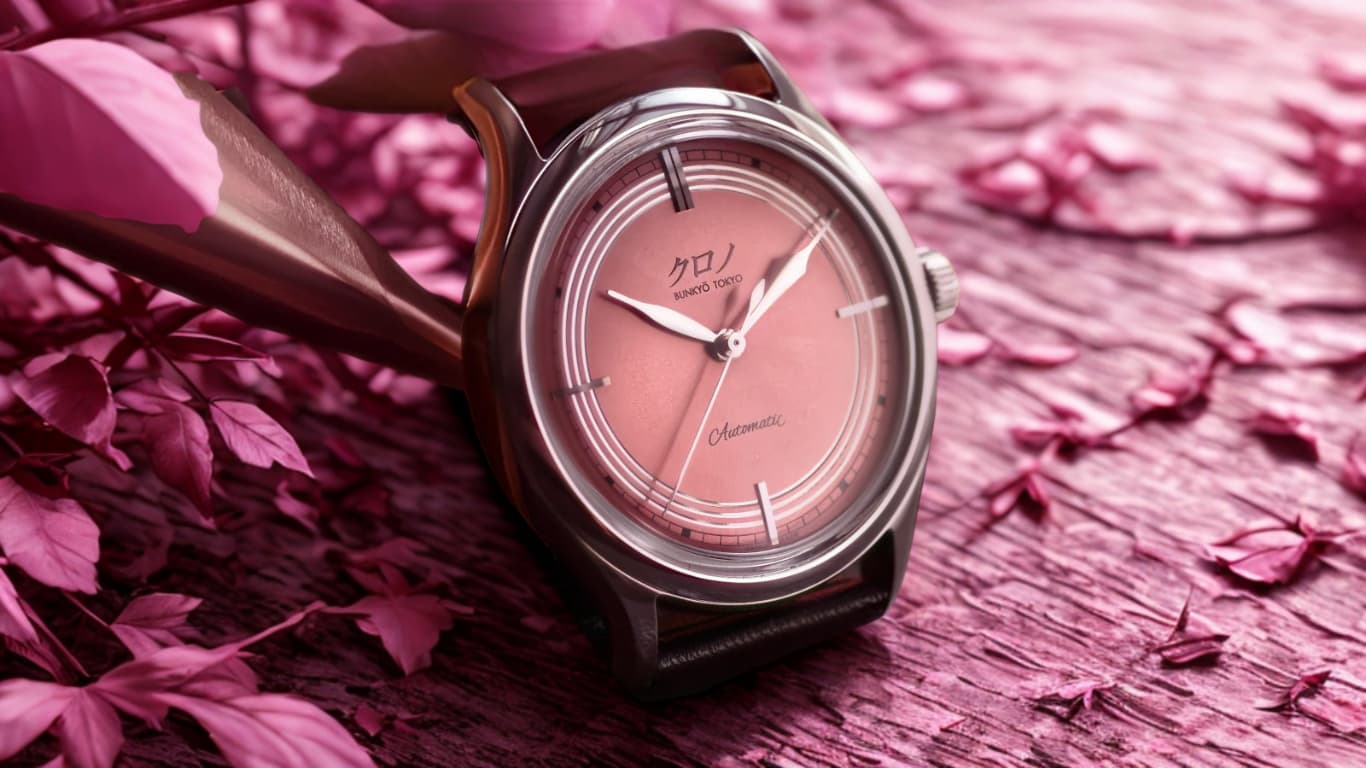
Hajime Asaoka runs a similar scale of production with hand-finished tourbillons and the Project T tourbillon programme. Masahiro Kikuno operates at a near-individual scale with the Tempo Diferencial and his other hand-built pieces. Kurono Tokyo, Asaoka's accessible-tier brand, has built a reputation around tight production and disciplined design that punches well above its retail position.
The independents share structural conditions that the major brands cannot replicate. Production scale measured in dozens of pieces a year creates genuine scarcity. The maker stories carry verifiable craft credentials at a level no marketing department can manufacture.
The secondary-market behaviour reflects collector conviction in the same pattern the European independents established a decade earlier.
Why serious collectors can no longer ignore the rotation
The auction-room evidence is now the working baseline. Phillips' Hong Kong and Geneva sessions have featured Naoya Hida, Hajime Asaoka and Grand Seiko's most considered references with credible regularity across the past three years. Christie's and Sotheby's have followed the same pattern.
The Japanese category is no longer carried by specialist Tokyo sessions alone.
The trade infrastructure has caught up. Specialist dealers in New York, London, Geneva and Singapore now stock the Japanese independents alongside the European peers, and the wait-list economics on Naoya Hida and Hajime Asaoka pieces now operate on terms similar to the upper end of European independent collecting.
Where the value sits today
The accessible end of credible Japanese watchmaking, the Grand Seiko Snowflake at primary-market retail or clean secondary-market examples, is genuinely strong on a finishing-quality-per-dollar basis against any Swiss peer at similar pricing. The independents sit at the upper end, with Naoya Hida and Hajime Asaoka pieces operating in the $20,000-to-$80,000 retail range and the secondary market reflecting collector conviction.
The midrange catalogue, the higher-end Grand Seiko complications, Credor, and the smaller Tokyo independents, sits in the zone where collecting depth is now most evident. The collectors who have built positions in this band across the past four years have done so with the kind of structural conviction the European independent category attracted a decade earlier.
What we'll watch next on Japanese watchmaking
Two questions sit on the table. First, whether Grand Seiko maintains the production discipline that has, so far, kept the brand's collector position credible. The signs are stable, but the temptation to expand allocation at the most-coveted references is the same one most of the major brands have faced.
Second, whether the Tokyo independent scene continues to produce makers with the structural conditions the existing names have established. Naoya Hida, Hajime Asaoka and the considered makers around them sit at the centre of a category that, on present trajectory, will continue to draw international collector attention across the next decade. The rotation toward Japan is the structural shift of the modern era, and serious collectors are now operating with that reading as baseline.
We last reviewed this analysis in May 2026.


Stefanos Moschopoulos
Stefanos Moschopoulos founded The Luxury Playbook in Athens and has spent the better part of a decade following the auction calendar, the en primeur releases, and the watchmakers, gallerists, and shipyards the magazine covers. He writes the field guides and listicles that anchor the Connoisseur section — pieces built on Phillips and Christie's results, Liv-ex movements, and conversations with collectors he has met across Geneva, Bordeaux, Basel, and Monaco. His own collecting habits sit closer to watches and wine than art, and it shows in the level of detail in the magazine's coverage of those categories. Under his direction, The Luxury Playbook now publishes long-form field guides, market-defining year-end listicles, and the Voices interview series with the founders behind the houses and the brands.