The London property market in 2026 reads like the city itself: uneven, regulation-heavy and structurally underpinned by international demand that has not gone away. The headline average residential price in Greater London sits near GBP 546,000, with prime central postcodes (Mayfair, Knightsbridge, Belgravia, Kensington, Chelsea) trading well above GBP 1. 5 million on average.
Mayfair trophy stock now sits around GBP 30,000 to GBP 40,000 per square metre according to Savills's World Cities Prime tracker.
Mansion Global has covered the recent off-market trades on Cheyne Walk, the slow tightening in Eaton Square and the renewed activity in St John's Wood. Knight Frank's London prime quarterly and Savills's residential research both describe the same picture: selective demand, scarce inventory, and a meaningful inflow of capital from the Gulf, North America and East Asia.
We track London prime as the deepest international real-estate conversation in Europe.
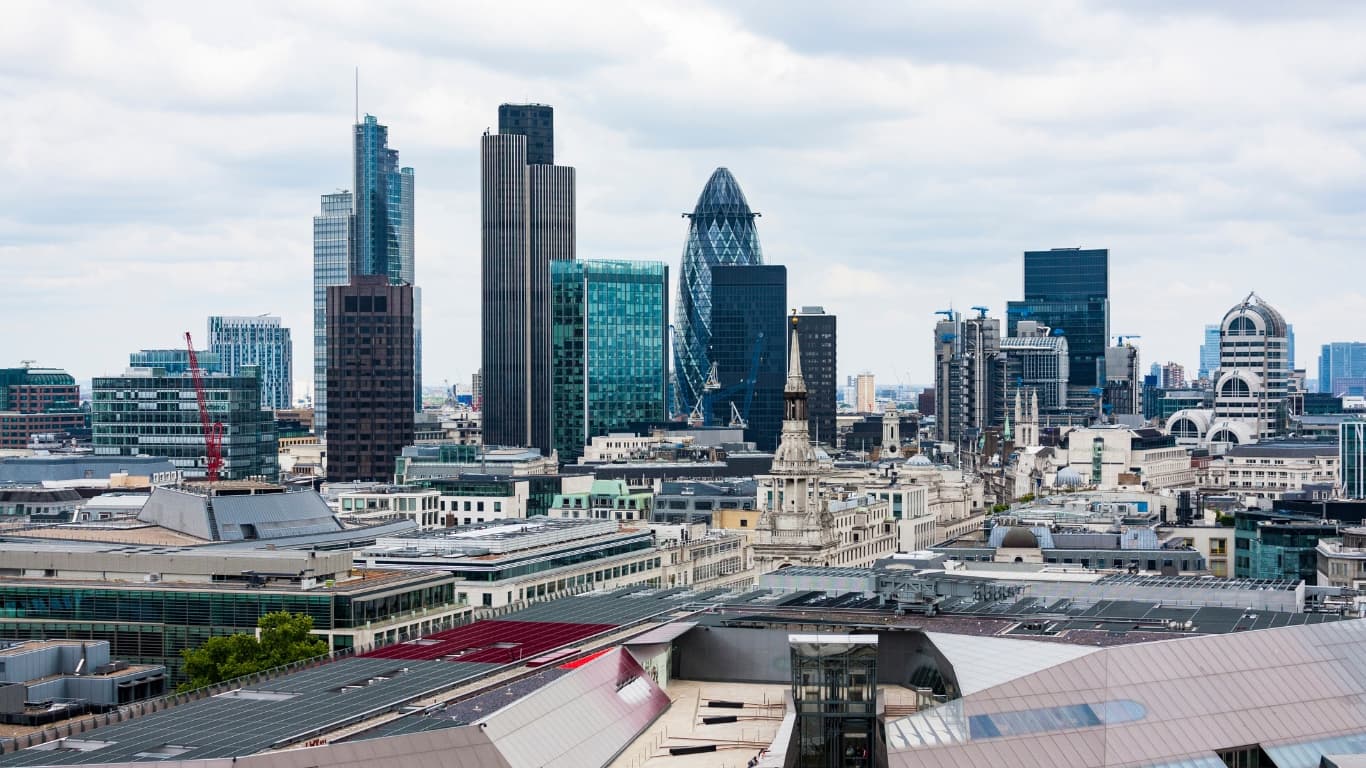
The architectural depth (Georgian terraces of Belgravia and Bloomsbury, Victorian stucco of Notting Hill, Edwardian mansion blocks of Marylebone, Lutyens villas of Hampstead, Foster + Partners' 30 St Mary Axe, the Renzo Piano-designed Shard, the Squire & Partners Battersea redevelopment around the Giles Gilbert Scott power station) is the structural reason its prime market keeps rebalancing rather than collapsing.
- London remains the deepest international prime residential market in Europe, with Mayfair, Belgravia, Kensington, Chelsea and Notting Hill anchoring the upper end of the capital.
- We see Knight Frank Prime London and Savills data showing continued bifurcation, with super-prime stock above five million pounds outperforming the broader market across recent quarters.
- HM Land Registry transaction volumes remain subdued by historical standards, although prime central London is showing tentative recovery signals as currency and rate conditions normalise.
- Non-resident SDLT surcharge and the recent non-dom regime changes continue to shape international buyer composition, with American and Middle Eastern flows partially replacing departing European principals.
- Halifax HPI and Nationwide HPI show outer London tracking the broader UK trend, with the regional gap from prime central London now wider than at any point in the past decade.
- For most considered London buyers we view prime central as offering the better risk-adjusted entry through 2026, with the discount to historical peaks supporting the longer-hold case.
- Who is this for?
- International and UK-resident buyers evaluating London prime property, alongside the advisers, brokers and family office staff framing those acquisitions.
- What is happening?
- A market read of London property in 2026, covering prime central neighbourhoods, super-prime resilience, SDLT framework changes and the broader London versus outer dynamic.
- When did this emerge?
- The article reflects 2026 market conditions through HM Land Registry, Halifax HPI, Nationwide HPI, Knight Frank Prime London and Savills data alongside our own observations.
- Where is this happening?
- The piece focuses on London, including Mayfair, Belgravia, Kensington, Chelsea and Notting Hill, with reference to outer London and the broader UK market context.
- Why does it matter?
- London prime pricing has reset materially against historical peaks, which is why understanding the current entry-point dynamics matters for any buyer tracking European luxury property.
The London market today
The Greater London market in 2026 has stabilised after a period of cooling through 2023 and 2024. Inventory remains tight in Zones 1 and 2, a structural feature of the city where planning bureaucracy, conservation areas and limited buildable land restrict new delivery.
Recovery has been most visible in prime central locations, where international buyers and constrained supply have maintained pricing floors. The Bank of England's gradual easing through 2025 has begun to support transactional activity. Mortgage approvals are recovering.
Christie's International Real Estate, Sotheby's International Realty and Beauchamp Estates each describe a prime market re-engaging through 2026, with the off-market segment particularly active. Sterling weakness against the dollar and the euro has continued to support the international buyer thesis.
- Average Greater London price around GBP 546,000
- Annual price movement around +1.0 percent (stabilised after prior declines)
- Prime central boroughs above GBP 1.2 million (Chelsea, Westminster, Kensington)
- Outer borough averages GBP 350,000 to GBP 450,000 (Barking, Croydon, Enfield)
- Stamp duty surcharges apply to non-UK-resident buyers and second homes
Neighbourhoods defining London in 2026
Kensington and Chelsea
Kensington and Chelsea sit at the top of London's prime market. Heritage architecture, embassy concentration and the V&A and Saatchi cultural anchors define the borough. International buyers have been the consistent force, particularly Gulf-based families who treat the borough as a winter base.
Average prices exceed GBP 1.5 million, or roughly GBP 13,000 per square metre. Knight Frank tracks the borough as one of the most reliably internationally bid in any European prime market.
Mayfair, Belgravia, Knightsbridge
The classical prime triangle. Mayfair's Georgian and Edwardian townhouses, the Belgravia stucco terraces and the Knightsbridge mansion-block stock continue to anchor the city's deepest prime activity. Beauchamp Estates has reported sustained off-market trade, particularly above GBP 20 million.
The GBP 100 million-plus segment remains thin but active. Trophy pricing sits around GBP 30,000 to GBP 40,000 per square metre.
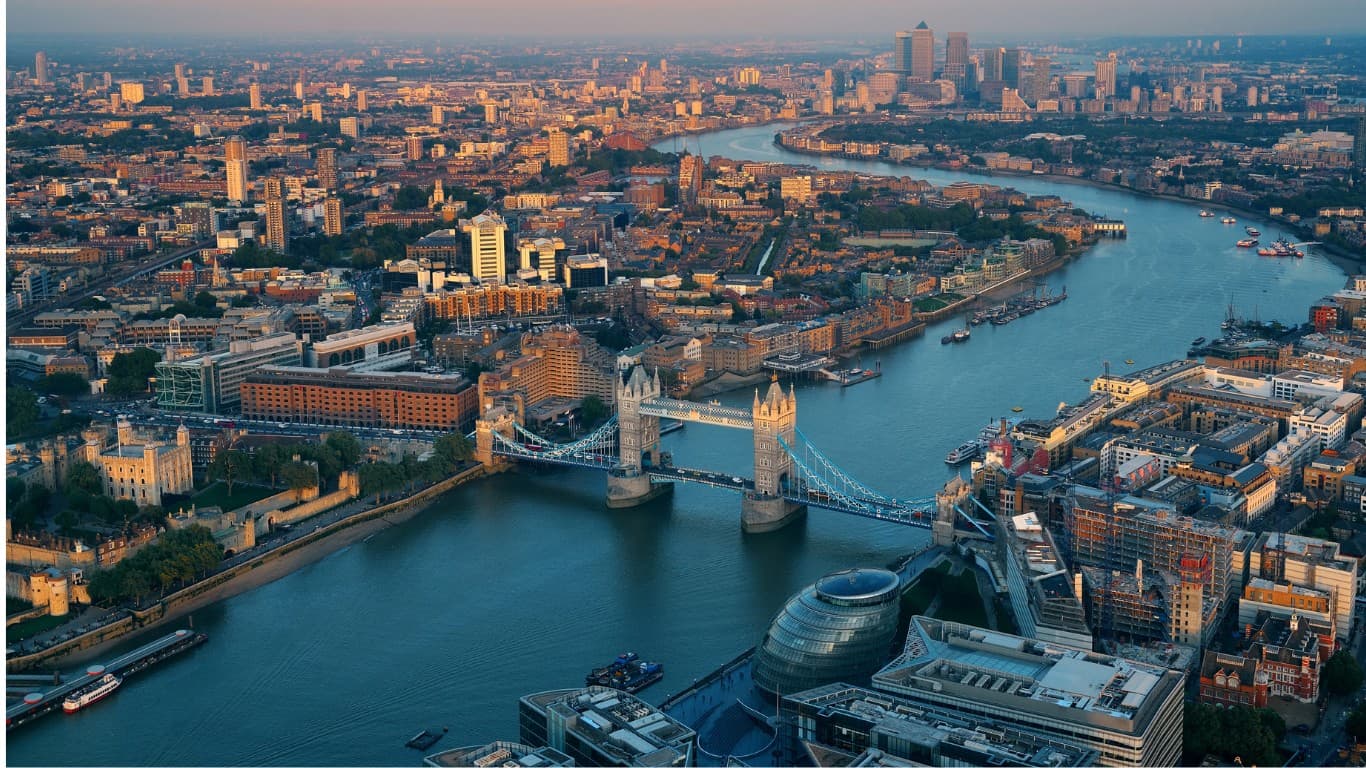
Canary Wharf
Once a single-purpose financial district, Canary Wharf has been diversifying steadily. Build-to-Rent activity has reshaped its residential composition, and proximity to the Crossrail Elizabeth Line has improved transit connectivity. Prices average GBP 620,000, or about GBP 7,000 per square metre, with strong leasing demand.
Battersea and Nine Elms
The riverside regeneration corridor has produced one of the largest contemporary residential developments in central Europe. Average prices fall between GBP 850,000 and GBP 1 million, or GBP 9,000 to GBP 10,500 per square metre. The Northern Line extension and the Battersea Power Station redevelopment by Wilkinson Eyre have transformed the area.
Walthamstow
East London's quietly compelling neighbourhood. Properties price around GBP 480,000, or GBP 5,000 per square metre. The buyer profile is younger professional and creative.
Barking and Dagenham
One of the most affordable London boroughs, supported by city-led regeneration. Typical pricing sits at GBP 375,000, or GBP 4,000 per square metre. Demand spillover from renters priced out of central areas keeps rental absorption strong.
The London rental landscape
The rental market in 2026 is outperforming the sales segment. Average monthly rents across London have reached GBP 2,234, up roughly 11 percent year on year, driven by undersupply, professional relocation and returning student demand.
One-bedroom apartments rent between GBP 1,700 and GBP 2,200, two-bedrooms between GBP 2,200 and GBP 2,900, three-bedrooms between GBP 2,900 and GBP 3,800. Luxury Zone 1 and 2 units exceed GBP 4,500.
The regulatory environment has tightened. The UK government's Renters Reform agenda has reshaped tenancy rules. Right-to-rent checks, deposit protection and EPC minimum-rating requirements all apply.
Short-term lets remain legal under the 90-day limit rule for entire properties, but enforcement in central boroughs has tightened.
How London compares with European prime markets
London prime at GBP 30,000 to GBP 40,000 per square metre sits below Monaco (Savills's World Cities Prime tracker puts Monaco near EUR 55,000 per square metre). Mayfair is roughly comparable to Manchester prime multiplied by six and Liverpool prime multiplied by eight on a per-square-metre basis.
Dubai Marina prime trades near AED 22,000 per square metre (around GBP 4,800), well below London prime. Manhattan prime sits at USD 16,000 to USD 20,000 per square metre, broadly comparable to Knightsbridge.
The Greek Golden Visa programme (EUR 250,000 in qualifying regions, EUR 800,000 in central Athens, Thessaloniki, Mykonos and Santorini from August 2024) and the Cyprus PR pathway sit in different categories. London prime is now a primary-residence and architectural-inheritance play, with the visa Tier-1 Investor route having closed in February 2022.
What we expect through year-end 2026
Property prices across London are projected to rise 2. 5 to 4. 0 percent through 2026.
The strongest movement is expected in outer boroughs (Croydon, Barking and Dagenham, Southall) where affordability gaps and infrastructure upgrades continue to draw first-time buyers.
Prime Central London (Kensington, Westminster, Mayfair) is projected to see slower growth between 1. 5 and 2. 5 percent, with deep international demand sustaining pricing floors.
Citywide average prices are expected to reach GBP 565,000 to GBP 575,000 by year-end.
Knight Frank's London property outlook has flagged renewed appetite from Middle Eastern and Asian buyers as a key 2026 demand driver. Sterling weakness has enhanced foreign-buyer purchasing power, particularly from USD and EUR-denominated buyers.
What this means for buyers
London rewards the buyer drawn to one of the most architecturally layered cities in the world, the most diversified employment economy in Europe and the long-track-record of pricing resilience that defines London's prime postcodes. The neighbourhoods responding most distinctly to the design-led buyer shift (Mayfair's restored townhouses, the Notting Hill stucco, Marylebone, the Battersea regeneration) are quietly outperforming the citywide averages.
Stamp duty surcharges for non-UK-resident buyers and second homes are a meaningful structural cost, but the architectural depth and rental absorption remain the durable assets. London prime continues to read as one of the structurally important property markets in the world.
We last reviewed this analysis in May 2026.
Frequently asked
What is the average property price in London in 2026?
Around GBP 546,000 across Greater London, with prime central zones exceeding GBP 1.2 million and Mayfair trophy stock around GBP 30,000 to GBP 40,000 per square metre.
Can international buyers purchase property in London?
Yes. There are no restrictions on foreign ownership in the UK, though stamp duty surcharges apply to non-UK-resident purchasers and second homes.
Are short-term rentals permitted?
Yes, with the 90-day limit on entire-property short lets. Enforcement in central boroughs has tightened.
Which areas are seeing the most buyer attention?
Prime central (Mayfair, Knightsbridge, Belgravia, Kensington, Chelsea) for international demand. Outer regeneration corridors (Barking, Croydon, Walthamstow, Southall) for value-tier activity.
What's the EPC standard for rentals?
EPC minimum-rating requirements apply to rented properties under the UK government's Renters Reform agenda. Landlords need to verify compliance before letting. Detailed expat-buyer guidance covers the wider regulatory framework.


Savvas Agathangelou
Savvas Agathangelou co-founded The Luxury Playbook and has spent years reporting from the prime postcodes the magazine covers — Mayfair, Knightsbridge, the Athens Riviera, Dubai's Palm crescents, and the southern Mediterranean coastlines where the world's wealthy keep coming back. His background is in international hospitality, and that frame shapes how he writes about property: the developer's choices, the architect's signature, the agency's bench of named brokers, the building's service standard once the buyer moves in. He files developer spotlights, agency profiles, and the seasonal "Properties That Defined" listicles, and he hosts the magazine's founder-and-leadership interviews on the Voices side.