Major wine brands are pulling back from China as the post-2022 market slowdown deepens, and the data behind the retreat is unambiguous. Total Chinese wine imports across 2023 and 2024 fell to their lowest combined level since 2012, with the French negociant network reporting that direct shipments to mainland China declined by more than 40% across the two-year period from the 2022 peak.
- Major wine brands are pulling back from China as the post-2022 market slowdown deepens, and the data behind the retreat is unambiguous.
- Total Chinese wine imports across 2023 and 2024 fell to their lowest combined level since 2012, with the French negociant network reporting direct shipments down over 40 percent across the two-year period.
- Pernod Ricard, LVMH (Moet Hennessy), Treasury Wine Estates, and the Bordeaux Place de Bordeaux negociant network have all publicly acknowledged the shift in 2024 and 2025 annual reports.
- What is happening is not a temporary correction but a structural reset in how the world's second-largest fine-wine consumer market engages with imported wine.
- The post-2018 anti-corruption clampdown and the post-2022 economic slowdown have compounded the structural pressure on import demand.
- For serious cellars the China pull-back signals a meaningful shift in the global fine-wine demand architecture, with downstream effects across allocation and pricing.
- Who is this for?
- Active collectors reading the contemporary global fine-wine demand picture, and cellar builders evaluating the structural China demand implications.
- What is happening?
- We read what the China pull-back means for the wider fine-wine market in 2026, with the import data, named-brand acknowledgements, and structural demand picture as live context.
- When did this emerge?
- The piece reads the post-2022 China market slowdown through the contemporary 2026 trajectory, with the 2024 and 2025 corporate annual reports as live reference.
- Where is this happening?
- Mainland China primarily, with the French negociant network and the major international wine groups (Pernod Ricard, LVMH, Treasury Wine Estates) as the structural global context.
- Why does it matter?
- The China pull-back represents a structural reset in global fine-wine demand, and understanding what it tells us about the wider market matters for serious cellar architecture.
What is happening is not a temporary correction. It is a structural reset in how the world's second-largest fine-wine consumer market engages with imported wine. Pernod Ricard, LVMH (Moët Hennessy), Treasury Wine Estates, and the Bordeaux Place de Bordeaux negociant network have all publicly acknowledged the shift in 2024 and 2025 annual reports.
This is our editorial read on what the China pull-back means and what it tells us about the wider fine-wine market in 2026.
The data behind China's wine slowdown

The headline figure is the import volume. China's total wine imports across 2024 fell to roughly 246 million litres, compared with the 2017 peak of 745 million litres and the 2019 figure of 612 million litres. The 2024 number is the lowest annual import volume in twelve years.
French wine has carried the steepest decline. Direct shipments from Bordeaux negociants to mainland Chinese importers fell more than 40% from the 2022 baseline across 2023 and 2024. Australian wine, after the 2021-2024 anti-dumping tariffs, fell more than 90% before partial recovery began in 2024 after the tariff removal.
Even Chilean wine, which had carried the volume tier in mainland China through the 2010s, has seen meaningful contraction.
The pricing tier matters. The high-end wine category (Bordeaux First Growth, named Burgundy, Champagne) has contracted less in unit volume terms than the volume tier, but the secondary-market clearing data shows that Asian buyer participation in serious auction lots has structurally declined since 2022.
Why the structural shift is happening
Three forces are working in parallel. First, the macro environment. The Chinese real-estate slowdown, the broader consumer-confidence reset, and the muted high-end gifting culture (which has shifted across the past decade away from imported wine and toward domestic baijiu and curated experience-based gifts) have all compressed top-tier wine demand.
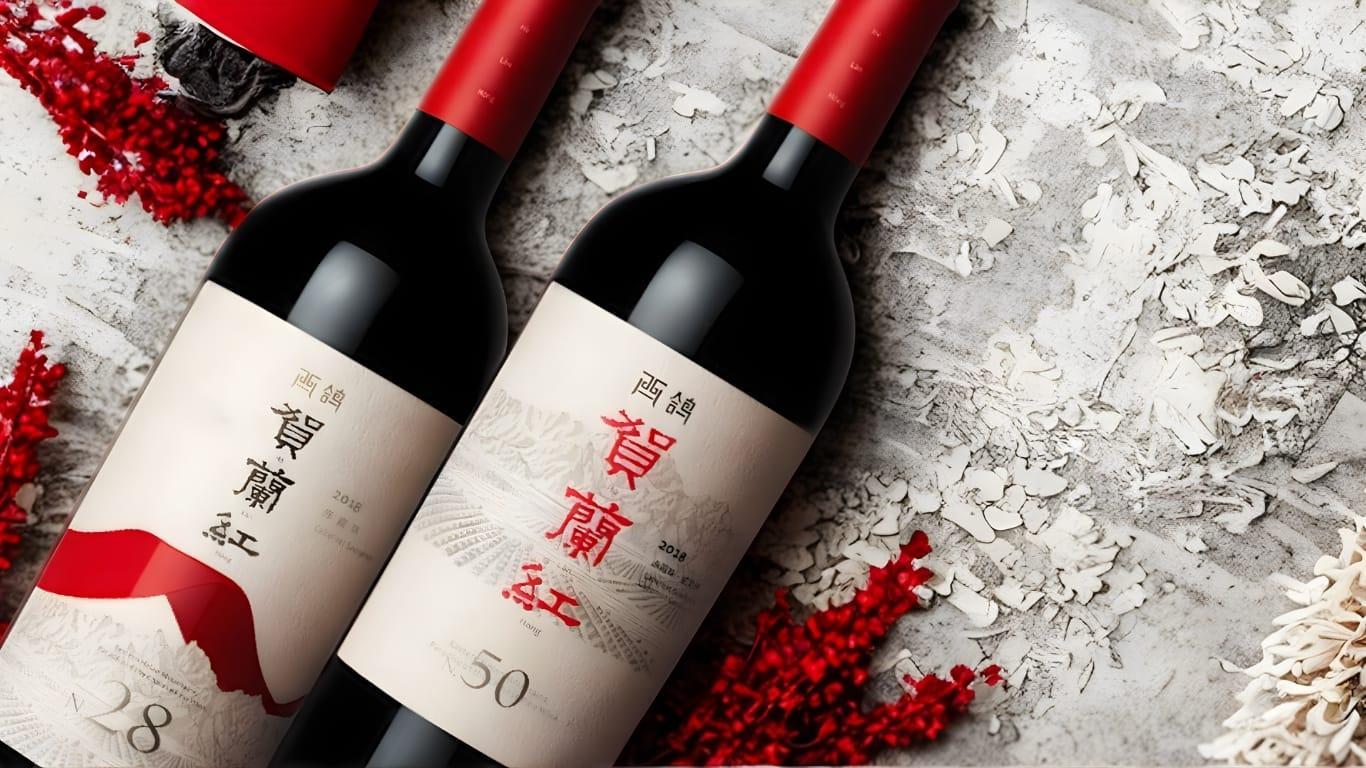
Second, the long structural rise of Chinese domestic wine. Ningxia, Yunnan, and Shandong now produce serious-quality wine at scale. Producers like Ao Yun (LVMH's Yunnan project), Silver Heights, and Tiansai Vineyards have built credible domestic recognition.
Mainland consumers who would, fifteen years ago, have bought Bordeaux as the prestige choice are increasingly choosing serious Chinese domestic wine in the same role.
Third, the channel reset. The Hong Kong fine-wine market, which had functioned as the structural entry channel for mainland Chinese collectors into international fine wine, has compressed across the past five years as cross-border movement has tightened. Sotheby's Hong Kong and Christie's Hong Kong both retain wine sales programs, but the volume reaching mainland buyers has structurally declined.
The wider context of how serious collectors are diversifying their attention away from Asian volume markets is something we have covered: Wine as an investment category looks different in 2026 than it did five years ago, with the Asia demand assumption no longer the structural anchor.
How the major brands are responding
The major international wine brands have moved on the data. Pernod Ricard's 2024 annual report flagged China as "structurally challenging" and signaled meaningful reductions in marketing spend and distribution-network investment in the mainland market. LVMH's Moët Hennessy segment reported similar pressures, with reduced Chinese demand affecting both the Champagne portfolio (Moët & Chandon, Dom Pérignon, Krug, Veuve Clicquot) and the wider cognac category.
Treasury Wine Estates (owner of Penfolds) had previously built mainland China into one of its strategic growth markets pre-2021. After the Australian tariff period and the post-2022 slowdown, Treasury has restructured its China go-to-market significantly and is now focusing on the high-end Penfolds tier rather than the volume Australian wine offer.
The Bordeaux Place de Bordeaux negociants have all reduced their China allocation discipline, redirecting their books toward Northeast Asia (Japan, South Korea, Taiwan, Singapore) and toward European and US merchant demand. The structural impact on the en primeur system is part of why the 2024 campaign saw the leading châteaux release at meaningful discount to the prior vintage.
What this means for fine-wine market dynamics
The China pull-back has structural implications across multiple parts of the fine-wine market. Liv-ex's Fine Wine 1000 index has spent the better part of two years recovering from the late-2022 China-led correction. The wider Liv-ex 100 and Bordeaux 500 indices both reflect the structural reset in Asia demand.
Where serious cellar attention has rotated is interesting. Italian fine wine has carried meaningful share gains across the period, with serious collectors deploying into Sassicaia, Masseto, Solaia, Tignanello, and the wider Super Tuscan tier. Our note on whether fine wine investment is finding new footing in Europe sets out that story in detail.
Italian, German Riesling at the apex (Egon Müller, J.J. Prüm), and grower-Champagne single-vintage work have each drawn meaningful collector attention away from the China-led Bordeaux narrative.
The broader question of how serious cellar builders frame their global allocation in this environment is one we have touched on in our note on how elite investors protect capital, which sets the wider asset-allocation context for diversifying beyond regions with concentrated demand.
Where the market is finding new footing
The structural pull-back from China has accelerated the broader market rotation toward European and Northeast Asian collector demand. Tokyo, Seoul, Singapore, and Taipei have all carried increased serious-wine auction volume across 2024 and 2025. Sotheby's Hong Kong and Christie's Hong Kong remain operationally active but with reshaped buyer participation.
The European secondary market has, in our editorial read, been the largest structural beneficiary. Bordeaux Index, Berry Bros & Rudd, Justerini & Brooks, and the wider London fine-wine merchant network have all reported broadening US, UK, and continental European collector demand across the past 18 months. Where fine wine still makes structural sense as a category for serious cellars is a question we have covered in our note on where fine wine investment still makes sense, and the European demand story is the answer that has most consistently held.
The Northeast Asian market has been more selective. Tokyo collectors in particular have built deeper Burgundy positions across the past two years, with Sotheby's Tokyo and the Japanese fine-wine merchant network (notably Wine Cellar Co. and the Tokyo branch of Sotheby's Wine) reporting meaningful buyer growth.
What this means for collectors
The straightforward read: the China demand story should no longer be the structural anchor for any serious cellar-building thesis on Bordeaux or Burgundy. The Asia-driven price pressure that defined the 2010s and early 2020s is no longer the dominant force.
What is replacing it is a more diversified, more European-weighted, and more selective international demand pattern. Collectors building positions in 2026 should be reading the secondary-market data from Liv-ex, Wine-Searcher, and the major auction houses with attention to where genuine buying is concentrated, rather than assuming that the 2018-2021 Asia frame still holds.
The categories that have held up structurally are the ones with the deepest European collector base: Burgundy Grand Cru, named single-vintage Champagne, Italian fine wine, and grower-Champagne. The categories that have decompressed are the ones that had built the most concentrated mainland-China exposure: Bordeaux Cru Bourgeois and second-tier Cru Classé, Australian premium Shiraz, and parts of the Cult California tier.
What we will watch next
Two structural signals. First, whether Chinese wine import volumes stabilize in 2026 at the 2024 level or continue to decline. The trade-tracking data from China Customs and the OIV will tell that story by mid-2026.
Second, whether mainland Chinese collector participation in Sotheby's, Christie's, and Acker fine-wine sales returns to pre-2022 patterns or remains structurally lower.
Either signal would tell us whether the China reset is the new equilibrium or whether the market is mid-cycle.
We last reviewed this analysis in May 2026.