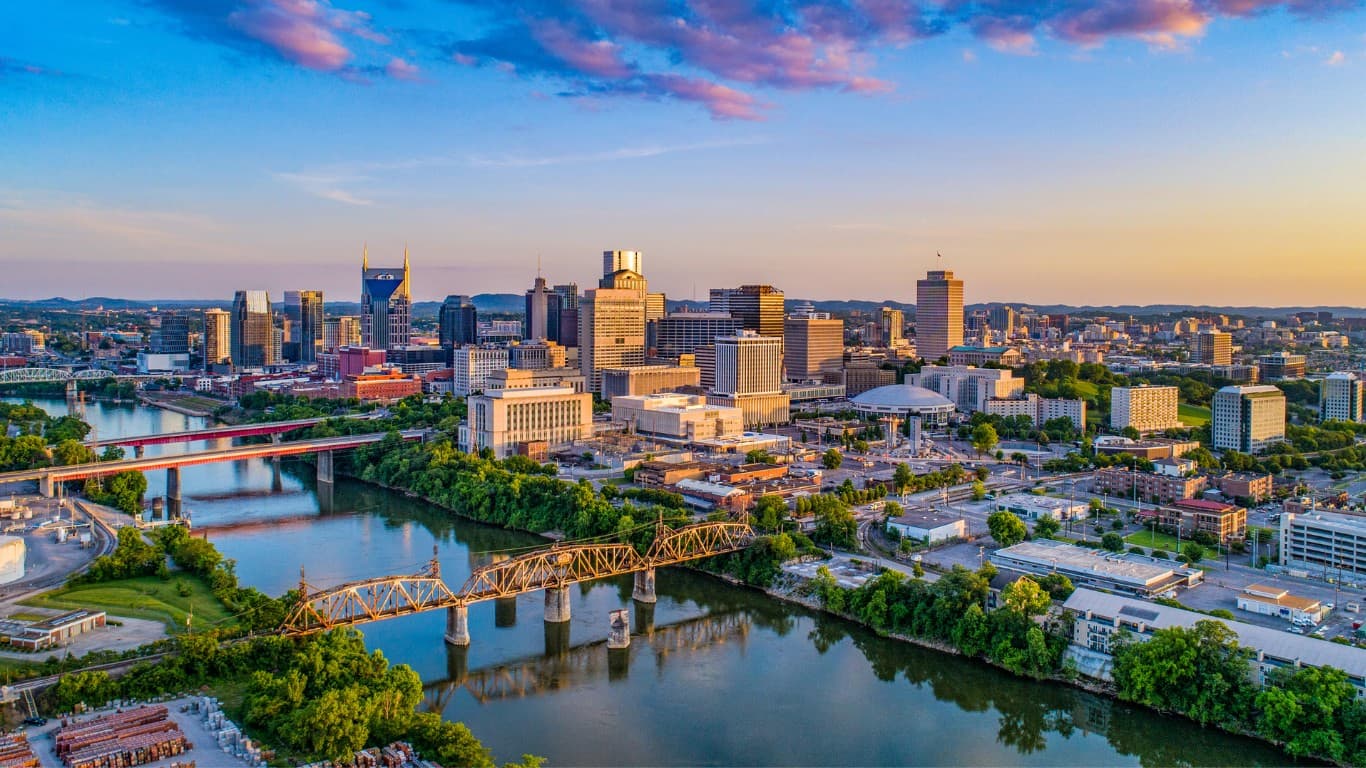
As of Q1 2026, the Nashville real estate market keeps pulling in local buyers and out-of-state investors alike, powered by the city’s economic momentum, steady population growth, and relative affordability when you stack it up against coastal markets. After a period of rapid price increases and razor-thin inventory in 2022 and 2023, the market has gradually found its footing in a more balanced state.

That said, competition stays fierce in the most desirable neighborhoods, and limited housing stock still pushes prices upward. Don’t mistake balance for a buyer’s free pass.

The city’s real estate market is anchored by a strong job market led by healthcare, technology, and entertainment. Nashville’s growing reputation as both a cultural and professional hub draws a steady stream of newcomers, many of whom enter the rental market first before making the move into homeownership. That pipeline keeps demand consistently warm.

Elevated interest rates are a reality, but many buyers have simply adjusted to the new normal and pressed on with their property searches. Investors, meanwhile, are playing the long game, backed by Nashville’s steadily rising rental rates, strong tenant demand, and an expanding metro footprint that shows no signs of slowing down.

In 2026, the Nashville real estate market offers a compelling case for both owner-occupiers and rental investors who want exposure to one of the Southeast’s most dynamic cities. The fundamentals are hard to argue with.

Overview of The Nashville Real Estate Market

As of Q1 2026, Nashville’s real estate market is showing real signs of stabilization after a volatile stretch driven by climbing mortgage rates and rapid appreciation. Price growth has moderated, yes, but market activity stays healthy thanks to solid employment fundamentals, a steady flow of in-migration from higher-cost states, and persistent inventory shortages in entry-level and mid-range price segments. If you’re watching this market, the supply story is the one to focus on.

The median listing price in Nashville currently sits at $510,000, reflecting a 3.8% year-over-year increase that speaks to durable underlying demand.

The median sold price comes in at roughly $492,000, meaning homes are generally selling close to asking price. That narrow spread tells you something important: buyer competition is real, and the environment still tilts toward sellers, especially in central and well-connected neighborhoods where everyone wants to be.

Inventory conditions stay tight, with 3,176 active listings and only 1,107 new listings added to the market by the end of Q1 2026. Homes are moving fast, averaging just 38 days on the market, which is a quicker turnover than you’d see in many similarly sized cities across the country.

On top of that, 34.6% of homes are selling above listing price, a clear signal of competitive bidding in high-demand pockets like East Nashville, Sylvan Park, and The Nations. These neighborhoods pull strongly toward young professionals and remote workers, and that concentration of demand creates real localized price pressure that you need to factor into any offer strategy.

The metro-wide median price per square foot lands at $308, though that number shifts considerably depending on neighborhood, home size, and school zoning. Premium areas like Green Hills and Belle Meade routinely exceed $450 per square foot, while more accessible markets such as Antioch and Madison offer values in the $220 to $260 per square foot range, giving you a wide spectrum to work with depending on your budget and goals.

The Nashville housing market right now is defined by a few consistent themes worth keeping front of mind.

  • Median home price up 3.8% YoY.
  • Inventory remains tight with moderate new supply.
  • Homes sell in approximately 38 days on average.
  • 35% of homes selling above asking price.
  • Strong demand in emerging and central neighborhoods.

Nashville’s housing market in 2026 is navigating a recalibration phase. Affordability challenges are real, but demand stays resilient, and limited supply keeps pushing prices upward, especially in the strategic, high-demand submarkets where the sharpest investors are already positioned. You can read more about how US real estate laws shape buyer and investor rights before you make your move.

Nashville Real Estate Market 1

Neighborhood Analysis

Nashville’s neighborhoods each run on their own distinct market dynamics, pricing levels, and investment logic. From historic districts to revitalized urban corridors and emerging suburbs, getting a real handle on the city’s submarkets is essential if you’re serious about navigating Nashville’s housing market with confidence.

East Nashville

East Nashville keeps drawing in creative professionals and first-time buyers who want the right blend of character, community, and walkability. It has a gravitational pull that’s hard to replicate.

The median home price sits at roughly $565,000, up 4.5% year-over-year. Demand stays strong, with many homes going under contract within two weeks, especially those near Five Points and Shelby Park. The area’s artsy energy and ongoing redevelopment make it a hotspot for appreciation and long-term rental opportunities worth watching closely.

Green Hills

Green Hills is the address for upscale homes, proximity to top-rated schools, and premium retail that draws a discerning crowd. The median home price currently sits at $1.15 million, up 2.1% year-over-year. Properties here typically feature larger lots and luxury amenities, attracting affluent families and senior executives. Low inventory and consistent appreciation make this one of Nashville’s most reliable long-term holds.

The Nations

The Nations is a fast-growing neighborhood in West Nashville that has become the go-to for new construction, modern townhomes, and a young professional demographic that values lifestyle as much as location.

The median home price runs around $585,000, up 3.9% year-over-year. New mixed-use developments and breweries have meaningfully lifted walkability and overall appeal. With relatively newer housing stock and rapid development momentum, this area delivers strong ROI potential for investors willing to move decisively.

Sylvan Park

Sylvan Park threads the needle between suburban comfort and urban accessibility, sitting just minutes from downtown Nashville with a neighborhood feel that buyers genuinely love.

The median home price is approximately $735,000, up 3.4% year-over-year. Demand stays steady, particularly among families and professionals who want a walkable community without sacrificing convenience. Access to green spaces and a strong restaurant scene add long-term lifestyle and investment value that tends to hold even in softer markets.

Antioch

Antioch stands as one of Nashville’s most affordable and diverse neighborhoods, appealing equally to owner-occupiers looking for value and investors building a rental portfolio.

The median home price comes in around $340,000, a modest 2.2% increase year-over-year. You get more inventory here and lower price-per-square-foot figures, which makes it attractive for entry-level buyers and rental investors focused on cash flow. With improving infrastructure and new development activity picking up, Antioch offers genuine value-based growth potential if you have the patience to play it out.

Nashville Neighborhoods – Median Prices and Price per Sq.Ft

Nashville_Neighborhood_Home_Prices_2025.csv

Nashville Rental Market Overview

Nashville’s rental market stays intensely competitive, fueled by continued population growth, limited home affordability, and elevated mortgage rates that keep a large pool of would-be buyers on the sidelines. As of Q1 2026, rental demand across the metro area is robust, with many renters choosing to lease rather than buy as affordability pressures and limited housing inventory show no sign of easing quickly. If you own rental property here, the conditions are working in your favor.

Average Rent Prices in Nashville

Here’s where average monthly rents currently stand across the city.

  • Studio Apartments: Approximately $1,525/month

  • One-Bedroom Apartments: Around $1,745/month

  • Two-Bedroom Apartments: About $2,215/month

  • Three-Bedroom Apartments: Roughly $2,975/month

These figures reflect an average 2.9% year-over-year increase, pointing to consistent upward momentum in rental rates. High-growth neighborhoods near downtown and major employment hubs are seeing the sharpest escalations, and that gap between central and peripheral rents keeps widening. According to Bloomberg’s housing market coverage, Sun Belt metros like Nashville are among the most resilient rental markets in the country heading into 2026.

Rent by Neighborhood

  • Downtown Nashville: One-bedroom apartments average $2,375/month, driven by demand for luxury units, walkability, and access to nightlife and employment.

  • The Gulch: Two-bedroom rentals typically cost $3,000/month, reflecting the area’s upscale reputation and proximity to entertainment and transit.

  • East Nashville: One-bedrooms rent for about $1,850/month, offering a trendy, arts-centric lifestyle appealing to young professionals.

  • Antioch: A more affordable alternative, one-bedroom apartments rent for approximately $1,450/month, with steady demand among working-class families and budget-conscious tenants.

Vacancy Rates

The citywide vacancy rate currently sits at around 3.4%, down from 3.9% in 2024, confirming that rental conditions have tightened further over the past year. Units in central and high-demand areas are often leased within days, especially those priced competitively or offering modern amenities. If your unit isn’t moving in a week, the pricing is probably off.

Drivers of Rental Demand

Several forces are keeping rental demand elevated across Nashville, and they’re not going away anytime soon.

  • Affordability Gap: With median home prices exceeding $500,000, many residents cannot afford to purchase.

  • High Mortgage Rates: Elevated borrowing costs are delaying transitions from renting to owning.

  • Population Growth: The city continues to see strong in-migration, especially from California, New York, and Illinois.

  • Lifestyle Flexibility: Renters—especially younger workers—favor the flexibility of leasing in urban neighborhoods.

Nashville’s rental market looks set to stay favorable for landlords throughout 2026, with high demand, stable vacancy rates, and rising rent prices across a wide range of neighborhoods. The window for locking in well-priced rental assets is narrowing. You might also want to consider how Nashville’s trajectory stacks up against other high-growth markets by checking out the Lausanne real estate market overview for a sense of how international luxury markets are performing by comparison.

Nashville Real Estate Market

Factors Influencing the Nashville Housing Market

The direction of Nashville’s housing market in 2026 is being shaped by a combination of economic, demographic, and regulatory forces. These drivers are actively influencing housing demand, inventory levels, and price growth across the city, and understanding them gives you a real edge when making buy, hold, or sell decisions.

  1. Population Growth & In-Migration: Nashville remains one of the fastest-growing metro areas in the Southeast. The city’s population has surpassed 715,000, with the greater metro area exceeding 2 million residents. Much of this growth is driven by domestic migration, particularly from higher-cost states such as California, Illinois, and New York. This influx supports both owner-occupied and rental demand, especially in central and well-connected neighborhoods.

  2. Strong Job Market: The Nashville metro area continues to post strong employment numbers, with an unemployment rate of 3.1% as of Q1 2025. Key industries—including healthcare, technology, education, and entertainment—remain growth engines. Major employers such as HCA Healthcare, Vanderbilt University Medical Center, Oracle, and Amazon continue expanding operations in the city. This economic strength underpins stable housing demand and supports property values.

  3. Limited Housing Supply: Inventory shortages remain a critical issue across most price points. New construction is ongoing but has not kept pace with demand.. Zoning restrictions and land availability challenges in urban core areas further limit new home development. This constrained supply continues to put upward pressure on prices and rental rates.

  4. Mortgage Rates & Affordability: Higher borrowing costs remain a hurdle for many would-be buyers. As of Q1 of 2025, average 30-year fixed mortgage rates hover around 6.6%, limiting affordability and slowing down purchase activity among first-time buyers. However, seasoned investors and cash buyers continue to pursue acquisitions, particularly in up-and-coming submarkets.

  5. Investor Activity: Institutional and individual investor activity remains strong, particularly in neighborhoods offering value and rental upside. Markets like Antioch, Donelson, and North Nashville have become hotspots for rental property acquisitions. Investor presence is contributing to tighter inventory, particularly in the sub-$400K range, and is influencing rental pricing across the metro.

  6. Urban Redevelopment & Infrastructure Projects: Major urban redevelopment initiatives—such as the River North project and Oracle’s East Bank campus—are reshaping parts of the city and enhancing long-term property value. Infrastructure improvements, including mass transit proposals and greenway expansions, are further boosting the livability and long-term appeal of Nashville’s core districts.

Nashville Housing Market Forecast for 2026

Looking ahead through the rest of 2026, Nashville’s housing market is expected to stay competitive, with moderate price growth and sustained rental demand. Limited housing inventory, steady in-migration, and strong employment fundamentals are likely to keep influencing market behavior well into the year. The core story here hasn’t changed, only the pace.

Elevated mortgage rates will keep a lid on rapid price acceleration. But long-term appreciation is firmly intact, and that’s what patient investors are counting on.

Home prices in Nashville are projected to rise by 2.0% to 3.5% over the next 12 months. With the current median home price around $510,000, that would bring average values to somewhere between $522,860 and $530,255 by early 2027. Not explosive, but steady and bankable.

This growth is primarily being driven by restricted housing supply and continued buyer interest in urban and transitional neighborhoods. Markets like East Nashville, Wedgewood-Houston, and The Nations are expected to outperform the citywide average, powered by strong investor activity and the kind of lifestyle-driven demand that doesn’t slow down easily. According to Forbes real estate analysis, Nashville ranks among the top Sun Belt cities for sustained price appreciation through the mid-2020s.

Inventory in Nashville stays tight, with roughly 1.9 months of available housing supply as of Q1 2026. Most new construction is concentrated in suburban areas and higher-priced custom homes, leaving a clear gap in affordable and mid-tier housing that isn’t getting filled anytime soon.

So competition for move-in-ready properties is expected to stay strong, especially within the city limits and in high-demand school districts. Homes are currently selling in an average of 35 days, and that timeline isn’t going to lengthen without a meaningful surge in available supply that simply isn’t on the horizon.

The rental market is also projected to grow throughout 2026. Ongoing affordability challenges and high borrowing costs are keeping more potential buyers in the rental pool longer than they’d like, which is good news if you’re a landlord.

Rent prices are forecast to climb by 2.5% to 3.5%, supported by sustained demand. Here’s where current average rents stand across the city.

  • One-bedroom units: $1,745/month
  • Two-bedroom units: $2,215/month
  • Three-bedroom units: $2,950/month

By early 2027, those averages could push to $1,788 to $1,806 for one-bedroom units and $2,270 to $2,293 for two-bedroom units. Investors buying now are getting in before those numbers become the new floor.

The strongest rent growth is expected in The Gulch, Midtown, and Germantown, three neighborhoods where lifestyle amenities and proximity to major employers create a demand floor that’s hard to crack.

Vacancy rates across Nashville are expected to stay low, averaging around 3.1% citywide. A limited number of new multifamily units are set to be delivered in 2026, mostly in the luxury segment, which does virtually nothing to ease pressure in mid-range rental markets. Low vacancy gives landlords real pricing power, especially in areas with high walkability, proximity to major employers, and access to transit infrastructure. The Financial Times coverage of US rental demand trends puts cities like Nashville in a structurally advantaged position compared to oversupplied markets.

Nashville’s economy stays robust heading into the second half of 2026. The key drivers are worth understanding before you commit capital to this market.

  • A strong healthcare and technology sector, with major employers such as HCA Healthcare and Amazon expanding their local footprint

  • Ongoing corporate relocations and HQ expansions

  • Positive net migration, especially among young professionals and remote workers drawn to the city’s cultural vibrancy and quality of life

Nashville Real Estate Market

Is It Worth Buying a Property in Nashville?

Yes. Buying property in Nashville right now makes a compelling case for buyers and investors with a long-term mindset. Despite elevated borrowing costs and tight inventory, the Nashville housing market keeps delivering consistent appreciation, stable rental income, and strong fundamentals backed by job growth and population inflow that shows no sign of reversing. If you understand how US real estate laws protect your investment, you’re already better positioned than most buyers entering this market.

Median home prices in Nashville are projected to rise by 2.0% to 3.5% in 2026, driven by sustained demand, limited supply, and a healthy local economy. High-potential neighborhoods like East Nashville, The Nations, and Wedgewood-Houston are poised to outperform the citywide average, thanks to their mix of relative affordability, location advantages, and cultural appeal that keeps attracting exactly the kind of residents who support long-term price growth.

Rental demand adds another layer of investment logic here. With vacancy rates around 3.1% and rents climbing steadily, landlords benefit from reliable income streams and low turnover risk. One-bedroom units in central neighborhoods lease for $1,745 or more per month, while two-bedroom units can clear $2,200 per month, offering solid gross yields for long-term investors who want cash flow alongside appreciation.

Elevated purchase costs and interest rates are a real consideration, but delaying entry could mean facing higher prices and sharper competition as rates eventually ease. For buyers who move in 2026, there may be a window to lock in property before appreciation picks up pace again, then refinance when conditions improve. Timing the perfect moment is a trap. Buying smart in a strong market is a strategy.

In short, Nashville gives you a balance of long-term growth potential, income generation, and relative affordability that you simply can’t find in larger metropolitan markets without paying a significant premium for the privilege. For more context on how to evaluate trophy real estate across competitive markets, see our breakdown of why billionaires gravitate toward trophy properties and what makes a market worth entering.

For buyers and investors working with a five to ten year time horizon, Nashville’s combination of rising rental income, stable appreciation, and expanding economic drivers makes it a strategically sound real estate investment. The city is still in a growth chapter, and the smart money is already positioned. According to Reuters reporting on the 2026 US housing outlook, mid-sized metros with diverse employment bases and population growth are expected to outperform the national average over the next several years, and Nashville checks every one of those boxes.

Other Market Forecasts and Overviews


FAQ

Is Nashville a good city for rental property investment?

Absolutely. Nashville offers low vacancy rates (around 3.1%), rising rents, and a steady influx of renters, making it attractive for both short- and long-term rental investments.


What are the most promising neighborhoods for investment?

East Nashville, The Nations, and Wedgewood-Houston offer strong appreciation potential due to ongoing development, lifestyle appeal, and strategic locations.


Is Nashville still affordable compared to other large U.S. cities?

Yes. Despite rising prices, Nashville remains more affordable than cities like Austin, Denver, or Los Angeles, offering higher ROI potential for buyers and investors.

Japanese Giants Spend Billions To Take Over The US Homebuilding Industry
Japanese Giants Spend Billions To Take Over The US Homebuilding IndustrySpotlight

Japanese Giants Spend Billions To Take Over The US Homebuilding Industry

America built roughly 1.4 million new homes in 2023, yet the country still faces a…
Is The US Housing Market Crashing Or Simply Correcting In 2026?

Is The US Housing Market Crashing Or Simply Correcting In 2026?

US home prices shot up more than 47 percent between 2020 and 2023, creating one…
Global Tensions In Iran in 2026 Are Forcing U.S. Home Buyers To Delay Purchases

Global Tensions In Iran in 2026 Are Forcing U.S. Home Buyers To Delay Purchases

Every major geopolitical crisis in modern history has left fingerprints on the American housing market,…