Neoclassicism is the period of European art that taught Western painting how to behave with restraint. Running roughly from the 1760s through to the 1830s, it reset the visual vocabulary after the Rococo and produced the figures who would anchor the museum holdings of the Louvre, the National Gallery, and the Met for two centuries.
For collectors building serious Old Masters or early-19th-century depth, the period offers a structurally distinct entry: clean classical subject matter, named artists with stable scholarship, and a market that trades with the discipline of any serious historical category.
In our coverage of the period we keep coming back to the same observation. Neoclassicism is the bridge between the late Old Masters tradition and the modern era, and the market understands the bridge function. Christie's, Sotheby's, and Bonhams continue to run dedicated 19th-century European sales each season, and the named Neoclassical artists hold their position as the structural top tier of those auctions.
- Neoclassicism emerged in the late eighteenth century as a deliberate return to Greek and Roman form, in reaction against the lightness of late Rococo.
- Jacques-Louis David anchors the French school, with Antonio Canova and Bertel Thorvaldsen leading the parallel sculptural tradition across Italy and Denmark.
- The movement’s political weight, from David’s Oath of the Horatii to the imagery of the French Revolution, is part of how serious collectors read the period.
- Major Neoclassical paintings trade only rarely at auction since most canonical works sit in the Louvre, the Prado and other national collections.
- Drawings, oil sketches and second-tier works from David’s circle still come to market and can offer collectors a credible entry point into the period.
- For serious collecting, Neoclassicism is best understood as a structural pivot in Western art rather than as a passing eighteenth-century fashion.
- Who is this for?
- Old Master and nineteenth-century collectors who want a focused field guide to Neoclassicism, alongside curators and advisors building knowledge of the late eighteenth century.
- What is happening?
- A collector overview of Neoclassicism, covering David, Canova and Thorvaldsen, the political context of the movement and the realistic auction entry points still available today.
- When did this emerge?
- Most relevant around Old Master and nineteenth-century sales at Christie’s, Sotheby’s and Bonhams, and when major loan exhibitions on the period travel between European and American institutions.
- Where is this happening?
- Centred on Paris, Rome and Copenhagen historically, with the strongest auction activity now in New York, London and Paris under the Old Masters and nineteenth-century departments.
- Why does it matter?
- Neoclassicism reshaped Western painting and sculpture, and collectors who understand it can navigate the period’s scarcity, politics and pricing with far greater discipline.
What we mean by Neoclassicism
Neoclassicism emerged in the mid-18th century as a reaction against the visual exuberance of the Rococo period and as a response to the archaeological recovery of Pompeii and Herculaneum in the 1740s and 1750s. The discovery brought classical antiquity back into direct contact with European visual culture for the first time since the Renaissance, and painters across Europe responded by remaking the visual language.
The period's defining marks are familiar to anyone who has spent time in the relevant museum rooms. Linear precision, restrained colour palettes anchored in classical sculpture, balanced compositions built around figures, and subject matter drawn from Greek and Roman history, Homeric epics, and Enlightenment moral philosophy. The figure dominates.
Landscape, when it appears, serves as setting rather than subject.
Politically and culturally, Neoclassicism aligned with the Enlightenment values that produced the American and French Revolutions. Jacques-Louis David's Oath of the Horatii at the Louvre is the period's manifesto painting, and its 1784 completion sits almost exactly at the threshold of European political transformation.
The artists who anchor the canon
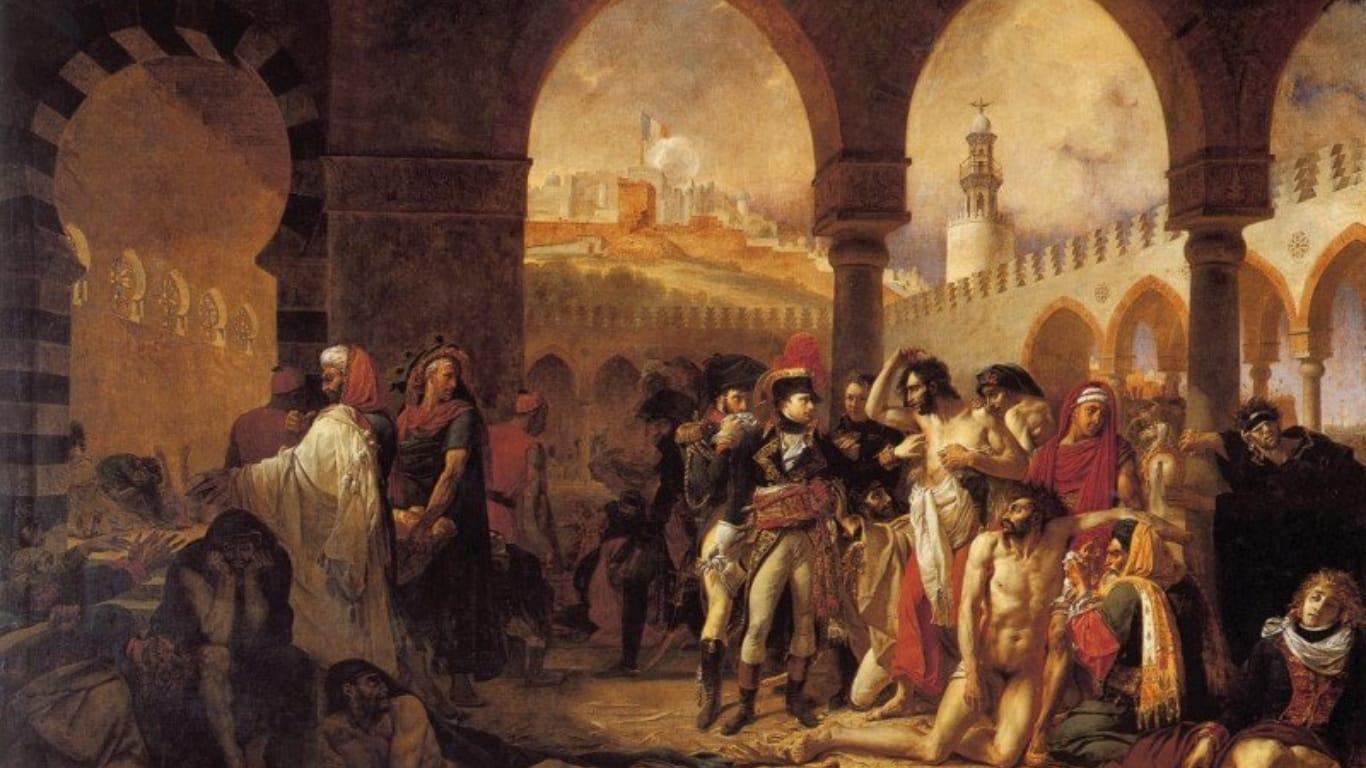
Jacques-Louis David (1748 to 1825) is the structural centre. The Oath of the Horatii, the Death of Marat, the Coronation of Napoleon, and the late Belgian-period portraits collectively define what Neoclassicism looks like when it works at the highest level. His finished paintings rarely leave institutional collections, but drawings and the studio works of his pupils trade meaningfully through the major houses.
Jean-Auguste-Dominique Ingres (1780 to 1867) extends David's tradition into the 19th century. Ingres portraits, both finished oils and the drawings that anchor his accessible market, surface at Christie's and Sotheby's regularly. His finished portrait paintings clear high seven and into eight figures when they appear with clean provenance.
Antonio Canova (1757 to 1822) anchors the sculptural tradition. The portrait busts and the smaller marbles trade actively, and the larger pieces, when they surface, are typically routed to institutional buyers. Bertel Thorvaldsen (1770 to 1844) provides the Northern European counterweight, with his Roman-period work and his Copenhagen-period later sculpture both holding meaningful auction-tier value.
The structurally important second tier includes Angelica Kauffman (1741 to 1807), one of the founding members of the Royal Academy and a meaningful market presence in her own right; Anton Raphael Mengs (1728 to 1779), the German painter whose Roman work effectively launched the movement; and Benjamin West (1738 to 1820), the American-born painter who anchored the British Neoclassical tradition.
What the secondary market actually shows
Neoclassical work trades on a structurally clear basis. The named artists hold robust pricing when works surface with secure attribution, clean provenance, and meaningful condition reports. Auction records over the past decade demonstrate the consistency.
Ingres portraits have cleared in the $5 million to $15 million range when major examples have surfaced at Christie's and Sotheby's. David works are rarer at auction but reach comparable numbers when they appear. Canova marbles at the upper tier trade in the low seven figures to low eight figures depending on subject and provenance. The drawings markets for both David and Ingres clear in the $30,000 to $500,000 range routinely.
The secondary tier (Kauffman, Mengs, West, and the wider circle of David's pupils) trades in lower five and low six figures for paintings, with the strongest examples reaching into mid six figures. The collector base is concentrated: a small group of European and American serious Old Masters collectors, a handful of major institutions, and the dealers who service them.
Where the category sits today
Neoclassicism has held up structurally better than the broader Old Masters category through the past decade. Three factors explain it. First, the named artists at the top of the canon are stable.
Scholarship around David, Ingres, Canova, and Thorvaldsen is settled and unlikely to face the kind of attribution upheaval that periodically rattles the deeper Old Masters market. Second, museum demand remains genuine. The Louvre, the Met, the Hermitage, and the major German museums continue to build Neoclassical holdings.
Third, the period's restrained visual vocabulary translates well to contemporary domestic display in ways that the more elaborate Baroque and Rococo periods often do not.
The Christie's, Sotheby's, and Bonhams 19th-century European sales each season anchor the structural pricing. The dedicated drawings sales provide the accessible entry. Phillips occasionally surfaces Neoclassical material in its broader Old Masters offerings, though the house's main focus sits elsewhere.
What this means for collectors
For collectors approaching the period, the lessons are familiar. Buy through the major houses or the specialist 19th-century European dealers. Treat attribution and condition as central, because the difference between attributed-with-certainty and studio-of pricing is structurally significant.
Pay particular attention to provenance for works moving across borders, since several European jurisdictions maintain export controls on works of this period. The collector base is small and well-known, and reputation in the market matters more than at the broader Old Masters tier.
For collectors thinking about how Neoclassicism fits into a wider traditional art programme, the structural answer is clear. The period bridges the late Old Masters tradition and the early modern era, and a serious traditional collection benefits from the reference points the named Neoclassical artists provide. The pricing discipline of the category, combined with the cultural stability of the canon, makes it one of the more structurally rational Old-Masters-adjacent entries available to a serious collector building depth into the historical end of Western painting.
We last reviewed this analysis in May 2026.