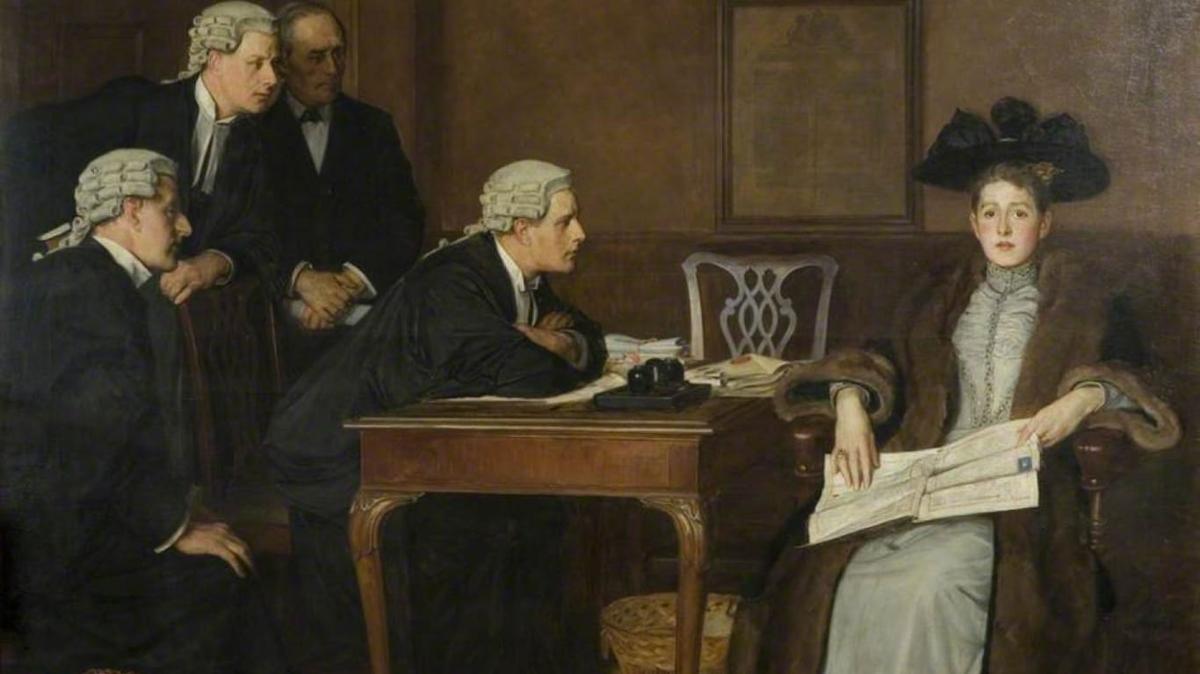
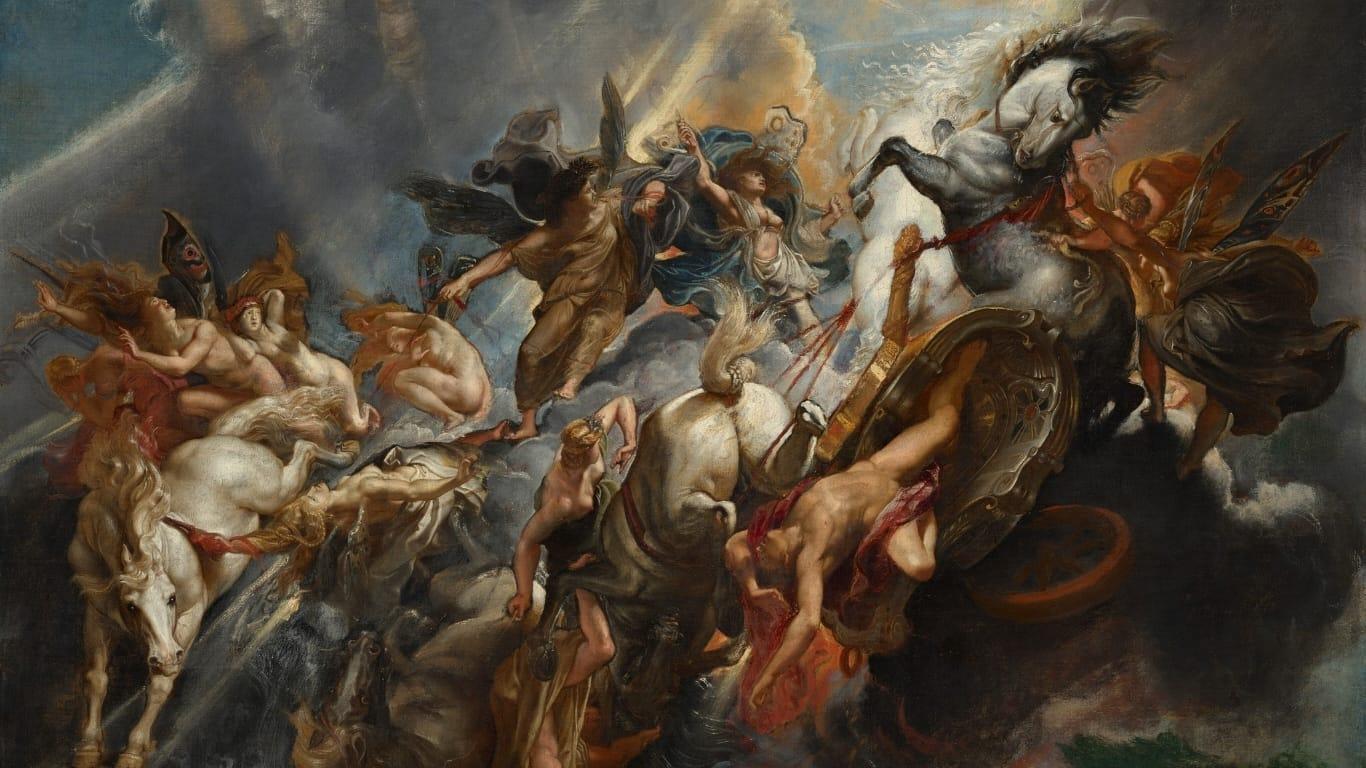
Traditional art is the broadest collecting category in the segment, and for serious collectors it is the most institutionally secure. The cohort runs from medieval panel painting through the Renaissance, Baroque, Rococo, Neoclassical, Romantic, and Realist periods to the late 19th century, and the secondary market for the segment has been continuously active for two hundred years.
The structural appeal is institutional depth. Every major Western museum, the Louvre, the Met, the National Gallery London, the Prado, the Uffizi, the Pinakothek, the Hermitage, the Rijksmuseum, the Mauritshuis, holds the canonical examples of the segment, and the academic scholarship supporting the cohort is the most mature in the field.
- Traditional art is the broadest collecting category in the segment and for serious collectors it is the most institutionally secure tier of the broader market.
- The cohort runs from medieval panel painting through Renaissance, Baroque, Rococo, Neoclassical, Romantic and Realist periods to the late nineteenth century.
- Every major Western museum, from the Louvre and the Met to the National Gallery London and the Prado, holds the canonical examples of the segment at depth.
- The Renaissance proper runs from roughly 1400 to 1600, with Italian primacy giving way to Northern centres in Flanders, Germany and the Netherlands.
- The Baroque runs from roughly 1600 to 1750, with Caravaggio, Velazquez, Rubens, Rembrandt, Vermeer and Poussin anchoring the canon.
- A high-quality seventeenth-century Dutch portrait might transact at fifty to two hundred and fifty thousand dollars, a credible entry point relative to contemporary blue chip.
- Who is this for?
- Serious collectors, advisors and family offices building or rebalancing traditional art programmes that span the canonical European tradition from the Renaissance through the nineteenth century.
- What is happening?
- A collector field guide to traditional art, covering structural shape, collecting entry points, provenance discipline, condition standards and the realistic price tiers across each period.
- When did this emerge?
- Most active around the January and July Old Master sales at Christie’s, Sotheby’s and Bonhams in New York and London, and around the major loan exhibitions on the period.
- Where is this happening?
- Centred on the New York and London salesrooms at the three major houses, with institutional reference holdings across the Louvre, the Met, the National Gallery London and the Prado.
- Why does it matter?
- Traditional art remains the most institutionally secure segment, and a clear field guide helps collectors engage with its depth, discipline and pricing without overpaying for lesser work.
The segment's structural shape
Traditional art divides into broad chronological and stylistic phases. The Renaissance proper runs from roughly 1400 to 1600, with the Italian primacy giving way to Northern centres in Flanders, Germany, and the Netherlands. The Baroque runs from roughly 1600 to 1750, with Caravaggio, Velázquez, Rubens, Rembrandt, Vermeer, and Poussin anchoring the canon.
The Rococo and Neoclassical periods extend through the 18th century, and the 19th century covers the Romantic, Realist, and Pre-Raphaelite cohorts.
For deeper coverage of the individual phases, our field guides cover Renaissance art, Baroque art, and Neoclassicism in detail.
The 19th century is the segment's most actively traded period by frequency. The Romantic, Realist, and academic cohorts produced a large volume of high-quality work, much of which remains in private hands and surfaces at auction with regularity.
The collecting entry points
Traditional art rewards a slow, deliberate entry. The cohort of serious dealers, Colnaghi, Otto Naumann (recently closed), Dickinson, Stair Sainty, Robilant+Voena, the major Old Master departments at Sotheby's, Christie's, and Bonhams, offers a structured path into the segment that the contemporary market does not.
The price tier is materially more accessible than the contemporary blue-chip tier. Serious traditional art collections can be built at price points the contemporary market exited fifteen years ago. A high-quality 17th-century Dutch portrait might transact at $50K to $250K, a strong Italian Renaissance drawing at $25K to $100K, a strong 19th-century academic painting at $30K to $150K.
The trophy tier is its own market. Our piece on the eleven most expensive paintings in the world covers the upper register, where Vermeer, Caravaggio, Leonardo, Rembrandt, and Velázquez anchor the segment.
The provenance question
Traditional art has the deepest provenance documentation in the field. The major works have ownership records that span centuries, and the academic literature on the cohort is exhaustive. That depth is the segment's primary protection.
The corollary is that provenance gaps are immediately visible. A 17th-century Dutch painting with a clean provenance through Christie's, Sotheby's, or a major dealer is straightforwardly collectable. The same painting with provenance that disappears between 1933 and 1945 carries restitution risk that the trade now takes seriously.
The Washington Principles of 1998 and the subsequent provenance research infrastructure have produced detailed standards for Nazi-era looted-art due diligence. Serious traditional art collectors apply that standard as a baseline.
The condition discipline
Condition reporting on traditional art is the most technically developed in the segment. The major institutions, the National Gallery London's Scientific Department, the Metropolitan Museum's conservation labs, the Rijksmuseum's Hamilton Kerr Institute, and the Getty Conservation Institute all publish methodological literature that the trade now treats as standard.
For a buyer entering the segment, the practical rule is to commission an independent condition report from an established conservator before any meaningful acquisition. The cost is modest relative to the acquisition price, and the discipline it imposes is valuable beyond the specific transaction.
Restoration history is part of the read. A painting that has been correctly conserved across centuries is more valuable than one that has been over-restored, and the trade can read the difference. Buy the painting that has been respected, not the one that has been rebuilt.
The 19th-century cohort
The 19th century is where the traditional art market has the deepest current activity. The Romantic painters, Delacroix, Géricault, Friedrich, Turner, Constable, anchor the upper register, with strong institutional and private demand at the trophy tier.
The Realist cohort, Courbet, Millet, Bonheur, Daumier, has rerated steadily across the past two decades, with the market expanding alongside renewed scholarly interest in the period. The Pre-Raphaelite Brotherhood, Rossetti, Millais, Hunt, Burne-Jones, anchors the British end of the segment.
The academic painters, Bouguereau, Gérôme, Cabanel, Meissonier, were the most expensive cohort in the late 19th century, fell sharply through the 20th century, and have substantially rerated across the past thirty years. Bouguereau in particular has been a notable rerating story.
The Dutch Golden Age
The Dutch 17th century is the most actively traded individual phase within traditional art. Rembrandt anchors the upper tier, with Vermeer (only thirty-six surviving paintings) effectively closed to private collectors. The next tier, Frans Hals, Jacob van Ruisdael, Pieter de Hooch, Gerrit Dou, Gerard ter Borch, Nicolaes Maes, transacts regularly at five-to-seven-figure prices.
The Dutch Italianate landscape cohort, Jan Both, Nicolaes Berchem, Aelbert Cuyp, Adam Pijnacker, has rerated steadily across the past decade. The genre and still-life specialists, Willem Claesz Heda, Pieter Claesz, Adriaen Coorte, Rachel Ruysch, anchor the segment's mid-tier.
The market depth for the Dutch cohort is unusual: the Mauritshuis, the Rijksmuseum, the National Gallery London, the Met, and dozens of regional museums hold the canonical examples, and the trade has been actively transacting in the cohort for two centuries.
The Italian Renaissance
The Italian Renaissance is the segment's most prestigious phase but the least frequently traded. The 15th-century Florentine, Sienese, and Venetian painters are largely in public collections, and what surfaces tends to be works on paper, smaller panels, and works from secondary collaborators.
The 16th-century cohort offers more market depth. Andrea del Sarto, Bronzino, Pontormo, Beccafumi, and the broader Mannerist cohort transact more frequently than the early Renaissance, with the Venetian colourists, Veronese, Bassano, Tintoretto, anchoring a separate sub-segment.
The Romantic and Symbolist transition
The late 19th-century transition into modernism is increasingly the segment where serious traditional art collectors build at the leading edge. The Symbolist cohort, Moreau, Redon, Khnopff, Klimt, has rerated substantially, and the Vienna Secession material in particular has crossed into the contemporary market's pricing register.
Our coverage of traditional art movements defining 2026 traces the cohorts the trade is currently rerating.
What this means for collectors
Traditional art is the segment serious collectors build into when they want institutional depth, scholarly support, and a price tier that allows the collection to actually grow. The market is structurally healthier than the contemporary speculative tier, the comparables run across centuries rather than seasons, and the institutional infrastructure of museums, scholars, and dealers is mature.
The discipline is provenance, condition, and patience. The collectors who build effectively in the segment are the ones who treat the acquisition as a multi-year scholarly project rather than a quick decision, and the rewards are holdings that hold their value across cycles the contemporary market does not weather.
We last reviewed this analysis in May 2026.
Frequently Asked Questions
What counts as traditional art?
Traditional art runs from medieval panel painting through the Renaissance, Baroque, Rococo, Neoclassical, Romantic, Realist, and Pre-Raphaelite periods to the late 19th century. The cohort excludes the modernist break that begins with Cézanne, Matisse, and the early 20th-century avant-gardes, and it excludes contemporary art entirely.
Is traditional art a good entry point for new collectors?
It is one of the strongest. The price tier is materially more accessible than the contemporary blue-chip tier, the institutional and scholarly infrastructure is the most mature in the field, and the comparables run across centuries. A high-quality 17th-century Dutch portrait might transact at $50K to $250K, well below the contemporary mid-career market.
How do I check the provenance of a traditional art work?
Through dealer documentation, auction-house catalogue research, and the academic literature. The major dealers, Colnaghi, Dickinson, Stair Sainty, Robilant+Voena, maintain provenance research as standard practice, and the Old Master departments at Christie's, Sotheby's, and Bonhams provide detailed provenance documentation on every consigned lot. Independent provenance research consultants are available for any high-value acquisition.
What is the most active segment within traditional art?
The Dutch 17th century is the most actively traded individual phase by frequency, followed by the 19th-century Romantic and Realist cohorts. The Italian Renaissance is the most prestigious but the least frequently traded. The 19th-century academic painters, Bouguereau, Gérôme, Cabanel, Meissonier, are the most actively rerating segment of the past three decades.