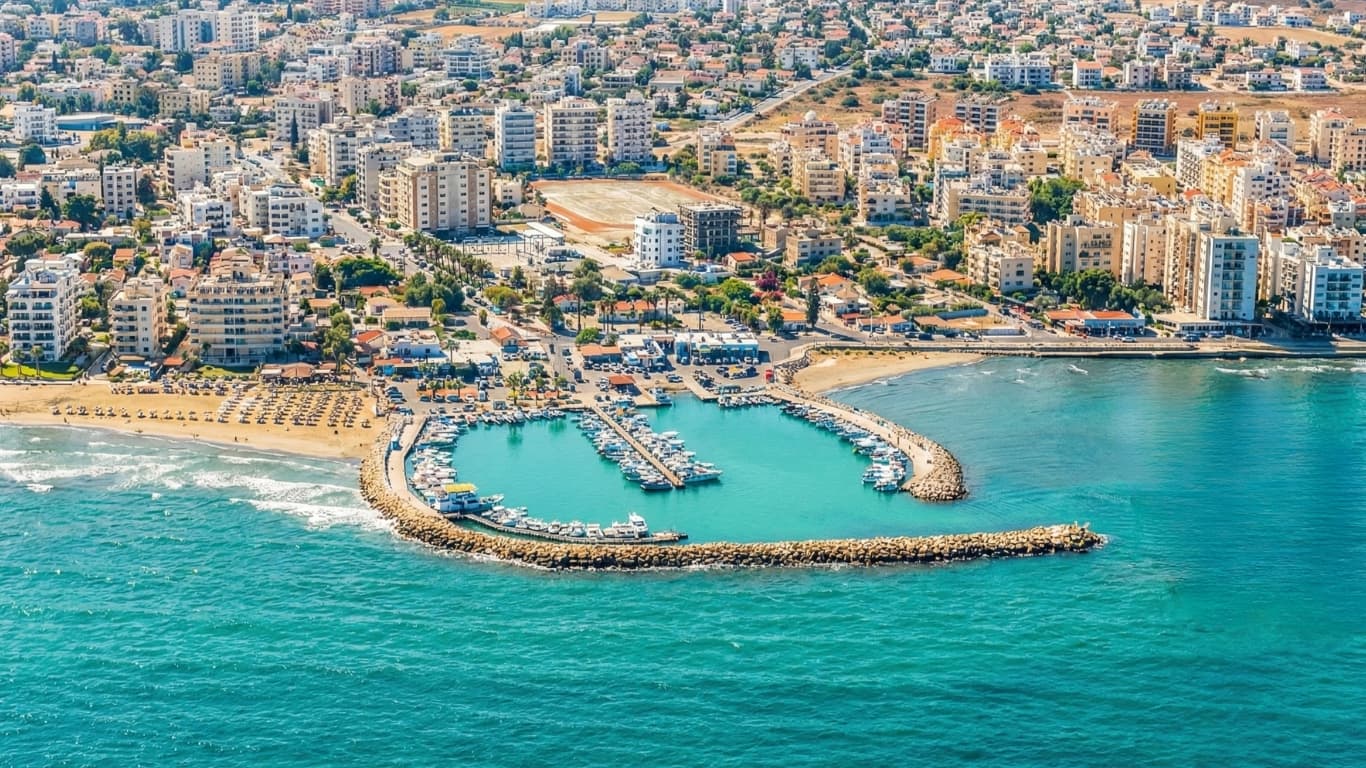
Nicosia's economy is the lens we use here: a story of institutional rebuild, EU membership and a slow-then-fast property cycle. Nicosia’s economic revival is a story worth knowing. Few cities have bounced back from the kind of trauma that hit Cyprus in 1974, when the Turkish invasion reshaped the island overnight.
What followed was a decades-long effort of strategic financial management, smart policy decisions, and sheer determination.
The Nicosia Master Plan, launched in 1979, became the backbone of this recovery, targeting urban revitalization within the Walled City and encouraging peaceful exchanges across a divided capital. The result was nothing short of a transformation from conflict to genuine prosperity.
Several forces have powered this resurgence. A robust banking sector, a geography that puts Nicosia squarely between Europe and the Middle East, and a tourism industry that kept growing even when others stumbled. Investments in infrastructure, innovation hubs, and entrepreneurship pulled in both local and foreign capital.
And when setbacks came, including the 2010 recession and the spillover from Greece’s financial collapse, Nicosia absorbed the blows. GDP held with more stability than many predicted, and unemployment rates moved steadily in the right direction.
Looking ahead, Nicosia’s economic trajectory looks genuinely promising. Urban renewal efforts are running alongside sustained investment in key sectors, and the city is carving out a real identity as a dynamic economic hub in Cyprus. Its ability to adapt through global shocks, internal crises, and geopolitical tension is what sets it apart.
Nicosia has earned its reputation as one of the Eastern Mediterranean’s most resilient economies, and the next chapter looks even more compelling.
- Nicosia's economic transformation across the past decade represents a credible Mediterranean miracle, with the capital emerging as a professional services, financial and educational hub.
- We see the post-2013 banking crisis recovery as the foundation, with disciplined fiscal management and structural reforms enabling the subsequent broad-based economic expansion.
- CyStat data shows GDP growth, employment and household income all firming meaningfully across recent years, with Nicosia leading the broader Cypriot economic story.
- The professional services cluster, including the major Cypriot law firms, accounting practices and the financial services base, has provided the most durable engine of growth.
- University of Cyprus and the broader tertiary education sector contribute meaningfully to the urban economic profile, with international student flows supporting residential demand.
- For most considered Cypriot observers we view Nicosia's trajectory as one of the more impressive small-capital economic stories in Europe through the past decade.
- Who is this for?
- Investors, relocators, policy analysts and economic observers evaluating Nicosia's economic transformation, alongside the advisers and brokers serving the Cypriot capital.
- What is happening?
- A read of Nicosia's economic miracle, covering the post-2013 recovery, professional services cluster, education sector and the broader urban economic transformation.
- When did this emerge?
- The article reflects the post-2013 recovery arc through 2026, with CyStat, Bank of Cyprus and major Cypriot institutional data alongside our own observations.
- Where is this happening?
- The piece focuses on Nicosia, with reference to the broader Cypriot economic context and the comparable Mediterranean capital trajectories.
- Why does it matter?
- Nicosia's economic story underpins the property market thesis, which is why understanding the structural drivers matters for any considered Cypriot allocation decision.
Introduction to Nicosia’s Economic Transformation
When the 1974 invasion split Nicosia in two, it became something no other European capital has ever been: a divided city with a buffer zone running through its heart. That reality prompted the launch of the Nicosia Master Plan in 1979, a bold urban revitalization effort that did far more than restore old buildings. Through the rehabilitation of historic structures, the city saw a surge in population, a thriving heritage tourism sector, and a growing number of bicommunal cultural gatherings.
It was a deliberate shift from conflict toward prosperity, and it worked.
The Master Plan’s gradual execution fueled genuine economic renewal and brought people back to Nicosia’s central areas, covering both the northern and southern parts of the city. The focus was sharp and intentional, targeting economic development inside the iconic Walled City. By encouraging peaceful exchanges across the divide, the plan became one of the most quietly effective tools in the city’s economic transformation.
| Aspect | Impact |
|---|---|
| Historic Preservation | Population growth, heritage tourism boom, increase in cultural events |
| Economic Progress | Growth in central city, rehabilitation of historic buildings |
| Peaceful Interaction | Bicommunal events and economic collaboration |
The 2013 economic crisis was a brutal test, but Cyprus came through with more composure than most expected. The GDP drop stayed below 6%, which was less severe than the early forecasts suggested. Unemployment rates pulled back too.
From early 2014 through the first quarter of 2015, local and foreign deposits in the Bank of Cyprus climbed steadily, a clear sign of returning confidence. These numbers tell a story of a financial system that bent under pressure but did not break.
At the macro level, fiscal corrections were more subtle than dramatic. Still, broad budget cuts across government ministries showed a real commitment to financial discipline when it mattered most. Taken together, the sophisticated urban planning and targeted economic measures gave Nicosia a track record of steady, hard-won progress.
Every setback it has faced has ultimately reinforced, rather than undermined, its longer-term trajectory.

The Historical Context of Cyprus’s Economy
To understand where Cyprus’s economy stands today, you need to look at how wars and political upheaval have shaped almost every major turn in its economic history. The island’s story is inseparable from the conflicts that tested it.
Impact of Wars and Political Turmoil
Between 1960 and 1973, the Republic of Cyprus enjoyed a period of remarkable economic momentum. GDP climbed, per capita income rose sharply, agricultural output doubled, and industrial production and exports expanded at a rate that turned heads across the region. Then came 1974.
The Turkish invasion placed nearly 40% of the island under Turkish control and sent the Greek Cypriot sector’s GDP into a sharp decline from 1973 to 1975. The setback was severe and immediate.
But the war did not stop the island in its tracks. Between 1975 and 1983, the area governed by the Republic of Cyprus achieved an average annual economic growth rate of around 10%. That kind of recovery, under those circumstances, set a powerful precedent for how Cyprus would handle future pressures.

Strategic Fiscal Policies
Strategic fiscal reform has been at the core of Cyprus’s ability to rebound and grow. Since 1983, the Greek Cypriot sector has posted consistent economic gains, with tourism emerging as one of the primary engines of that growth. The development of double taxation agreements opened important economic doors, particularly with the Soviet Union and Eastern Europe, and gave the island’s financial health a meaningful boost.
Two moments stand out as turning points. Joining the European Union in 2004 and adopting the euro in 2008 each brought greater stability, clearer fiscal frameworks, and deeper integration into the broader European economy. Agriculture, forestry, and fishing also play a steady supporting role in Cyprus’s overall economic output, providing a base that complements the island’s more headline-grabbing financial and tourism sectors.
Cyprus does face some structural challenges. Copper ore reserves have dwindled, and the island’s dependence on imported petroleum creates ongoing vulnerability. On the upside, Cyprus punches well above its weight as a solar energy producer.
The search for natural gas in the eastern Mediterranean offers real long-term potential, though disputes between Greek and Turkish Cypriot authorities over those resources are yet to be fully resolved.
Key Drivers Behind Nicosia’s Economic Miracle
Nicosia’s economic surge was fueled in no small part by a booming banking sector, which drew a substantial inflow of foreign capital over several decades. The “golden passport” scheme became one of the more talked-about chapters in this story. Launched at scale in 2013 and requiring a minimum real estate investment of €2.
5 million for citizenship, it attracted around 2,500 investors and offered both Cypriot and EU citizenship.
The program was not without controversy, and by 2020 the European Commission had opened infringement procedures against Cyprus and Malta over their respective citizenship-by-investment arrangements. You can see how real estate investment programs in high-growth cities follow a similar logic, using property as a gateway to broader economic participation.
The 2012 to 2013 banking crisis forced Cyprus’s hand on economic reform, and much of that change came under President Nicos Anastasiades. The decision to allow banks to use large deposits as part of the bailout structure was deeply controversial, but it ultimately worked. Cyprus exited its bailout program by 2016, a milestone that carried real weight and underscored just how far the economy had come in a short stretch of time.
Tourism stepped up as a key economic pillar, generating jobs and breathing life into local businesses across the island. Paired with an aggressive marketing push following EU membership, Nicosia positioned itself as Europe’s eastern gateway. That framing brought in tourists and, just as importantly, encouraged foreign investors to take a closer look at what the city had to offer.
Cyprus also leaned into its geography in a smart way. Sitting between Europe and the Middle East gives Nicosia a natural advantage that few capitals can claim. Steady infrastructural investment turned that geographic edge into consistent real GDP growth and a more resilient overall economy.
| Year | Real GDP Growth | Unemployment Rate | Foreign Deposits Increase |
|---|---|---|---|
| 2013 | -5.4% | Increased | , |
| 2014 | Marginal Decline Expected | Increased | , |
| 2015 | Marginal Growth | , | 34% (First Quarter) |
| 2016 | Exit from MoU Expected | Stable | , |
| 2021 | 9.9% | , | , |
| 2022 | 4.6% | , | , |
The Role of Banking and Financial Services
Banking and financial services have been at the heart of Nicosia’s economic resurgence. The sector’s growth was shaped by strategic tax legislation and a series of external events that redirected significant capital flows toward Cyprus. The Lebanese conflict and the collapse of the Soviet Union were both pivotal, each sending waves of foreign funds to an island that was well-positioned to receive them.
Banking Sector Growth
Nicosia’s banking sector grew at an impressive pace, powered by efficient bureaucracy, strong resistance to corruption, and solid infrastructure. The government added further confidence by guaranteeing deposits of up to €100,000, a move that resonated strongly with both domestic and international depositors. Even when Cyprus experienced its first recession since 1978 and GDP briefly turned negative, the sector held its ground.
That stability, maintained under genuine pressure, is a large part of what made Nicosia attractive to foreign investors in the years that followed.
Financial Services Expansion
Cyprus’s expansion into broader financial services transformed it into a genuine Eastern Mediterranean financial hub. Property, private equity, legal, accounting, and banking all played a role in building out the offshore business ecosystem that gave Cyprus its reputation as a serious financial center. The road was not entirely smooth.
Reduced government income from taxation and economic weakness among key trading partners, including the UK, Greece, and Russia, created headwinds. But the financial services sector kept moving forward, remaining one of the most reliable drivers of the country’s economic progress. Institutional investors have long understood the value of well-regulated financial hubs, and Cyprus has consistently offered exactly that.
The outlook for Cyprus’s financial services sector looks solid. Ongoing efforts to secure foreign-invested assets and sharpen the country’s competitive edge are keeping the sector dynamic. Financial services are not just a chapter in Nicosia’s growth story; they are its backbone, and they will likely remain so for years to come.
| Year | Inflation Rate | Current Account Deficit (as % of GDP) | Predicted Budget Deficit |
|---|---|---|---|
| 2008 | N/A | 18.3% | N/A |
| 2009 | 0.8% | 8.5% | Deficit due to higher social spending |
| 2010 | 1.8% | N/A | Deficit due to higher social spending |

Foreign Direct Investment in Nicosia
When Cyprus joined the European Union in 2004, it changed the conversation around foreign direct investment in Nicosia entirely. Membership opened the door to a far wider pool of international capital and gave global investors a level of confidence in the regulatory environment that simply had not existed before.
Impact of European Union Membership
EU membership gave Nicosia something money cannot easily buy on its own: predictability. With greater financial stability and a clearer fiscal framework, the city became a genuinely attractive destination for investors from around the world, and particularly from Eastern Europe. That appeal shows up in the numbers.
In 2022, Nicosia recorded 1,640 new firm registrations in sectors like professional services, energy, and ICT, a strong signal of the city’s growing status as a serious commercial center.
Attraction of East European Capital
Nicosia has carved out a strong position as a destination for East European capital, thanks to its EU access and its investor-friendly regulatory climate. The data backs this up. The Greenfield FDI Performance Index rose by 150% during the first half of 2022, and FDI was projected to grow to around 150% of Cyprus’s GDP by 2023.
Those figures reflect real conviction from investors who have done their homework and like what they see.
| Aspect | Details | Impact |
|---|---|---|
| Population | 0.921 million (2024 est.) | Market size appeal for investors |
| GDP (Nominal) | $34.221 billion (2024 est.) | Economic strength and stability |
| EU Membership | Since 2004 | Enhanced investor confidence and stability |
| FDI Growth | 150% increase in Greenfield FDI (H1 2022) | Significant capital inflow |
The Boom of the Tourism Industry
Tourism has been one of Cyprus’s most reliable economic engines for decades, and its power to drive growth and innovation across the broader economy should not be underestimated. The island has consistently attracted visitors in ways that go well beyond beach holidays, building a tourism model that feeds into real estate, hospitality, retail, and financial services alike.
The economic foundation for this tourism boom was laid between 1960 and 1973, when Cyprus saw GDP and per capita income rise sharply, agricultural production double, and industrial output and exports triple. Then 1974 arrived. The Turkish occupation cut the Greek Cypriot sector’s GDP by roughly one-third almost overnight, a stark reminder of how quickly geopolitical events can reshape an economy.
Cyprus’s recovery from that shock was genuinely impressive. Between 1975 and 1983, the Republic of Cyprus posted an average annual growth rate of around 10%, laying the groundwork for what would become a flourishing tourism sector in the decades that followed.
Since 1983, the Greek Cypriot sector has maintained steady economic health, with low unemployment and inflation creating the right conditions for sustained tourism growth. The industry’s expansion has pushed technological advancement, deepened international trade relationships, and helped diversify Cyprus’s economy in ways that make it more resilient to future shocks.
Infrastructure investment has been central to making Cyprus a top-tier destination. The economic ripple effects of a strong tourism sector are wide-ranging, from job creation to increased investment in hospitality, retail, and transport, all of which compound into broader economic stability.
EU membership in 2004 and euro adoption in 2008 added another layer of appeal, making Cyprus easier and more straightforward to visit and invest in. These moves strengthened the tourism sector’s foundations and contributed to the kind of long-term economic confidence that keeps investors coming back. You can see similar dynamics playing out in other Cypriot cities where tourism and real estate intersect, with Limassol being a prime example.
Below is a brief comparative table illustrating the economic contributions of Cyprus’s primary sectors.
| Economic Sector | Contribution to GDP (percent) | Growth Rate Since 1983 |
|---|---|---|
| Tourism | 20% | 15% |
| Banking and Financial Services | 30% | 10% |
| Agriculture | 5% | 2% |
| Industry | 10% | 5% |
The sustained growth in Cyprus tourism has been one of the island’s most powerful tools for economic revival, building a diverse and prosperous economy that extends well beyond any single sector.
Entrepreneurship and Business Innovation
Nicosia’s rise as an economic hub is closely tied to a culture of entrepreneurship and business innovation that has been quietly building for years. The start-up scene here has been particularly active, supported by a rich ecosystem of resources, mentorship, and access to capital that gives new businesses a real shot at scaling.
Support for Start-ups
The aftermath of the 2008 financial crisis was a genuinely tough period for Cypriot start-ups, with financing difficult to access and uncertainty high across the board. But Nicosia’s entrepreneurship ecosystem showed real character. Public financial support, strategic policy measures, and a network of mentors gave new businesses the tools they needed to push through.
The support system was not perfect, but it was present when it mattered most.
Innovation Hubs and Incubators
Nicosia is home to a growing number of innovation hubs and incubators that are doing serious work to fuel business growth across Cyprus. These spaces offer the full package: facilities, funding pathways, and the kind of networking that actually opens doors. Since 2019, technology investment in Cyprus has climbed by 600%, and these innovation centers have been a key part of that story, attracting talent and building the collaborative culture that drives meaningful growth.
| Nicosia Entrepreneurship Ecosystem | Details |
|---|---|
| Start-up Support | Access to resources, public financial backing, mentorship programs. |
| Innovation Hubs | Facilitate collaboration, grant facilities, funding opportunities. |
| Technology Investment Growth | 600% increase since 2019, bolstered by international enterprises. |
| Impact on Economy | Contributed approximately €3 billion to the economy. |
Nicosia’s entrepreneurial momentum is about more than individual success stories. It reflects a cohesive National Innovation System that, when properly funded and supported, can position the city as one of the region’s most dynamic business environments. Closing the remaining gaps in financial support and reinforcing that system will be key to locking in Nicosia’s status as a leading business innovation hub.

Infrastructure Development and Its Role
Infrastructure investment has been one of the most consistent threads running through Nicosia’s economic rise. Strong foundations in transportation, telecommunications, and public services have not just improved daily life; they have created the conditions for sustained economic growth across multiple sectors. Without this kind of investment, the city’s other advantages would have far less impact.
The numbers tell a clear story. Cyprus’s GDP hit $34. 221 billion in nominal terms and $54.
104 billion on a purchasing power parity basis in 2024, with growth of 3. 3% in the first quarter of that year and a projected 2. 7% for the full year.
Those are strong figures for an economy of Cyprus’s size, and they reflect the compounding effect of years of smart infrastructure spending.
Service sectors dominate the Cypriot economy, contributing 85.5% to GDP in 2017, a figure that is only sustainable with solid infrastructural backing. Per capita income reached $37,149 in nominal terms and $58,733 on a PPP basis in 2024, reflecting a real improvement in living standards that tracks closely with the quality of the country’s infrastructure. Wellness and luxury real estate markets increasingly rely on exactly this kind of infrastructure quality to attract premium buyers and long-term residents.
Controlled inflation and low unemployment are two of the clearest indicators of a well-managed economy. As of April 2024, Cyprus’s inflation rate sat at 2.4%, with unemployment at 6.
0% in March of that year. That combination creates an environment that is genuinely attractive to investors and businesses looking for a stable place to put down roots.
Every round of infrastructure investment in Nicosia compounds on the last, creating a virtuous cycle of economic activity that shows up across the city’s metrics. As that investment continues, Nicosia’s position as a dynamic economic hub in the Eastern Mediterranean only strengthens.
| Indicator | Value |
|---|---|
| Projected GDP (Nominal) 2024 | $34.221 Billion |
| Projected GDP (PPP) 2024 | $54.104 Billion |
| GDP Growth Rate Q1 2024 | 3.3% |
| Projected GDP Growth Rate 2024 | 2.7% |
| Inflation Rate April 2024 | 2.4% |
| Unemployment Rate March 2024 | 6.0% |
The Impact of Global Events on Nicosia’s Economy
Nicosia has rarely had the luxury of operating in a calm global environment. Major external events have reshaped its economy repeatedly, sometimes delivering unexpected windfalls and sometimes creating serious challenges. Understanding those moments is key to understanding how the city became what it is today.
The Lebanese Civil Conflict
The Lebanese Civil War turned out to be an unlikely economic catalyst for Nicosia. As instability gripped Lebanon, companies and wealthy individuals relocated their assets and operations to the relative safety of Cyprus. That shift delivered a meaningful boost to the banking and services sectors in the southern part of the island at a time when every advantage counted.
It was an early demonstration of how Nicosia could benefit from its position as a stable, well-connected alternative in a volatile region.
The Collapse of the Soviet Union
The fall of the Soviet Union sent a significant wave of Russian and Eastern European capital flowing into Cyprus. Russian and Serbian businesses in particular chose Cyprus as their base for international operations, drawn by its legal framework, EU-adjacent status, and favorable tax arrangements. This influx strengthened Nicosia’s financial services sector considerably, and all of this from an economy that accounts for just 0.
2% of Eurozone GDP. The outsized impact of that capital was a defining moment in the city’s financial evolution, as Bloomberg’s coverage of the Cyprus bailout era documented in detail.
Nicosia’s ability to absorb and benefit from external shocks is one of its most underappreciated qualities. Despite being the third smallest economy in the Eurozone, it has built a genuine financial center by playing its geographic and legal advantages with precision. Cyprus’s recovery following its €10 billion IMF and Eurozone bailout was another proof point, with the country’s position as home to the fourth largest ship registry in the world giving it a structural advantage that the headlines about the banking crisis often overshadowed.
The economic contrast between the north and south of Cyprus brings the impact of geopolitical events into sharp focus. The northern economy is roughly one-fifth the size of the south’s, a disparity that reflects decades of different trajectories under very different governance. Despite early dire predictions from the European Commission, Nicosia’s southern economic zone has shown a capacity for recovery that continues to exceed expectations.
Challenges and Setbacks in the Economic Journey
No economic success story comes without its share of painful chapters. Cyprus has achieved a great deal, but it has also been tested hard, and those tests have revealed both the vulnerabilities and the strengths of its economy.
The 2010 Recession
The 2010 recession hit Cyprus with real force, dragging GDP down by 3.4% in 2020 and intensifying pressures that were already building across several sectors. The construction industry, which had been one of the economy’s reliable engines, fell into a sharp decline during this period.
The banking sector faced its own strain, with rising non-performing loans creating complications that slowed the broader recovery process. As Reuters reported on the Cyprus economic downturn, the path back was going to require more than just patience.
Greek Economic Meltdown
Greece’s economic collapse hit Cyprus in a way that was almost unavoidable, given how deeply Cypriot banks were exposed to Greek debt. The losses were significant and dragged down Cyprus’s own GDP at a moment when the economy could least afford it. Unemployment climbed sharply as a result.
By March 2024, the general unemployment rate stood at 6.0%, and youth unemployment had reached 20.7%, a figure that reflects just how deeply the Greek crisis cut into Cyprus’s labor market.
These figures tell the story of crises that layered on top of each other, each one compounding the effects of the last.
| Year | GDP Growth Rate | Unemployment Rate | Youth Unemployment Rate |
|---|---|---|---|
| 2010 | -3.4% | 4.9% | 14.3% |
| 2020 | -3.4% | 7.6% | 18.5% |
| 2023 | 2.5% | 6.5% | 19.7% |
| 2024 | 2.7% | 6.0% | 20.7% |

The Future of Nicosia’s Economic Growth
The outlook for Nicosia’s economy is genuinely encouraging. Since the 2013 crisis, where GDP dropped by under 6%, the city has built a track record of disciplined recovery and forward-looking strategy. That resilience is not accidental; it is the product of consistent financial management and a willingness to make difficult decisions when the situation demanded it.
The falling unemployment rate is one of the clearest signs that recovery has been real and not just statistical. GDP improvements followed, aligning with employment gains for the first time since 2008. Rising fixed deposit levels at Cyprus’s largest bank since mid-summer 2014 point to a financial sector that has genuinely rebuilt trust with both local and international depositors.
Foreign investment into Nicosia surged by 34% in early 2015, a signal that global investors were paying attention to what Cyprus had accomplished. That vote of confidence came from disciplined fiscal planning that outperformed expectations on primary balances and debt management alike, results that did not happen by accident.
Even with meaningful spending reductions in 2014, the government’s fiscal approach kept the economy moving in the right direction. The 2015 budget modestly increased spending to support growth, and importantly, the earlier reductions were targeted at efficiency rather than wholesale program cuts. That approach preserved economic stability while still addressing the underlying fiscal pressures.
Cyprus’s GDP growth has settled into a pattern of steady, if modest, expansion, suggesting a new economic baseline built on conservative investment and disciplined management. For Nicosia specifically, urban renewal efforts are adding a layer of momentum that goes beyond the headline economic figures. You can get a broader sense of how Forbes has tracked Cyprus’s economic resilience through these cycles.
Since 1979, the bicommunal Master Plan for Nicosia’s city center has done something few urban planning projects manage to achieve: it has simultaneously attracted residents, boosted heritage tourism, and created real economic value across the divided city. Strategies built around preserving and repurposing historic buildings have been particularly effective, generating growth while also building the kind of goodwill that makes cross-community cooperation possible.
The success of these preservation efforts is a model worth studying. It shows how cultural revitalization and economic progress can reinforce each other rather than compete, and it gives Nicosia a growth story that is rooted in something more durable than a single sector or a single cycle of investment. The trajectory from here looks genuinely strong.
What this means for buyers reading Nicosia's economy
Nicosia's economy is a story of institutional rebuild rather than a tourism boom: banking, services, ICT and education anchor the city, with prime real estate concentrated around the historic centre and the leafy suburbs. Buyers reading Nicosia should weight stability, EU membership, and the Cyprus PR pathway against the slower price growth relative to Limassol. Knight Frank Cyprus and Engel & Völkers Cyprus both publish Nicosia-specific reads worth tracking.
We last reviewed this analysis in May 2026.


Savvas Agathangelou
Savvas Agathangelou co-founded The Luxury Playbook and has spent years reporting from the prime postcodes the magazine covers — Mayfair, Knightsbridge, the Athens Riviera, Dubai's Palm crescents, and the southern Mediterranean coastlines where the world's wealthy keep coming back. His background is in international hospitality, and that frame shapes how he writes about property: the developer's choices, the architect's signature, the agency's bench of named brokers, the building's service standard once the buyer moves in. He files developer spotlights, agency profiles, and the seasonal "Properties That Defined" listicles, and he hosts the magazine's founder-and-leadership interviews on the Voices side.