Limassol has been the surprise of the Cypriot residential market for nearly a decade. The coastal city, historically Cyprus's commercial centre and more recently its prime residential address, has matured at a different pace than Nicosia or Paphos. The story is not really about price points anymore.
It is about who is landing in the city, what they are commissioning and how the architectural texture has reset. Mansion Global's 2024 Limassol dispatch and Knight Frank's Cyprus desk have both tracked the rental conversation in some detail across the past three years.
- Limassol rental pricing has moved decisively higher in recent years, with the seafront arc and central business districts setting the upper end of the local market.
- We see two-bedroom seafront apartments in Limassol typically commanding rents well above the comparable Nicosia or Larnaca benchmarks, reflecting the deepening international tenant pool.
- Marina and Limassol Old Town locations attract the strongest premium, with corporate tenants and Russian-speaking households driving consistent demand at the top end.
- Suburban Limassol stock offers materially lower entry pricing, with established neighbourhoods including Mesa Geitonia and Agia Fyla supporting the bulk of family tenant demand.
- Short-term rental licensing has tightened across Cyprus, with the regulatory framework affecting yield calculations for buy-to-let-focused investors weighing entry economics.
- For most considered Cypriot tenants we view location selection as more consequential than headline rental yield arguments, with seafront proximity carrying a persistent premium.
- Who is this for?
- International tenants relocating to Limassol, local renters weighing neighbourhood selection, and the brokers, advisers and landlords serving the Cypriot rental market.
- What is happening?
- A practical read of how expensive it is to rent in Limassol, covering seafront pricing, suburban alternatives, short-term licensing dynamics and the comparative regional context.
- When did this emerge?
- The article reflects current rental conditions through 2025 and into 2026, with reference to the multi-year price arc following the city's international repositioning.
- Where is this happening?
- The piece focuses on Limassol, including the seafront arc, Old Town, Mesa Geitonia and Agia Fyla, with reference to Nicosia and Larnaca for comparison.
- Why does it matter?
- Limassol rental economics shape relocation and investment decisions, which is why honest numbers matter more than reflexive reaction to the headline market story.
The coastal arc and the tower skyline
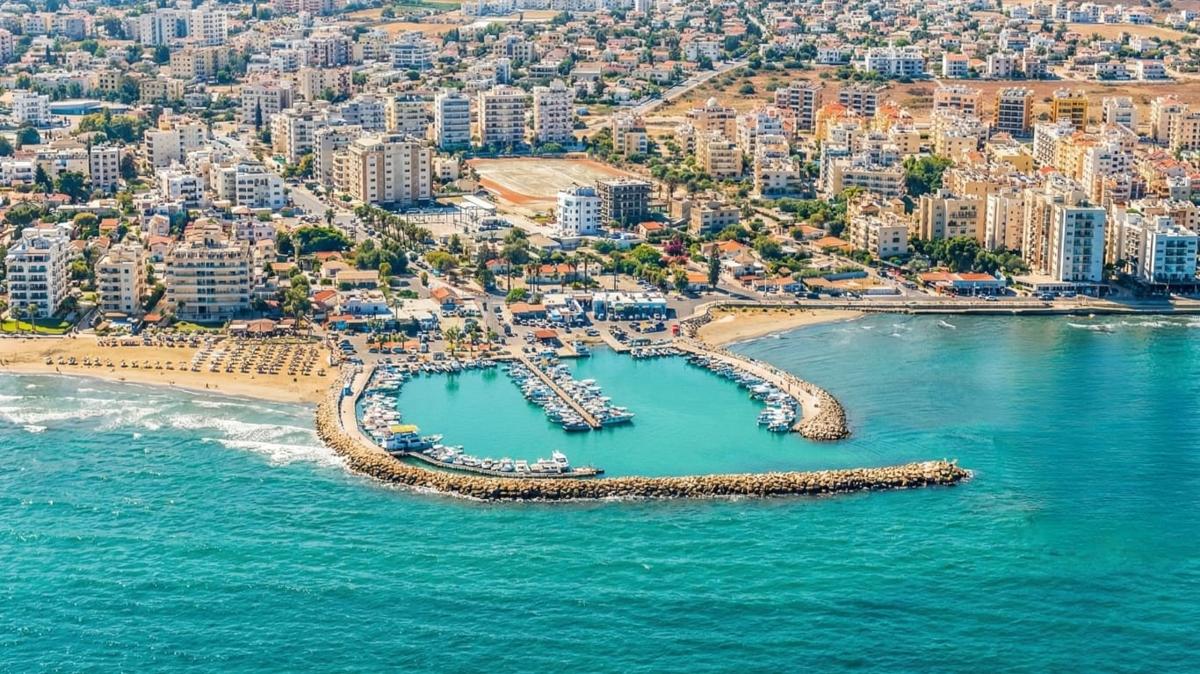
The Limassol prime band runs along the seafront from Akti Olympion through Germasogeia to Pyrgos. Three towers anchor the modern skyline. One Limassol (the country's tallest residential tower, designed by Atkins), Symbol (designed by Pafilia) and Olympic Residence (developed by Cybarco) all opened in the past decade.
Mansion Global covered the city's tower-residence wave in a 2024 dispatch noting that Limassol's seafront product has commanded premium per-square-meter pricing. The buyer field (Russian, Israeli, Lebanese, Chinese and increasingly Western European) has paid for the brand-residence model.
Below the towers, the seafront low-rise band holds restored colonial-era villas, a generation of contemporary architecture by Cypriot practices (Vardastudio, Sevina Floridou Architects, Aristo Developers) and the Limassol Marina district, a Foster + Partners-masterplanned mixed-use development that opened in 2014.
Who is renting
The buyer profile has rotated. The 2010s saw a heavy Russian wave anchored by the Cyprus residency-by-investment programme (since restructured in 2020 after EU pressure). The 2022-2025 cycle has seen Israeli, Lebanese and Chinese buyers anchor the upper tier, with a growing Western European secondary segment, particularly British and German buyers seeking a Mediterranean base.
The Cypriot non-domiciled tax framework, similar in structure to the UK's pre-2025 system, has been part of the appeal. The renter field at the apartment-and-tower level remains active. Engel & Völkers' Limassol office reports that the upper-tier furnished-rental band clears in under 30 days on the strongest streets.
The villa segment, particularly in the hills behind Limassol (the Yermasoyia, Pyrgos and Moutagiaka areas), has absorbed a quieter wave of family-base renters committing to multi-year leases. Cypriot architects familiar with the regional vernacular have set the design vocabulary for the new villa stock.
What it actually costs to live there
For owners and renters considering the city, the operational cost layer is meaningful. Apartment service charges in the named towers run between €3 and €5 per square meter per month, with Olympic Residence at the lower end and Symbol and One Limassol at the upper. Annual immovable property tax was abolished in 2017, but municipal taxes (sewerage, refuse, road infrastructure) typically run to a few hundred euros per property per year.
Utilities (particularly air conditioning costs in the summer months) are real. Well-built apartment stock with proper insulation and modern HVAC absorbs the load more cleanly than older pre-2010 construction. The upper-tier rental market typically prices these costs into the headline figure when the lease is long-term.
Rental rates for premium long-term tenants in the Limassol Marina apartments and the named towers cluster at the upper end of Cypriot pricing. They have stabilised rather than declined over the past three years despite the wider market correction. Cushman & Wakefield's Cyprus desk publishes the most useful comparative yield-and-rent series for the city.
The architectural conversation
What is actually interesting about Limassol is the architectural depth that has emerged in the past decade. Cypriot practices that started designing restorations in the 1990s have grown into serious contemporary studios. Vardastudio (Demetris Varvarossis), Sevina Floridou Architects, AAP Architects and the regional desk of MM Architects all have books that include serious villa work in the Limassol coastal hills.
The local vernacular reads through restored stone-and-cement villas, contemporary architecture that uses Cypriot limestone and traditional terracotta and gardens designed for the Mediterranean climate. The drought-tolerant planting, shade structures and stone hardscape have become a coherent design language. The work is closer in register to the villas of the Aegean than to anything happening on the Costa del Sol or in the Algarve.
The cultural anchors and the operational layer
Limassol's cultural infrastructure has thickened. The Lanitis Carob Mill complex in the old town houses contemporary galleries. The Limassol Wine Festival has become a serious annual cultural event.
The Cyprus Wine Museum at Erimi anchors a wine-touring corridor that runs through the Limassol-area villages. The American University of Beirut Mediterranean campus opened in 2025, anchoring a new cultural axis. The Limassol cultural texture, while not yet the depth of Athens or Tel Aviv, is real and developing.
Cyprus's wider economic cycle has its own rhythms, and Limassol absorbs them. The 2013 banking crisis cooled the market for several years. The 2020 residency-programme restructuring removed a meaningful tier of buyer demand.
The honest caveats and the renter experience
The 2022 Russian buyer profile has been replaced rather than added to. None of these has structurally weakened the city, but each has reshaped the buyer field. Owners landing in Limassol in 2026 do so with a clearer view of the city than at any previous point.
The infrastructure (highway connections to Nicosia and Paphos, the Limassol Port redevelopment, the New Limassol Marina extension) is operational. The schools (the English School Limassol, The Heritage Private School, Logos School) are international-standard. The cultural-and-culinary scene has matured.
Christie's International Real Estate's Cypriot affiliate operates a separate rental book that covers the long-term lease segment above €5,000 per month, which is the upper band where most international tenants land.
What this means for buyers
For owners considering a Mediterranean second-home or dual-base address that is not on the Côte d'Azur or in the Balearic Islands, Limassol does serious work. The price points are below the comparable Marbella or Mallorca prime, the architectural depth is real, the buyer infrastructure (estate agents, lawyers, accountants) is mature and the city has a self-contained cultural rhythm that does not depend on tourism cycles.
It is not the right answer for every buyer, but for owners drawn to a quieter Mediterranean prime with a defined architectural register, the city is worth a serious look. Renters considering Limassol for a multi-year lease typically find the upper-tier furnished stock priced and presented at international standards.
We last reviewed this analysis in May 2026.