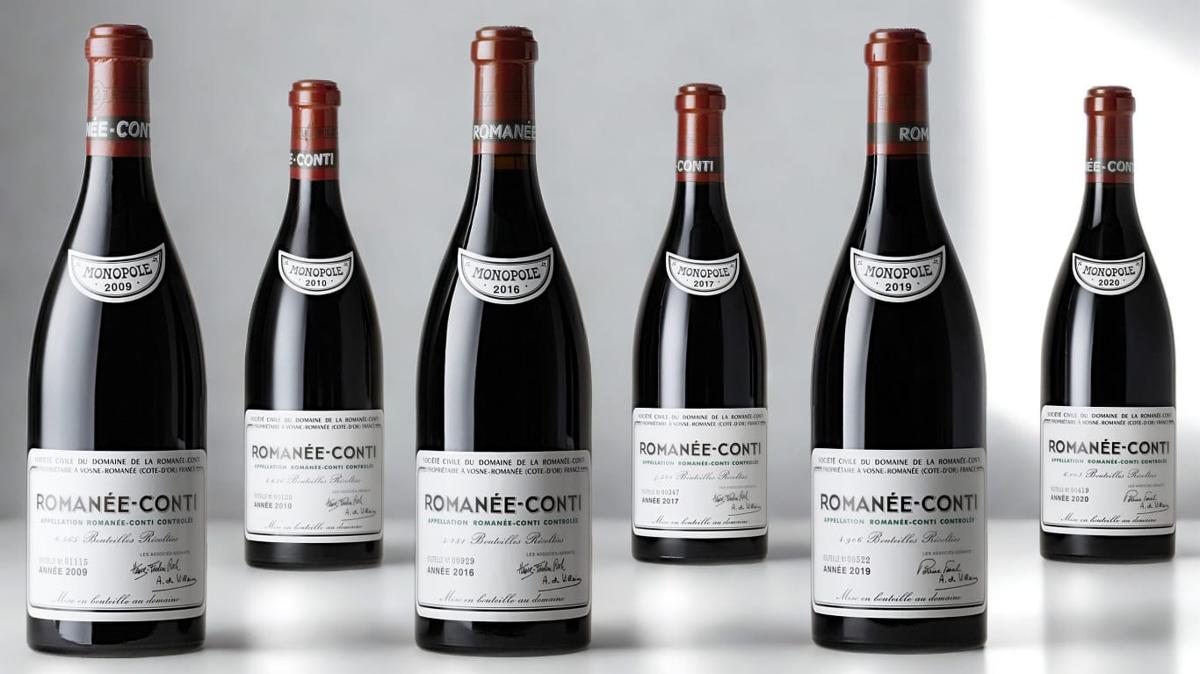
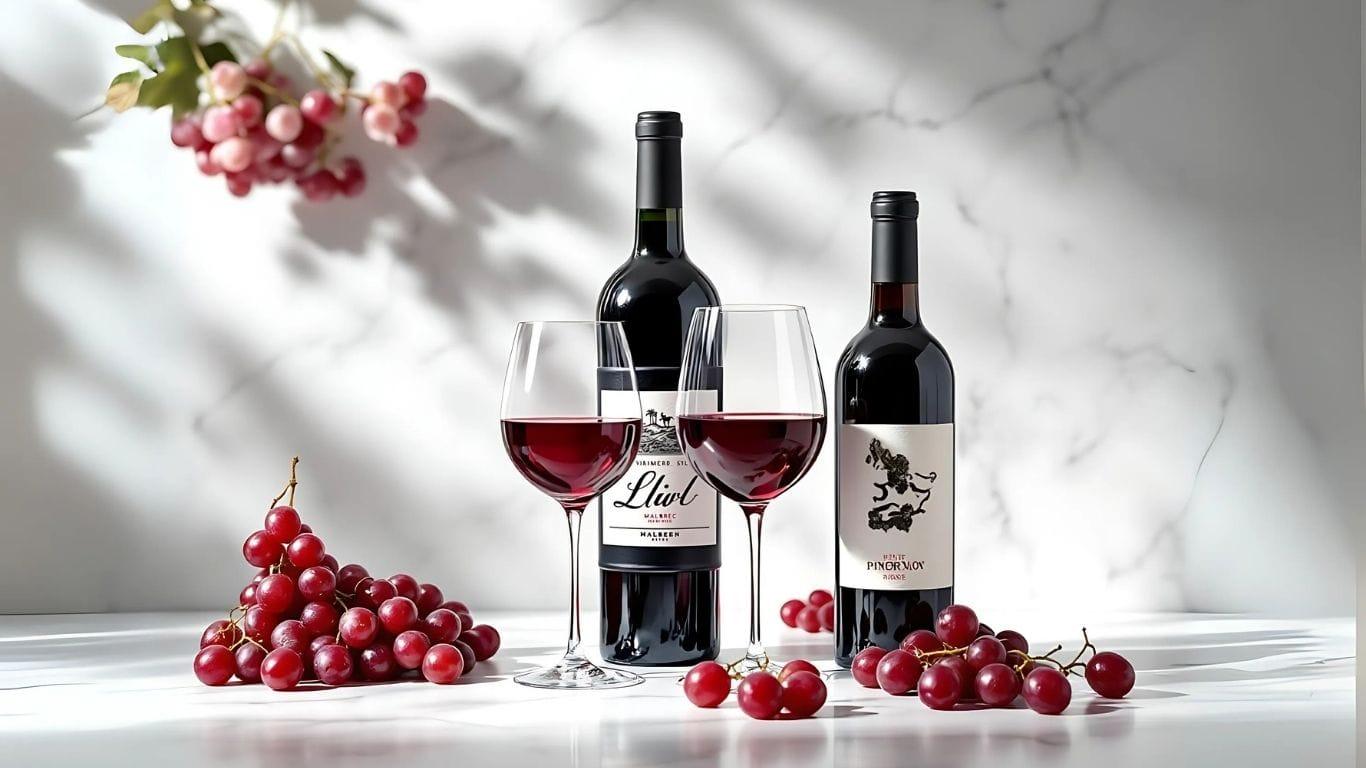
Pinot Noir and Malbec sit at very different points on the serious-red spectrum. Pinot Noir is Burgundy's exalted, terroir-driven, structurally delicate grape, the variety that anchors Domaine de la Romanée-Conti, Domaine Leroy, and the Côte de Nuits grand crus commanding the steepest per-bottle clearing prices in red wine.
- Pinot Noir and Malbec sit at very different points on the serious-red spectrum, and the comparison defines two structurally distinct cellar strategies.
- Pinot Noir is Burgundy's exalted, terroir-driven, structurally delicate grape, anchored by DRC, Leroy, and the Cote de Nuits grand cru tier.
- Malbec is Argentina's altitude-driven, modern-classic grape, anchored by Catena Zapata's Adrianna Vineyard and Cheval des Andes in the Uco Valley.
- The two grapes reward different cellar logics, with Pinot Noir demanding producer-led depth and Malbec rewarding regional concentration.
- Drinking windows diverge, with apex Burgundy peaking at 15 to 30 years and high-altitude Mendoza Malbec drinking strong at 10 to 20 years.
- For serious cellars both grapes deserve weight, but the structural cellar logic and price entry points are meaningfully different at every tier.
- Who is this for?
- Cellar builders weighing Burgundy positions against Mendoza Malbec, and serious collectors evaluating two structurally distinct red-wine strategies.
- What is happening?
- We compare Pinot Noir and Malbec as structural cellar positions, with the regional, producer, and drinking-window variables that distinguish each in serious collecting.
- When did this emerge?
- The piece reads the contemporary post-2020 market, with the post-2022 Burgundy correction and the maturing Argentine apex tier as live context.
- Where is this happening?
- Burgundy's Cote de Nuits for Pinot Noir, Mendoza's Uco Valley for Malbec, with named single-vineyard producers as the apex on both sides.
- Why does it matter?
- Sizing Pinot Noir and Malbec correctly against one another matters for collectors building red-wine breadth, and the structural decisions affect cellar performance across decades.
Malbec is Argentina's altitude-driven, modern-classic grape, the variety that anchors Catena Zapata's Adrianna Vineyard, Cheval des Andes, and the broader Mendoza tier that has built genuine fine-wine credibility over the past two decades. Both deserve cellar weight, for very different reasons.
This is our editorial comparison of Pinot Noir and Malbec for collectors weighing how the two grapes fit alongside each other in cellar architecture.
Origin and terroir
Pinot Noir's spiritual home is Burgundy, the strip running south from Dijon through the Côte de Nuits to the Côte de Beaune, where the grand crus map at vineyard rather than producer level. Beyond Burgundy, the grape anchors serious Pinot Noir from Oregon's Willamette Valley, Sonoma Coast, Central Otago in New Zealand, and Tasmania.
The grape rewards cool-climate, terroir-expressive sites: the limestone of Burgundy's grand crus, the volcanic and marine-sediment soils of the Willamette Valley, the schist of Central Otago.
Malbec's spiritual home is now Mendoza, Argentina, particularly the high-altitude Uco Valley sites at 1,200 to 1,700 metres. The grape originated in Cahors in southwest France (where it remains an important regional variety) but found its truest modern expression at altitude. The serious Mendoza sites (Gualtallary, La Consulta, Vista Flores, Altamira, Chacayes) produce wines with structural depth and aromatic complexity that didn't exist in the variety's Old World expressions.
Grape character and winemaking
Pinot Noir is a thin-skinned, early-ripening, structurally delicate red grape with notoriously difficult viticulture. The grape produces wines of pale-to-medium ruby colour, soft tannins, structural acidity, and aromatic complexity built around red fruit (cherry, raspberry, cranberry), earth (forest floor, mushroom), and floral notes (rose, violet).
The named Burgundy producers typically use a combination of new and used French oak (proportions varying by producer and bottling), often with whole-cluster fermentation in the more traditional houses.
Malbec is a thick-skinned, structurally tannic, deeply pigmented red grape that produces wines of dense purple-to-black colour, pronounced tannins, and aromatic profile anchored on black fruit (blackberry, plum), violet, savoury notes (chocolate, mocha), and (at altitude) an aromatic lift that balances the grape's natural density.
The named Mendoza producers typically use new French oak ageing (proportions varying by producer), with careful single-vineyard or single-parcel sourcing for the top bottlings and the structural advantage that altitude provides for natural acidity retention.
Drink windows and ageing
Pinot Noir's structural ageing comes from the integration of fine tannins, acidity, and aromatic complexity rather than the polyphenol-rich structural backbone of heavier reds. Burgundy grand crus from named producers reach their peak windows at 15 to 25 years from a strong vintage. The DRC grand crus extend slightly longer (20 to 35 years for the great vintages).
Premier crus from named producers reach their peak at 8 to 15 years.
Malbec's structural ageing comes from polyphenol content and concentration. The named Mendoza single-vineyard bottlings (Catena Adrianna, Achaval Ferrer Finca Altamira, Vina Cobos Volturno) reach their peak windows at 15 to 25 years from a strong vintage. The broader serious tier (Cheval des Andes, the better Catena Estiba Reservada bottlings) reaches its peak at 10 to 18 years.
Cahors from named producers (Château du Cèdre, Clos Triguedina) ages 12 to 20 years from strong vintages.
Pricing and secondary market
Pinot Noir spans the widest price range in serious red wine. Burgundy grand crus from named producers run $500 to $3,000 for current vintages, with the DRC bottlings clearing $5,000 to $30,000+ for new releases. Mature library releases of the great Burgundy vintages reach significantly higher: the great DRC Romanée-Conti routinely clears $30,000 to $100,000+ at major auctions, with the 1945 vintage clearing $558,000 at Sotheby's New York in 2018.
Premier crus from named producers run $200 to $800 for current vintages. Oregon and Sonoma Coast Pinot Noir from named producers runs $50 to $200 for the standard bottlings and $80 to $400 for single-vineyard wines.
Malbec runs at meaningfully more accessible price tiers across the spectrum. The Catena Adrianna single-parcel bottlings run $200 to $500 for current vintages, Cheval des Andes $80 to $150, and the broader serious tier $40 to $120. Even the most expensive serious Malbec sits well below the per-bottle clearing prices of comparable serious Burgundy, which is part of why the category has built consistent collector interest as Burgundy pricing has compounded.
The secondary market for both grapes runs through different channels. Burgundy grand cru Pinot Noir trades actively across all major fine-wine auction houses (Christie's, Sotheby's, Acker, Hart Davis Hart, Zachys), and Liv-ex's Burgundy 150 tracks the broader trajectory. Argentine Malbec trades more thinly at the major auction houses but has built consistent presence at regional auctions and through direct merchant channels.
Where each belongs in the cellar
Pinot Noir occupies the structural top tier of the red-wine cellar architecture for collectors building serious Burgundy depth, typically alongside Bordeaux Cabernet-driven positions, Tuscan Sangiovese-driven wines (Brunello, Super Tuscans), and selective Northern Rhône Syrah from named producers. The terroir-driven, single-vineyard nature of grand cru Burgundy gives it a distinctive role that no other red category replicates.
Malbec occupies a complementary position, providing structural quality at meaningfully more accessible price tiers, with stylistic depth that rounds out a serious red-wine cellar. The named Mendoza producers (Catena Adrianna, Cheval des Andes, Achaval Ferrer) provide collectors with quality positions at price points where Burgundy and Bordeaux from named producers no longer reach.
Vintage notes
The strong recent Burgundy vintages worth holding: 2009, 2010, 2015, 2016, 2017, 2018, 2019, and 2020. The strong recent Mendoza Malbec vintages from the named producers above: 2013, 2015, 2017, 2018, 2019, and 2020.
Both regions had challenging conditions in 2021 (Burgundy frost, Mendoza weather variability) but produced excellent quality from the better producers in 2022.
What this means for collectors
The Pinot Noir-versus-Malbec question isn't really competitive. The two grapes occupy different roles in the cellar architecture and serve very different purposes: Pinot Noir for the terroir-driven, structurally lifted, single-vineyard expression that defines serious Burgundy, Malbec for the altitude-driven, modern-classic expression that defines serious Mendoza. Cellars built across both have stylistic depth that single-region focused cellars miss.
The pattern most serious collectors converge on is concentrated Burgundy positions for Pinot Noir (the named domaines, multiple vintages of grand cru and premier cru bottlings) with selective Malbec positions for stylistic variety (Catena Adrianna and Cheval des Andes anchoring, the broader serious Mendoza tier filling out depth). Both deserve cellar weight, neither replaces the other.
We last reviewed this analysis in May 2026.