Rolex versus Hublot is one of the more polarising comparisons in modern watch collecting, and it is more useful than it first appears. The two brands occupy genuinely different temperaments. Rolex is the structural anchor of modern collecting; Hublot is the contemporary fusion-design maker that operates outside the traditional Swiss collector framework in deliberate ways.
- Rolex and Hublot answer almost opposite questions about luxury watches, with one anchored on understatement and the other on visible design provocation.
- Hublot Big Bang references command genuine waitlist demand on limited collaborations, but the broader Hublot catalogue depreciates more aggressively than equivalent Rolex pieces.
- Rolex secondary-market depth and liquidity continue to outperform Hublot by a wide margin, particularly in the long-term ownership horizon.
- We see Hublot as the strongest brand for collectors drawn to material innovation, with carbon, ceramic, and sapphire case work that no other luxury house matches.
- Brand signalling and resale flexibility still favour Rolex, which matters for buyers who prioritise long-term value retention over immediate aesthetic statement.
- A serious collector's shelf rarely holds both brands as core acquisitions, because they appeal to fundamentally different watch-buying motivations.
- Who is this for?
- Buyers weighing Rolex against Hublot, collectors drawn to material innovation, and design-anchored watch enthusiasts.
- What is happening?
- A side-by-side comparison of Rolex and Hublot in 2026, covering design philosophy, material innovation, secondary-market dynamics, and brand positioning.
- When did this emerge?
- The current comparison reflects post-2022 market dynamics, with Hublot collaboration releases continuing alongside Rolex's persistent waitlist depth.
- Where is this happening?
- Authorised dealers globally stock both brands, with Hublot collaboration releases concentrated through brand boutiques and event-driven sales.
- Why does it matter?
- These two brands answer opposite questions about luxury watches, and the right comparison helps buyers align purchase with personal watch philosophy.
The collector conversation tends to split between buyers who treat the two as alternatives at similar price bands and buyers who treat them as serving entirely separate registers. The honest read sits closer to the second view. Each brand earns its place for a particular reader, and the comparison sharpens what each is actually for.
Rolex: the case for the deep secondary market
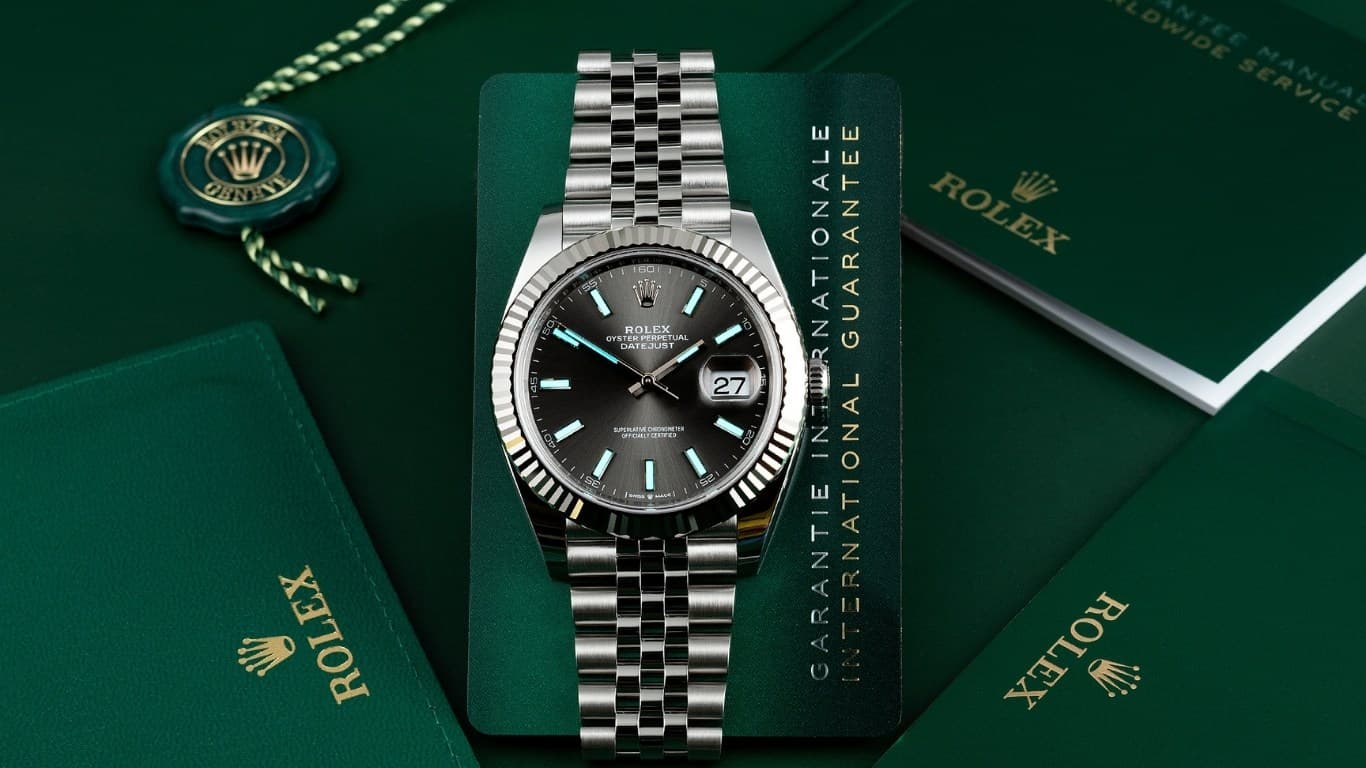
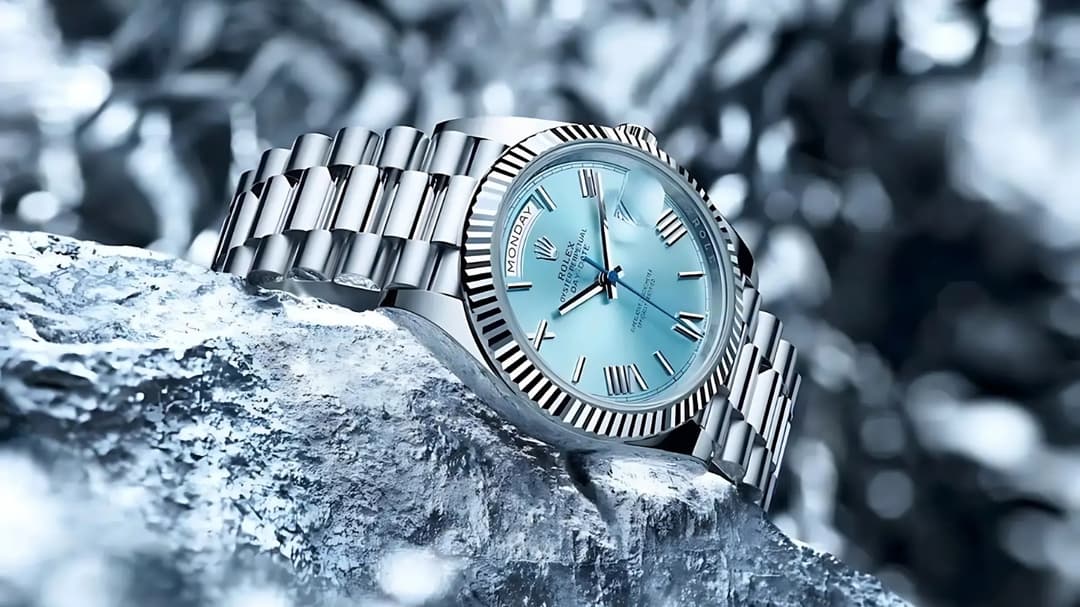
Rolex was founded in 1905 and produces in the broad ballpark of one million watches annually. The brand's secondary-market depth across the Submariner, GMT-Master II, Daytona and Datejust lines is the structural condition that defines modern watch collecting.
Allocation discipline at the boutique level keeps the most-sought references at sustained premiums above retail; the major auction houses, the dedicated specialist dealers, and Chrono24 and WatchCharts all treat current Rolex sport references as effectively liquid.
The technical case rests on the in-house movement architecture (the Calibre 3230, 3235 and 3255 families with Chronergy escapement and 70-hour power reserve), the proprietary 904L Oystersteel, the Cerachrom ceramic bezels, and Rolex's own gold alloys. Service-network density across the brand's global authorised dealer footprint supports the brand's place at the centre of modern collecting in ways no other Swiss maker has fully duplicated.
Hublot: the case for fusion design
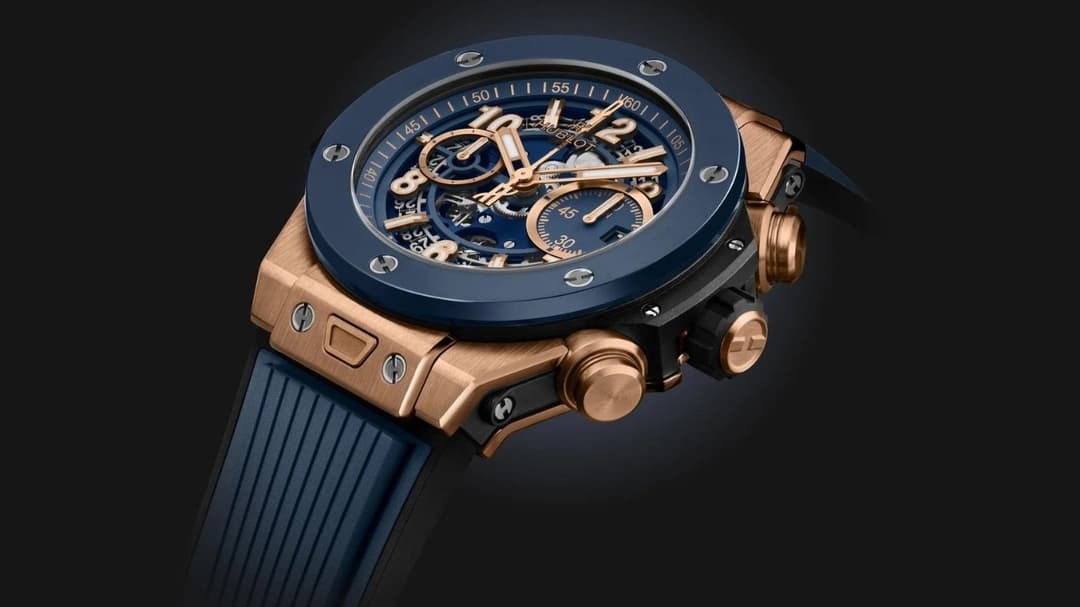
Hublot was founded in 1980 by Carlo Crocco and acquired by LVMH in 2008. The brand's defining contribution is the "art of fusion" approach: unusual material combinations (carbon, ceramic, sapphire, the proprietary Magic Gold scratch-resistant gold alloy, the various coloured ceramics) executed in the bold Big Bang case architecture introduced in 2005. Annual production sits in the tens of thousands of pieces.
The contemporary Hublot catalogue runs in-house Unico chronograph movements in the upper end, modified base movements in the broader catalogue, and a number of high-complication references with serious watchmaking ambition. The Classic Fusion line addresses buyers who want a more conventional case in the brand's design language; the Big Bang and Spirit of Big Bang lines anchor the catalogue's most-recognised registers.
Price comparison: where the two actually overlap
Rolex steel sport references run from around $9,100 (Submariner no-date) to $16,500 (Daytona) at retail. The Datejust runs from around $7,500. Precious-metal references push the upper catalogue into bespoke territory.
Hublot Classic Fusion references run from around $5,500 to $12,000 in the standard steel and ceramic configurations. Big Bang references run from around $14,000 to $30,000 depending on case material and complication. The upper Hublot complications (the Big Bang Tourbillon, the various sapphire-cased references, the Aerofusion chronographs) run substantially higher into six figures.
Resale value and how the secondary market responds
Rolex sport references trade at structural premiums above retail. That premium has held with remarkable consistency across decades and is the structural condition the brand's allocation discipline produces. For the most-sought references (Daytona, Submariner Date, GMT-Master II), the premium runs into the thousands of dollars above retail.
Hublot's secondary-market behaviour is different. Most current Hublot production loses 30 to 50 percent of retail in the first few years on the secondary market, the normal pattern for brands that aren't supply-constrained. The exceptions are the upper complication references and the genuine limited editions, which hold value better.
Our coverage of which Hublot watches actually retain value walks through the specific references where the curve looks different.
Quality and mechanics: how the watchmaking stands up
Rolex's case is straightforward. The Oyster case construction, the Twinlock or Triplock screw-down crown, the Cerachrom bezel, and the in-house movement architecture make modern Rolex production some of the most reliable wristwatches available at any price. Service intervals are long, the global service network is dense, and movement reliability across decades is well-documented.
Hublot's case is more variable. The Unico chronograph movement is a genuine in-house design and executes at a serious level; the Classic Fusion line with the modified base movements is more conventional. The proprietary materials (Magic Gold, the various coloured ceramics, the carbon and sapphire constructions) are legitimately ambitious; the engineering ambition in the upper catalogue is real.
The broader catalogue is more design-led than mechanically ambitious, which is the brand's deliberate positioning.
Choosing between Rolex and Hublot
Choose Rolex for the deepest secondary-market depth, the broadest brand recognition, and the most structurally consistent design language across decades. Rolex is the brand most buyers think of as "a serious watch" without further qualification; the allocation friction and the boutique-relationship work are the cost of the brand's market position.
Choose Hublot for the contemporary fusion-design register the brand built across the past two decades. Hublot is the brand most likely to suit buyers drawn to bold materials, modern case architecture, and a brand operating outside the traditional Swiss collector framework. The collectors who add a Hublot to a serious collection tend to do so for the design register rather than the structural collecting case.
We last reviewed this analysis in May 2026.


Stefanos Moschopoulos
Stefanos Moschopoulos founded The Luxury Playbook in Athens and has spent the better part of a decade following the auction calendar, the en primeur releases, and the watchmakers, gallerists, and shipyards the magazine covers. He writes the field guides and listicles that anchor the Connoisseur section — pieces built on Phillips and Christie's results, Liv-ex movements, and conversations with collectors he has met across Geneva, Bordeaux, Basel, and Monaco. His own collecting habits sit closer to watches and wine than art, and it shows in the level of detail in the magazine's coverage of those categories. Under his direction, The Luxury Playbook now publishes long-form field guides, market-defining year-end listicles, and the Voices interview series with the founders behind the houses and the brands.