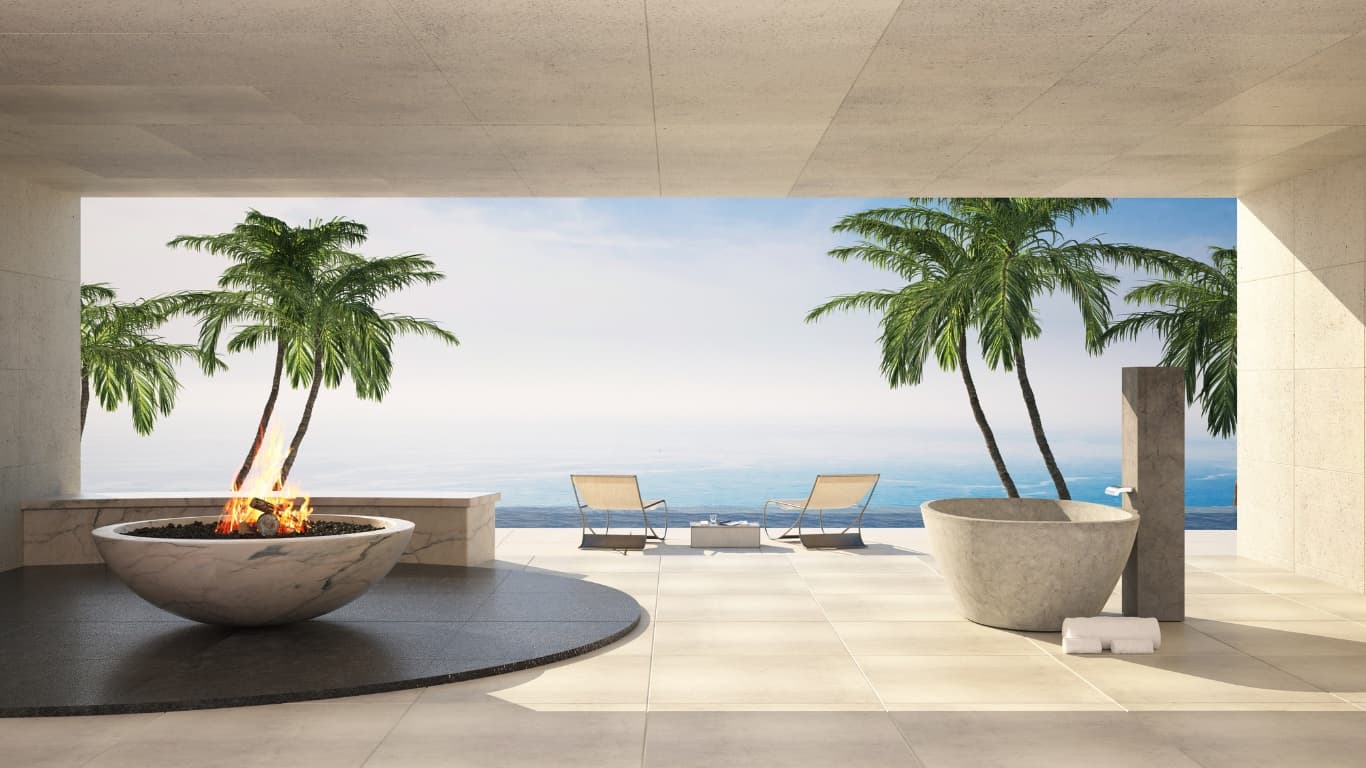
Every affluent buyer has already seen it: the marble kitchens, the floor-to-ceiling glass, the temperature-controlled wine cellars and the resort-style pool. These features once signaled the very top of the market. Now they are the price of entry, so familiar that they barely register. The finishes that used to close a sale have started to collect dust.
For most of the last century, real estate was measured by what was built rather than by what it meant. That measure is changing. Luxury property is going through an emotional and psychological shift, and the next frontier will be judged less by what a home contains and more by how it is lived.
This is not a decorating trend. It is a structural change in how value gets created, and it is already visible in the way the most sophisticated developers, brands and buyers think about space.
Key Takeaways
- Standard luxury finishes no longer set a property apart. Marble, glass and resort-style amenities are now the baseline, so buyers judge a home by how it makes them feel rather than by what it contains.
- The idea traces to the "experience economy" concept from 1998. Research from Cushman & Wakefield links an optimal level of "Play" real estate to stronger downtown GDP, foot traffic and property valuations, so the effect shows up in the numbers.
- Commercial and residential design are converging. Offices borrow the warmth of the home while luxury residences adopt the service model of the world’s best hotels.
- Perceived value is emotional. Two otherwise identical homes can be valued very differently depending on whether the space is designed around daily rituals.
- Branded residences prove the point. Names such as Bvlgari, Armani, Porsche and Aston Martin command roughly a 25% to 40% premium, with more than 700 developments worldwide and another 400-plus in the pipeline.
- Wellness and hospitality are the new operating model. Knight Frank reports a move from conspicuous consumption toward intentional, experience-led spending, and the developers who design for feeling will hold the advantage.
- Who: Luxury developers, branded operators and high-net-worth buyers rethinking what a premium home is actually worth.
- What: A shift in luxury real estate away from finishes and square footage toward feeling, hospitality and human-centered design.
- When: Now, as basic luxury becomes widely available and buyers, especially younger affluent ones, put experience ahead of possessions.
- Where: Across prime markets worldwide, from branded residential towers to private homes and the offices and retail spaces that inform them.
- Why: Because a physical product is easy to copy, while the emotional experience of living somewhere is far harder to replicate and now drives perceived value.
Table of Contents
- The Experience Economy Reaches Real Estate
- Commercial and Residential Design Are Converging
- Experience Architecture and Perceived Value
- Branded Residences and Hotel-Inspired Living
- Wellness as the New Luxury
- Hospitality as a Design Philosophy
The Experience Economy Reaches Real Estate
The thinking behind this shift is not new. The "experience economy" concept, introduced in 1998, argued that experiences were the next stage of the consumer economy, delivering memories rather than only tangible products or intangible services. Real estate is one of the last industries to absorb that lesson, and it is absorbing it quickly.
In property, the idea shows up most clearly in the "Play" part of the old "Live, Work, Play" framework: the retail, hotels and anchor institutions such as museums, theaters, arenas and stadiums that give a place its pull. Research from Cushman & Wakefield found that an optimal level of "Play" real estate correlates with the best outcomes for a downtown’s GDP, foot traffic and property valuations. This is not a soft cultural observation. It shows up in the numbers.
Connect the dots across retail, hospitality, multifamily and workplace design and one cross-sector thesis emerges. Physical space now has to earn its keep, and it earns it through what people feel inside it, not through the rules of any single asset class. The old habit of treating offices, shops, hotels and homes as separate disciplines is breaking down.
Commercial and Residential Design Are Converging
For most of the last century, commercial and residential design chased different goals. Commercial space was engineered for efficiency, maximizing productivity, circulation, transactions and the number of people who could move through it. Residential space was built around permanence, comfort, privacy and ownership, with an emphasis on craftsmanship, aesthetics and the tangible markers of home.
Those two worlds are now converging fast. Commercial environments are borrowing the warmth and intimacy long associated with residential design, while luxury residences are adopting the service philosophy and operational discipline of the world’s best hotels. Offices now include hospitality-style lounges, cafes, wellness rooms and residential furnishings, because employers understand that people do not simply work in a space, they experience it. Retail has moved beyond displaying products toward immersive destinations built around cafes, events, stylists and VIP experiences, because product alone no longer sets a brand apart.
Luxury homes have changed in the same way. They are no longer defined by a larger wine cellar or extra square footage, but by concierge service, wellness programming, sleep optimization, a real sense of community and hospitality that runs quietly in the background.
Experience Architecture and Perceived Value
Beyond design and investment, luxury real estate now earns its value through what you might call experience architecture: the way a building shapes daily life. Behavioral economics and psychology tell us that people judge value emotionally and in context rather than objectively. The environment becomes part of the value chain.
Picture two homes priced at $12 million presented to the same buyer. Home A has every finish imaginable: imported marble, custom millwork, a private theater and an infinity pool. It is technically perfect. Home B has many of the same finishes, but it was designed with intention around how the owner will actually live. A window is placed so that morning light fills the breakfast nook exactly when the family gathers. Rather than asking where to put the breakfast nook, the design team asked a different question: what daily ritual should this breakfast nook support?
Buyers describe the two homes very differently. One is impressive but expected. The other leaves a feeling they cannot quite shake. That emotional gap often translates into higher perceived value, because the buyer is imagining a better version of their own life, the time spent together and the memories built through those small rituals. It is also how the wealthiest buyers read property, a point explored in our look at how the wealthiest actually make luxury decisions.
Our brains do not, by default, separate a product from the setting in which it is experienced. We encode the atmosphere, the people, the anticipation, the sensory cues and the emotion into our sense of what something is worth. It is why luxury brands invest so heavily in their stores, why hotels obsess over the moment of arrival, and why the smartest developers are starting to design environments rather than amenities.

Branded Residences and Hotel-Inspired Living
Branded residences show how tightly luxury travel, retail and hospitality now connect. Bvlgari, Jacob & Co, Armani, Porsche and even Aston Martin are putting their names on standalone residential towers, and these properties command roughly a 25% to 40% price premium over comparable luxury homes. Buyers pay it because a globally recognized brand works like an insurance policy for quality, security and financial return, removing the doubts that usually surround construction standards, on-time delivery and property management.
The scale is significant. There are now more than 700 branded residential developments worldwide, with another 400-plus in the pipeline, making this one of the fastest-growing segments in luxury real estate. What buyers are really paying for is confidence in the service and a way of living that matches the world’s best hotels. The same logic helps explain why high-net-worth individuals keep increasing their real estate holdings, since they are buying managed experience rather than square meters alone.
Wellness as the New Luxury
This is not confined to real estate. The same shift is playing out across fashion, travel, hospitality, automotive and wellness. The reason is both psychological and economic. Once basic luxury becomes widely available, the scarce commodity is no longer more, it is better.
Knight Frank puts it plainly: "Luxury is no longer just about what you own, it is about who you are becoming." That single line explains why ease, privacy, wellness and personalization are overtaking conspicuous consumption.
The firm’s latest Wealth Report describes a clear move from conspicuous consumption toward intentional, experience-led spending, with wellness, longevity and emotional luxury emerging as primary drivers of what people buy. Among younger affluent consumers surveyed, nearly half said they would rather spend a financial windfall on experiences than on possessions.
Increasingly it is the invisible elements that separate one property from another: intuitive service, restorative spaces, considered lighting, acoustic comfort and the personal touches that make a place feel built for one person.
Hospitality as a Design Philosophy
Hospitality thinking is becoming essential to residential development, because buyers are really investing in the daily experience of an asset that mostly sits still. The physical product is easy to replicate. What sets one development apart is how it operates after the sale: the quality of service, the ease of living, the personalization and the feeling of coming home. Value is shifting from the building itself to the life it makes possible.
At its heart, hospitality is the business of anticipating human needs before they are spoken. The real measure of luxury is how smoothly a resident moves through the day, how supported they feel, and how often the space removes friction instead of adding it. None of this works in isolation. Light, sound, scent and flow shape mood and memory together, and the developers who grasp that first will hold a genuine edge.
Aesthetics still matter, but they are no longer enough to stand out. Beautiful space is now expected at the top of the market. What is far harder to copy is a home that reliably makes its residents feel calm, energized, connected, restored or inspired. So the better question is not "what should we build," but "how do we want people to feel when they wake up, host friends, work from home or unwind in the evening?" A rival can install the same marble, the same appliances and the same fixtures, yet the feeling of effortless living depends on a deeper read of human behavior.
People form lasting attachments to buildings that quietly improve how they live. As luxury moves from ownership to experience, the greatest advantage will belong to developers who design not only for what people see, but for what they feel. We pour enormous effort into extraordinary experiences in places we occupy for only a few hours or a few days, in retail and in travel, yet often overlook the emotional life of the homes we return to every day. That gap is the opportunity luxury real estate has not yet fully claimed.
Related reading on how experience and access shape prime markets can be found in Sotogrande: The Discreet Andalusian Trophy Market.
We last reviewed this analysis in July 2026.


Irina Volfson
Irina Volfson is an entrepreneur, innovation strategist and experience architect specializing in luxury, hospitality, consumer products, and emerging business ecosystems. As founder of Magnatist, she advises organizations on growth strategy, commercialization, customer experience, and the development of products, services, and ventures designed for long-term value creation. Her work has also spanned private client advisory, luxury travel, lifestyle experiences, and affluent consumer behavior, providing a unique perspective on the evolving relationship between wealth, consumption, and culture. At The Luxury Playbook, she writes about wealth, luxury, business, consumer trends, hospitality, real estate, and the industries shaping the future of affluence.