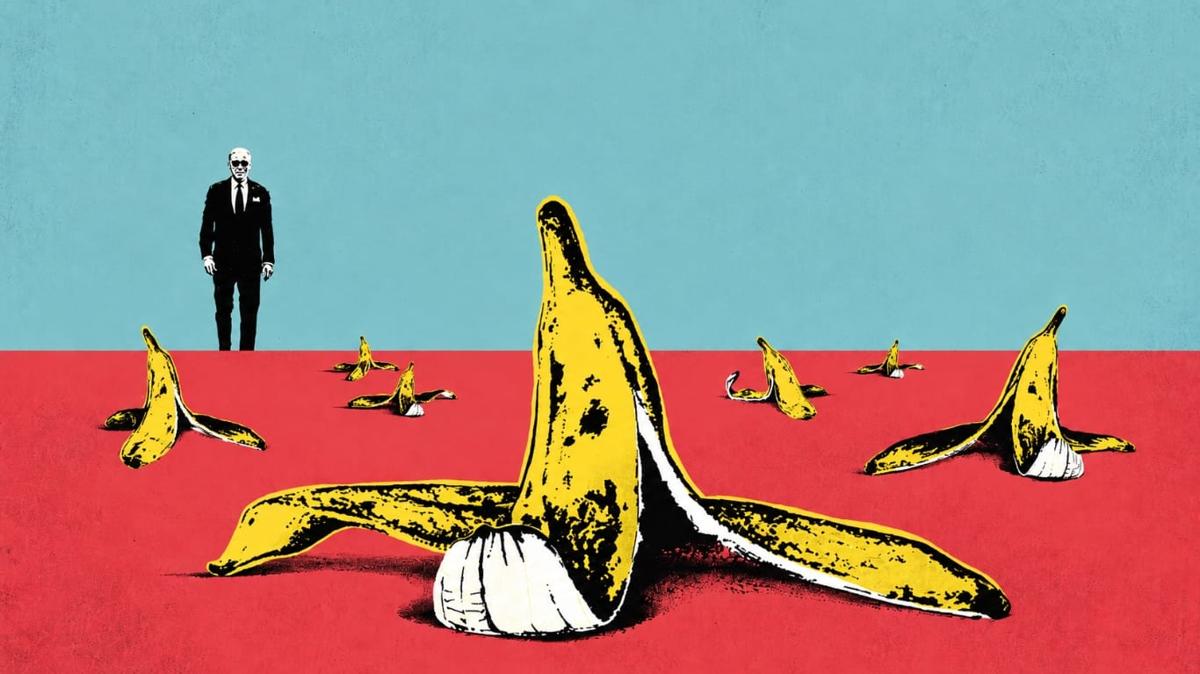
Ask a founder how he built the business and he will describe, without intending to, a long life of successful intervention. A supplier failed and he had another by Friday. A senior hire walked out and he covered the role himself for a quarter. The product was wrong, so he changed it. The market moved, so he moved. Every serious problem eventually had a door he could walk through, given enough will and enough hours. This is not a delusion. It is an accurate account of how a company actually works, and it is the reason he is wealthy. It is also the most dangerous habit he carries into the capital markets, where there is no door.
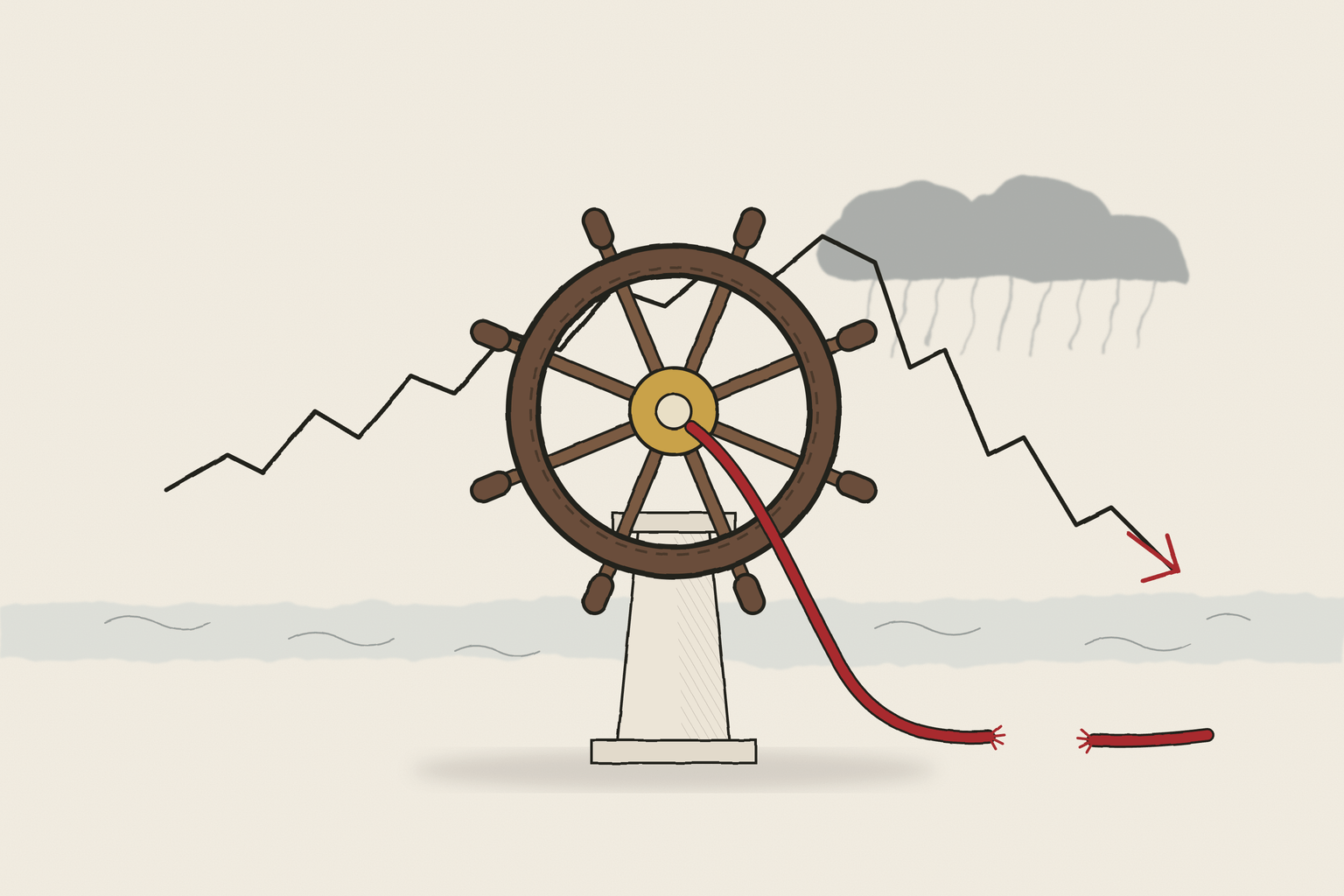
The distance between the two environments is wider than it appears from either side. Inside a company, effort and outcome are joined by a chain the owner can largely see and mostly pull. In markets that chain is cut. An interest rate cycle does not respond to conviction. A valuation does not care who is holding it. The collective behaviour of millions of other participants cannot be managed, persuaded, out-worked or called at the weekend. Conviction is still required. It has simply stopped being causal, and nothing in the experience of holding it announces the change.
Key Takeaways
- The habit that builds a business, intervening until a problem gives way, misleads a founder in markets, where effort and outcome are no longer joined.
- Ellen Langer showed in 1975 that cues normally linked to skill, such as choice, familiarity, competition and involvement, make people behave as if they can influence chance.
- Financial markets are built almost entirely from those cues, so confidence is easily mistaken for control.
- In a study of 107 professional traders, those most prone to illusory control performed worse, were rated lower by their managers and earned less.
- In private wealth the illusion shows up as action taken to relieve anxiety, and as precise forecasts that soothe more than they inform.
- The control that is real covers price, borrowing, position size, liquidity and never being a forced seller: control over exposure, not over outcomes.
- Who: Founders and business owners managing significant private wealth, and the advisers who work with them.
- What: How the illusion of control, a well-documented bias, carries over from running a company into managing capital, and what it costs.
- When: Most acutely after a difficult quarter or a market fall, when the urge to act is strongest.
- Where: In private portfolios, family offices and adviser relationships as much as on trading floors.
- Why: Because the only control that protects a fortune is control over exposure, and it is decided years in advance.
The Cues That Whisper Skill
Ellen Langer named the mechanism in 1975. Across a series of studies she showed that when features normally belonging to skill are introduced into situations governed entirely by chance, people begin behaving as though they can influence the result. Being allowed to choose your own lottery ticket rather than receive one. Facing a competitor who appears nervous. Familiarity, practice, personal involvement. Each cue pushed expectations of success above what the odds could possibly justify. The illusion demanded no stupidity whatsoever. It required only that the situation resemble the kind of situation in which skill matters.
Financial markets are constructed almost entirely from those cues. The holding is chosen rather than handed over. The sector is familiar, sometimes the management, occasionally the founder personally. There is a scoreboard updated by the second and a visible field of rivals doing the same thing. The participant is financially and emotionally involved, and has often studied the position for weeks. Everything about the experience has the texture of a skill game, and some genuine portion of it is one. The difficulty is that the cues make no distinction between the portion that is skill and the portion that is weather, and neither, without deliberate effort, does the person feeling them. Supplying that deliberate effort, so that confidence is not quietly mistaken for control, is a large part of what Behavioral Arbitrage is concerned with.
What the Illusion Actually Costs
This might be dismissed as a harmless comfort were it not measurable. Mark Fenton-O’Creevy and colleagues studied a hundred and seven professional traders across four financial institutions, assessing each one’s susceptibility to illusory control through a task that appeared to respond to their input but did not. The traders most prone to the illusion performed worse. They were rated lower by their managers and they earned less. The finding cuts against the comfortable assumption that self-belief is simply fuel. Among people paid specifically to make decisions under uncertainty, those who felt most in command of that uncertainty were the ones handling it least well.
In private wealth the same reflex is quieter than on a trading floor, and better dressed. It shows up as the restructuring convened after a difficult quarter, the hedge put on once the fall has already happened, the fourth call to the adviser in a month. Action metabolises anxiety. Something was done, therefore something must be under control. The decision has been taken in order to feel better, which is a legitimate human need and an unusually expensive way of meeting it.
Forecasting performs the same service in more respectable clothing. A model with carefully argued assumptions, a base case and two alternatives, a figure carried to one decimal place. None of it makes the future more knowable. What it does is convert an unbearable blankness into something that can be discussed in a meeting, which is a genuine service and should not be confused with accuracy. A forecast stated precisely is not more likely to be right than a forecast stated as a wide and honest range. It is merely more soothing, and the soothing is usually what it was built for.
Controlling What Can Be Controlled
The correction is not humility understood as a virtue, which tends to be recommended by people who have never had to act on it. It is humility understood as a specification. There is a short list of things an investor genuinely determines: what he pays, how much he borrows, how large any single position is permitted to become relative to everything else, how much liquidity stands behind his commitments, how long he can afford to wait, and whether he can ever be forced to sell at a moment not of his choosing. Not one item on that list requires a view about the future. Every item on it governs how much the future is allowed to matter.
For a certain kind of successful person this feels like a demotion, and it is worth naming the feeling rather than pretending it away. He is being asked to stop being the protagonist of the story, to swap the question of what will happen for the duller question of what happens to him in each case, and to accept that his job now is to be well positioned rather than to be right. The skills that built the company are not useless here. They are simply pointed at the wrong target, and they were never tested against an opponent that does not notice him.
He retains far more control than he believes, though not over the variables he spends his time watching. He cannot move a rate cycle and cannot time a market top, and no amount of attention will change either fact. He does decide whether a rate cycle or a market top is survivable, and that decision is made years in advance, quietly, in the size of a position and the structure standing behind it. Surrendering the illusion, in other words, is what finally delivers the thing the illusion was imitating. Control over outcomes was never available to anyone. Control over exposure always was, and it is the only kind that has ever protected a fortune.
Related thinking on why the investors who do best tend to look inactive from the outside can be found in Why the Best Investors Are Duller Than the Stories About Them.
Sources: Ellen J. Langer, “The Illusion of Control”, Journal of Personality and Social Psychology, 1975, the original identification of the bias, showing that skill-related cues such as choice, familiarity, competition and involvement raise confidence in outcomes determined by chance. Mark Fenton-O’Creevy, Nigel Nicholson, Emma Soane and Paul Willman, “Trading on Illusions: Unrealistic Perceptions of Control and Trading Performance”, Journal of Occupational and Organizational Psychology, 2003, field evidence from professional traders that a higher propensity to illusory control is associated with lower performance and lower remuneration.
We last reviewed this analysis on 19 October 2026.