Chardonnay is one of the most widely recognized and consumed white wines in the world. Known for its incredible versatility, you can find it across a full range of styles, from crisp and unoaked to rich and buttery.
But beyond its appeal to wine lovers, Chardonnay is also gaining real traction as an alternative investment asset, offering potential financial returns for collectors and investors who know where to look.
With wine investment becoming a sought-after avenue for portfolio diversification, Chardonnay’s global presence and historical market performance make it a genuinely intriguing option worth your attention. If you want to understand how luxury assets are replacing stocks as the preferred playground of the elite, fine wine is a strong place to start.
But what makes it unique? Why has it held a firm place in the wine industry for centuries? And more importantly, is Chardonnay wine a good investment in 2026 and beyond?
This guide covers everything you need to know about Chardonnay wine, from its history and taste profile to the regions, pricing, and potential return on investment.
You’ll also find a breakdown of the best Chardonnay wines to collect in 2026, so you can decide whether this beloved white wine deserves a place in your investment portfolio.
Table of Contents
What Is Chardonnay Wine?
Chardonnay is a green-skinned grape variety used to produce white wine. It ranks among the most widely planted and adaptable grape varieties in the world, thriving in both cool and warm climates across nearly every major wine-producing region.
Unlike many other grapes, Chardonnay is relatively neutral in character, meaning its taste is largely shaped by the region it grows in and the winemaking techniques applied.
Key Characteristics of Chardonnay Wine
- Adaptability: Chardonnay grows in diverse climates, from the cool regions of Burgundy, France, to the sun-drenched vineyards of California, Australia, and South Africa.
- Winemaking Influence: Chardonnay can be unoaked or oaked, which significantly alters its taste and texture.
- Aging Potential: Premium Chardonnays from Burgundy Grand Cru vineyards and some high-end New World producers can develop complexity over time.
Why Is Chardonnay So Popular?
Chardonnay has earned its place as one of the most beloved white wines on the planet, and that popularity doesn’t come from marketing alone. A few key factors keep it at the top.
From its versatility in winemaking to its strong market demand and investment appeal, Chardonnay captivates wine enthusiasts, collectors, and investors in equal measure.
One of the primary reasons for Chardonnay’s widespread appeal is its sheer versatility. Winemakers can craft it in a wide variety of styles, catering to almost any palate. It can be made into crisp, refreshing unoaked wines that showcase bright acidity and flavors of green apple and citrus.
Alternatively, it can go through oak aging, resulting in rich, buttery, full-bodied wines with notes of vanilla, toast, and tropical fruit. That adaptability allows Chardonnay to appeal to everyone, from casual drinkers to seasoned connoisseurs.
Chardonnay’s popularity is also driven by its global market demand. It’s one of the most widely consumed and traded white wines worldwide, with a presence in nearly every wine-producing region on earth.
From the Burgundy region of France to California’s Napa Valley and Australia’s Margaret River, Chardonnay thrives across diverse climates and terroirs. Its consistent quality and recognizable flavor profile keep it a staple on wine lists and in retail stores across the globe.
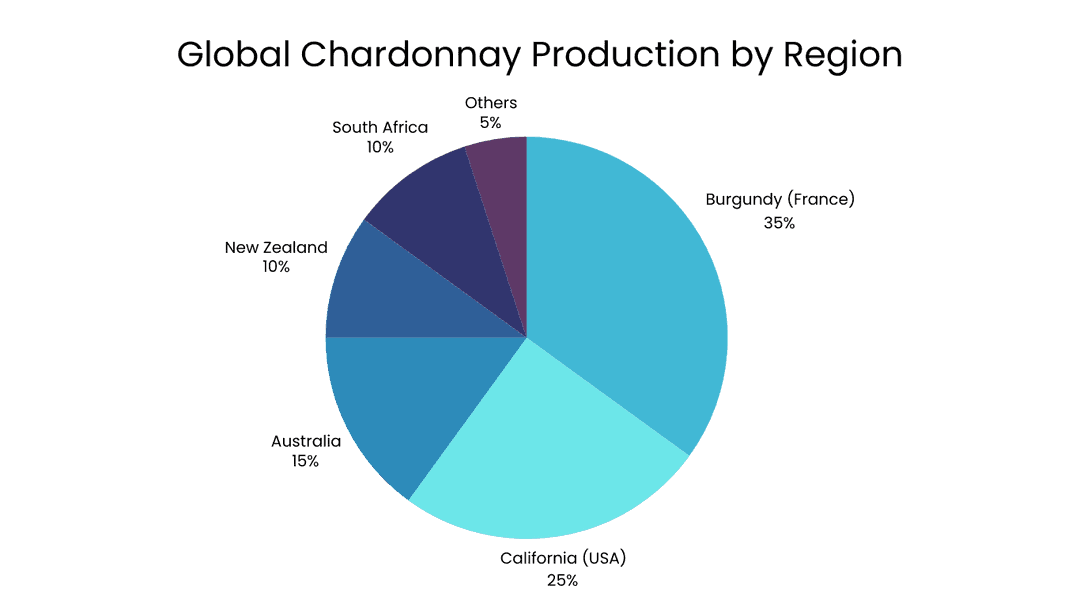
And beyond its versatility and market demand, Chardonnay has also earned recognition for its investment potential. Wines from top producers and prestigious regions, such as Burgundy’s Montrachet or California’s Sonoma Coast, have historically appreciated in value over time.
The History of Chardonnay Wine
The story of Chardonnay is a captivating journey spanning over a millennium, beginning in the vineyards of Burgundy, France, where it first emerged as a prized white grape variety.
Its name is believed to originate from the small village of Chardonnay in the Mâconnais region, where historical records suggest it was cultivated as early as the 10th century.
Monastic orders played a pivotal role in refining winemaking techniques, harnessing Burgundy’s limestone-rich soils and cool climate to produce some of the world’s most revered white wines.
Iconic appellations like Puligny-Montrachet, Chablis, and Meursault became synonymous with Chardonnay’s elegance and complexity, laying the foundation for its global acclaim.
By the 17th and 18th centuries, Chardonnay had begun spreading beyond France, finding its way into vineyards across Italy and Germany, where it was often blended with local white grapes.
But it wasn’t until the 19th and 20th centuries that Chardonnay truly exploded onto the global stage. Advances in viticulture and a growing demand for fine white wine propelled its expansion, especially in the New World.
In the 20th century, California became a new epicenter for Chardonnay, especially in regions like Napa Valley and Sonoma County.
The 1976 Judgment of Paris, a landmark blind tasting, marked a turning point when a California Chardonnay triumphed over top Burgundy whites, shattering preconceptions and putting California firmly on the fine wine map.
That victory ignited a wave of global interest, and soon countries like Australia, New Zealand, South Africa, and South America began cultivating their own distinctive expressions of Chardonnay, each shaped by unique climates and soils.
Today, Chardonnay stands as the most planted white wine grape globally, covering over 210,000 hectares (519,000 acres) across major wine-producing regions.
In 2024, it accounted for nearly 20% of all global white wine sales, underscoring its commercial weight. And beyond popularity, Chardonnay has become a genuine star in the world of fine wine investment.
Top-tier Burgundy Chardonnays from producers like Domaine de la Romanée-Conti and Domaine Leflaive regularly command tens of thousands of dollars per bottle at auction, reflecting their status as prized collectibles.
With its rich history, unwavering market demand, and consistent price appreciation, Chardonnay has proven itself to be far more than a beloved wine. For the right buyer, it’s a valuable asset.
From its humble beginnings in Burgundy to its global dominance, Chardonnay’s story is a evidence of adaptability, quality, and enduring appeal.
Chardonnay Wine Regions and Terroir
One of Chardonnay’s most fascinating attributes is its ability to adapt to diverse climates and soils, producing remarkably different expressions depending on where it is grown.
The influence of terroir, meaning climate, soil, and topography, plays a crucial role in shaping the flavor profile, acidity, and age-worthiness of any Chardonnay you’re considering.
Here’s a look at the most significant Chardonnay-producing regions and how their terroir affects the wine’s characteristics.
- Burgundy, France: The most prestigious Chardonnay-producing region, known for its limestone-rich soils that contribute to the wine’s high acidity and minerality. It includes sub-regions like Chablis, Côte de Beaune, and Mâconnais, producing wines that range from crisp and unoaked to rich and complex.
- California, USA: A major player in Chardonnay production, with regions like Napa Valley, Sonoma County, and the Central Coast leading the way. California Chardonnays are often full-bodied, with tropical fruit flavors, vanilla, and buttery textures due to oak aging.
- Australia: Produces diverse styles of Chardonnay, with Margaret River focusing on rich, textured wines, while Adelaide Hills and Yarra Valley specialize in elegant, mineral-driven expressions. The country’s top Chardonnays are gaining global recognition.
- New Zealand: A cool-climate region where Chardonnay is known for bright acidity, citrus notes, and subtle oak influence. Marlborough and Hawke’s Bay are the most prominent producing areas, with quality on the rise.
- South Africa: Emerging as a producer of high-quality Chardonnay, particularly in Walker Bay, Stellenbosch, and Elgin. The wines balance citrus freshness with minerality, influenced by the cool ocean breezes.
The terroir-driven nature of Chardonnay makes certain regions far more valuable from an investment standpoint. Burgundy holds the gold standard, with California following closely in the fine wine investment space.
Regions like Australia, New Zealand, and South Africa offer impressive quality, but investment-grade wines from these areas are still building their track record.
Chardonnay Wine Taste and Smell Characteristics
Chardonnay is often called a winemaker’s grape, and for good reason. Its adaptability allows it to reflect both the terroir and the techniques used in production.
That versatility produces a broad spectrum of flavors and aromas, making it one of the most dynamic white wine varieties you can put in your glass or your cellar.
Aroma Profile
The aroma of Chardonnay depends largely on where it was grown and how it was made. In cooler climates like Chablis, New Zealand, and parts of coastal California, you’ll typically find fresh, crisp aromas of green apple, pear, lemon, and flint. These wines tend to be lean, with a noticeable mineral character.
In warmer climates, including Napa Valley, Australia, and South Africa, the fruit aromas become riper, leaning towards tropical notes like pineapple, mango, peach, and melon.
These warmer regions produce fuller-bodied wines with a more pronounced fruit-forward profile.
The use of oak barrels introduces additional secondary aromas. Oak-aged Chardonnays often carry vanilla, caramel, toasted almonds, butterscotch, and baking spice notes, which add real depth and complexity.
How prominent those flavors are depends on the length of oak aging and the type of barrels used.
Flavor Profile
Unoaked Chardonnay is known for its fresh, vibrant character, featuring citrus, apple, and stone fruit flavors with a crisp acidity and a clean, refreshing finish. These wines tend to be lighter in body and emphasize the purity of the fruit.
Oaked Chardonnay, on the other hand, develops a richer and more complex profile. Techniques like malolactic fermentation and aging on lees contribute to flavors of vanilla, butter, toasted hazelnut, and spice.
These wines have a creamier texture and a longer, more rounded finish, often displaying a lush mouthfeel that’s deeply satisfying.
Acidity and Mouthfeel
The acidity and texture of Chardonnay vary based on climate and winemaking choices. In cooler climates, Chardonnay retains higher acidity, making the wine feel crisp and refreshing.
That higher acidity also enhances aging potential, allowing the wine to evolve and develop more complex flavors over time, which matters a great deal if you’re buying to hold.
In warmer climates, acidity is lower and the wine has a rounder, more fruit-forward profile. These Chardonnays tend to feel fuller-bodied and softer on the palate.
The process of malolactic fermentation further softens acidity, creating the creamy, buttery texture many associate with traditional California Chardonnay.
Aging Potential and Investment Value
While many Chardonnays are best consumed within a few years of release, certain high-quality examples have exceptional aging potential.
Wines from Grand Cru vineyards in Burgundy and select Napa Valley estates can age for 10 years or more, developing intricate secondary flavors such as honey, almond, truffle, and brioche.
From an investment standpoint, aged Chardonnay from top-tier producers like Domaine Leflaive, Domaine de la Romanée-Conti, and Domaine Coche-Dury has shown strong price appreciation over the past few decades. If you want a deeper look at how white wine holds up against red in terms of long-term value, the red wine vs white wine investment comparison is worth your time.
Rare vintages and limited-production releases often fetch striking prices at auction, reinforcing Chardonnay’s position as a valuable asset in the fine wine market.
Food Pairing Versatility
Chardonnay is an incredibly food-friendly wine, capable of pairing with a wide range of dishes. Unoaked Chardonnay, with its crisp acidity and mineral-driven profile, works beautifully with oysters, sushi, ceviche, grilled fish, and fresh salads.
The bright citrus and green fruit flavors enhance delicate seafood and vegetable-based dishes without overpowering them.
Oaked Chardonnay, with its fuller body and richer texture, pairs exceptionally well with buttery seafood dishes, roasted poultry, creamy pasta, and soft cheeses.
The wine’s lush mouthfeel and complex flavors match dishes that share similar creamy or savory characteristics.
The dynamic range of aromas, flavors, and textures in Chardonnay makes it one of the most intriguing white wines in both the tasting room and the investment market.
Whether unoaked and refreshing or bold and creamy, Chardonnay holds a firm place in the glass and in the cellar.
Chardonnay Wine Storage
Proper storage is essential for maintaining the quality, freshness, and aging potential of your Chardonnay.
Whether you’re storing a bottle for short-term enjoyment or long-term investment, the right conditions ensure its flavors develop optimally over time.
Temperature is one of the most critical factors in preserving Chardonnay. The ideal storage range sits between 10°C and 15°C (50°F to 59°F). Fluctuations in temperature can harm the wine, causing premature aging or oxidation. Extreme heat can cook the wine, while extreme cold dulls its flavors. Consistency is key, so avoid storing Chardonnay in kitchens or garages where temperatures swing.
Humidity levels should be maintained at around 70% to prevent the cork from drying out. A dry cork can shrink, allowing air to seep in and oxidize the wine, leaving you with a flat, lifeless pour. On the other hand, excessive humidity above 80% can encourage mold growth, potentially damaging the label and packaging, which matters enormously for investment-grade bottles.
UV rays can degrade Chardonnay by breaking down its delicate compounds. Direct sunlight should always be avoided, as it can cause premature aging and alter the wine’s aromas. Even artificial light can have a negative impact over time. Store your Chardonnay in a dark space, such as a wine cellar or a UV-protected wine fridge.
For long-term aging, Chardonnay bottles with natural corks should be stored horizontally. This keeps the cork moist, ensuring a proper seal and preventing air from entering. If the cork dries out, the wine can oxidize and spoil. Bottles with screw caps or alternative closures don’t require horizontal storage but should still be kept in a cool, dark place.
Short-Term vs. Long-Term Storage
- Short-Term Storage: Most unoaked Chardonnays are meant for early consumption, typically within one to three years of production. These wines do not develop much complexity with age and can be stored in a wine fridge or a temperature-controlled room.
- Long-Term Storage: High-end Burgundy or Napa Valley Chardonnays are often age-worthy, improving over 10 to 15 years or more. These wines develop richer flavors and greater depth when stored under optimal conditions, making them ideal for long-term investment.
When moving or shipping Chardonnay, avoid temperature shocks. Sudden exposure to heat or cold can compromise the wine’s integrity. For investment-grade bottles, use temperature-controlled shipping services and ensure proper packaging to protect their quality in transit.
For collectors and investors, proper storage is crucial for maintaining a bottle’s resale value. Wines stored in professional cellars or bonded warehouses with controlled conditions tend to command higher prices at auction.
Buyers and collectors prioritize wines with a verified storage history, as this confirms their provenance and authenticity, two factors that can make or break a sale.
Styles of Chardonnay Wine
Chardonnay Wine Pricing
Chardonnay is produced across a wide range of price points, from affordable, mass-market bottles to highly sought-after investment-grade wines that trade at auction for thousands.
Pricing is shaped by several factors, including region, production methods, vintage quality, and producer prestige. Here’s a breakdown of Chardonnay pricing across different categories.
Entry-level Chardonnay typically falls between $10 and $20 per bottle. At this price point, wines are mass-produced and designed for immediate consumption. They often come from large-scale producers and may lack the complexity of premium offerings. The styles are usually unoaked or lightly oaked, with simple fruit-driven flavors.
Most entry-level Chardonnays come from California’s Central Valley, South Australia, and South Africa, where high yields keep costs low. These wines offer solid value for everyday drinking but hold no investment potential due to their short shelf life.
Mid-tier Chardonnay sits between $20 and $50 per bottle. These wines are often produced by reputable wineries in premium regions such as Sonoma County, Margaret River, and Hawke’s Bay, with more winemaker influence, better vineyard management, and selective oak aging.
Some mid-tier wines can age for 5 to 10 years, particularly from cool-climate regions where acidity is well-preserved. Certain single-vineyard expressions in this range offer excellent value for collectors, though they aren’t widely considered investment-grade.
Premium Chardonnay runs from $50 to $150 per bottle. These wines come from prestigious regions and often low-yielding vineyards that prioritize quality over quantity. Expect balanced oak integration, structured acidity, and a longer aging potential.
Wines in this range come from renowned producers in Burgundy, including Meursault and Puligny-Montrachet, as well as Napa Valley and Adelaide Hills. Some well-crafted Blanc de Blancs Champagne also falls into this tier.
Some premium Chardonnays can appreciate in value, though investment potential depends heavily on producer reputation and vintage quality. California wineries like Kistler, Aubert, and Peter Michael are known for producing high-end Chardonnays that attract serious collectors.
Investment-grade Chardonnay starts at $150 per bottle and can reach $10,000 or beyond. At the highest level, Chardonnay from Grand Cru vineyards in Burgundy and select California producers is considered genuinely investment-worthy. These wines are produced in limited quantities and have a proven track record of price appreciation.
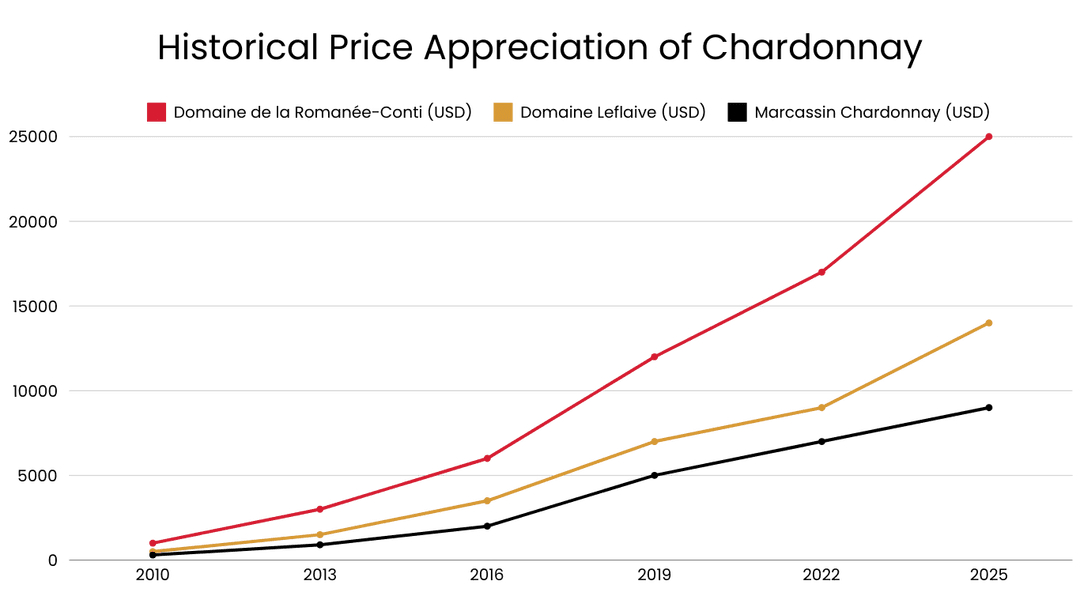
Some of the most expensive Chardonnay wines worth knowing about include the following.
- Domaine de la Romanée-Conti (Montrachet Grand Cru) – Regularly sells for over $5,000 per bottle, with rare vintages exceeding $10,000 at auctions.
- Domaine Leflaive (Bâtard-Montrachet, Chevalier-Montrachet) – High-end Burgundy Chardonnay with a strong market demand, often valued at $500–$3,000 per bottle.
- Domaine Coche-Dury (Meursault Premier Cru) – Known for its intense aging potential and limited availability, commanding $1,000+ per bottle.
- Kistler and Marcassin (California) – Napa Valley and Sonoma producers with highly allocated Chardonnays that fetch $300–$800 per bottle in secondary markets.
Investment-grade Chardonnay is often purchased by collectors and wine investors who store bottles in professional wine cellars to maximize resale value.
These wines appreciate over time, making them real assets in the fine wine market rather than simply bottles to drink.
Factors That Influence Chardonnay Pricing
Several elements contribute to what you’ll pay for a bottle of Chardonnay.
- Region: Burgundy remains the benchmark for high-end Chardonnay, commanding the highest prices.
- Winemaking Practices: Oak aging, vineyard selection, and fermentation techniques add to production costs.
- Vintage Quality: Exceptional vintages can double or triple the price of a bottle, as seen with sought-after Burgundy releases.
- Producer Reputation: Established names like Domaine de la Romanée-Conti and Domaine Leflaive consistently fetch higher prices.
- Market Demand & Scarcity: Limited production and increasing collector interest drive prices up, particularly for rare and aged Chardonnay wines.
Chardonnay Wine Historical ROI
Fine wine investment has gained real momentum over the past two decades, often outperforming traditional assets, with Chardonnay playing a meaningful role in the market. The Financial Times has tracked the rise of fine wine as a serious alternative asset class for collectors and investors alike.
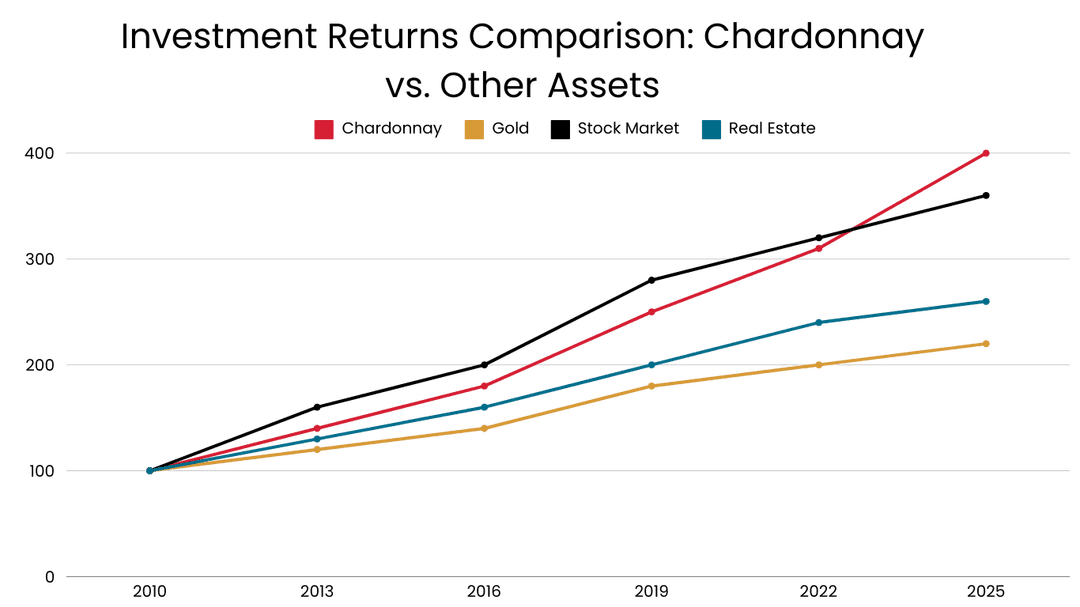
While red wines from Bordeaux and Burgundy have traditionally led wine investment portfolios, certain high-end Chardonnays from Burgundy and California have delivered impressive returns over time.
Historically, the best-performing Chardonnay wines have come from Burgundy Grand Cru vineyards and elite Napa Valley estates.
Some bottles have seen triple-digit price increases over the years, driven by demand, limited production, and vintage rarity.
- Burgundy Grand Cru Chardonnay Price Growth: Over the last 20 years, prices for top Burgundy Chardonnays have increased by 500–800%, with producers like Domaine Leflaive, Domaine Coche-Dury, and Domaine de la Romanée-Conti (Montrachet) leading the charge.
- Auction Sales of Fine Chardonnay: In 2023, a case of Domaine de la Romanée-Conti Montrachet 2010 sold for over $120,000, highlighting the demand for ultra-premium Chardonnay.
- California Chardonnay Price Growth: High-end Napa and Sonoma Chardonnays, such as Kistler, Aubert, and Marcassin, have seen consistent 5–10% annual appreciation, with some rare releases doubling in value over a decade.
While Burgundy Pinot Noir and Bordeaux reds still lead in overall investment value, high-end Chardonnay has shown strong price resilience for several key reasons.
- Rising global demand for white wines in luxury markets like the U.S., China, and Europe.
- Increasing scarcity as collectors and connoisseurs hold onto aged bottles.
- Improved perceptions of age-worthy Chardonnay, particularly in Burgundy and select regions of California.
What Drives Chardonnay’s Investment Value?
Several key factors contribute to Chardonnay’s strong ROI potential, and understanding them gives you a real edge as a collector or investor.
- Prestige of the Producer: Limited-production wines from Domaine Coche-Dury, Domaine Leflaive, and Domaine de la Romanée-Conti consistently appreciate in value.
- Scarcity and Allocation: Many of the top Chardonnay producers release only a few thousand bottles per vintage, making them highly collectible.
- Vintage Variability: Exceptional vintages tend to outperform weaker years, with prices sometimes doubling for standout releases.
- Aging Potential: Unlike most white wines, Grand Cru and top-tier Napa Valley Chardonnay can age gracefully for 15–30 years, enhancing their resale value.
- Auction Market Demand: Some investment-grade Chardonnays regularly appear at Sotheby’s, Christie’s, and other global wine auctions, achieving record-breaking sales.
Risks and Considerations in Chardonnay Investment
Despite its strong investment track record, Chardonnay does come with some challenges compared to red wine investments, and it pays to know them before committing capital.
- Market Liquidity: While Burgundy Chardonnays sell well at auction, they do not have the same turnover rate as Bordeaux or Burgundy reds.
- Vintage Sensitivity: Some years produce exceptionally high-quality Chardonnay, while others may not have the same appreciation potential.
- Counterfeit Concerns: Ultra-premium white wines, particularly rare Burgundy Chardonnays, have been targets of wine fraud, making provenance verification essential.
Given its historical price appreciation, limited production, and increasing collector demand, Chardonnay is solidifying its position as a fine wine investment asset worth considering.
Burgundy leads the pack, but Napa Valley, select Australian estates, and Champagne Blanc de Blancs producers are all gaining ground in the investment wine market. If you’re exploring the sparkling wine side of things, it’s worth understanding vintage vs non-vintage Champagne and which actually holds its value better.
If you’re looking for long-term value growth, consider acquiring well-stored, highly rated vintages from top Chardonnay-producing estates. The demand for aged white wines is building, and getting ahead of that curve is exactly the kind of move that separates serious collectors from casual buyers. Wine-Searcher is a useful tool for tracking current market prices and availability across top producers.
Best Varieties of Chardonnay Wine
While all Chardonnay wines come from the same grape, the region, climate, winemaking techniques, and aging methods shape their flavor profile, aging potential, and investment value in dramatically different ways.
Here’s a look at some of the best Chardonnay varieties, organized by region and style.
Best Chardonnay Wine Collections in 2026
As Chardonnay continues to dominate the global fine wine market, collectors and investors are zeroing in on top-tier producers and limited-edition releases.
The best Chardonnay collections in 2026 feature highly sought-after vintages, exceptional aging potential, and strong investment value. Robb Report and other luxury publications have taken note of this growing collector focus on prestige white wines. Below are some of the most prestigious Chardonnay wines to have on your radar this year.
Top Burgundy Chardonnay Collections
- Domaine de la Romanée-Conti (Montrachet Grand Cru) – The most expensive and collectible Chardonnay, with bottles regularly selling for $10,000+ due to extreme scarcity.
- Domaine Coche-Dury (Meursault Premier Cru, Corton-Charlemagne Grand Cru) – Known for its iconic winemaking style, with bottles appreciating 300–500% in value over 20 years.
- Domaine Leflaive (Bâtard-Montrachet, Chevalier-Montrachet, Puligny-Montrachet) – A top choice for collectors, with some vintages doubling in price over a decade.
- Domaine Raveneau (Chablis Grand Cru Les Clos) – The most collectible Chablis, valued for its mineral-driven intensity and longevity.
Top California Chardonnay Collections
- Marcassin Estate Chardonnay – One of California’s most allocated and hard-to-find wines, with older vintages appreciating 8–12% annually.
- Kistler Vineyards (Single-Vineyard Chardonnays) – Highly collectible, with resale values increasing steadily over time.
- Aubert Chardonnay (Lauren Vineyard, Ritchie Vineyard) – A favorite among New World collectors, offering both aging potential and strong market demand.
- Peter Michael (Belle Côte, Ma Belle-Fille, Point Rouge) – Considered one of the finest Chardonnay producers in Napa, known for exceptional balance and longevity.
Top Australian and New Zealand Chardonnay Collections
- Leeuwin Estate Art Series Chardonnay (Margaret River) – Considered Australia’s most collectible Chardonnay, regularly ranking among the world’s best white wines.
- Giaconda Chardonnay (Beechworth, Australia) – Boutique and highly limited-production, making it a valuable collector’s item.
- Kumeu River (Hunting Hill, Mate’s Vineyard – New Zealand) – An underrated investment wine, gaining international recognition for Burgundy-style elegance.
Best Sparkling Chardonnay Collections (Blanc de Blancs Champagne)
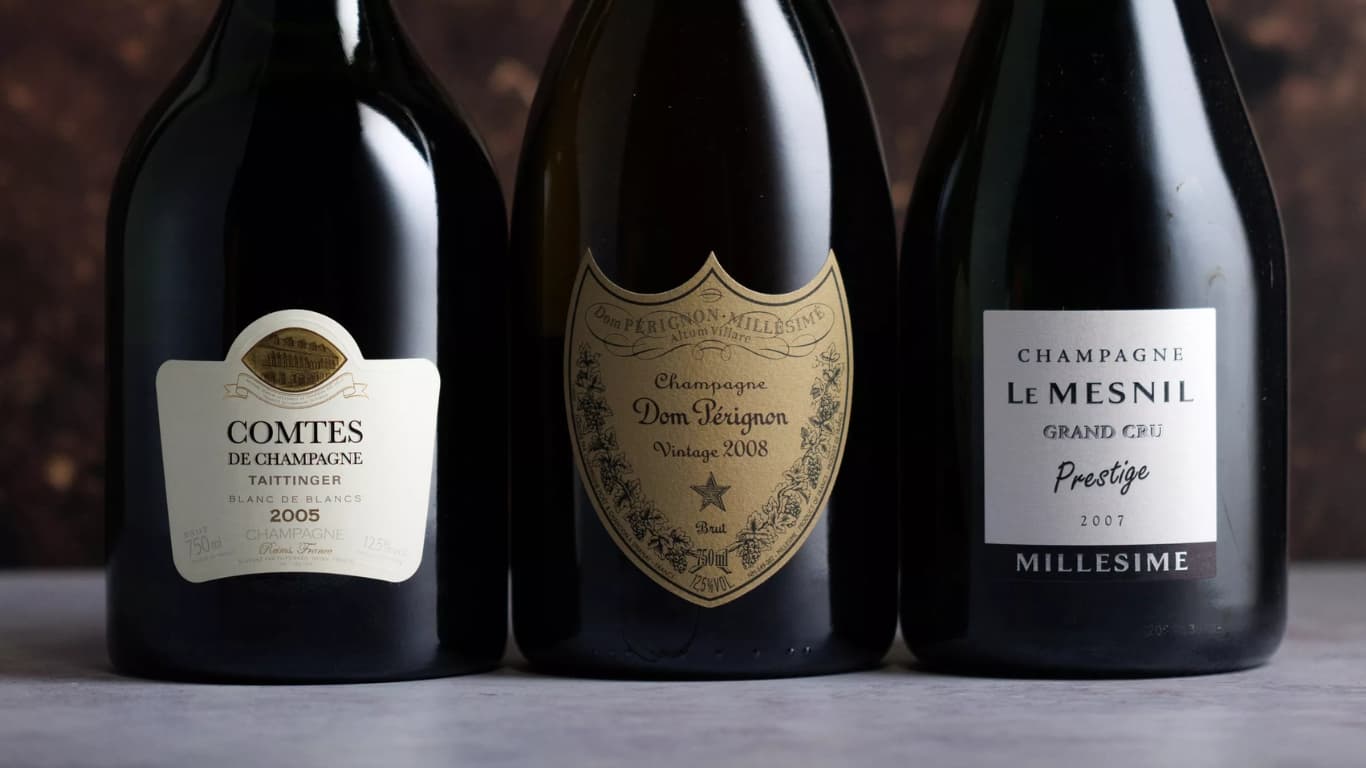
- Salon Le Mesnil Blanc de Blancs (Champagne Grand Cru) – One of the most sought-after and collectible Blanc de Blancs Champagnes, with exceptional aging potential.
- Krug Clos du Mesnil (Blanc de Blancs Vintage Champagne) – A single-vineyard rarity that commands high auction prices and appreciates significantly.
- Dom Pérignon P2 (Blanc de Blancs Champagne) – A unique prestige cuvée, aged for longer, offering rich complexity and strong investment value.
FAQ
What Makes Chardonnay a Good Investment?
Chardonnay is a strong investment wine due to its global popularity, aging potential, and market demand. High-end bottles from Burgundy, Napa Valley, and Champagne have shown consistent price appreciation over time, particularly Grand Cru Burgundy Chardonnays, which are among the most expensive and collectible white wines in the world.
How Long Can Chardonnay Age?
The aging potential of Chardonnay depends on the region, winemaking techniques, and storage conditions. Entry-level Chardonnays are best consumed within 2–5 years, while premium and investment-grade Chardonnays (e.g., Domaine Leflaive, Domaine Coche-Dury, and Marcassin) can age for 10–30 years, developing richer and more complex flavors over time.
What Is the Most Expensive Chardonnay in the World?
One of the most expensive Chardonnays is Domaine de la Romanée-Conti (Montrachet Grand Cru), with bottles regularly selling for $10,000+ at auctions. Other high-end collectible Chardonnays include Domaine Coche-Dury Meursault Premier Cru and Domaine Leflaive Bâtard-Montrachet, both of which have shown significant price appreciation over decades.
Is Burgundy Chardonnay Always Better Than New World Chardonnay?
Burgundy remains the benchmark for high-end Chardonnay, particularly in Puligny-Montrachet, Meursault, and Chablis. However, some California Chardonnays (e.g., Kistler, Aubert, Peter Michael, and Marcassin) have gained international recognition and strong investment potential, rivaling the best Burgundian wines.
Can Chardonnay Be a Safe Alternative to Red Wine Investment?
Yes, Chardonnay can be an excellent diversification strategy within a fine wine portfolio. While red wines from Bordeaux and Burgundy historically dominate investment markets, top-tier Chardonnay wines have shown increasing value appreciation.
Which Vintages of Chardonnay Are the Best for Investment?
The best Chardonnay vintages vary by region, but some highly rated investment-worthy years include:
– Burgundy: 2010, 2012, 2014, 2017, 2019, 2020.
– California: 2013, 2016, 2018, 2021.
– Champagne (Blanc de Blancs): 2002, 2008, 2012, 2015.

Stefanos Moschopoulos
Stefanos Moschopoulos is the Founder and Head of Editorial at The Luxury Playbook, specializing in fine assets and alternative investments. His work focuses on analyzing luxury asset classes such as art, watches, collectibles, and yachting as structured investment vehicles, aligning them with broader wealth-building strategies. He leads the editorial direction of the publication, ensuring all content around alternative assets is data-driven, macro-aware, and investment-focused. His expertise lies in translating niche luxury markets into clear frameworks for portfolio diversification, long-term capital preservation, and asymmetric returns within non-traditional asset classes.