Beyond the Paul Newman halo, which Daytona dial variants are collectors quietly hunting in 2026? The auction-house data and the dealer-floor chatter both point to a small subset: the rare exotic dials, the discontinued precious-metal variants, and the early-production transitional dials that anchor the most active modern Daytona collecting beyond the Newman tier. Reading what is actually moving is useful for collectors operating across the broader vintage and modern-vintage Daytona market.
- The Daytona dial variants collectors are quietly hunting include the panda dial 116500LN white, the inverse-panda 116500LN black, and the meteorite dial 116519LN gold variants.
- Reference 116500LN white panda anchors the most consistently hunted modern Daytona dial variant, with secondary pricing still well above retail despite the broader post-2022 reset.
- Reference 116519LN white gold with meteorite dial draws serious collector competition, with the limited production and natural-material dial supporting the broader Daytona dial-variant premium.
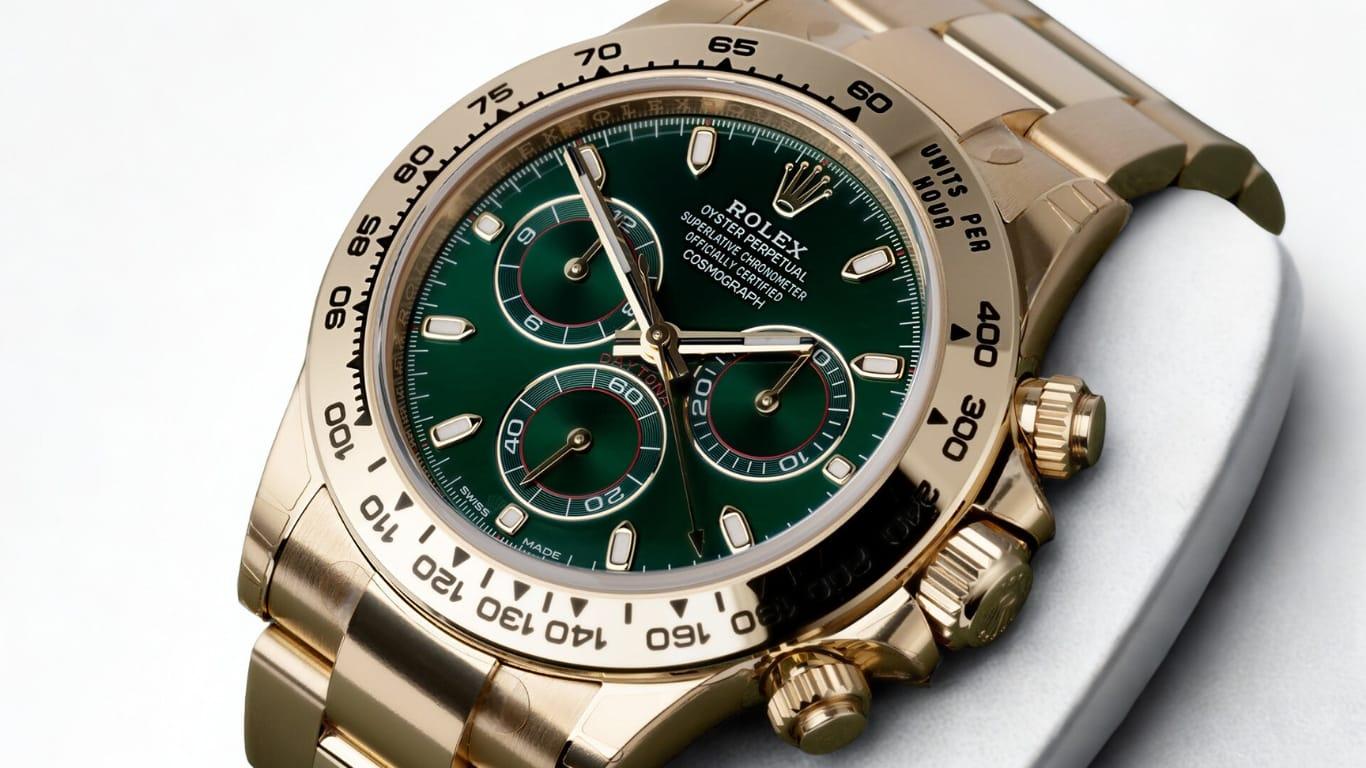
- We see the Reference 116508 yellow gold green-dial Daytona as the strongest dial-variant cornerstone purchase, with the green-dial originality supporting long-term collector positioning.
- Vintage Daytona dial variants, including the exotic Paul Newman dials on Reference 6239 and 6263, continue to anchor the absolute top of the dial-variant collecting category.
- Manufacturer pricing discipline has held on the most coveted dial variants, with Daytona secondary values supported by the kind of finite-supply positioning collectors continue to chase.
- Who is this for?
- Rolex Daytona collectors, dial-variant enthusiasts, and established collectors building modern Daytona reference depth.
- What is happening?
- A grounded read on which Daytona dial variants collectors are quietly hunting, covering the 116500LN panda, 116519LN meteorite, and 116508 green-dial yellow gold.
- When did this emerge?
- The current Daytona dial-variant hunt reflects post-2022 secondary-market dynamics, with the modern 116500LN catalogue continuing to draw renewed collector momentum.
- Where is this happening?
- Chrono24, Subdial 50, and authorised pre-owned programmes anchor the visible market, with private dealer relationships handling the higher-end Daytona dial-variant inventory.
- Why does it matter?
- Daytona dial variants offer the kind of finite-supply positioning that supports long-term collector value retention, with the most coveted dial-variant runs continuing to outperform.
The pattern is consistent across the tier. Production-window discipline matters. Documented provenance matters.
Originality discipline matters. The collectors who navigate this collecting register well spend substantial time reading Phillips' Geneva catalogue notes and consulting with specialist dealers like Eric Wind, Davide Parmegiani, and the broader Italian vintage Rolex network.
The Daytona dial-variant collecting tier sits in its own register inside the broader Daytona tradition. The standard production references trade in a deep secondary market with relatively narrow price bands. The dial-variant rarities trade in their own market with prices that scale more like vintage Patek complications than vintage Rolex sport.
The early Big Red Daytona dials
The early manual-wind Daytona references with the Big Red dial configuration, the Daytona reference 6263 with the larger DAYTONA text in red across the dial centre, anchor a particular subset of vintage Daytona collecting. The tier sits below the Paul Newman peak but well above the standard production. Clean Big Red references trade between $40,000 and $100,000 depending on condition and provenance.
The Big Red dial is the most visually distinctive non-exotic Daytona dial of the manual-wind era. Phillips and Christie's have handled clean Big Red references in dedicated chronograph lots more than once at recent Geneva sales. Hodinkee's coverage of the tier has helped reframe the references as serious vintage Rolex collecting rather than secondary curiosities.
The Cosmograph Sigma dials
The Cosmograph Sigma dials, produced for a brief window in the 1970s with the Greek sigma symbols flanking the SWISS designation to indicate gold hour markers, are the dial variant most actively pursued by collectors hunting for production-window-specific Daytona references. The various 6263 Sigma and 6265 Sigma references command meaningful premiums over the standard production.
The Sigma designation was a brief industry-wide convention that disappeared by the late 1970s. Daytonas carrying the marking sit in a tightly defined production window. That window-specificity is exactly the trait that anchors serious collector premiums. Auction-house catalogue notes consistently flag the Sigma marking as a meaningful condition consideration on early ceramic-bezel and pre-ceramic references.
The discontinued ceramic-bezel John Mayer Daytona
The Daytona reference 116508 in yellow gold with the green dial, the reference colloquially known as the John Mayer Daytona after the musician's well-documented preference for the variant, is one of the most actively pursued discontinued ceramic-bezel Daytonas. Clean examples trade between $90,000 and $130,000 depending on condition and box-and-papers documentation.
The reference is the cleanest current example of celebrity-association demand in the modern Daytona market. The John Mayer name carries real collector weight in a way most celebrity associations do not. The 116508 was discontinued in the 2023 Rolex catalogue refresh, which sharpened the secondary demand.
The green-dial configuration is rarer in the gold case than the standard champagne and silver variants.
The Albino Daytona
The Daytona reference 6263 Albino, the rare white-dial-and-white-sub-counter configuration produced in single-digit known examples in the late 1970s, sits at the upper tier of vintage Daytona dial-variant collecting. The Eric Clapton example cleared $1. 4 million at Christie's in 2018.
Subsequent examples have surfaced rarely and command similar pricing.
The Albino sits in the category of dial variants where the collecting register operates closer to vintage Patek complications than vintage Rolex sport. Only a handful of known examples are documented, which puts the reference in a different conversation from the broader Daytona market. The Clapton provenance gave the auction-house anchor the tier needed to mature into a serious collecting register.
The platinum 116506 with the ice-blue dial
The platinum Daytona reference 116506 with the ice-blue dial and the chestnut-brown ceramic bezel, produced from 2013 onwards as the precious-metal upper-tier modern Daytona, anchors the contemporary upper-tier Daytona collecting register. Clean examples trade between $90,000 and $130,000 depending on condition. The reference is the modern equivalent of the precious-metal Daytona variants serious collectors prioritise.
The ice-blue dial is unique to the platinum case across the Rolex catalogue. That single-case-metal-and-dial-combination is a Rolex signature for the platinum references across the broader collection. The reference benefits from the same case-metal-specific dial convention that anchors the platinum Day-Date with the ice-blue dial in the Day-Date collecting register.
The 6263 and 6265 transitional dials
Beyond the headline references, the various transitional dial revisions on the 6263 and 6265 manual-wind Daytona production anchor a particular collecting tier that operates below the celebrity-association headlines but above the standard production.
The early Mk 1 dials with the specific font and the small case-marking variations, the various Sigma dial transitions across the mid-1970s, and the rarer dial-colour variants all command premiums when they surface at specialist dealers and smaller auction-house sales.
The chocolate dial variants, the specific silver dial revisions, and the various lume-aged dial configurations make up the second tier of dial-variant collecting beyond the headlines. Clean transitional 6263 and 6265 examples can clear $60,000 to $100,000 at the specialist dealer level. Phillips' Geneva catalogue notes consistently anchor the originality and dial-marking discipline as the load-bearing condition considerations.
Why originality discipline matters more here than anywhere else
Service-replacement dials drop value meaningfully even on rare configurations. Phillips' Geneva catalogue notes consistently flag the originality factors as the load-bearing condition consideration across the Daytona dial-variant tier. The collecting register punishes service-replacement dials more aggressively than almost any other vintage Rolex category.
The 2017 Phillips sale of Paul Newman's own Daytona at $17.8 million remains the headline reference for the upper tier. Subsequent sales across the past decade have steadily extended the considered dial-variant tier below that peak. Authenticity discipline is non-negotiable in this register.
The pattern is consistent. Production-window discipline matters. The dials that emerged in defined production windows command premiums.
Documented provenance matters. The celebrity-association references command premiums when the chain of ownership is documented credibly. Originality discipline matters.
Service-replacement dials drop value meaningfully even on rare configurations.
What this means for collectors
Daytona dial-variant collecting represents one of the most reference-specific tiers of modern watch collecting. The collectors who navigate the tier well spend substantial time reading Phillips' Geneva catalogue notes and consulting with the major auction-house specialists. The casual collector tends to overlook the dial-variant subtleties that anchor the most considered Daytona collecting.
For collectors building Daytona positions, the headline references, the Big Red, the Sigma dials, the John Mayer 116508, the Albino, and the platinum 116506, are the four lines we would actually pay close attention to. The transitional dial register sits below those headlines as the second tier of dial-variant collecting. The standard production references are a different conversation entirely.
The longer story collectors recognise is that the Daytona has become the deepest dial-variant collecting register in modern Rolex. The references covered here are the ones we would actually buy at the right numbers. Box-and-papers, original dial condition, and clean service histories are the non-negotiables.
We last reviewed this analysis in May 2026.