Contemporary pop art absorbed surprisingly little of the broader market softness in 2026. Christie's, Sotheby's and Phillips have all reported strong sell-through and meaningful new auction highs across the cohort working in the pop tradition, even as the speculative end of the contemporary market continued to cool. The 2025 UBS / Art Basel Global Art Market Report flagged the segment as one of the resilient parts of a soft year.
The five names below are not the only artists carrying the category. They are the cohort whose institutional records, auction depth, and catalogue scholarship most clearly meet the four tests that serious pop collectors apply: technical depth, institutional record, market depth, and cohort placement.
- Contemporary pop art absorbed surprisingly little of the broader market softness in 2026, with Christie’s, Sotheby’s and Phillips reporting strong sell-through across the cohort.
- Takashi Murakami sits structurally at the centre of the contemporary pop conversation, with the Superflat theoretical framing he developed in the early 2000s building the conceptual bridge.
- Yoshitomo Nara’s market has run on a steady multi-decade compounding curve rather than speculative spikes, with major canvases trading in the high-seven-figure range at the top.
- KAWS sits at the intersection of fine art and broader cultural production, with the 2019 Sotheby’s Hong Kong sale of fourteen point seven million dollars as the trophy benchmark.
- Mr Brainwash, Thierry Guetta, has built a market that requires careful separation of the institutional record from the speculative editions activity around his programme.
- Hebru Brantley anchors the African American pop cohort, with strong institutional support and a deepening secondary-market position across the past several seasons.
- Who is this for?
- Serious contemporary collectors and advisors building or rebalancing pop-art positions in 2026 with a focus on artists who clear the institutional, technical and market-depth tests.
- What is happening?
- An editorial overview of five pop art artists serious collectors should know in 2026, covering Murakami, Nara, KAWS, Mr Brainwash and Hebru Brantley with the structural arguments for each.
- When did this emerge?
- Most relevant around the contemporary evening and day sales at Christie’s, Sotheby’s and Phillips and during major Murakami and Nara retrospective programmes worldwide.
- Where is this happening?
- Centred on the New York, London and Hong Kong salesrooms at the three major houses, with institutional anchors including Mori, Fondation Cartier, Brooklyn Museum and MOCA Los Angeles.
- Why does it matter?
- Reading the contemporary pop cohort correctly matters because the segment is more resilient than most observers expected and the artists who pass the structural tests reward disciplined collecting.
1. Takashi Murakami
Murakami sits structurally at the centre of the contemporary pop conversation. The Superflat theoretical framing he developed in the early 2000s built the conceptual bridge from postwar Japanese visual culture to a global contemporary practice, and the major museum surveys (Mori, Fondation Cartier, Versailles, MOCA Los Angeles) have built the institutional record.
The auction depth is genuine. Christie's, Sotheby's and Phillips have all placed major Murakami canvases at the multi-million-dollar level repeatedly through the recent cycle, and the editions market is one of the deepest contemporary print markets globally. The collaborations (with Louis Vuitton, Kanye West, and the broader luxury cohort) extended the market reach without diluting the institutional record.
The argument for Murakami is the combination of institutional depth, market depth, and continued production. The argument against is the speculative volatility in the editions segment, where some primary-market drops have cleared at multiples that subsequently re-rated.
2. Yoshitomo Nara
Nara's market has run on a different curve to Murakami's. The institutional record (Yokohama Museum of Art, the Nara Museum of Art commission, major Asian and American museum acquisitions) is deep, and the auction record has run on a steady multi-decade compounding curve rather than speculative spikes.
The major canvases trade in the high-seven-figure range at the top of the market, with significant new auction highs through 2023-2025. The depth of comparable lots at the mid-six and low-seven-figure level is one of the thickest of any contemporary Asian artist. The works on paper and small canvases provide the accessible entry point into a market with serious institutional support.
3. Kaws (Brian Donnelly)
The KAWS market sits at the intersection of fine art and broader cultural production. We covered the case in detail in our piece on KAWS as a serious addition to a collection. The institutional record (Brooklyn Museum, Modern Art Museum of Fort Worth, the Mori Art Museum) has thickened past the point of accident.
The unique canvases trade with the depth of an established contemporary name, with the 2019 Sotheby's Hong Kong $14. 7 million result as the trophy reference. The editions and figures trade with the depth of a print market.
The two segments behave differently and reward different approaches.
4. Mr. Brainwash (Thierry Guetta)
Mr. Brainwash is the most speculative entry on the list, and the case is worth stating carefully. The institutional record is thinner than the cohort above; the auction depth has thickened materially through the past three seasons but is not yet at the depth of the institutionally-anchored names; and the catalogue scholarship is still in formation.
What the cohort has produced is a meaningful primary-market reach and a documented exhibition record across major Western galleries. The auction record at Phillips and the regional houses has carried the work into low-seven-figure territory consistently. The conservative read is that the cohort represents the cohort one tier earlier in the institutional curve, where serious depth has not yet been built.
5. Hebru Brantley
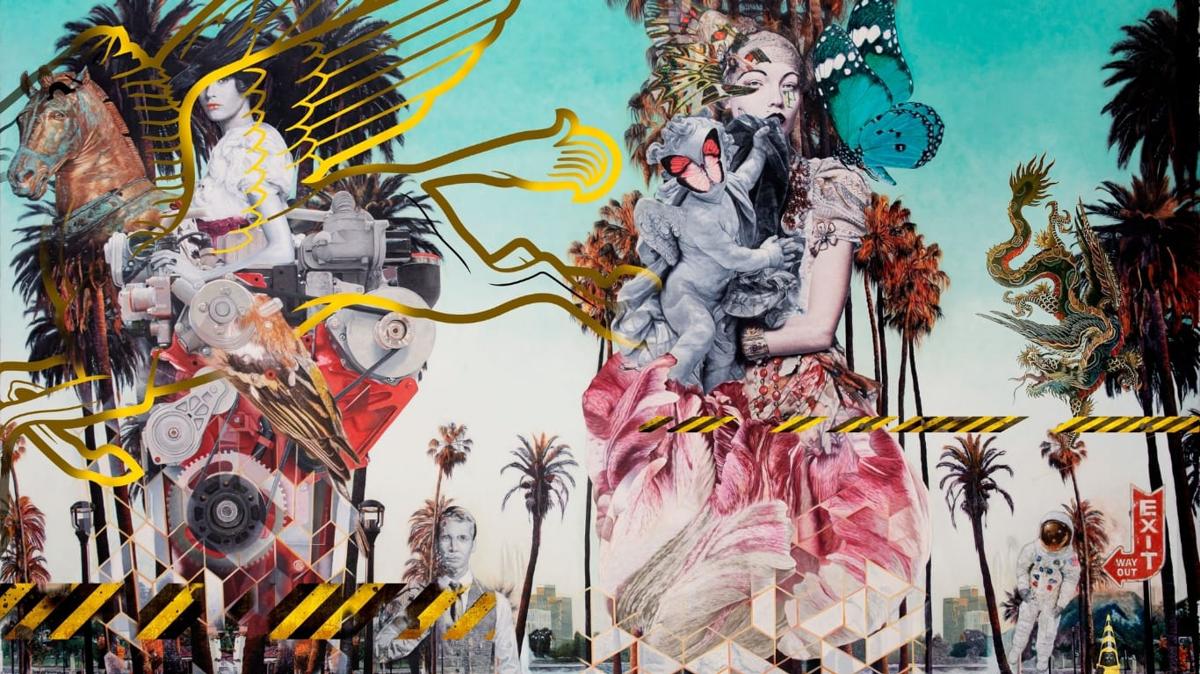
Brantley's market has accelerated through the past two seasons in ways that reflect the broader 2026 reweighting. The institutional record has thickened with major American museum acquisitions and survey programming, and the auction depth has expanded across both the major and the regional auction houses.
The cohort placement is interesting. Brantley sits structurally within the lineage that runs from Basquiat through the contemporary cohort working at the intersection of pop, street and figurative practice, and the market has rewarded the lineage with thickening secondary depth.
The case for inclusion in a 2026 collection is the same case that applied to other names at the same stage of the curve a decade ago: institutional record running ahead of auction comparables, and a market in which the comparables are visibly thickening.
What the five share
Each artist combines technical seriousness, institutional record, and meaningful market depth within the broader pop tradition. The four tests apply consistently: depth across multiple named institutions, depth of comparable lots across multiple seasons, technical achievement evaluated by named specialists, and catalogue scholarship around the practice.
The 2026 framing has also shifted. Our coverage of the tariff impact on collectors and the broader Gen Z collector behaviour reflects a market in which the discovery channels for contemporary pop have widened materially, particularly through the social-media-driven primary-market interest in the editions segment.
How to read the cohort relative to each other
Murakami and Nara anchor the institutional and market-depth end. KAWS sits structurally at the intersection of fine art and broader cultural production, with deeper market activity than institutional record. Brantley sits at the earlier stage of the institutional curve, with the comparable record visibly thickening.
Mr. Brainwash carries the most speculative profile and warrants the most careful diligence.
The contemporary art field guide and the broader frameworks for limited-edition prints apply directly to the cohort. The editions and figure markets behave structurally differently to the unique-work markets, and the frameworks for each segment differ accordingly.
What this means for collectors
Contemporary pop is not the speculative free-for-all the dismissive framing of the category sometimes suggests. The cohort of artists with deep institutional records and meaningful auction depth is small, defensible, and structurally engaged with by serious collectors building positions across the broader contemporary market.
The cohort sits alongside the broader institutional-track names and the cohort of blue-chip artists defining 2026. The discipline that separates serious engagement from speculative exposure is the same as in the rest of the contemporary market: documentary rigour, depth of comparable lots, and the institutional record.
The five names above are the cohort we have spent the most time evaluating. Each one rewards a different point on the curve, and each one belongs in a serious 2026 pop collection on its own terms.
Frequently asked questions
Why has contemporary pop held up in a soft market?
The cohort combines institutional depth, market depth, and a primary-market collector base that has continued to engage with the category through the broader cycle. The 2025 UBS / Art Basel Global Art Market Report flagged the segment as one of the resilient parts of a soft year, and the auction depth at the major houses has reinforced the framing.
How should a first-time pop collector approach the cohort?
Through the editions and works on paper of institutionally-anchored names (Murakami, Nara, KAWS) before moving to the unique work. The frameworks for limited-edition prints apply directly, and the cost of admission to the documentary record at the editions tier is structurally lower than at the canvas tier.
Where does KAWS sit relative to the rest of the cohort?
KAWS sits structurally at the intersection of fine art and broader cultural production, with deeper market activity than institutional record relative to Murakami and Nara. The two segments of the KAWS market (unique canvases and editions/figures) behave differently and reward different approaches.
What separates serious cohort engagement from speculative exposure?
The four tests: institutional record across multiple named museums, depth of comparable lots across multiple seasons, technical achievement evaluated by named specialists, and catalogue scholarship around the practice. An artist who clears all four tests is structurally different to one who clears one or two. The cohort that clears all four is small but meaningful.
We last reviewed this analysis in May 2026.