

Climate change has become one of the most pressing concerns facing wine producers, collectors, and investors right now. Rising temperatures, unpredictable weather patterns, and extreme events like heatwaves, droughts, and hailstorms are reshaping the delicate balance that defines fine wine production. Your favorite regions, from Bordeaux and Burgundy to Napa Valley, are feeling these shifts in grape quality, harvest timelines, and the overall character of the wines they produce. If you’re serious about fine wine as an investment, understanding the relationship between climate shifts and wine production is no longer optional. This article walks you through the effects of climate change on fine wine and highlights the strategies winemakers and investors are adopting to adapt and thrive.
Table of Contents
Scarcity Will Increase Fine Wine Prices
Climate change is creating real headaches for wine producers, from shifting weather patterns and rising temperatures to increasingly violent weather events. These changes are cutting crop yields and, in some cases, threatening the future of traditional wine-growing regions. The result is straightforward for your portfolio: scarcity drives prices up, making limited-production wines more valuable than ever.
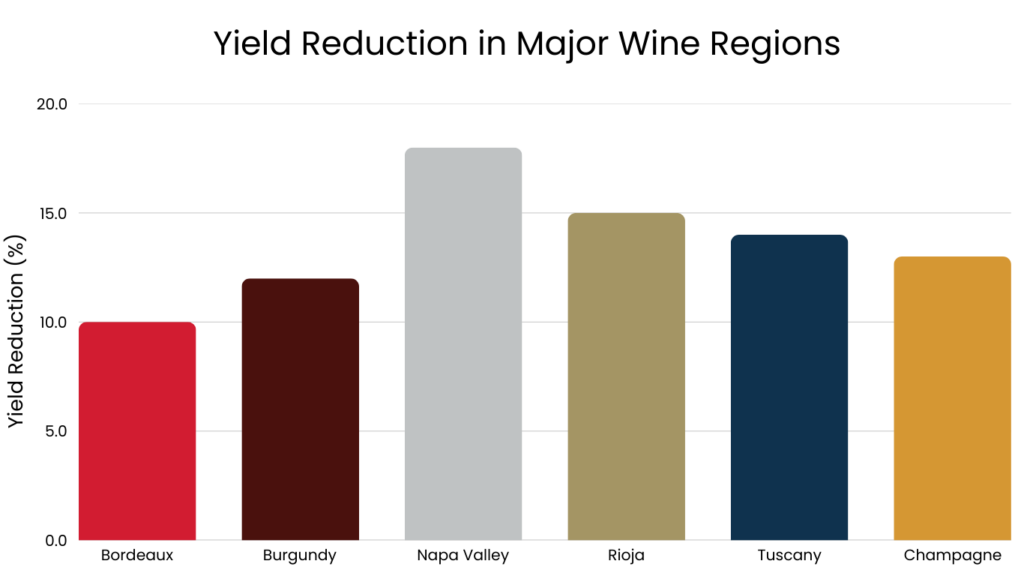
Regions like Bordeaux, Burgundy, and Champagne have historically enjoyed the kind of stable weather patterns that winemakers dream about. That stability is eroding fast, and fluctuating conditions are hitting both grape yield and quality hard.
In Bordeaux, early spring frosts and increasingly brutal summers have made harvests deeply inconsistent. In Burgundy, excessive rainfall has triggered mildew outbreaks that strip yields down even further. These aren’t isolated incidents anymore. They’re becoming the norm.
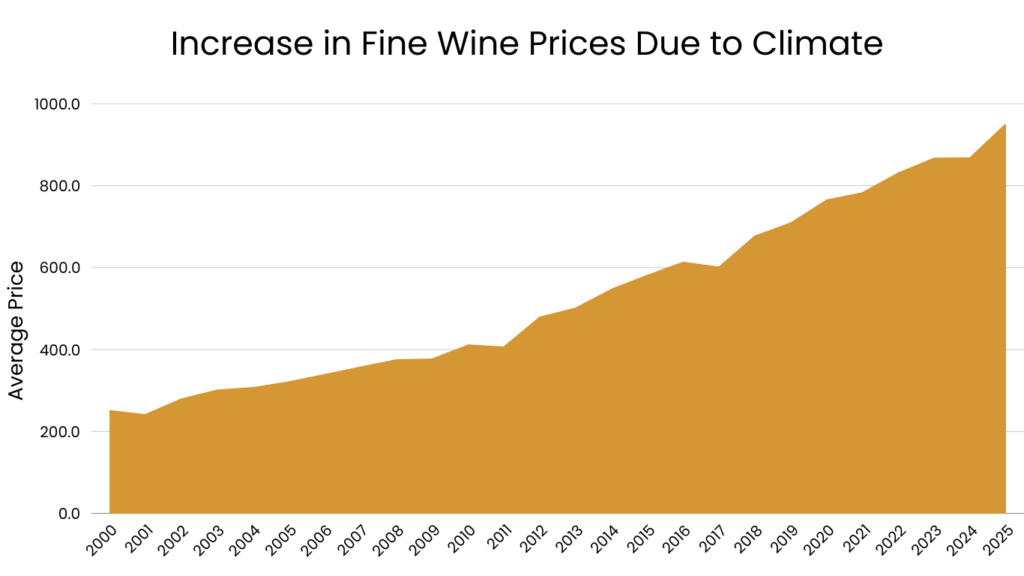
As production volumes shrink while demand holds strong, prices for premium wines are climbing steadily. You’re already seeing this play out, with bottles from smaller harvests fetching significantly higher prices on the secondary market. Burgundy Grand Cru bottlings, for example, have seen price increases of over 15% year-over-year in direct response to reduced availability. France’s recent harvest data and its effect on Burgundy and Champagne pricing gives you a clearer picture of how supply shocks ripple through the market.
For you as an investor, this scarcity is a genuine opportunity. Wines from resilient producers and prestigious appellations are positioned for the most meaningful price appreciation. If you move into limited-production vintages now, you’re positioning yourself ahead of the supply crunch that’s already underway.
Impacts on Wine Acidity, Sugar Levels, and Flavor Profiles
One of the deepest effects climate change is having on fine wine shows up in acidity, sugar levels, and flavor profiles. Rising temperatures, unpredictable rainfall, and extended growing seasons are disrupting the delicate balance that winemakers have relied on for centuries. The taste, texture, and overall quality of wines you know and love are shifting in ways that matter for both drinking and investing.
Acidity and Sugar Levels
Grapes ripen faster in warmer temperatures, which means more sugar concentration and less natural acidity. Higher sugar leads to higher alcohol, but that drop in acidity chips away at freshness, structure, and aging potential. Regions like Champagne and Chablis, built on crisp acidity as their calling card, are now fighting to hold onto their signature styles. Many producers are moving to earlier harvests to lock in acidity before the sugar load gets out of hand.
Flavor Profiles
Warmer climates push grapes to accumulate sugars and phenolic compounds faster, which produces bolder, fruit-forward flavors. For some consumers, that’s appealing. But for serious collectors, it means wines losing their subtlety and finesse. Burgundy’s Pinot Noir, celebrated for its delicate complexity, is increasingly showing heavier, fruitier notes as hotter growing seasons take hold.
Alcohol Levels
Higher sugar translates directly to higher alcohol, and that’s changing the personality of wines from regions you wouldn’t expect. Parts of Germany and northern France are now producing wines with alcohol levels that used to be associated with Spain or Italy. That shift throws off the perceived balance and puts off traditionalist collectors. Winemakers aren’t standing still, though. Some are pushing vineyards to higher altitudes to capture cooler temperatures. Others are refining canopy management to shield grapes from excessive sun. And heat-tolerant varieties like Syrah and Tempranillo are being introduced in regions that were historically Pinot Noir and Chardonnay territory.
For you as an investor, these changes cut both ways. Wines from historically cooler regions may struggle to hold their classic profiles, but emerging regions with favorable new conditions could produce the next generation of investment-worthy bottles. Pay attention to producers who are actively innovating, because they’re the ones most likely to hold their value as the market evolves.
Impact on Acidity and pH Balance
Acidity and pH levels sit at the heart of what makes a wine fresh, structured, and capable of aging. Climate change, driven by rising global temperatures and erratic weather patterns, is having a deep effect on both, reshaping how fine wines are produced, cellared, and valued.
Acidity gives wine its crispness and vibrancy, balancing sweetness and alcohol. A proper pH balance keeps a wine stable, preventing spoilage and microbial growth during aging. Wines with lower pH (higher acidity) are built for long-term cellaring. Higher pH wines, with lower acidity, tend to taste flat and age poorly. That distinction matters enormously when you’re holding bottles for a decade or more.
Warmer growing seasons accelerate ripening, causing grapes to load up on sugar rapidly while their natural acidity fades. What you end up with are wines that skew overripe, jammy, and too alcoholic, lacking the balance and finesse you’d expect from a premium vintage.
- White Wines: Regions known for crisp, mineral-driven white wines, such as Chablis and Champagne, are experiencing reduced acidity, altering their signature fresh profiles.
- Red Wines: Varieties like Pinot Noir and Cabernet Sauvignon are showing softer acidity levels, affecting their vibrancy and structure.
As grape acidity falls and pH rises, wines become more alkaline. That imbalance opens the door to a range of quality problems that directly affect a wine’s aging trajectory and, by extension, its investment case.
- Color Instability: Red wines may lose their bright, ruby hues and turn dull.
- Flavor Degradation: Subtle notes of fruit and minerality may fade, replaced by heavier, overripe flavors.
- Aging Potential: Wines with elevated pH are more prone to oxidation, limiting their ability to age gracefully.
Winemakers aren’t passive about this. Across top regions, producers are deploying a range of innovative techniques to hold the line on acidity and pH, from targeted harvest timing to cellar interventions that restore structural balance without compromising authenticity.
- Earlier Harvests: Picking grapes earlier preserves acidity but risks under-ripeness if not carefully timed.
- Canopy Management: Adjusting leaf coverage helps regulate grape exposure to sunlight and heat.
- Acidification: In some regions, winemakers are adding tartaric acid to artificially balance pH levels, though this practice is controversial and regulated.
- Grape Variety Selection: Heat-resistant grape varieties, such as Touriga Nacional and Mourvèdre, are being planted in historically cooler regions.
For you as a wine investor, acidity-related challenges carry real weight. A wine’s ability to age gracefully is one of its core value drivers. When acidity is compromised, so is the long-term return. Knowing which producers are actively managing pH gives you an edge in selecting bottles with genuine aging potential.
- Impact on Aging Potential: Wines with poor acidity and pH balance may not age as expected, affecting long-term investment value.
- Changing Buyer Preferences: Markets may shift towards wines that adapt well to changing conditions, such as those from higher-altitude vineyards.
- Emerging Opportunities: Regions previously considered too cold for premium wine production, such as parts of Sweden and Canada, are now gaining attention for their acidity-retaining potential.
As the industry adapts to these pH and acidity pressures, your job is to stay informed about which producers are implementing sustainable practices and which regions are showing genuine resilience. Those who understand these shifts can spot wines built to perform well in the market despite the environmental headwinds. Understanding the difference between single-vineyard wines and blends is also worth your time here, since single-vineyard expressions tend to show acidity shifts most acutely.
Effects on Aroma Precursors and Flavor Development
The aromas and flavors in a great bottle of wine are what collectors fall in love with, and they’re a direct driver of market value. Climate change is disrupting the aroma precursors, the chemical compounds in grapes that evolve into complex scents during fermentation and aging, and that disruption is changing flavor development in fine wines in ways you need to understand.
Aroma precursors live in grape skins and pulp. They develop into the fruity, floral, herbal, and earthy notes you associate with a region’s signature character. Temperature, sunlight exposure, and ripening patterns all govern how those compounds behave. Get those conditions wrong, and the aromas you’re counting on simply don’t show up.
- Cool Climate Aromas: Grapes grown in cooler climates develop more delicate and nuanced aromas, such as citrus, green apple, and white flowers.
- Warm Climate Aromas: In hotter regions, aroma precursors break down more quickly, resulting in riper, more intense aromas such as tropical fruits, jam, and dried berries.
As global temperatures rise, grapes are ripening faster, and aroma precursors are degrading before they can fully develop. That rapid ripening disrupts the natural balance of flavor compounds, leaving wines that feel one-dimensional and lacking the complexity that justifies premium pricing.
- Exhibit overly ripe or “cooked” fruit flavors
- Lose their subtle floral or herbal notes
- Show less complexity and balance
Take Chardonnay from Burgundy, historically prized for crisp apple and citrus notes. You’re now seeing it lean toward heavier tropical fruit flavors. Or Pinot Noir from Oregon, traditionally known for its elegant red fruit profile, which is increasingly showing stewed or baked fruit characteristics. These aren’t subtle shifts. They’re fundamental changes to what made these wines worth collecting.
Intense sunlight and increased UV radiation are adding another layer of complexity. They accelerate the breakdown of aromatic compounds in grape skins, pushing wines toward more oxidative characteristics and fewer of the vibrant, fresh fruit aromas that drive collector demand.
Regions like Napa Valley and Tuscany have felt this most sharply, with wines shifting toward darker fruit notes and climbing alcohol levels as UV exposure intensifies year after year.
Forward-thinking producers are fighting back. Strategies like adjusted canopy management, altitude planting, and harvest timing shifts are all aimed at preserving aroma precursors and keeping flavor profiles where collectors expect them to be.
- Selective Harvesting: Harvesting grapes in smaller batches at optimal ripeness helps preserve aromatic compounds.
- Shading Techniques: Vineyards are using canopy management to protect grape clusters from excessive sunlight.
- Fermentation Adjustments: Lower fermentation temperatures help retain volatile aromatic compounds.
- Grape Variety Adaptation: Producers are planting heat-tolerant grape varieties that retain their aromatic profiles even under warmer conditions.
For you as a wine investor, the effects on aroma and flavor development are a double-edged sword. Yes, some classic profiles are under pressure. But producers who successfully adapt are creating wines that stand out in a crowded market, and those bottles command attention at auction.
- Vintage Variability: Fluctuations in aroma and flavor consistency across vintages may affect long-term value.
- Market Demand Shifts: Collectors may start favoring wines from cooler microclimates or higher-altitude vineyards where aromas are preserved.
- Rise of New Regions: Emerging wine regions in Canada, England, and Tasmania are gaining recognition for their ability to produce wines with balanced aromatic profiles.
Wines that hold onto aromatic complexity and flavor depth despite climatic pressure will stay highly desirable. Your focus should be on producers actively implementing mitigation strategies and regions demonstrating resilience. Decanter’s coverage of climate change and fine wine is one of the sharpest ongoing resources for tracking which regions are holding up.
Impact on Wine Body and Texture
Body and texture are two of the most telling qualities in a fine wine. They shape the drinking experience, signal aging potential, and drive market desirability. Climate change is rewriting both, pushed along by rising temperatures, irregular rainfall, and the viticultural changes producers are making in response.
- Wine Body: Refers to the weight and mouthfeel of the wine, which is influenced by factors such as alcohol content, sugar levels, and grape ripeness. Wines can be categorized as light-bodied, medium-bodied, or full-bodied.
- Wine Texture: Describes the tactile sensations of a wine, including smoothness, tannin structure, and viscosity.
Body and texture are built on the interplay of sugar, acidity, phenolic compounds, and alcohol. All four are directly affected by shifting climate conditions, which means the wines you’ve come to know from specific regions are changing in ways that carry real investment implications.
Warmer climates speed up ripening, which drives sugar concentration higher and pushes alcohol levels up with it. A fuller body can come from higher alcohol, but when it’s out of balance, it overwhelms the more subtle flavors and aromas that make a wine worth holding.
For example:
- Bordeaux Reds: These traditionally balanced wines are now leaning towards more robust, heavily structured profiles with elevated alcohol content.
- Champagne: Historically prized for its light body and sharp acidity, warmer conditions are creating more rounded and fruit-driven sparkling wines.
Erratic rainfall, whether sudden heavy storms or prolonged drought, disrupts how grape skins and seeds develop. That directly affects tannin levels and phenolic maturity, the two factors that do the most to define a wine’s texture. Get those wrong and you’ve lost the structural backbone that allows a wine to age.
- Excess Rainfall: Dilutes grape juice, leading to wines with a thinner texture and lower concentration of flavor.
- Prolonged Droughts: Result in overly tannic wines, where the structure becomes harsh and less integrated, affecting the wine’s drinkability and aging potential.
Producers aren’t accepting these changes passively. Across the top appellations, winemakers are deploying innovative practices aimed at preserving body balance and texture integrity despite increasingly difficult growing conditions.
- Canopy Management: Adjusting vine leaf coverage to control sunlight exposure and prevent over-ripening.
- Water Management Systems: Implementing advanced irrigation techniques to regulate water stress.
- Harvest Timing Adjustments: Picking grapes earlier or in stages to maintain phenolic balance and prevent excessive sugar accumulation.
- Blending Strategies: Introducing grape varieties with complementary profiles to achieve balance in body and texture.
The changes in body and texture look different depending on where you look. Bordeaux is producing rounder, more immediately approachable reds. Burgundy is grappling with textural shifts in its Pinot Noir. And some New World regions are seeing tannin structures they’ve never had to manage before.
- Napa Valley: Wines are becoming fuller-bodied and more fruit-driven, sometimes at the expense of structural elegance.
- Burgundy: Pinot Noir wines, traditionally prized for their delicate structure, are showing denser, richer profiles with more pronounced alcohol.
- Rioja: Producers are facing challenges in balancing bold fruit flavors with the region’s traditionally silky texture.
For you as a fine wine investor, these shifts in body and texture cut both ways. Some wines are losing the structural complexity that justified their pricing. Others, from producers who’ve adapted well, are holding their ground and in some cases finding new audiences.
- Market Preferences: Some collectors prefer bolder, richer wines, while others value finesse and balance. Investors should track evolving trends.
- Aging Potential: Wines with overly extracted body and harsh tannins may not age gracefully, impacting long-term investment value.
- Emerging Producers: Regions with naturally cooler climates, such as Canada and Tasmania, are gaining investor interest for their ability to produce wines with balanced body and refined texture.
Your best move is to prioritize wines from producers actively adapting both in the vineyard and in the cellar. Wines that hold onto balance despite changing conditions will keep their value. Those that don’t will struggle to hold a premium.
Impact on Aging Potential and Longevity
Aging potential is one of the most critical factors in a wine’s investment case. You buy fine wine expecting it to improve in complexity, flavor, and market value over time. But climate change is making that equation harder to predict, particularly when it comes to how long wines can age and how their profiles evolve along the way.
A wine’s ability to mature gracefully over time is foundational to its value. High acidity, balanced tannins, and moderate alcohol are the pillars of a great aging candidate. Wines built on those pillars develop secondary and tertiary flavors like leather, tobacco, and dried fruit over a decade or more, and that’s when you cash in.
Climate change is dismantling some of those pillars. Lower acidity from warmer growing seasons, elevated alcohol from faster ripening, and tannin imbalances from erratic rainfall are all shortening aging windows and making long-term cellaring a riskier proposition than it used to be.
- Faster Ripening: Higher global temperatures are causing grapes to ripen more quickly, leading to wines with higher sugar and alcohol levels but lower acidity. This imbalance reduces the wine’s ability to mature gracefully over extended periods.
- Alcohol Levels: Elevated alcohol content from overripe grapes can lead to wines that taste hot or unbalanced, diminishing their suitability for long-term cellaring.
- Acidity Loss: Acidity acts as a natural preservative in wine, and its decline due to warmer climates shortens the optimal aging window.
- Oxidative Stress: Higher pH levels and lower natural acidity make wines more prone to oxidation, causing them to degrade faster in the bottle.
The impact varies by region but no major fine wine area is completely insulated. Bordeaux is seeing Merlot ripen so fast that some vintages peak earlier than collectors historically expected. Burgundy’s Pinot Noir is under pressure from both acidity loss and heat stress. Even Champagne’s legendary longevity is being questioned as pH levels drift higher.
- Bordeaux: Historically celebrated for producing wines capable of aging for decades, some Bordeaux vintages are now showing earlier maturity and a narrower drinking window.
- Champagne: Increased sugar levels and reduced acidity are leading to sparkling wines that peak sooner than in previous decades.
- Barolo and Barbaresco: Nebbiolo wines, known for their exceptional aging potential, are facing challenges with faster ripening and altered tannin structures.
Winemakers across top regions are making deliberate changes in both the vineyard and the cellar to defend aging potential. Earlier harvests, adjusted winemaking protocols, and a closer eye on phenolic maturity are all tools being deployed to keep wines built for the long game.
- Earlier Harvests: Grapes are being picked earlier to preserve acidity and moderate alcohol levels.
- Blending Techniques: Winemakers are adjusting blends to include varieties that naturally retain acidity and structure in warmer climates.
- Cellar Adjustments: Temperature-controlled aging facilities are being fine-tuned to slow down oxidation and maintain wine integrity.
- Oak Usage: The duration and type of oak aging are being adapted to maintain structure and prevent premature aging.
For you as an investor, the implications are significant. If the aging window on certain wines is compressing, the optimal hold period changes. That affects your exit strategy, your pricing expectations, and the producers and regions worth backing.
- Shorter Investment Horizons: Wines that traditionally aged well for decades may now peak sooner, requiring investors to adjust their holding strategies.
- Focus on Resilient Producers: Investors should prioritize wineries with a proven track record of adapting to climatic changes.
- Shift in Demand: Wines from cooler microclimates or high-altitude vineyards may become more valuable due to their ability to retain balance and structure.
- Vintage-Specific Risks: Some vintages may struggle to meet long-term aging expectations, affecting their resale value.
Knowing which producers are successfully protecting aging potential is one of the most valuable pieces of intelligence you can have right now. Wines with balanced acidity, moderate alcohol, and proper tannin structure are still the safest bets for long-term value. The work is identifying which bottles actually meet that standard in a changing climate.
The Potential for Cooked or Jammy Flavors
One of the more noticeable consequences of climate change on fine wine is the creep of cooked or jammy flavors into bottles that used to be celebrated for elegance and restraint. As temperatures rise and heatwaves arrive more often, grapes ripen faster and pile on sugar at a rate that pushes wines toward exaggerated fruit characteristics. The result is profiles that veer overripe and heavy, a long way from the subtlety that defines the best premium bottles.
When grapes sit in prolonged heat during the ripening stage, something called over-ripening kicks in. Natural sugars spike, acidity drops, and the aromatic compounds that give a wine its distinctive character start to break down. What you’re left with is a wine that tastes more like jam or stewed fruit than the precise, layered expression that earned the region its reputation.
- Sugar content spikes, causing elevated alcohol levels during fermentation.
- Acidity drops, diminishing the wine’s balance and freshness.
- Aromatic compounds break down, leading to heavier, syrupy fruit notes that dominate the flavor profile.
Regions like Napa Valley in California and Barossa Valley in Australia, already known for bold, generous reds, are now pushing further into jammy territory in warmer vintages. For collectors who prize structure and balance, that shift raises real questions about value.
The flavor profile story looks different from one region to the next, but the pressure is being felt across the board. Warmer vintages in Bordeaux, Tuscany, and Rhône are all producing wines that sit heavier than the regional benchmarks collectors have used for decades.
- Bordeaux: Wines that once showcased refined cassis and earthy notes are now leaning towards sweeter, cooked black fruit flavors.
- Tuscany: Super Tuscans, traditionally celebrated for their harmony and elegance, are beginning to exhibit heavier, more intense fruit characteristics.
- Champagne: Warmer growing seasons are reducing the crisp green apple and citrus flavors, replacing them with rounder, tropical fruit notes.
Some markets, particularly in North America and parts of Asia, have shown appetite for fruit-forward, full-bodied wines. But the collectors and traditional fine wine investors who set prices at the top of the market tend to value balance, structure, and finesse above all else. When jammy or cooked flavors dominate, a wine’s appeal in those circles narrows fast, and that matters for your investment return.
Producers in heat-affected regions aren’t sitting still. You’re seeing a range of strategies deployed to pull ripeness back under control, from adjusting harvest timing and planting at altitude to experimenting with canopy management and more heat-resilient clones.
- Earlier Harvesting: Picking grapes before they become overripe helps maintain acidity and prevents sugar levels from rising excessively.
- Canopy Management: Adjusting vine leaves to reduce direct sun exposure protects grapes from sunburn and heat stress.
- Altitude Planting: Vineyards are being established at higher elevations where cooler temperatures allow slower, more balanced grape ripening.
- Heat-Resistant Varieties: Winemakers are increasingly planting varieties such as Mourvèdre, Syrah, and Tempranillo, which are more resilient to heat and can retain structure even in warmer climates.
For you as an investor, the emergence of cooked flavors is both a warning sign and a pointer toward opportunity. Wines from producers who’ve cracked the adaptation challenge will stand out sharply against a backdrop of over-ripe, undifferentiated competition.
- Shift in Investment Focus: Wines from cooler microclimates, such as England, Tasmania, and Canada, are gaining traction for their ability to maintain classic flavor profiles.
- Selective Producer Strategy: Investors should focus on producers who demonstrate adaptability in vineyard management and winemaking practices.
- Market Preferences: Understanding regional and demographic preferences is crucial, as some markets are more accepting of jammy, fruit-forward wines than others.
Regions that manage to balance ripeness, acidity, and aromatic complexity despite rising temperatures will keep producing wines worth holding. Those that can’t navigate the heat will struggle to justify their price tags, regardless of their historical reputation.
Your job is to stay close to climate adaptation strategies and build relationships with producers who are out ahead of the problem. Those who adapt successfully protect both the quality of their wines and your investment. Wine Enthusiast’s ongoing coverage of climate and winemaking is worth bookmarking for exactly this kind of intelligence.
Emergence of New Winegrowing Areas
One of the more surprising outcomes of climate change is the opening up of entirely new winegrowing areas in regions once written off as too cold for serious viticulture. As global temperatures climb, traditional wine regions are fighting headwinds while previously overlooked places are stepping forward with genuine potential for fine wine production.
Rising temperatures and shifting precipitation patterns are redrawing the map of viable wine production. Cooler regions that once couldn’t ripen grapes reliably are now enjoying longer growing seasons and the ability to cultivate varieties that would have failed there a generation ago. Southern England, Canada, Sweden, and parts of China are all seeing meaningful vineyard expansion as a direct result.
The list of emerging wine regions worth watching is growing. English sparkling wine is already competing with Champagne at the top level. Canadian Riesling from the Okanagan Valley is turning heads. Swedish producers are carving out something genuinely interesting in the south of the country. These aren’t novelties anymore. They’re investable.
- England: Once dismissed as too cold for quality viticulture, southern England is now producing world-class sparkling wines. Regions like Sussex and Kent are gaining international acclaim for wines that rival Champagne in quality.
- Canada: Areas such as British Columbia’s Okanagan Valley and Ontario’s Niagara Peninsula are becoming well-known for their structured reds and elegant whites. Ice wines, in particular, remain a unique specialty from these regions.
- Sweden and Denmark: Warmer summers are allowing northern European countries to experiment with grape varieties like Pinot Noir, Chardonnay, and Riesling.
- China’s Ningxia Region: This high-altitude region has emerged as a leading player in fine wine production, with a focus on Cabernet Sauvignon and Merlot blends.
- Tasmania, Australia: Known for its cooler climate compared to mainland Australia, Tasmania is producing Pinot Noir and sparkling wines of exceptional quality.
Emerging wine regions offer you real diversification potential. Early movers into these markets benefit from lower entry prices, reduced competition, and the upside of a category that hasn’t yet been fully priced in by the broader market. Record summer heat and the UK’s most valuable vintage yet shows exactly how fast these emerging regions can move from curiosity to serious investment story.
- Lower Entry Costs: Compared to established regions like Bordeaux or Napa Valley, emerging regions often have lower initial investment requirements.
- High Growth Potential: As these regions gain recognition, their wines are poised for substantial price appreciation.
- Sustainability Focus: Many emerging regions prioritize sustainable practices from the outset, appealing to environmentally conscious investors.
The risks are real too. Emerging regions come with shorter track records, less established secondary markets, and greater vintage variability. You’re taking on more uncertainty in exchange for the upside, so position sizing matters.
- Market Recognition: Wines from emerging regions may face challenges in gaining acceptance from traditional collectors and critics.
- Consistency in Quality: Young wine regions often lack the multi-generational expertise and infrastructure of their established counterparts.
- Regulatory Hurdles: Some regions face bureaucratic or export challenges that could limit their market reach.
As Bordeaux, Napa, and other classic regions grapple with heatwaves, wildfires, and water stress, cooler climates are stepping into the spotlight with structural advantages. Longer growing seasons without extreme heat stress, lower production costs in many cases, and a novelty factor that drives media attention and collector interest are all working in their favor.
- Stable Weather Patterns: Cooler regions often have more consistent seasonal conditions, reducing the risk of extreme weather damage.
- Adaptability: Emerging wine regions are often free from entrenched traditions, allowing for innovative vineyard management and winemaking practices.
- Terroir Potential: Unexplored soils and microclimates offer exciting opportunities for creating unique wines that appeal to collectors seeking exclusivity.
If you’re considering a position in emerging regions, look at the quality of the producers, the stability of local regulations around winemaking, and the proximity to existing fine wine infrastructure like auction houses and bonded storage. Those factors separate a smart early bet from a speculative punt.
- Producer Reputation: Identify wineries with strong leadership and technical expertise.
- Track Record: Look for regions with growing critical acclaim and increasing demand on global markets.
- Sustainability Practices: Wines from environmentally conscious producers often hold long-term appeal.
A few rising star wines worth tracking include English sparkling from producers like Nyetimber and Chapel Down, Okanagan Valley Riesling from Canada, and experimental releases from Scandinavian producers pushing the boundaries of what’s possible at northern latitudes.
- Sparkling Wines from Sussex, England: Known for their finesse and precision, these wines are now challenging Champagne on the global stage.
- Cabernet Sauvignon from Ningxia, China: High-altitude vineyards are producing structured reds with impressive aging potential.
- Pinot Noir from Tasmania: With a climate similar to Burgundy, Tasmania is gaining recognition for elegant, refined wines.
The continued rise of new winegrowing regions signals a genuine shift in global wine investment. If you diversify your portfolio to include wines from these emerging areas now, you’re well positioned for early-entry advantages and the kind of long-term returns that come from backing a story before the wider market catches on.
Sustainable Vineyards and Practices Will Flourish
Sustainability in fine wine is no longer a nice-to-have. It’s become an essential part of how serious producers protect their businesses and their land for future generations. As an investor, paying attention to sustainability isn’t just about values. It’s about identifying the wineries most likely to remain viable and valuable as climate pressures intensify.
Sustainability in wine production covers a broad range of factors, from water conservation and energy efficiency to biodiversity and soil health. With rising temperatures and unpredictable weather, wineries can no longer afford to lean on practices that worked fine for the past century. Prolonged droughts, water scarcity, and wildfires are forcing a rethink across every major region.
In response, many producers are building advanced water management systems, rolling out drip irrigation technology, and investing in water recycling facilities. In arid regions like California’s Napa Valley and South Australia’s Barossa Valley, where water shortages have gone from occasional concern to permanent reality, these investments are becoming a baseline requirement.
Organic and biodynamic farming are gaining serious traction as tools for climate resilience. By improving soil health and promoting biodiversity, these approaches build vineyard ecosystems that can absorb more punishment from variable weather. Burgundy and Alsace have been at the forefront of this shift, with biodynamic producers consistently delivering wines with vibrant terroir expression despite increasingly difficult conditions.
Reducing carbon footprints is another front on which top estates are moving fast. Switching to solar and wind power, optimizing logistics, and rethinking packaging are all part of the picture.
Lightweight bottles, eco-friendly labels, and recyclable corks have moved from innovation to standard practice at many environmentally conscious wineries. Some estates are even exploring carbon capture technology to push toward full emissions neutrality.
Grape selection is also shifting as part of the sustainability response. In historically warm regions like Southern Spain and Sicily, growers are turning to heat-tolerant varieties like Touriga Nacional, Tempranillo, and Mourvèdre, grapes that can handle higher temperatures while holding onto natural acidity and structure. In Chile and Argentina, altitude planting is becoming a go-to strategy for keeping temperatures in a range that produces wines with genuine finesse.
From your investment perspective, sustainable wineries carry meaningful advantages. They’re more resilient against climate-related disruption, which means more consistent production and more reliable quality. Sustainability certifications like Demeter for biodynamic production or Sustainable Winegrowing credentials are increasingly acting as quality signals for consumers and collectors, and wines carrying those credentials tend to command higher market prices.
There’s also a demographic tailwind worth understanding. Younger wine collectors and investors actively prioritize environmental responsibility when making purchasing decisions. That creates durable demand for bottles from eco-conscious producers and builds a strong secondary market that protects your investment over time.
Some wineries have set the standard. Château Smith Haut Lafitte in Bordeaux and Domaine Zind-Humbrecht in Alsace have made biodynamic farming and water management central to their identities. Their wines reflect those values and continue to perform strongly as investment assets.
New Zealand’s Marlborough and South Africa’s Stellenbosch have also built reputations as sustainability leaders at a regional level, establishing rigorous environmental standards that every producer in those regions is expected to meet.
For you as a fine wine investor, understanding how climate change is accelerating the move toward sustainable practices gives you a real edge. Wines from producers who are out ahead of environmental challenges are more likely to stay resilient as weather patterns shift further. They also come with the kind of transparent provenance and traceability that reduces investment risk.
If you want to future-proof your wine portfolio, make sustainability a filter, not an afterthought. Whether it’s energy-efficient cellars, organic farming, or climate-adaptive varieties, the estates embracing these changes are the ones best positioned to thrive in the wine market of the next decade. Understanding the differences between ESG investing and socially responsible investing gives you a useful framework for thinking about how these sustainability credentials translate into investment value.
Which Wine Regions Have Been Most Affected by Climate Change
Fine wine is inseparable from the land it comes from, and how climate change is affecting your portfolio depends enormously on where those wines originate. Some regions are under severe stress. Others are finding unexpected opportunity. Understanding the geography of climate impact is essential if you want to make smart calls about where to hold and where to move.
Bordeaux, France sits at the sharp end of climate disruption. Earlier springs are bringing frost risk to young buds, while summers are pushing temperatures to levels that accelerate ripening and drive alcohol higher. The Left Bank’s Cabernet Sauvignon is holding up better than Merlot on the Right Bank, where the variety’s sensitivity to heat is showing up in wines that peak younger and carry less of the structural complexity collectors expect.
- Experiencing hotter summers, irregular rainfall, and extreme weather events like hailstorms and frost.
- Earlier harvests and higher alcohol levels are becoming common in wines made from Cabernet Sauvignon and Merlot.
- Winemakers are introducing heat-tolerant grape varieties and using advanced canopy shading techniques.
Burgundy, France is arguably the most vulnerable of the elite regions. Its entire identity is built on razor-thin margins of terroir and climate. Even a one-degree shift in average temperature changes what ends up in your glass. Earlier harvests, frost events, and hail are all becoming more frequent, and the Grand Cru vineyards that command the highest prices are also the most exposed to vintage variability.
- Known for its delicate Pinot Noir and Chardonnay, Burgundy is highly sensitive to small climate changes.
- Faster ripening and reduced acidity have altered the region’s classic flavor profiles.
- Winemakers are exploring higher-altitude vineyards and adopting advanced vineyard management techniques to preserve quality.
Champagne, France is facing a version of climate pressure that contains a hidden complication. Warmer temperatures have actually improved vintage consistency in the short term, reducing the number of unripe, thin years that used to plague the region. But the same warmth is threatening the high acidity that defines great Champagne’s aging potential, and that’s a much bigger problem for the long game.
- Rising temperatures are leading to accelerated grape ripening, higher sugar content, and lower acidity.
- Wines are becoming more fruit-forward, with reduced aging potential.
- Producers are adjusting by harvesting earlier and planting native grape varieties better suited to warmer conditions.
Napa Valley, USA is dealing with a combination of heat stress, wildfire smoke taint, and water scarcity that’s forcing a fundamental rethink of how and where the best wines are made. Higher-elevation vineyards are gaining ground rapidly, and producers who’ve invested in water management and smoke taint mitigation are separating themselves from those who haven’t.
- Grappling with wildfires, prolonged droughts, and intense heatwaves.
- Smoke taint from wildfires has rendered some vintages unsellable.
- Wineries are implementing water management systems, fire-resistant vineyard designs, and smoke filtration technologies.
Rioja, Spain:
- Facing heatwaves and prolonged dry periods, leading to smaller yields and inconsistent grape quality.
- Water scarcity is becoming a persistent issue, impacting the Tempranillo grape.
- Producers are planting vineyards at higher altitudes and adopting drought-resistant varieties.
Tuscany, Italy is seeing vintage character shift as warmer summers push Sangiovese into territory it wasn’t bred for. The best Brunello and Chianti Classico producers are adapting through altitude, canopy work, and harvest timing, but the wines you’re buying today from this region are measurably different from what collectors were cellaring two decades ago.
- Experiencing erratic weather patterns, including hailstorms and prolonged heatwaves.
- Key grape varieties like Sangiovese are facing challenges in retaining acidity and balanced tannins.
- Winemakers are utilizing canopy shading techniques and exploring higher-altitude sites for planting.
South Australia’s Barossa Valley is one of the regions facing the most acute long-term risk. Extreme heat events and persistent drought are testing the limits of even the most heat-adapted varieties. Water access is becoming a strategic issue, and producers without secure water rights face real uncertainty about their ability to maintain production.
- Facing hotter growing seasons, reduced rainfall, and increased soil salinity.
- Shiraz wines remain acclaimed but are increasingly difficult to produce consistently.
- Producers are using advanced irrigation systems and experimenting with drought-tolerant grape varieties.
How Is The Wine Industry Reacting to Climate Change
The fine wine industry is in the middle of one of its biggest transformations in generations. From vineyard management to cellar technology, producers and investors are rethinking almost every aspect of how wine is made, protected, and positioned. And the pace of change is accelerating.
Adaptation in vineyard practices is where most of the visible change is happening. Producers are adjusting harvest dates, experimenting with cover crops, managing canopies more precisely, and exploring new rootstocks built for heat and drought tolerance. These aren’t marginal tweaks. They’re structural changes to how vineyards operate.
- Earlier Harvests: Many wineries are harvesting grapes earlier to prevent over-ripening and preserve acidity. This practice is becoming common in regions like Bordeaux and Napa Valley.
- High-Altitude Vineyards: Producers are moving vineyards to higher elevations where cooler temperatures slow down grape ripening and improve balance.
- Canopy Management: Winemakers are using leaf management techniques to protect grapes from direct sunlight and heat damage.
- Drought-Resistant Varieties: Regions like Rioja and Barossa Valley are experimenting with grape varieties known for their resistance to heat and drought, such as Tempranillo and Mourvèdre.
Technological innovation is playing a growing role. Precision viticulture tools, including satellite monitoring, soil sensors, and AI-driven weather modeling, are giving producers a level of insight into their vineyards that wasn’t possible a decade ago. The best estates are using this data to make sharper decisions about when and how to intervene.
- Precision Agriculture: Advanced tools like satellite imagery, sensors, and drones are being used to monitor vineyard health, optimize irrigation, and manage disease risks.
- Climate Modeling: Winemakers are using predictive models to plan for changing weather patterns and extreme events.
- Irrigation Technology: Drip irrigation and water recycling systems are helping vineyards minimize water usage while maintaining grape quality.
- Smoke Taint Solutions: In wildfire-prone regions like California, research is ongoing to develop filtration technologies to remove smoke taint from affected wines.
Sustainability has moved from a marketing angle to a core operating principle. Organic and biodynamic certifications, renewable energy adoption, and water recycling systems are becoming standard at top estates rather than differentiators. The Financial Times wine section has tracked how quickly this shift has moved from niche to mainstream across Bordeaux and Burgundy.
- Organic and Biodynamic Farming: Producers are adopting organic and biodynamic practices to improve soil health and biodiversity. Estates like Domaine Zind-Humbrecht and Château Smith Haut Lafitte are leading the way in these approaches.
- Carbon Neutrality: Wineries are investing in renewable energy sources, such as solar power, and reducing their reliance on fossil fuels.
- Eco-Friendly Packaging: Lightweight bottles, recyclable corks, and biodegradable labels are becoming industry standards.
Research and development spending is climbing across the industry. Universities, research institutes, and private producers are all investing in work on heat-resistant grape varieties, rootstock performance, and fermentation science aimed at preserving acidity in warmer growing conditions.
- Heat-Resistant Clones: Researchers are developing grapevine clones that can withstand higher temperatures while retaining acidity and structure.
- Hybrid Varieties: In some regions, hybrid grape varieties are being introduced to combine heat resistance with flavor complexity.
- Fermentation Techniques: Adjustments in fermentation and aging techniques are being tested to adapt to grapes with higher sugar content and lower acidity.
Geographic expansion is another clear response. As established regions face increasing stress, new vineyard territory in cooler climates is being identified and developed. England, Scandinavia, and higher-altitude zones within traditional regions are all drawing serious investment.
- New Wine Regions: As traditional regions face increasing stress, emerging wine regions like Southern England, Tasmania, and Canada’s Okanagan Valley are gaining global attention.
- Diversified Sourcing: Some wineries are sourcing grapes from multiple regions to mitigate risks associated with localized climate impacts.
Education and awareness have become priorities for major wine bodies. The CIVB in Bordeaux, the BIVB in Burgundy, and Champagne’s CIVC are all actively educating their member producers on climate adaptation strategies and sharing research across their appellations.
- Knowledge Sharing: Industry associations and trade groups are organizing conferences and workshops to share best practices for mitigating climate risks.
- Consumer Education: Winemakers are becoming more transparent with consumers about how climate change affects their wines, building trust and awareness.
- Investor Education: Investment platforms and auction houses are providing resources on how climate change impacts fine wine portfolios.
Financial protection and insurance are evolving to keep pace with increased risk. Specialized crop insurance products for fine wine vineyards are becoming more sophisticated, offering producers protection against frost, hail, and drought events that would previously have been catastrophic.
- Climate Insurance: Vineyards in high-risk regions are increasingly purchasing specialized insurance policies that protect against financial losses from extreme weather events.
- Diversified Investment Portfolios: Fine wine investors are spreading their investments across multiple regions to minimize climate-related risks.
Collaboration across the industry is intensifying. Producers who might once have guarded their methods closely are now sharing information on climate adaptation, recognizing that the challenge is bigger than any single estate can address alone.
- Global Partnerships: Wineries, researchers, and governments are collaborating on projects aimed at long-term solutions, such as developing resilient grape varieties and sustainable water management systems.
- Certifications: Industry certifications, like Sustainable Winegrowing or Demeter Biodynamic, are becoming quality markers that reassure investors and consumers.
Shifting market preferences are also shaping the industry’s response. As climate change alters the character of wines from classic regions, producers are working to communicate those changes to collectors and investors clearly, rather than trying to pretend nothing has shifted.
- Rise of Cooler Climate Wines: As warmer regions produce heavier, jammy wines, cooler climate regions are gaining favor for their crisp, balanced wines.
- Increased Demand for Transparency: Investors and collectors are demanding more transparency around vineyard practices and climate adaptation strategies.
How is Burgundy Reacting to Climate Change
Burgundy is one of the regions most exposed to climate change, and that exposure matters to you because it’s also one of the most important regions in your investment universe. Built on Pinot Noir and Chardonnay, and anchored by a terroir identity that depends on precise environmental conditions, even small temperature shifts carry outsized consequences. Over the past two decades, Burgundy has seen earlier harvests, more frequent heatwaves, and unpredictable frost and hail events that make vintage-by-vintage quality harder to call.
The most immediate impact is accelerated ripening. Warmer summers push sugar levels up while acidity drops, and you end up with wines carrying higher alcohol and less of the structural tension that defines great Burgundy. Producers are responding by harvesting weeks earlier than historical norms to catch the acidity before it fades. The trade-off is real though: grapes picked too early can lack the phenolic maturity and complexity that justifies the price.
Vineyard management in Burgundy is evolving rapidly. Canopy strategies are being adjusted to give grapes more shade and reduce sunburn risk. Rootstocks are being tested for heat and drought resilience. And some vineyards are being established at higher altitudes where cooler air slows the ripening curve and gives producers more time to work with.
Frost is a persistent threat, especially in spring when young buds have no protection. Producers have turned to candles, wind machines, and sprinkler systems to shield their vines, but these solutions are expensive and labor-intensive. For estates already operating in one of the world’s most competitive markets, those added costs compress margins further.
Water management has moved up the priority list as well. Burgundy’s limestone soils drain well but struggle to hold moisture through prolonged dry spells. Some producers are introducing cover crops to build water retention and improve soil biology. Sustainable irrigation is being explored carefully, though it remains tightly regulated across the appellation.
Despite everything, Burgundy’s investment case holds firm. Land scarcity and an unmatched global reputation keep demand strong from collectors and investors. Domaine de la Romanée-Conti and Domaine Leroy continue to set records at auction, and quality-focused smaller producers are building their own followings among discerning buyers.
From your investment standpoint, Burgundy wines stay attractive because of their scarcity and aging potential. The producers worth backing are those demonstrating genuine adaptability, not just in the vineyard but in how they communicate their approach to collectors. Biodynamic and organic certifications are increasingly shorthand for a long-term commitment to quality, and that credibility adds real value.
Burgundy’s future comes down to balancing tradition with the kind of forward-thinking innovation that climate change demands. Producers who get that balance right, through better vineyard management, smarter techniques, and a genuine embrace of sustainability, will protect both their wine quality and their position in the investment market. Burgundy’s legacy is worth protecting, and the best producers know exactly what’s at stake.
How is Champagne Reacting to Climate Change
Champagne built its reputation on cool temperatures, chalky soils, and the kind of restrained growing seasons that produce wines of extraordinary freshness and precision. Climate change is testing every one of those foundations. Warmer temperatures, earlier harvests, and volatile weather are pushing the region to rethink practices that have been in place for generations.
The harvest calendar in Champagne tells the story clearly. Historically, picking started in late September. Recent years have seen it begin as early as mid-August. Grapes are hitting optimal sugar levels faster, but they’re losing acidity in the process, and acidity is the backbone of everything that makes great Champagne worth aging. Producers are monitoring their vineyards with increasing intensity to find the window where ripeness and acidity still coexist.
The flavor profiles are shifting too. Champagne built its identity on crisp citrus notes, mineral precision, and elegance. Modern vintages are showing riper fruit, softer acidity, and slightly higher alcohol. The wines are more immediately approachable, which works commercially, but there’s growing concern about what this means for aging potential, which has always been one of the strongest arguments for holding top Champagne as an investment.
On the vineyard side, producers are reducing leaf thinning to give grapes more natural shade, slowing sugar accumulation and protecting freshness. Pruning methods are being adjusted to better manage the growth cycle. Water stress is becoming a management issue as dry periods extend, and cover crops plus improved soil management are being deployed to keep moisture where it’s needed.
The major Champagne houses are also making significant commitments on sustainability. Moët and Chandon and Taittinger are among those pushing toward carbon neutrality and transitioning to renewable energy. Packaging is getting lighter and more recyclable across the board. The region has established formal environmental standards under the Viticulture Durable en Champagne certification, which sets a clear bar for eco-friendly production.
There’s an interesting nuance here though. Climate change hasn’t been entirely negative for Champagne. Warmer temperatures have reduced the frequency of underripe, green vintages that used to compromise consistency. The past decade has seen more reliable harvests and higher average quality than many previous decades. Whether that trend can be sustained as temperatures climb further is the open question.
Champagne producers are also quietly exploring grape varieties and clones better adapted to warmer conditions. Chardonnay, Pinot Noir, and Pinot Meunier aren’t going anywhere, but experimental plantings are being monitored carefully to understand what options might be available if the climate continues to shift.
For you as a fine wine investor, Champagne stays compelling. Global demand for top sparkling wines keeps growing, driven by both established European markets and surging interest from Asia. Dom Pérignon, Krug, and Salon continue to perform at the highest levels at auction and in secondary markets. Your best filter when selecting which houses to back is a clear record of proactive climate strategy and credible sustainability credentials. Those are the producers best positioned to deliver long-term returns as the region adapts.
How is Bordeaux Reacting to Climate Change
Bordeaux carries more weight in the fine wine investment world than almost any other region, which makes its response to climate change worth understanding in detail. Rising temperatures, unpredictable rainfall, and violent weather events like hailstorms and spring frosts are forcing real changes in how this region operates. Cabernet Sauvignon and Merlot are ripening earlier and faster, producing wines with higher alcohol and softer acidity than the benchmarks collectors have used for decades.
Bordeaux winemakers are experimenting with heat-resistant grape varieties, recalibrating vineyard management techniques, and sourcing rootstocks better suited to drier conditions. Canopy work is being refined to provide more shade and reduce water stress. Harvest dates are moving earlier to capture acidity before it disappears. None of these changes are cosmetic. They’re a fundamental rethinking of how the region grows and makes wine. Bloomberg’s reporting on fine wine investment trends has tracked how these regional shifts are influencing prices and collector behavior.
Sustainability has become a genuine priority rather than a marketing talking point. Across the Médoc, Saint-Émilion, and Pomerol, châteaux are adopting organic and biodynamic practices to strengthen soil health and reduce environmental impact. Advanced irrigation monitoring and vineyard condition technology are also seeing meaningful investment.
Despite the headwinds, Bordeaux holds its position as a cornerstone of fine wine investment. The region’s ability to adapt while protecting its global reputation keeps demand strong and prices firm. For you as an investor, the châteaux with the most proactive climate strategies and the strongest sustainability credentials are the ones offering the best prospects for long-term value. That’s where your focus should be.
How To Protect Your Fine Wine Assets
Protecting your fine wine investments has taken on a new dimension as climate change reshapes the industry. Beyond the traditional concerns around provenance and authenticity, you’re now dealing with the added risk of weather extremes, rising temperatures, and shifting growing conditions that affect the underlying value of every bottle in your cellar. Building the right protection strategy around your wine assets is essential.
- Invest in Secure and Climate-Controlled Storage Facilities: Proper storage is one of the most critical factors in protecting fine wine assets. Professional storage facilities offer stable conditions with controlled temperature, humidity, and light exposure, all of which are vital for preserving wine quality. Facilities like bonded warehouses provide added security and financial benefits, including potential tax advantages and provenance tracking.
- Diversify Across Regions and Producers: Regional diversification is a powerful strategy for minimizing the risks associated with climate change. While traditional regions like Bordeaux and Napa Valley remain strongholds, emerging regions such as Tasmania, Ningxia, and Southern England offer opportunities for diversification. Investing across multiple vineyards, producers, and vintages can balance exposure to climate-related risks.
- Focus on Producers with Sustainable Practices: Wineries adopting sustainable viticulture, carbon-neutral operations, and advanced water management technologies are better positioned to withstand climate volatility. Producers with certifications such as Organic, Biodynamic, or Sustainable Winegrowing demonstrate resilience and are likely to retain long-term value in global markets.
- Leverage Insurance Policies for Wine Collections: Specialized wine insurance policies provide financial protection against risks such as extreme weather events, theft, and accidental damage. Policies tailored specifically for wine collections cover both private cellars and professional storage facilities, offering peace of mind to investors.
- Monitor Market Trends and Industry Developments: Staying informed about climate developments, industry innovations, and market trends is crucial. Subscribing to wine investment reports, participating in industry conferences, and maintaining relationships with reputable merchants and auction houses can provide valuable insights.
- Invest in Technology for Provenance Tracking: Technologies like blockchain, RFID tags, and smart bottle seals are enhancing transparency and traceability in the wine market. These tools provide verifiable provenance, reducing the risks of fraud while ensuring investors have access to accurate information about their assets.
- Adjust Investment Strategies Based on Climate Trends: Investors should consider shorter-term strategies for regions facing severe climate stress while prioritizing long-term holdings in areas demonstrating adaptability. This dynamic approach balances liquidity with value appreciation.
- Work with Fine Wine Investment Experts: Partnering with investment platforms, brokers, and financial advisors specializing in fine wine investments can offer tailored strategies based on climate-related risks and market opportunities. Experts can guide portfolio adjustments, storage recommendations, and risk management practices.
- Actively Review and Rebalance Your Portfolio: Climate risks are not static; they evolve over time. Regularly reviewing and rebalancing your wine investment portfolio ensures that it remains aligned with emerging climate data, market trends, and individual financial goals.
- Invest in Resilient Vintages: Certain vintages are naturally more resilient to climatic challenges due to ideal weather conditions during production. Investing in these proven vintages can provide a safety net against unpredictable harvest outcomes in subsequent years.
Protecting your fine wine assets in the face of climate change calls for a layered approach. Secure, climate-controlled storage with proper humidity and temperature management is non-negotiable. Strategic diversification across regions, vintages, and producers reduces your exposure to any single climate event. Prioritizing sustainable producers gives you a portfolio built on resilience. And using technology, whether provenance tracking platforms, market data tools, or specialist wine investment advisors, keeps you ahead of the shifts that matter. Investors who build these layers into their approach will be far better placed to navigate the risks and seize the opportunities in the global fine wine market as it continues to evolve.