France's 2026 wine harvest is making headlines for good reason. After several years of weather disruptions, vine diseases, and reduced output, production is finally bouncing back, and the rebound is most pronounced in Burgundy and Champagne, two regions that have spent the past five years wrestling with tight supply and steadily rising release prices.
- France's 2026 wine harvest is making headlines after several years of weather disruptions, vine diseases, and reduced output across multiple regions.
- The rebound is most pronounced in Burgundy and Champagne, two regions that have spent the past five years wrestling with tight supply and steadily rising release prices.
- For collectors building cellar depth in either region, the harvest signals a meaningful shift in availability working through the merchant calendar across 2027 and into 2028.
- Decanter, Wine Spectator, and the Comite Champagne (CIVC) have all reported the structural strength of the 2026 harvest across the two regions.
- Bordeaux's 2026 harvest is more measured, with Right Bank and Left Bank yields recovering modestly from the 2024 disruption.
- For serious cellars the 2026 vintage signals the first credible chance to add Burgundy and Champagne depth at less compressed allocation since 2020.
- Who is this for?
- Cellar builders working Burgundy and Champagne positions, and active collectors reading what the 2026 French harvest means for release-cycle availability.
- What is happening?
- We read what France's 2026 harvest means for collectors, with the Burgundy and Champagne rebound and the structural release-cycle dynamics as live context.
- When did this emerge?
- The piece reads the 2026 harvest results through the contemporary autumn cycle, with the post-2020 supply compression as live reference.
- Where is this happening?
- Burgundy and Champagne primarily, with Bordeaux's measured recovery and the broader French wine production base as secondary structural context.
- Why does it matter?
- The 2026 harvest reshapes the structural availability story for Burgundy and Champagne across the next two release cycles, and reading it correctly matters for cellar timing.
For collectors building cellar depth in either region, the harvest signals a meaningful shift in availability that will work through the merchant calendar across 2027 and into 2028. Decanter, Wine Spectator, and the Comité Champagne (CIVC) have all reported the structural strength of the 2026 harvest across the two regions.
This is our editorial read on what France's 2026 harvest means for collectors building Burgundy and Champagne positions across the next two release cycles.
The harvest in numbers
Burgundy's 2026 harvest is being reported by Decanter and Wine Spectator as one of the strongest in the past decade. Volumes across the Côte de Nuits and Côte de Beaune are projected to come in 25 to 35% above the recent five-year average, a meaningful recovery after the catastrophically small 2021 vintage (frost-affected) and the variable 2020 and 2023 harvests.
The named producers report consistent quality across both Pinot Noir and Chardonnay, with the Chardonnay structurally strong and the Pinot Noir benefiting from late-harvest concentration. Allen Meadows of Burghound and William Kelley of Wine Advocate have both written initial favourable assessments from the early en primeur tastings.
Champagne's 2026 harvest is similarly strong. The Comité Champagne (CIVC) has indicated yields running approximately 25% above the recent average, with the major houses reporting quality consistent with the strongest recent vintages. The Pinot Noir, Chardonnay, and Pinot Meunier across the historic grand cru villages have all shown serious quality from named producers' early tastings.
What the harvest means for Burgundy pricing
Burgundy's pricing has been driven for the past several years by genuine production scarcity rather than artificial market constraints. The 2021 frost effectively halved volumes for many named domaines. The 2020 and 2023 harvests produced more variable results.
The compound effect across 2022 to 2025 has been release pricing that pushed grand cru and premier cru bottlings to historical highs.
The 2026 harvest's recovery doesn't reset that pricing structure overnight. Named-domaine grand cru bottlings released into 2027 and 2028 will continue to reflect the merchants' established price positioning. The marginal effect of more wine reaching the market should ease the most extreme pressure on premier cru bottlings from named producers, particularly the second-tier grand cru and premier cru wines that have been hardest to find at workable allocations across the past two years.
For collectors building first serious Burgundy depth, the 2026 vintage release cycle (which will work through the merchant calendar across 2028) provides the most accessible recent entry point in serious Burgundy in several years. The named domaines (Mugnier, Roumier, Méo-Camuzet, Faiveley, Bouchard Père et Fils, Drouhin) typically distribute through merchant networks that broaden allocation availability when production volumes recover.
What the harvest means for Champagne pricing
Champagne's pricing dynamics differ from Burgundy's. The major houses (Moët, Veuve Clicquot, Mumm, Krug, Bollinger, Pol Roger) hold reserve wines across multiple vintages, which buffers their pricing decisions against single-vintage volume swings.
The grower-Champagne tier (the smaller producers working with named single-village or single-vineyard sourcing such as Egly-Ouriet, Pierre Péters, Jacques Selosse, Larmandier-Bernier, Vouette et Sorbée, and Chartogne-Taillet) is more directly affected by single-vintage dynamics.
The 2026 harvest's strength affects the grower-Champagne tier most directly. The named grower-producers' 2026 cuvées will provide more accessible allocation availability than the recent vintages have allowed. The 2026 vintage Champagnes from named houses (Dom Pérignon, Krug Vintage, Cristal, Comtes de Champagne, Bollinger Grande Année) will release across 2034 to 2038 given Champagne's ageing-in-cellar requirements before disgorgement, so the immediate pricing implications are more about non-vintage cuvées than about vintage releases.
Beyond Burgundy and Champagne
The broader French harvest picture in 2026 is similarly strong. Bordeaux had a strong harvest with consistent quality from named producers across both banks. The Northern Rhône (Côte-Rôtie, Hermitage, Crozes-Hermitage from named producers) reported strong volumes and quality.
The Loire (Sancerre, Pouilly-Fumé, Chinon, Vouvray) reported strong harvests across both whites and reds. The 2026 vintage in France is shaping up across multiple regions as one of the standout recent harvests for serious cellar building.
Where collectors should look across 2027 and 2028
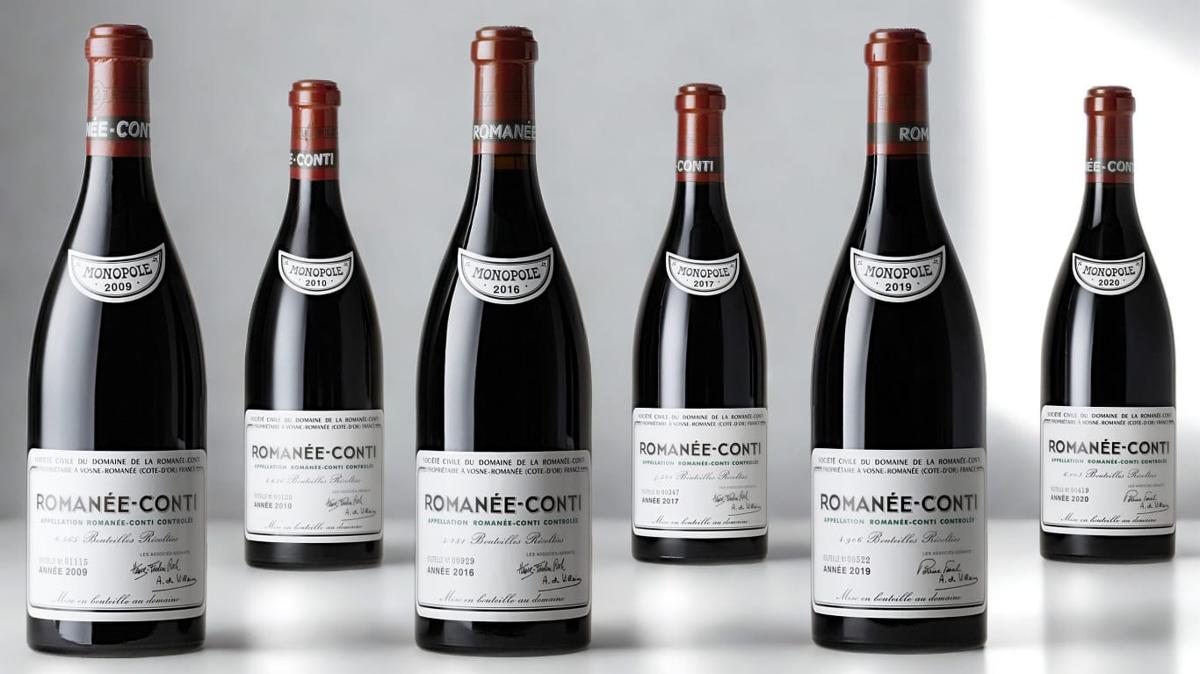
For collectors deepening Burgundy positions, the 2026 vintage release cycle from named domaines (working through merchants across late 2027 and 2028) provides the most accessible serious entry in several years. The named producers worth tracking include Mugnier, Roumier, Méo-Camuzet, Faiveley, Bouchard, and Drouhin for the Côte de Nuits. For the Côte de Beaune whites the names are Coche-Dury, Domaine Leflaive, Domaine de la Romanée-Conti's Montrachet, and Roulot.
For collectors deepening Champagne positions, the named grower-Champagnes (Egly-Ouriet, Pierre Péters, Jacques Selosse, Larmandier-Bernier, Vouette et Sorbée) provide accessible serious depth at workable allocation availability. The major-house non-vintage cuvées will continue at established positioning. Vintage Champagne from the strong recent vintages (2008, 2012, 2013, 2018) remains the structural top-tier position.
What this means for collectors
A strong harvest doesn't lower release prices in serious wine. The named producers and the major houses set their pricing based on broader merchant positioning rather than single-vintage volumes. What a strong harvest does is broaden allocation availability across merchants, ease the structural scarcity that has constrained collectors building first depth in serious Burgundy and Champagne over the past several years, and provide the kind of vintage-quality consistency that rewards collectors holding multi-vintage positions in named producers across the next decade.
The 2026 harvest sits in the conversation as a meaningful supply recovery for two of France's most-watched serious wine regions. The cellars built across the next two release cycles from the named producers above are typically the cellars that benefit most as the broader pricing structure works through across the rest of the decade.
We last reviewed this analysis in May 2026.