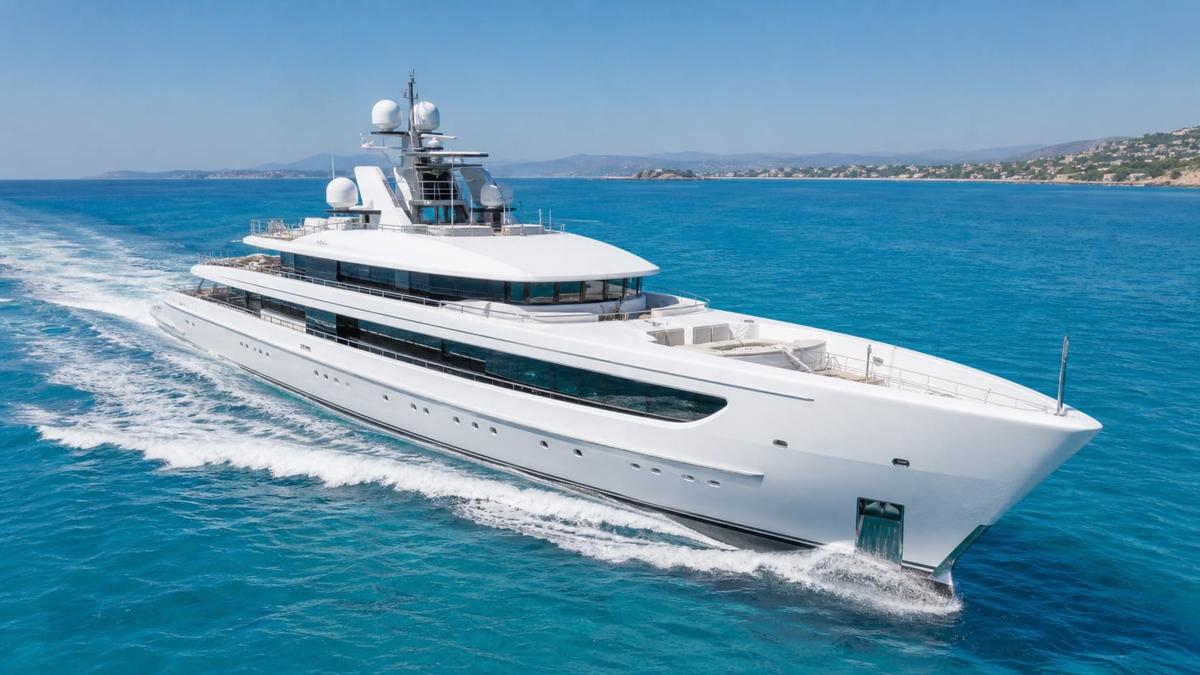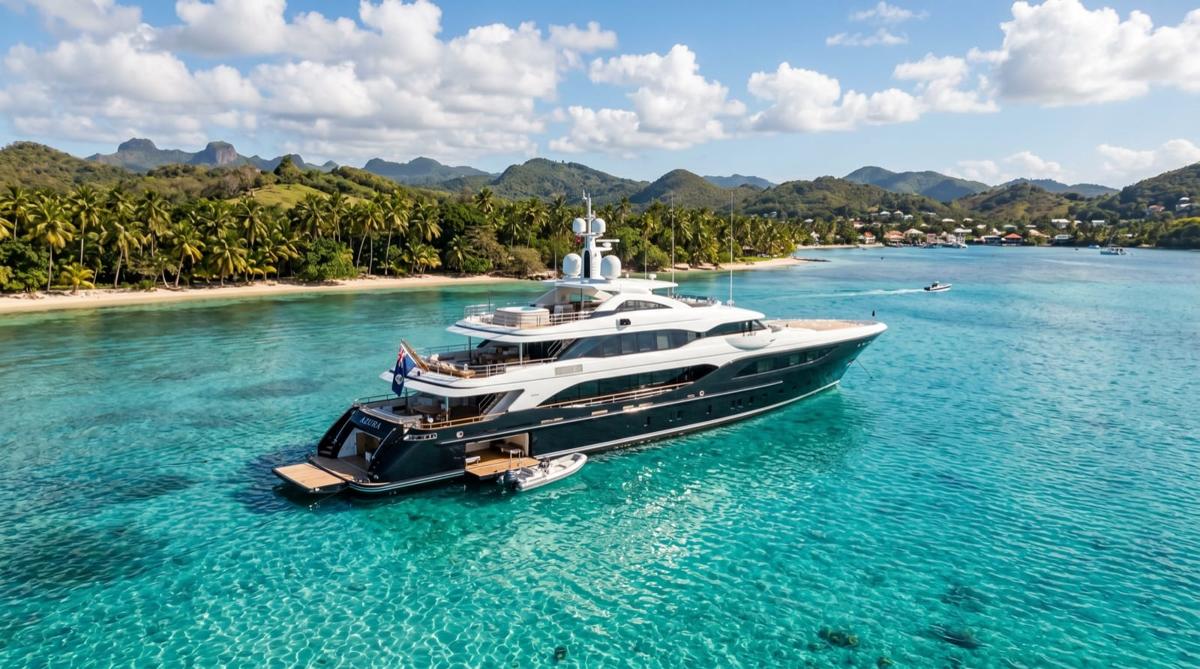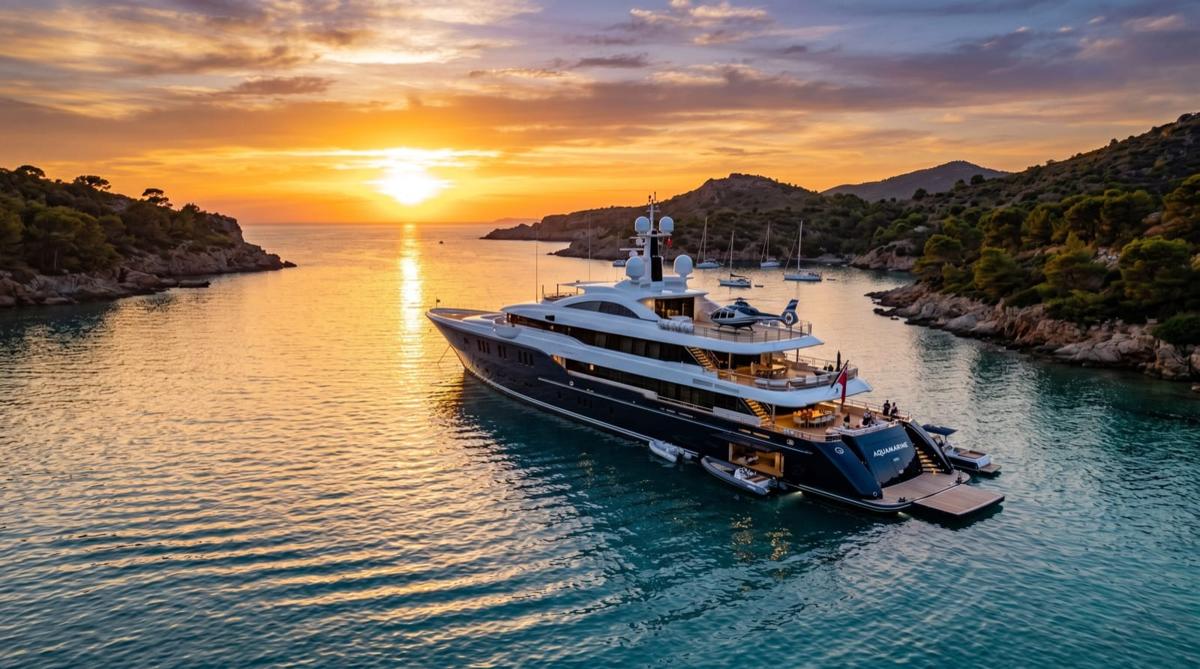
Buying a yacht in Greece sits in a quieter category of Mediterranean ownership: real charter depth, lower cost base, an EU flag, and a registration regime with its own logic. We'd argue the country has gone from "interesting alternative" to a credible default for owners running 18-to-40-metre vessels in the Aegean and Ionian.
Hellenic Yacht Brokers Association figures put Greek charter revenues at roughly €400 million in 2023, with bookings up again year on year. The country accounted for around 29 percent of worldwide charter bookings in 2022, second only to Croatia, with Athens alone responsible for an estimated 8 percent of global charter departures.
The market is real, well developed, and, for owners who do the work, more accessible than the better-known Riviera alternative. The supporting marina build-out is covered in our read on the new Greek marinas reshaping the Aegean.
- Buying a yacht in Greece sits at the intersection of attractive cruising geography and a notoriously layered regulatory and tax framework that rewards careful preparation.
- We see flag selection, VAT status and whether the vessel will operate privately or commercially as the foundational questions shaping every downstream decision.
- Greek TEPAI cruising tax applies to yachts cruising Greek waters, with annual or monthly liability calculated by length and used by the authorities as a baseline compliance check.
- Working with a Greek-licensed yacht broker and a maritime lawyer based in Piraeus or Athens remains the most efficient route through the registration, survey and customs requirements.
- EU buyers benefit from established VAT-paid status pathways, while non-EU principals face a more involved process when bringing a vessel into Greek registry.
- For most considered Greek market buyers we view structural preparation as more consequential than headline acquisition pricing across the typical first-yacht journey.
- Who is this for?
- International and Greek buyers evaluating a yacht acquisition in Greece, alongside the brokers, maritime lawyers and tax advisers framing those cross-border decisions.
- What is happening?
- A practical field guide to buying a yacht in Greece, covering flag selection, VAT status, the Greek TEPAI cruising tax and the operational distinction between private and commercial use.
- When did this emerge?
- The article reflects 2025 and 2026 conditions, with reference to the current TEPAI framework and the broader Greek maritime registration landscape.
- Where is this happening?
- The piece focuses on Greece, including Piraeus, Athens and the broader Aegean and Ionian cruising grounds.
- Why does it matter?
- Greek yacht acquisition rewards structural preparation, which is why understanding the regulatory and tax framework matters before any vessel-level decision begins.
New build versus pre-owned
This is the first real fork for any buyer approaching the Greek market. The trade-off is rarely about preference. It is about the depreciation curve, the warranty position, and the appetite for due-diligence work.
New build. Latest design and propulsion, full manufacturer warranty, the certainty of knowing exactly what is on the vessel. The premium is real, and the steepest depreciation hits in the first two to three years.
For owners who plan to keep a boat ten years or more, that early drop matters less than it looks. The arithmetic improves the longer the holding period.
Pre-owned. Chosen carefully, a well-maintained vessel from an established yard is the more compelling buy in this market. Classic designs from Feadship, Lürssen, Benetti, Heesen and Sanlorenzo hold value better than the broader pre-owned cohort.
The catch is due diligence. A marine survey, hull inspection and independent engine evaluation are non-negotiable. Skipping that work is the single most common way buyers run into trouble.
Our wider read on the pros and cons of buying a used yacht sets out the trade-offs in more detail.
What ownership actually costs
The purchase price is the start of the conversation, not the end. Indicative brackets for the categories serious buyers typically consider:
Below 50ft (15m): roughly €500,000 to €2.5 million.
50–70ft (15–21m): €2 million to €6 million.
70–100ft (20–30m): €6 million to €20 million.
Superyachts over 100ft (30m): from €10 million upward, often substantially.
These are guidelines, not rules. Specific vessels sit below or well above the range depending on condition, service history and seller motivation.
The ongoing line is where first-time owners get caught. An annual operating budget covers fuel, mooring, crew, communications, provisioning and onboard leisure spend. Each line is variable, but none of them is small.
Our detailed breakdown of the costs and expenses of yacht maintenance and operation is worth reading alongside any purchase budget.
Maintenance is the unavoidable line. The recurring items are servicing of engines, thrusters, sails, rigging, safety gear and hull fairing; occasional repair after damage; painting; cleaning; and specialist consumables for teak and leather. A dedicated maintenance buffer is what separates prepared owners from surprised ones.
Why Greek-flag ownership has its own discipline
Five practical features distinguish the Greek market from the Riviera and the Italian coast.
VAT and tax treatment. Under current Greek law, a new vessel used commercially does not pay VAT at the point of import. For pre-owned commercial vessels, treatment varies depending on prior VAT status.
Vessels purchased within the EU with unpaid VAT qualify as intra-community transactions, and the buyer takes on the VAT obligation. Commercial vessels under 12 metres without prior VAT payment will need to settle the designated amount under current rules. This area changes, so confirm current treatment with a Greek maritime tax specialist before signing anything.
The cruising-tax layer that sits on top of the flag question is covered in our read on the Greek cruising tax (TEPAI) and its impact on yachting.
Competitive vessel pricing. Greek-market vessels often list below comparable boats elsewhere in the Mediterranean. A 50-foot sailing yacht in Greece typically comes in below an equivalent on the French Riviera, driven by lower labour costs and local market conditions.
EU flagging. A Greek registration flies the EU flag, simplifies navigation in EU waters, builds compliance with EU maritime regulation into the vessel from the outset, and makes cross-border chartering across the bloc more straightforward. For owners running multi-country itineraries this is a real operational advantage.
Owners weighing alternative registries can sense-check the wider question in our read on the benefits of changing a yacht's flag.
Lower maintenance and refit costs. Labour rates for yacht maintenance and repair in Greece run noticeably below France or Italy. Average hourly rates of €50 to €80 in Greece compare with €100 to €150 in France or Italy, per industry data tracked by BOAT International.
Across a multi-year ownership and major refit cycles, the gap compounds. The savings on a single yard period can be material.
Mooring fees. Annual berthing for a 50-foot yacht runs €3,000 to €8,000 in Greek marinas, against €8,000 to €15,000 for equivalent space on the French Riviera. Over five-to-ten years of ownership, the mooring delta alone is meaningful.
The Greek charter context
For owners considering charter to offset operating costs, the Greek market is one of the strongest in the Mediterranean. Charter revenues reached €400 million in 2023, with steady year-on-year growth. The Cyclades and Ionian islands draw international charter clients consistently across the May-to-October peak.
Local charter brokers (Hellenic Yacht Brokers Association members and the larger international houses with Athens or Piraeus offices) handle international placement. Local management firms handle crew, provisioning and itinerary execution. MYBA charter agreements are standard at the upper end of the market.
Charter management fees typically run 20 to 30 percent of gross revenue. Net charter income covers a meaningful share of annual operating costs on a well-managed vessel in the 18-to-30-metre bracket, but it is not a substitute for a budget that assumes the boat costs money to own.
Owners who go in expecting charter to cover everything tend to be the disappointed ones. Owners who treat charter as a cost-offset mechanism tend to be satisfied with the arithmetic.
How to choose the right vessel
Five considerations sit at the centre of any sensible purchase decision in this market.
Purpose and usage. Will the vessel be primarily for personal use, for chartering, or both? The answer shapes size, layout, amenities and crew configuration meaningfully.
A boat optimised for owner use looks different from one optimised for charter rotation. Trying to do both at once usually produces a compromise.
Operating costs. Run a complete annual budget covering crew, maintenance, dock fees, insurance, fuel and communications before committing. Total annual running cost typically lands at 10 to 12 percent of vessel value on a well-managed superyacht.
Build the buffer into the calculation upfront. Anything else is wishful thinking.
Resale and depreciation profile. Like most luxury assets that combine engineering and craftsmanship, yachts depreciate over time. Vessels from established yards such as Feadship, Lürssen, Benetti and Heesen hold value better than the broader market.
Boats with documented full service history and clean ownership records resell more easily and at better prices. Provenance matters.
Charter potential. If the plan includes chartering, look at vessel layout, amenities, water toys and the practical accessibility of the cruising grounds the vessel will be marketed for. A boat suited to family charter looks different from one suited to corporate entertaining.
Tax, legal and registration. Greek and EU yacht law is its own discipline. A specialist maritime lawyer and a Greek maritime tax advisor are worth the cost before signing anything.
The structures available for commercial-versus-private ownership, EU-versus-non-EU registration, and crew employment compliance all materially affect the long-run economics.
What this means for buyers
Greek waters reward owners who arrive prepared. The cruising grounds are genuinely world-class, the supporting infrastructure has matured significantly across the past decade, and the cost base, provided the buyer goes in clear-eyed about both the upfront purchase and the ongoing running costs, is more accessible than the better-known Mediterranean alternatives.
For the right buyer, with the right preparation and the right specialist team in place, Greek-flag ownership is among the more rewarding paths into Mediterranean yachting. We last reviewed this analysis in May 2026.