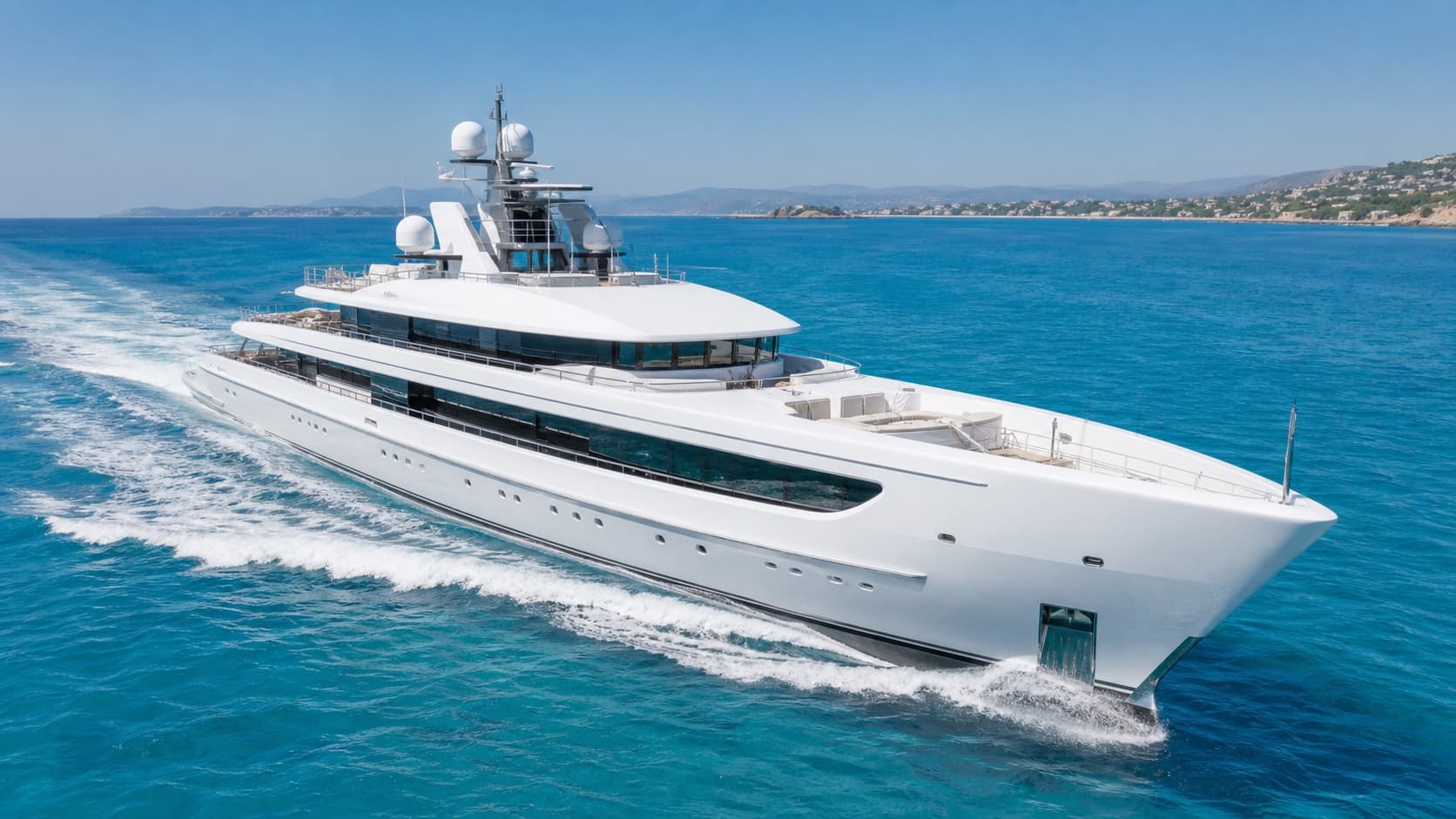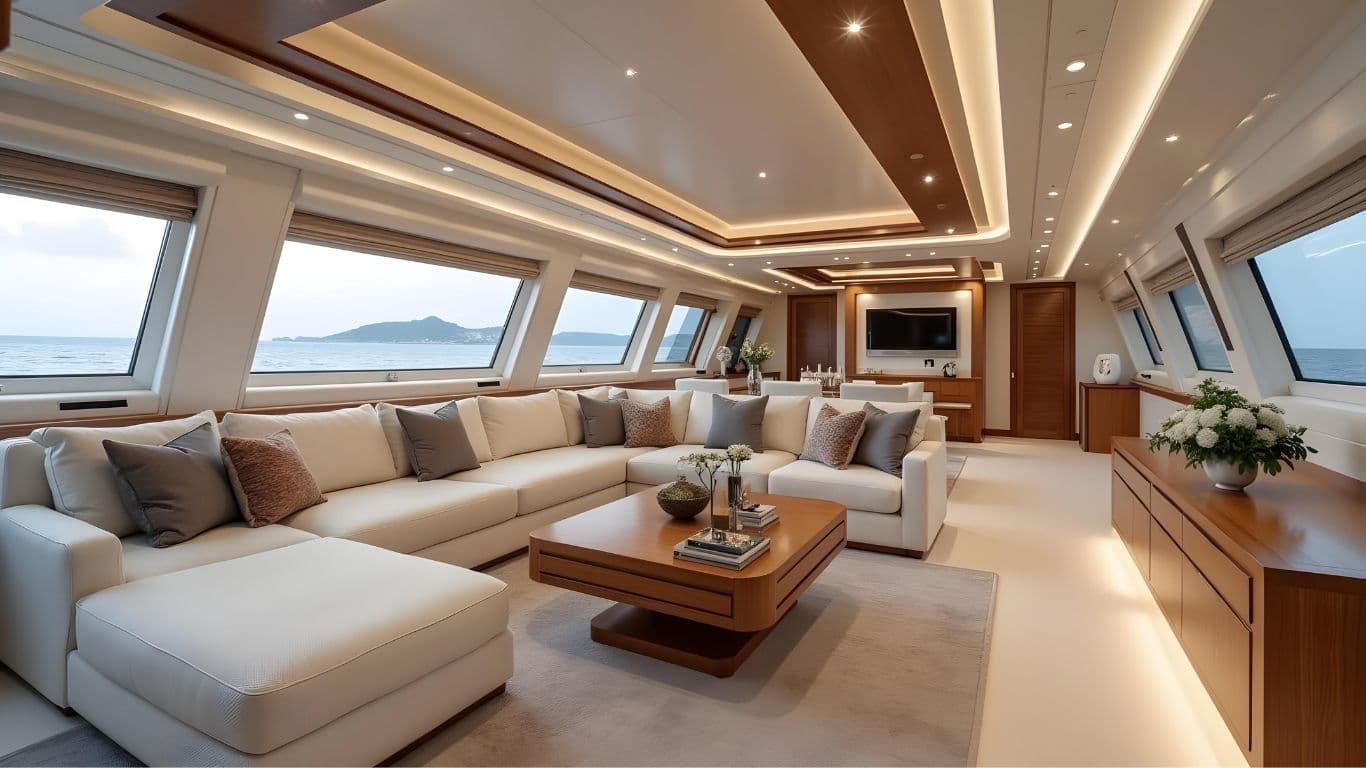
The pros and cons of buying a used yacht don't change much from buyer to buyer. Pre-owned vessels from serious yards offer a meaningfully different cost basis than new builds, with a deeper inventory and more credible track records on the boats themselves. The trade-off is the diligence work, and there is no shortcut.
BOAT International and the major brokerage houses (Edmiston, Burgess, Camper & Nicholsons, Fraser, Y.CO) all flag the same point: most pre-owned regret cases trace back to insufficient survey work at the purchase stage. What follows is our practical read on the upside, the trade-offs, and the discipline that makes the route work.
Key takeaways
- Pre-owned yachts from serious yards typically offer 20-40 percent savings on a comparable new build.
- The inventory is broader than the new-build market and the delivery window is shorter.
- Marine survey, sea trial and independent engine evaluation are non-negotiable.
- Operating economics depend more on condition than on age, within the established-build cohort.

- Buying a used yacht offers distinctive trade-offs versus new build, with acquisition discount, immediate availability and known operational history weighing against potential maintenance considerations.
- We see well-maintained pre-owned vessels typically trading at 30 to 50 percent below comparable new build pricing depending on age, condition and market segment.
- Pre-purchase survey by an independent qualified surveyor remains essential, with the older the vessel the more rigorous the structural, mechanical and systems assessment required.
- Known operational history, including documented maintenance records and previous owner experience, can meaningfully inform the acquisition decision versus speculative new build outcomes.
- Refit potential including interior updating, systems modernisation and equipment renewal can extend functional life materially while still offering total cost discount versus new build.
- For most considered yacht buyers we view used acquisition as a credible route when paired with rigorous survey discipline and realistic refit budget planning.
- Who is this for?
- Yacht buyers evaluating a used vessel acquisition, alongside the brokers, surveyors, refit yards and yacht management firms framing those decisions.
- What is happening?
- A read of the pros and cons of buying a used yacht, covering pricing discount, survey requirements, operational history visibility and the refit potential dimension.
- When did this emerge?
- The article reflects current market conditions through 2025 and 2026, with reference to the typical multi-year vessel depreciation arc.
- Where is this happening?
- The piece covers the global used yacht market, including the Mediterranean, Caribbean, US Atlantic and Asian primary brokerage hubs.
- Why does it matter?
- Used yacht acquisition offers distinctive value when paired with rigorous diligence, which is why understanding the trade-offs matters before any specific acquisition decision.
The benefits of pre-owned
Two structural advantages drive the case for pre-owned at the upper end of the market.
Lower upfront cost
The steepest depreciation on a serious yacht hits in the first two to three years of ownership. Pre-owned buyers stepping in after that initial drop access vessels at meaningfully better prices than a comparable new build, with the bulk of the depreciation already absorbed.
The arithmetic is unambiguous: a six-year-old Feadship from a careful owner typically sells at a fraction of replacement cost, with the build pedigree intact. Luxury assets are reshaping how the wealthy allocate capital, and the pre-owned yacht market is one of the better-priced corners.
Wider inventory
The pre-owned market carries a meaningfully broader range of vessels than the new-build market at any given time. Buyers approaching with a specific brief (a particular yard, a particular layout, a particular size bracket) typically find the right vessel faster in pre-owned than waiting through a 24-30 month new-build cycle.
Maintenance and repair
The reverse side of the cost saving is the maintenance picture. Older vessels carry more accumulated wear and a longer list of upcoming refit items.
Cost picture
Maintenance on a pre-owned vessel typically runs higher as a percentage of value than on an equivalent new build, simply because there is more accumulated work to do. Maintenance and Repairs are the largest variable line in the running budget at this tier.
Boat International estimates the operating line at 10-15 percent of vessel value annually on a well-maintained pre-owned boat, rising for vessels with documented deferred-maintenance issues.
Recurring repair
The recurring repair line covers engines, fuel system, electrical, plumbing, HVAC, electronics and the routine consumables. Buyers approaching pre-owned should expect to invest in the first 12-18 months of ownership to bring the vessel fully up to their working standard.
Pre-owned inspection
The diligence work is the structural backbone of any serious pre-owned purchase. There is no shortcut, and no broker worth their commission tries to talk a buyer out of the survey work.
Why marine surveys matter
A pre-purchase survey by an independent marine surveyor catches the structural and mechanical issues that nobody discloses voluntarily. The National Association of Marine Surveyors publishes credentialing standards that buyers should look for when selecting their surveyor.
The survey typically covers hull, structural integrity, machinery, electrical, plumbing, safety gear and compliance documentation. The cost (typically a few thousand dollars on smaller vessels, tens of thousands on superyachts) is meaningfully less than the issues it catches.
What a thorough pre-purchase inspection includes
Hull inspection (preferably with the vessel hauled out), engine evaluation, sea trial, electronics check, safety-gear audit and review of all documentation. The serious surveyors do all of this as standard.
Quick availability
The new-build market on a serious yacht runs 24-30 months from contract to delivery. The pre-owned market typically delivers within 30-60 days of contract, subject to survey and documentation.
For owners who want to start a season this year, pre-owned is frequently the only realistic option. The serious brokers maintain inventory across most size brackets and price points.
Financing
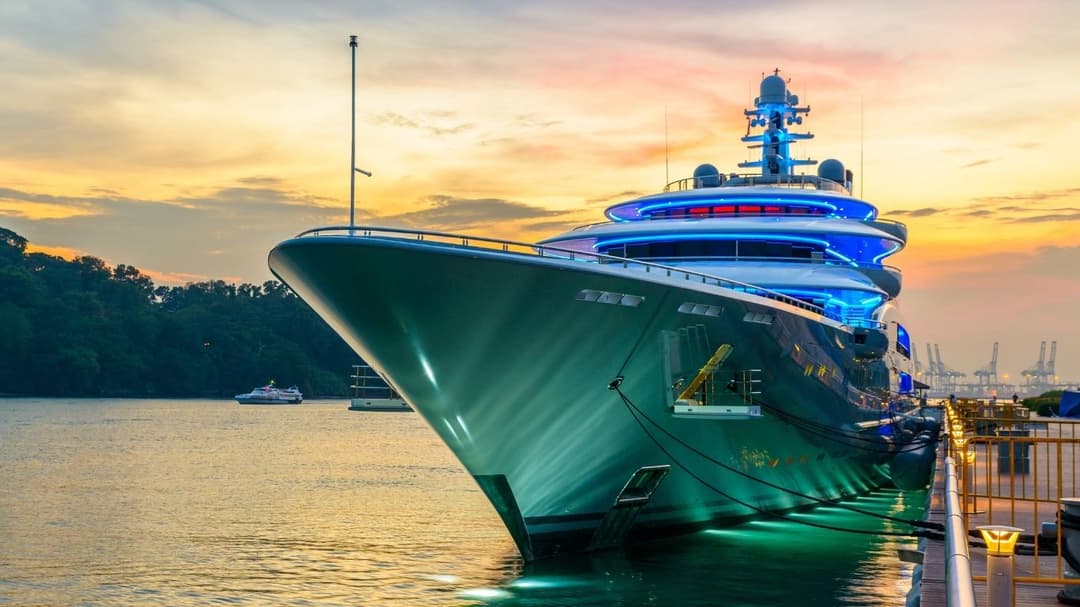
Marine financing on pre-owned yachts is its own discipline, and the lender market is smaller than for residential property.
Loan considerations
Lenders typically require survey documentation, full title history, vessel registration, insurance binding and proof of buyer creditworthiness. Loan-to-value ratios are typically more conservative on older vessels than on new builds.
Interest rates
Interest rates on used-yacht loans typically run somewhat higher than on new-build loans, reflecting the additional underwriting risk on older vessels. Buyers who want to assess whether buying a yacht in Greece makes financial sense can find regional context in that companion read.
Used yacht buyer's guide
The structured approach pays back. The casual approach doesn't.
Working with brokers
The serious yacht brokers (Edmiston, Burgess, Camper & Nicholsons, Fraser, Y.CO, IYC) maintain dedicated pre-owned divisions with deep inventory. Denison Yachting and other US-focused houses cover the American pre-owned market.
Steps to purchasing
Define the brief (size, budget, cruising ground, usage). Engage a broker. Shortlist vessels.
Run pre-purchase surveys on the leading candidates. Sea trial. Negotiate.
Finalise documentation, then take delivery. The serious brokers manage the choreography.
Certifications
For owners planning to skipper the vessel themselves, the relevant boating certifications (RYA Day Skipper or Yachtmaster, US Coast Guard Captain's licence at the appropriate tier) are worth completing before delivery. The crew certifications matter on chartered or commercially-operated vessels.
What this means for buyers
Pre-owned yacht buying rewards owners who do the diligence work. The route delivers meaningfully better economics than new build on most price points, with broader inventory and shorter delivery windows.
The trade-off is the survey discipline. Buyers who skip the work pay for it later.
Buyers who do the work tend to be the satisfied owners three and five years out. We last reviewed this analysis in May 2026.


Stefanos Moschopoulos
Stefanos Moschopoulos founded The Luxury Playbook in Athens and has spent the better part of a decade following the auction calendar, the en primeur releases, and the watchmakers, gallerists, and shipyards the magazine covers. He writes the field guides and listicles that anchor the Connoisseur section — pieces built on Phillips and Christie's results, Liv-ex movements, and conversations with collectors he has met across Geneva, Bordeaux, Basel, and Monaco. His own collecting habits sit closer to watches and wine than art, and it shows in the level of detail in the magazine's coverage of those categories. Under his direction, The Luxury Playbook now publishes long-form field guides, market-defining year-end listicles, and the Voices interview series with the founders behind the houses and the brands.