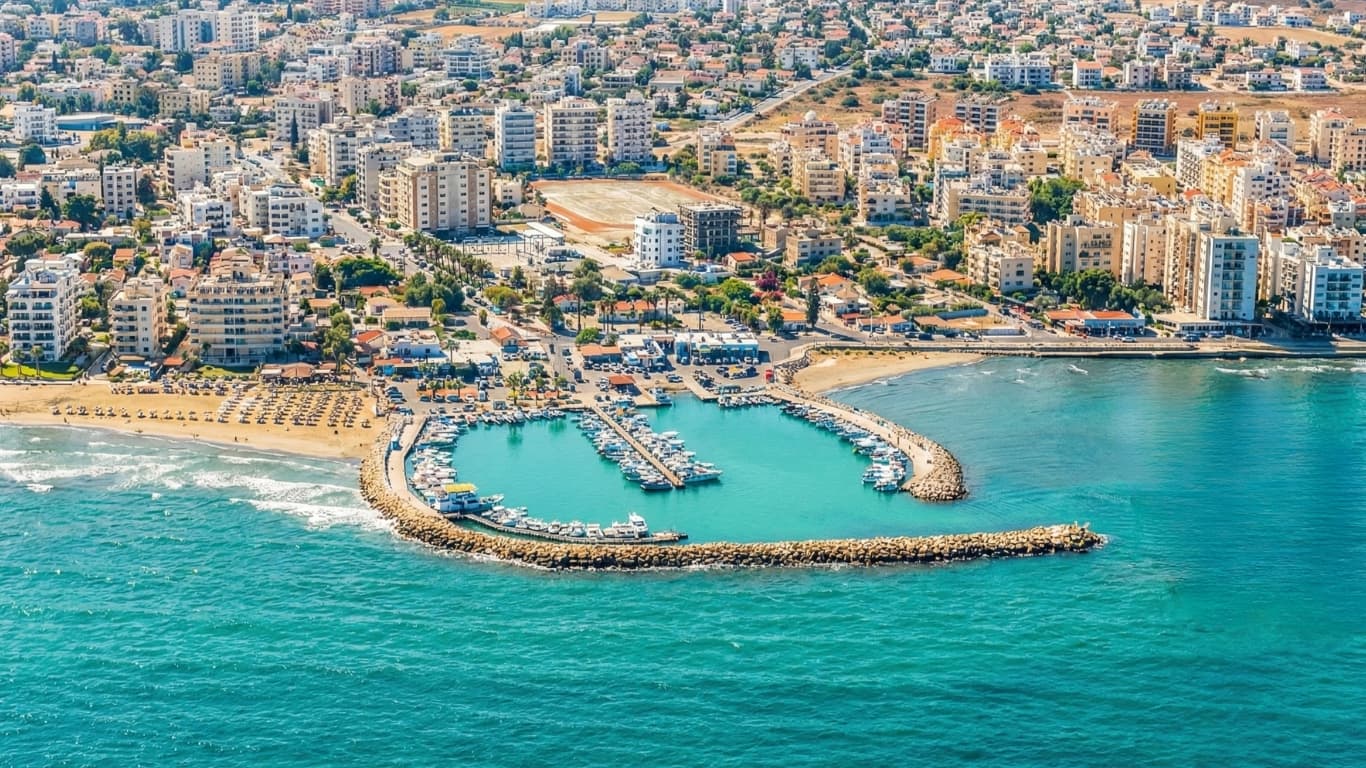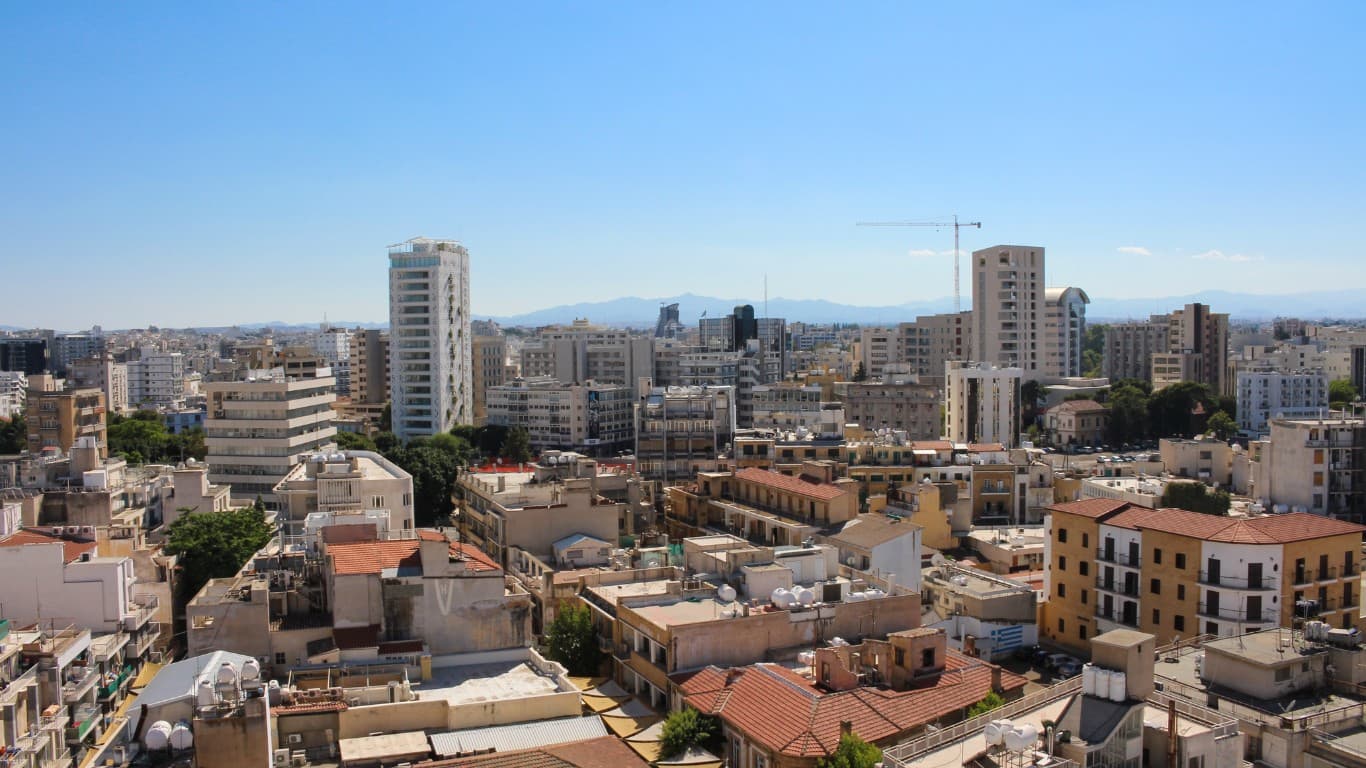
The Nicosia property market represents the most institutionally driven of Cyprus's property markets. The country's capital, the seat of government, and the only divided capital in Europe (the Green Line separating the Republic of Cyprus from the Turkish-controlled north remains a defining feature of the city), Nicosia anchors a structurally different residential conversation than the coastal cities.
As of Q2 2026, average residential prices in Nicosia sit at approximately EUR 2,300 per square metre, meaningfully below the coastal cities. The city offers a markedly different value proposition focused on year-round demand rather than tourism-driven volatility. The buyer composition is dominated by domestic professionals, government employees, and the substantial student population at the University of Cyprus.
Knight Frank's Cyprus coverage and Mansion Global's recent profiles have both started to position Nicosia as the structurally stable counterpoint to the more cyclical coastal markets.
The architectural depth that defines the Nicosia prime-residential offer is unusual within Cyprus. The walled medieval Old Town (the Venetian Walls, the restored neoclassical buildings of Strovolos and Aglantzia, and the contemporary developments along Makariou Avenue) give the city an architectural register the coastal cities cannot match. The Cyprus Museum, the Leventis Municipal Museum and the broader cultural institutions anchor the city's distinctive character.
The Engel and Volkers Cyprus and Sotheby's International Realty Cyprus desks both rank Nicosia restoration stock among their most consistently performing prime inventory.
- Nicosia offers the administratively stable counterpart to Limassol's coastal-luxury market, with the capital's government, professional services and university base supporting consistent residential demand.
- We see Strovolos, Egkomi, Aglantzia and the historic core as the most dynamic submarkets, with a mix of new-build delivery and renovated period stock.
- CyStat data shows Nicosia tracking the broader Cypriot recovery, with prices firming across recent quarters as institutional rental demand continues to deepen.
- The capital's status as the administrative and financial centre supports a more steady, less cyclical residential demand profile than the coastal alternatives.
- Cypriot residency-by-investment captures meaningful Nicosia-based buyer interest, with the non-dom tax regime continuing to support international relocator inflows.
- For most considered Cypriot buyers we view Nicosia as offering the steadier value proposition versus Limassol, with appreciation tied to the broader Cypriot economic stability.
- Who is this for?
- International and Cypriot diaspora buyers evaluating Nicosia property, alongside the advisers, brokers and family office staff framing capital city acquisitions.
- What is happening?
- A market read of Nicosia property in 2026, covering Strovolos, Egkomi, Aglantzia, the historic core, the professional services base and the residency framework.
- When did this emerge?
- The article reflects 2026 market conditions through CyStat, Knight Frank Cyprus and major Cypriot broker data alongside our own observations.
- Where is this happening?
- The piece focuses on Nicosia, including the major residential submarkets and the historic core, with reference to the broader Cypriot market.
- Why does it matter?
- Nicosia occupies a distinct position in the Cypriot market, which is why understanding the capital city dynamics matters for any considered Cyprus allocation conversation.
The Nicosia property market today
Q2 2026 transactions saw steady year-on-year activity, with foreign buyer share lower than coastal Limassol or Larnaca but supported by the Cyprus Permanent Residency programme (EUR 300,000 net of VAT minimum for non-EU nationals). Demand has been particularly strong in restored heritage districts and contemporary apartment developments along the central avenues.
The Cyprus tax framework, including the 17-year non-domiciled regime and the 12.5 percent corporate tax rate (one of the lowest in the EU), has supported a steady flow of relocators choosing Nicosia for the year-round professional environment rather than the coastal lifestyle proposition.
The senior Cypriot brokerages we speak with most often (Engel and Volkers Cyprus, Antonis Loizou and Associates, the Sotheby's International Realty Cyprus desk) describe a prime restoration market increasingly transacting through relationship-driven broker channels.
- Average residential prices: approximately EUR 2,300 per sqm
- Foreign buyer share: lower than coastal cities, but stable
- Strongest demand: Strovolos, Aglantzia, restored Old Town
Nicosia neighborhoods defining the prime tier in 2026
Old Town within the Venetian Walls
The Old Town restoration culture is among the most active in Cyprus, with traditional stone houses and neoclassical buildings drawing both domestic and international buyer attention. Restored prime stock in the heritage core now trades above EUR 3,500 per sqm. The architectural integrity of the walled city has been one of the structural supports for the heritage premium.
Strovolos and Aglantzia
Strovolos and Aglantzia are the established residential districts with strong family-buyer demand. The combination of mature infrastructure, the established schools network and the broader residential character has consolidated both districts as the most reliable family-buyer addresses in the city.
Makariou Avenue
Makariou Avenue is the central commercial spine with contemporary apartment developments. The contemporary architectural register here is the most-watched in the city, with prime new-build apartments trading above EUR 3,000 per sqm.
Engomi and Egkomi
Engomi and Egkomi draw demand from the university-adjacent demographic. The proximity to the University of Cyprus and the European University Cyprus anchors a steady rental and ownership demand from academic professionals and graduate students.
What is shaping the Nicosia property market in 2026
The structural drivers are demographically focused. Government and institutional employment, the University of Cyprus and the European University Cyprus, and the steady flow of professional residents all anchor the market. The Cyprus Permanent Residency framework supports international demand at specific price points.
The broader Cyprus tax framework (the 17-year non-domiciled regime, the 12.5 percent corporate tax rate, the broader EU-aligned regulatory environment) has captured a meaningful share of the international wealthy-migration flow redirected from Greece, Portugal and Spain over the past three years.
Greece's Golden Visa now sits at EUR 250,000 to EUR 800,000 depending on zone, Portugal's pre-2023 real-estate route was withdrawn, and Spain ended its programme entirely in 2024, which has supported the Cyprus PR pathway.
Where the Nicosia property market reads now
Prices are projected to climb 3 to 5 percent through the back half of 2026, characteristic of the city's defensive market profile. Growth is expected to concentrate in the restored Old Town and the contemporary apartment districts. The architectural-pedigree subcategory (restored neoclassical stock within the Venetian Walls, contemporary new-build commissions along Makariou Avenue) has been the strongest premium consolidation segment.
What this means for buyers
For the buyer who values architectural depth, year-round demand stability rather than tourism-driven volatility, and one of the most institutionally driven property markets in the eastern Mediterranean, the Nicosia property market continues to read as a structurally distinctive proposition within Cyprus. Meaningfully different in character from Limassol or Paphos.
The neighborhoods responding most distinctly to the design-led buyer shift, namely the restored Old Town, Strovolos and Aglantzia, are quietly outperforming the citywide averages.
We last reviewed this analysis in May 2026.
Frequently asked
How is the Nicosia property market evolving in 2026?
Prices are projected to climb 3 to 5 percent through 2026, supported by stable institutional employment and steady international buyer demand. Knight Frank's Cyprus coverage positions Nicosia as the structurally stable counterpoint to the more cyclical coastal markets.
Which Nicosia areas are seeing the most buyer attention?
The restored Old Town, Strovolos, Aglantzia, the Makariou Avenue corridor and the university-adjacent Engomi district are drawing the most consistent demand.
Can foreign nationals buy property in Nicosia?
Yes. Cyprus offers a Permanent Residency programme for non-EU buyers above EUR 300,000 net of VAT, and EU nationals can buy without restriction. The 17-year non-domiciled tax regime is one of the structural draws for international relocators.
How does Nicosia compare against the coastal cities?
The Nicosia market is more institutionally driven, year-round in demand profile, and meaningfully more affordable than Limassol while offering a distinctive architectural and cultural foundation. Prime Nicosia stock at EUR 2,300 per sqm sits well below Limassol's EUR 3,800 per sqm average.
What is the appeal of the Old Town within the Venetian Walls?
The walled medieval Old Town, with its restored neoclassical and traditional Cypriot stone architecture, offers an architectural register the coastal cities cannot match. Restored prime stock in the heritage core now trades above EUR 3,500 per sqm.


Savvas Agathangelou
Savvas Agathangelou co-founded The Luxury Playbook and has spent years reporting from the prime postcodes the magazine covers — Mayfair, Knightsbridge, the Athens Riviera, Dubai's Palm crescents, and the southern Mediterranean coastlines where the world's wealthy keep coming back. His background is in international hospitality, and that frame shapes how he writes about property: the developer's choices, the architect's signature, the agency's bench of named brokers, the building's service standard once the buyer moves in. He files developer spotlights, agency profiles, and the seasonal "Properties That Defined" listicles, and he hosts the magazine's founder-and-leadership interviews on the Voices side.