
U.S. buyers still dominate fine wine, but the buying has shifted, and the auction data across the past three years tells the structural story. American collectors remain the single largest national buyer base at Sotheby's, Christie's, Acker, Zachys, and Hart Davis Hart, but the categories drawing the dominant American bidding and the demographic profile of the active U.S. collector have both meaningfully changed since 2019.
- US buyers still dominate fine wine, but the buying has shifted, and the auction data across the past three years tells the structural story.
- American collectors remain the single largest national buyer base at Sotheby's, Christie's, Acker, Zachys, and Hart Davis Hart, accounting for roughly 50 to 55 percent of total clearing volume.
- The categories drawing the dominant American bidding have meaningfully changed since 2019, with Burgundy and Italian fine wine absorbing the structural attention.
- The demographic profile of the active US collector has broadened, with younger collectors and West Coast buyers building structural participation.
- Napa cult Cabernet retains a strong domestic anchor, with Screaming Eagle, Harlan, and Bryant Family continuing to clear at apex levels regardless of broader market softness.
- For serious cellars the US demand pattern has rebalanced, and understanding the new category and demographic profile matters for allocation strategy.
- Who is this for?
- Active collectors reading the contemporary US fine-wine demand picture, and cellar builders evaluating the structural buyer-base implications.
- What is happening?
- We read how American buying has shifted in fine wine, with the auction data, category rotation, and demographic rebalancing as live structural context.
- When did this emerge?
- The piece reads the post-2019 US buyer-base evolution through the contemporary 2026 market, with the past three years of auction data as live reference.
- Where is this happening?
- The international auction circuit, with US buyers at Sotheby's, Christie's, Acker, Zachys, and Hart Davis Hart as the structural reference.
- Why does it matter?
- The US fine-wine demand pattern defines a meaningful share of contemporary pricing architecture, and reading the structural shift correctly matters for serious-cellar strategy.
What this shift tells us about the wider fine-wine market in 2026 is that the structural categories have rebalanced, the regional emphasis has rotated, and the U.S. collector base is now more demographically diversified than at any prior point.
This is our editorial read on how American buying has shifted and what it means.
The data behind U.S. dominance
The headline figure: U.S. collectors accounted for approximately 50-55% of total clearing volume across the major fine-wine auction houses in 2024 and through the first three quarters of 2025. That share is a structural recovery from the late-2010s and early-2020s period when mainland Chinese buyers briefly carried a comparable share of high-value lot clearings.
The U.S. dominance is most pronounced at the apex categories. Sotheby's New York, Christie's New York, Acker, Zachys, and HDH all report that U.S. collectors accounted for the majority of high-value Burgundy Grand Cru and Bordeaux apex lot clearings across 2024. The Liv-ex secondary-market data backs the narrative through the broader European merchant channel.
What is structurally different from the pre-2018 pattern is the geographic and demographic spread of the U.S. collector base. The traditional Northeast and West Coast collector strongholds (New York, Boston, Greenwich, Westchester, San Francisco, Napa, Sonoma) remain dominant, but Sun Belt collector participation (Texas, Atlanta, Miami, Nashville, Chicago) has built meaningfully across the past five years.
How the buying pattern has shifted
The structural shift in American buying is the category-level rotation. The traditional American collector profile, defined through the 1990s and 2000s, was deep Bordeaux holdings supplemented by selective Burgundy and California Cult Cabernet. That profile has rotated meaningfully.
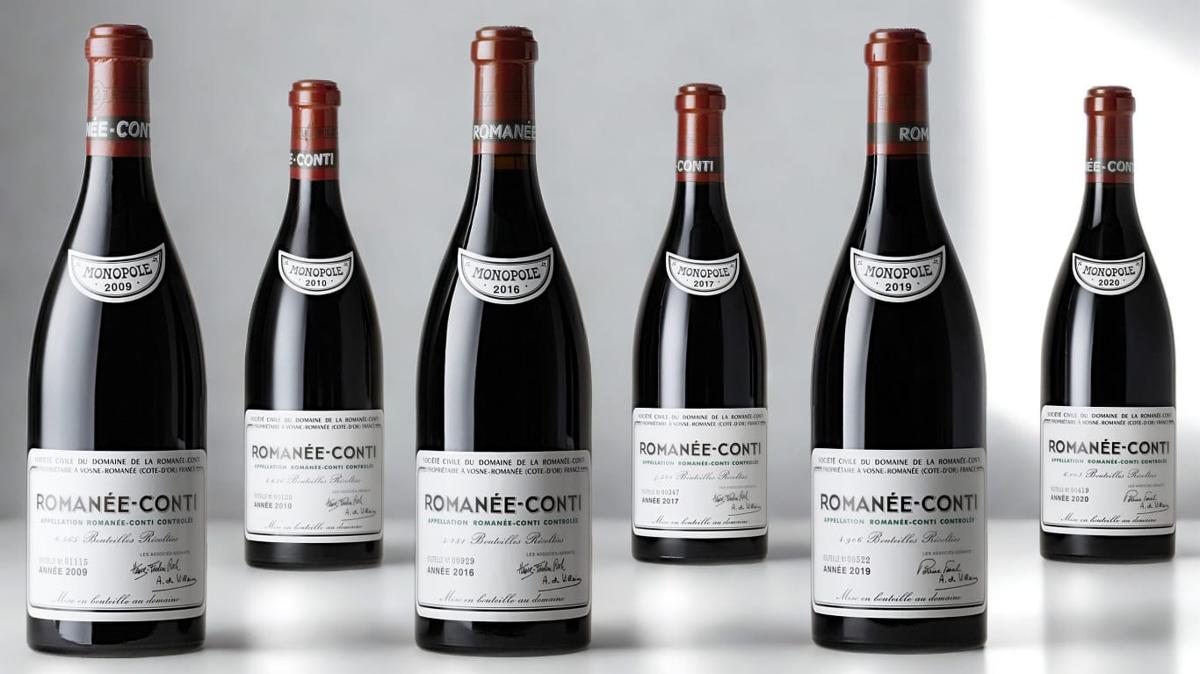
The 2024 and 2025 American auction-house bidding pattern shows Burgundy as the dominant single category. Domaine de la Romanée-Conti, Domaine Leroy, Domaine Roumier, Domaine Rousseau, and the wider Grand Cru and Premier Cru tier have all carried structural gains in U.S. bidding depth across the past five years. The wider Burgundy ascendance is something we have covered: Bordeaux has ceded structural share to Burgundy, and that shift is most pronounced in U.S. collector behavior.
What has not gone away is the U.S. interest in Bordeaux apex (First Growths, Pétrus, Lafleur). The category remains structurally important. What has changed is the marginal allocation decision: U.S. collectors are weighting new positions more heavily toward Burgundy than they did a decade ago.
The Liv-ex secondary-market data confirms the rotation. The Liv-ex Burgundy 150 has been the dominant index gain across the past five years.
The wider Italian fine wine category has also drawn meaningfully expanded U.S. bidding. Sassicaia, Masseto, Solaia, Tignanello, and the Giacomo Conterno Monfortino tier all draw consistent U.S. collector participation at the major auction houses.
The demographic shift
The U.S. fine-wine collector demographic has structurally broadened across the past five years. The historic profile (predominantly East Coast and West Coast, predominantly male, predominantly in the sixty-plus age bracket) has expanded into a more demographically diverse buyer base.
The younger U.S. collector cohort, building serious cellars in their forties and fifties rather than their sixties and seventies, carries different stylistic preferences. The Burgundy-led pattern is more pronounced in this cohort. The interest in vintage Champagne is also more pronounced.
The interest in Italian fine wine and in named single-vineyard New World work (Hirsch Vineyards, Marcassin, Sine Qua Non, Eyrie South Block, Littorai) is broader than in the older demographic.
The geographic breadth has also expanded. Texas, Florida, Georgia, Tennessee, Illinois, and Arizona have all built meaningful new collector bases across the past decade. Sotheby's and Christie's now run promotional events in Houston, Dallas, Atlanta, and Nashville that ten years ago would not have justified the investment.
The structural picture suggests this geographic broadening will continue.
Why the shift is happening
Three structural forces are working. First, the broader U.S. economic context. Sustained wealth growth across the wider Sun Belt has built a meaningful new affluent demographic that is engaging with fine wine collecting at the entry-to-mid serious tier.
The structural picture suggests this demographic will continue to expand.
Second, the category recognition pattern. Burgundy's structural ascendance through the post-2020 cycle has drawn meaningfully expanded U.S. collector attention. The same critical infrastructure that supports the broader rotation (Antonio Galloni at Vinous, Wine Advocate, Decanter, Jancis Robinson) has built strong U.S. readership across the past decade.
Third, the auction-house digital transformation. Sotheby's, Christie's, Acker, Zachys, and HDH have all built credible online bidding platforms across the past five years. The digital channel has broadened U.S. collector participation beyond the traditional in-room bidding pattern that historically favored New York, Chicago, and the West Coast.
The wider international context of how U.S. and Asian collector behavior is reshaping fine wine pricing is something we have covered in our How U.S. and Asian Buyers Are Pushing Fine Wine to Record Highs.
What this means for the wider market
The structural reading is that U.S. collector behavior has rebalanced toward Burgundy and Italian fine wine, broadened demographically, and built genuine digital-channel participation. The traditional Bordeaux-led American collector pattern is no longer the dominant frame.
What this does not mean is that Bordeaux is finished in the American market. The First Growth bottles age, the apex Right Bank work remains structurally important, and the deep U.S. collector base supporting Bordeaux apex pricing is durable. What has shifted is the marginal allocation decision.
The broader European demand picture, where the structural pull-back from China has accelerated the rotation toward Burgundy and Italian fine wine, has been the supporting structural story. The U.S. and European demand patterns are now more aligned than at any prior point in the modern market. The wider context of how that fits the global picture, where some categories have decompressed and others have built structural gains, is covered in our note on Burgundy taking record share from Bordeaux.
What this means for collectors
The straightforward read for serious cellars in 2026 is that the U.S. collector base remains the structural anchor of fine-wine demand, but the category emphasis has rotated meaningfully. Burgundy Grand Cru and Premier Cru work, vintage Champagne single-vintage releases, Italian fine wine apex (Sassicaia, Masseto, Monfortino), and selectively the New World named-vineyard tier are where U.S. collector demand is structurally concentrated.
The categories that have lost ground (parts of the Bordeaux Cru Bourgeois tier, Australian premium Shiraz, parts of the broader California serious-quality tier outside the Cult names) reflect the same structural rotation. Collectors building positions in those categories should be reading the secondary-market data carefully.
For serious cellars building in the U.S. or selling into the U.S. collector base, the strategic framework is clear. Weight new allocation toward Burgundy and Italian fine wine, retain selective Bordeaux apex positions, and approach categories outside that core with disciplined attention to the actual secondary-market clearing depth.
What we will watch next
Two structural signals. First, whether the 2025 fall auction season (Sotheby's, Christie's, Acker, Zachys, and HDH sales running through October to December) continues to show U.S. collector participation rising on Burgundy and Italian fine wine, or whether the rotation begins to stabilize. Second, whether the Sun Belt collector demographic continues to broaden through 2026.
Each signal will tell us whether the structural shift compounds further or whether the U.S. collector picture begins to stabilize at the 2024-2025 equilibrium.
We last reviewed this analysis in May 2026.