U.S. and Asian buyers are pushing fine wine to record highs, and the auction data across 2024 and 2025 is unambiguous. Sotheby's, Christie's, Acker, Zachys, and Hart Davis Hart have all reported that combined US and Asian buyer participation accounted for the majority of high-value fine-wine lot clearings across the past two years, with the US alone returning to the position of single largest market.
- US and Asian buyers are pushing fine wine to record highs, and the auction data across 2024 and 2025 is unambiguous in confirming the demand pattern.
- Sotheby's, Christie's, Acker, Zachys, and Hart Davis Hart have all reported that combined US and Asian buyer participation accounted for the majority of high-value lot clearings across the past two years.
- The US alone has returned to the position of single largest buyer market, with structural pricing leadership across multiple categories.
- Asian demand is now more demographically diversified than at the 2018 to 2021 peak, with Singapore, Tokyo, and Seoul building parallel structural presence alongside Hong Kong.
- The categories drawing the most concentrated bidding have shifted decisively, with Burgundy, apex Champagne, and Italian fine wine absorbing the structural attention.
- For serious cellars the demand architecture has rebalanced, and understanding the new geographic and demographic profile matters for allocation strategy.
- Who is this for?
- Active collectors reading the contemporary global fine-wine demand picture, and cellar builders evaluating the structural buyer-base implications.
- What is happening?
- We read how US and Asian buyer behaviour is shaping fine wine's record-high pricing, with the auction data, geographic rebalancing, and category rotation as live context.
- When did this emerge?
- The piece reads the 2024 and 2025 auction cycles through the contemporary 2026 market, with the post-pandemic structural buyer-base evolution as live reference.
- Where is this happening?
- The international auction circuit, with the US, Hong Kong, Singapore, Tokyo, and Seoul as the structural global demand hubs anchoring the analysis.
- Why does it matter?
- The US and Asian demand pattern defines the structural shape of contemporary fine-wine pricing, and reading it correctly matters for serious-cellar allocation strategy.
What the participation pattern looks like in 2026 is structurally different from where it sat at the 2018-2021 peak. The geographic distribution of demand has rebalanced, the collector demographic has broadened, and the categories drawing the most concentrated bidding have shifted decisively.
This is our editorial read on how American and Asian collector behavior is shaping fine wine's record-high pricing.
What the auction data is telling us
The headline figure: Sotheby's, Christie's, Acker, Zachys, and Hart Davis Hart combined cleared north of $500 million in fine-wine sales across 2024. The 2025 totals are tracking similar or higher, with the first three quarters of the year clearing at a faster pace than the 2024 baseline.
The US share of clearing volume has structurally returned to its 2018 position as the largest single national buyer base. The mainland China share that briefly defined the market between 2018 and 2021 has compressed; the broader Asian share (Tokyo, Singapore, Hong Kong, Seoul, Taipei) has held up but with a different demographic and category mix than the China-led peak. We have covered the broader story of how the US buyers are participating in our previous note.
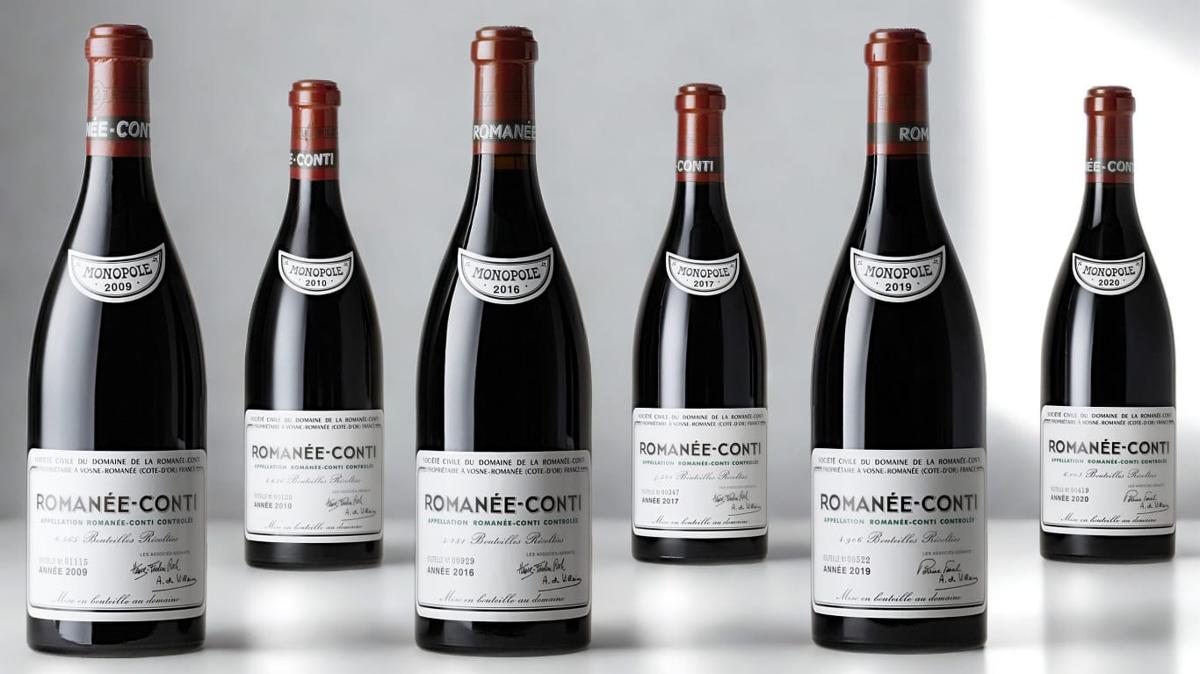
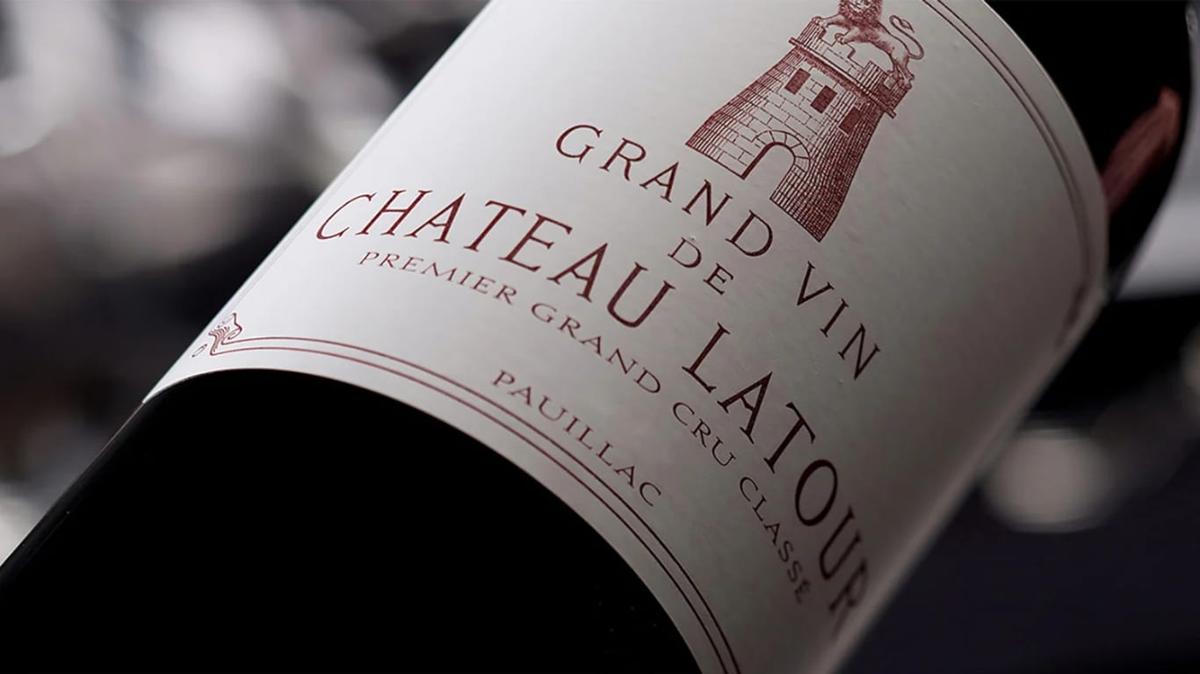
The most-bid categories at the major houses in 2024 and 2025 were, in order, Burgundy (Domaine de la Romanée-Conti, Domaine Leroy, Domaine Roumier, Domaine Rousseau), Bordeaux apex (Pétrus, Lafite, Mouton, Latour, Margaux, Haut-Brion), Italian fine wine (Sassicaia, Masseto, Solaia, Bruno Giacosa, Gaja, Giacomo Conterno's Barolo Monfortino), and vintage Champagne (Krug, Dom Pérignon, Salon).
How U.S. collector behavior has shifted
The U.S. fine-wine collector base has structurally broadened across the past five years. The traditional Northeast and West Coast collector strongholds (New York, Boston, Greenwich, San Francisco, Napa) remain dominant, but Sotheby's and Christie's both report meaningful new collector participation from Texas, Chicago, Atlanta, Miami, and the wider Sun Belt across the past 18 months.
The category preferences have shifted. The traditional U.S. collector profile (deep Bordeaux holdings, supplemented by select Burgundy and California Cult Cabernet) has rotated. The new Burgundy-led pattern is now dominant: Grand Cru and Premier Cru work anchors the most active bidding categories, with named California work (Screaming Eagle, Harlan, Bond, Sine Qua Non) and Italian fine wine in supporting positions.
Why the U.S. shift has happened is part broader market rotation and part demographic. The younger U.S. collector cohort (collectors building serious cellars in their forties and fifties rather than their sixties and seventies) carries different stylistic preferences and a more diversified geographic outlook. The structural advantage that Burgundy has built is one we have covered in detail.
How Asian collector behavior has shifted
The Asian buyer story is more nuanced than the headline "China pull-back" narrative suggests. Mainland China demand has structurally compressed since 2022, but Tokyo, Singapore, Seoul, and Taipei have all built meaningful collector depth across the same period.
Tokyo collectors have been the most consistently active across 2024 and 2025, with deep Burgundy positions defining the buying pattern. Sotheby's Tokyo and the Japanese fine-wine merchant network have reported that Burgundy Grand Cru is now the dominant category among serious Tokyo cellars. The Japanese collector demographic is structurally older and more established than the mainland-China-led 2018-2021 demographic.
Singapore collectors carry a broader category mix, with Bordeaux apex, Burgundy, and named vintage Champagne all carrying meaningful participation. Seoul has built its own serious Burgundy and vintage Champagne collector base across the past five years. Taipei retains a meaningful presence in Bordeaux apex bidding.
The wider rebalancing of where fine wine sits in 2026 is set out in our The Fine Wine Market in 2026: A Collector's Read, which covers the demographic and geographic context in detail.
The category-level demand pattern
Where U.S. and Asian collector demand has concentrated reveals the structural story. Burgundy Grand Cru is the category that has drawn the most combined participation, with the bidding depth on DRC, Leroy, Roumier, Rousseau, Coche-Dury, and the wider Grand Cru tier consistently outpacing the historical pattern. The Liv-ex Burgundy 150 has carried the trend across the past five years.
Bordeaux apex (the First Growths plus Pétrus, Lafleur, Le Pin, Cheval Blanc, Ausone) has carried steady but flatter demand. The mature back-vintage Bordeaux tier (1982, 1986, 1990, 1995, 1996, 2000, 2005, 2009, 2010) remains the structural anchor of every major auction-house sale, with consistent US and Asian bidding depth.
Italian fine wine has carried strong gains. Sassicaia, Masseto, Solaia, the Bruno Giacosa Barolo tier, Gaja's Sori Tildin and Sori San Lorenzo, and Giacomo Conterno's Monfortino Riserva have all drawn meaningfully expanded international bidding. The wider category context is covered in our note on Major Wine Brands Are Pulling Back From China Due To Market Slowdown, which sets out the structural reasons behind the Italian gain.
Where the record highs are landing
Single-bottle and single-lot records across the past 18 months tell the structural story. The 1945 Romanée-Conti at Sotheby's New York in 2018 remains the all-time single-bottle benchmark at $558,000. The recent record-band lots since 2024 have come predominantly through Burgundy at Sotheby's, Christie's, Acker, and HDH, with named DRC magnums, Henri Jayer back-vintage work, and Domaine Leroy single-bottle lots clearing well into the six-figure range.
The Bordeaux record-bottle category has carried more selective activity. The Lafite 1869 Sotheby's Hong Kong lot at $233,972 (from the 2010 sale) remains the canonical Bordeaux benchmark. More recent Bordeaux high-value lots have been more conservative in clearing.
Italian fine wine has built its own record-band activity, with Conterno's 1958, 1961, and 1971 Barolo Monfortino magnums clearing at five-figure premium pricing across recent sales. The category's structural recognition is now genuinely competitive with the canonical French regions at the apex level.
What this means for collectors
The record-high pricing pattern is genuine but selective. The categories carrying the record-band activity are the ones with the deepest international collector base: Burgundy Grand Cru, Bordeaux apex, Italian fine wine, vintage Champagne. The categories that built record bidding on China-led demand in 2018-2021 (parts of the Bordeaux Cru Bourgeois tier, some Australian Shiraz, parts of the Cult California tier) have decompressed.
The straightforward read for serious cellars in 2026 is that the structural rotation toward Burgundy, vintage Champagne, and Italian fine wine is durable. The US and Asian collector base supporting that rotation is broader and deeper than at any prior cycle. The categories not benefiting from that rotation should be approached with selective allocation discipline.
What is also true is that the record-high pricing is concentrated. Outside the apex categories, the broader fine-wine market is more measured. That bifurcation is the structural feature of the 2026 market, and it is the framework collectors should use when reading auction results.
What we will watch next
Two structural signals. First, whether the 2025 fall auction season (the major Sotheby's, Christie's, Acker, Zachys, and HDH sales running through October, November, and December) consolidates the record-band Burgundy pattern or shows the first signs of slowing. Second, whether the mainland Chinese collector participation in serious lots returns to pre-2022 patterns.
Either signal would tell us whether the 2026 record-high story is the new equilibrium or whether the market is mid-cycle. Our read is that the structural rotation is durable; the question is the rate at which the broader market participation continues to broaden.
We last reviewed this analysis in May 2026.