Pre-owned Rolex stays a cornerstone of serious watch collecting because it is, simply, the deepest end of the secondary market. Not the most exotic, that's vintage Patek and the independent watchmakers, but the deepest. Rolex caps annual production at roughly one million units globally, and every one of those watches eventually circulates through the secondary market.
- Pre-owned Rolex remains the deepest single market in collecting, with consistent liquidity, transparent pricing data, and a global dealer network that newer brands cannot match.
- Submariner, GMT-Master II, and Datejust references anchor the secondary catalogue, with predictable price floors that have held across multiple downturns.
- Box-and-papers premiums have narrowed in recent quarters, which makes naked examples of strong references worth a second look at the right condition.
- We track the WatchCharts Rolex index closely, because it filters out hype around hot references and reveals where everyday demand actually sits.
- Authorised pre-owned programmes have professionalised the trade, but independent specialists still set the standard for transparent provenance and honest condition grading.
- Buyers entering now should anchor on condition, service history, and bracelet originality rather than chasing the latest reference everyone is talking about.
- Who is this for?
- First-time Rolex buyers, established collectors building depth, and dealers managing inventory across multiple price tiers.
- What is happening?
- A grounded explanation of why pre-owned Rolex still functions as the cornerstone of serious watch collecting, with depth, liquidity, and pricing discipline that no rival matches.
- When did this emerge?
- The case has held across the last decade and reinforced itself through the post-2022 price reset, when Rolex held value better than most luxury asset classes.
- Where is this happening?
- Authorised dealers, independent specialists, Chrono24, and the major auction houses all supply liquid pre-owned Rolex inventory across global markets.
- Why does it matter?
- Rolex pre-owned offers the cleanest mix of liquidity, transparency, and long-term value retention available in collecting today.
The depth of trading on Chrono24 and WatchCharts, the number of credible specialist dealers, the consistency of pricing across Submariner and GMT references: these are the conditions that let collectors actually transact, refine collections, sell when they need to and buy with confidence. Pre-owned Rolex is the workhorse of the field, and it is the workhorse for reasons that have held up across multiple market cycles.
The 2022 to 2024 secondary-market correction took some heat out of the speculative end of the catalogue. Daytonas were trading at multiples of retail in early 2022, and the air came out of those numbers reasonably quickly. What's left, on the evidence Hodinkee and the major auction houses are reporting, is a more rational secondary market with the core sport references trading at premiums that look more sustainable than the 2021 numbers ever did.
Where the pre-owned Rolex catalogue actually sits
The Submariner is the foundational reference. The current no-date Submariner reference 124060 retails new from authorised dealers at around $9,100, and clean pre-owned examples trade between $10,500 and $12,000 on the secondary market.
That 15 to 30 percent premium reflects the gap between waitlist allocation and immediate availability. The earlier reference 16610, discontinued in 2010, trades between $10,000 and $14,000 depending on condition. The discontinued status and the era-specific dial geometry give it a collector premium over the current production.
The Daytona and Paul Newman lineage
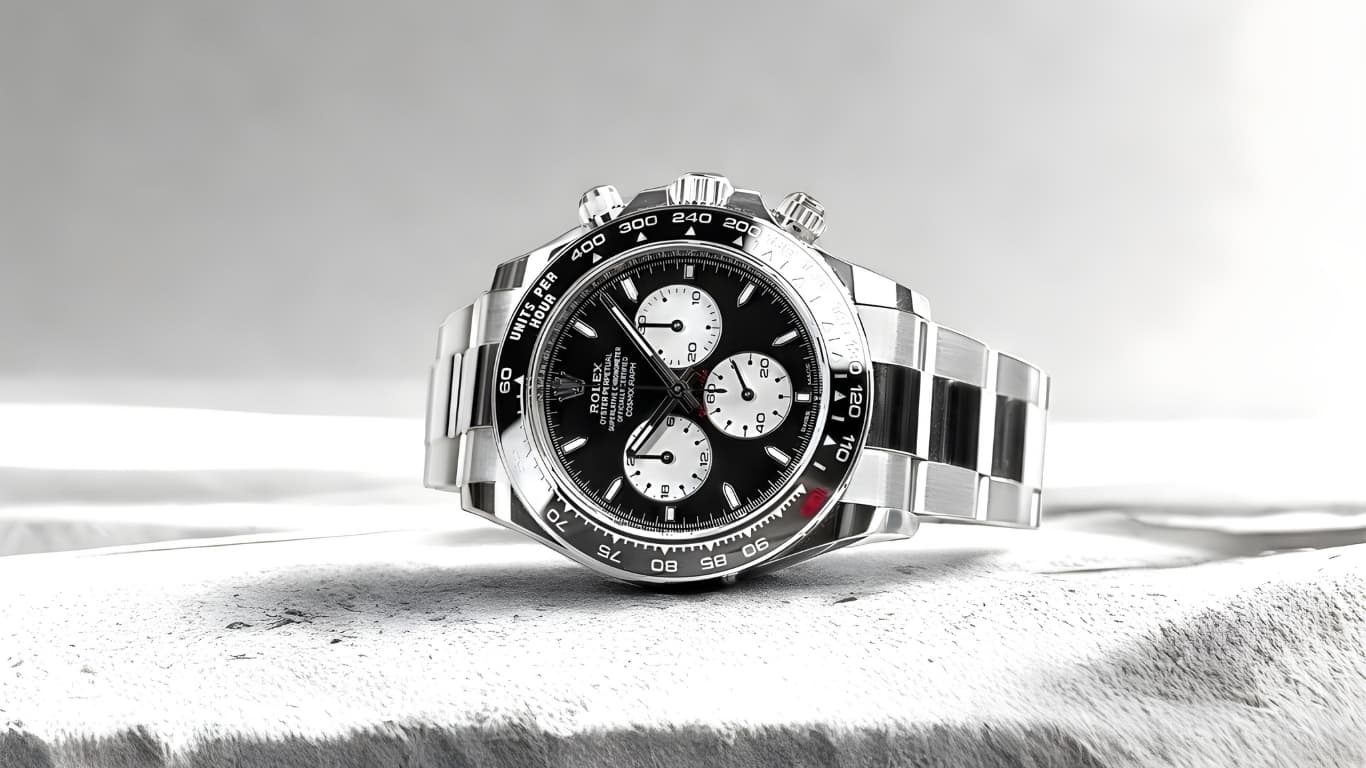
The Daytona is the brand's headline reference. The ceramic-bezel 116500LN, the white-dial "Panda" version particularly, retails at around $15,100 from boutiques and trades between $26,000 and $34,000 on the pre-owned market.
The earlier 116520 (pre-ceramic, with the metal bezel) is the reference vintage Daytona collectors point to as the moment the modern Daytona hit its design peak. Vintage Daytonas, the manual-wind references from the 1960s and 1970s, particularly the "Paul Newman" reference 6263 with its exotic dial, clear $100,000-plus regularly at Phillips and Christie's.
Exceptional examples reach multiples of that. The Paul Newman Daytona that cleared $17.8 million at Phillips in 2017 set the long-term benchmark for what serious vintage Rolex can do at auction.
GMT-Master and Day-Date
The GMT-Master II is the third pillar. The current "Pepsi" 126710BLRO retails at around $10,900. Pre-owned examples in clean condition trade between $16,000 and $20,000.
The discontinued 16710 with the aluminium bezel is the reference collectors hunt for. Slimmer case, the matte aluminium bezel insert that ages distinctively, and a build geometry that current ceramic-bezel production hasn't quite replicated.
The Day-Date is the dress reference at the top of the catalogue. The vintage 18238 in 18-karat yellow gold with a champagne dial has moved from roughly $14,000 in 2020 to over $22,000 today, a steady climb driven by renewed appetite for vintage gold dress watches. The current generation 228238 retails around $38,000 and trades between $45,000 and $52,000 on the secondary market.
The Explorer, Datejust and Milgauss tier
The Explorer line is the quieter end of the catalogue. The Explorer I reference 214270 has moved from around $6,000 in 2020 to over $8,500 today. Vintage Explorer II "Polar" reference 16570 with the white dial is the reference Explorer collectors specifically hunt for, frequently selling above $9,500.
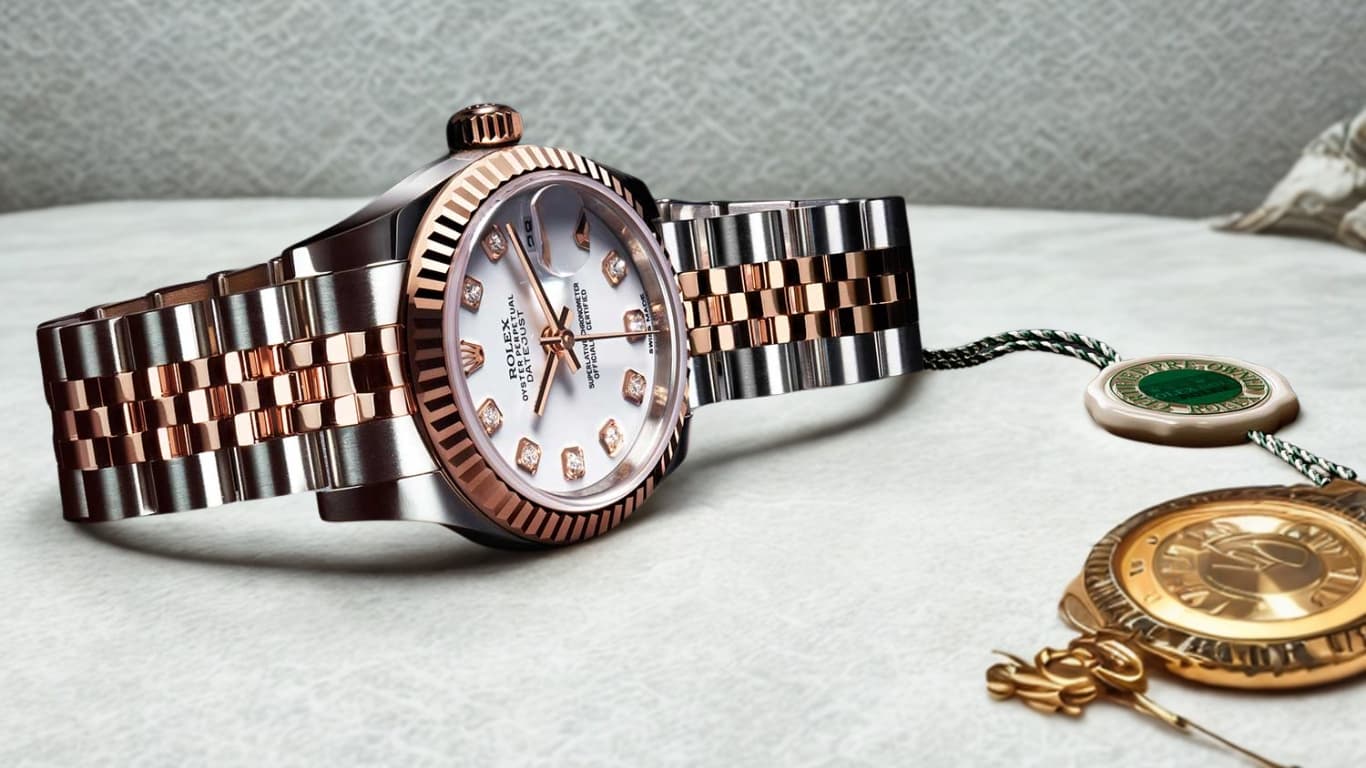
The Datejust trades steadily across the catalogue. Vintage 1601s in steel-and-gold combinations sit around $6,500 to $8,000, modern 126300 references at a 10 to 20 percent premium above their $8,000 retail.
The Milgauss is the discontinued curiosity. The 116400GV with the green-tinted sapphire crystal moved from around $8,000 to over $12,000 by early 2026. Once a watch the wider market overlooked, the discontinuation has firmed prices on clean examples and the unusual technical positioning, designed for laboratory environments with high magnetic fields, gives it a distinctive collector identity.
What pre-owned Rolex collectors look for
Reference numbers do most of the heavy lifting in pre-owned Rolex. The same model name covers references that trade at very different secondary-market levels. A discontinued reference can carry a substantial premium over its successor purely because of production constraint and the collector recognition that builds around defined production windows.
Submariner reference 16610 versus 124060, Daytona reference 116520 versus 116500LN, GMT-Master II reference 16710 versus 126710BLRO: these are the splits that matter when reading a piece's value. The reference literacy is what separates collectors who buy well from collectors who pay premium for adjacent references that don't carry the same collector weight.
Condition and case geometry
Condition is the second pillar. Original case lines (no aggressive polishing, Rolex case geometry has sharp bevels that disappear quickly when a jeweller's polishing wheel goes to work), original dial without service replacement, and consistent serial numbers across the case and movement are the baseline.
Service dials, replacement dials Rolex itself fitted during a service, sit below original-dial pieces in collector preference. The discount can be substantial on vintage references where original dial finish is part of the watch's character.
Full-set documentation premium
Full-set documentation matters at every tier. A Submariner reference 16610 with original box, papers, hangtags, and credible service history clears 20 to 30 percent above an identical condition watch sold without documentation.
For modern production references the gap can be even wider. For vintage references where complete sets are rare to begin with, even partial documentation carries weight. It's the first thing any specialist dealer or auction-house specialist asks about before pricing a piece.
Buying through dealers, auctions and the secondary market
Three channels matter for pre-owned Rolex. Specialist dealers (names like Watches of Switzerland's pre-owned operation, Bucherer Certified Pre-Owned, Hodinkee Shop's pre-owned section, and the established independent dealers in London (Watchfinder), Geneva (Antiquorum's daily-trade arm), New York (Govberg's network), and Tokyo (Komehyo)) provide authenticated watches with warranty coverage, typically at premium pricing reflecting the authentication and warranty cost.
The auction houses (Phillips, Christie's, Sotheby's, Antiquorum) handle the top of the vintage market. Lots come pre-authenticated with detailed condition reports. Estimates are reliable indicators of likely clearing price, and the auction route is where serious vintage Rolex collecting actually happens at the upper end.
The marketplaces (Chrono24, WatchCharts, eBay's authenticated watch programme) provide the broadest access at the most variable quality levels. Authentication discipline is the load-bearing concern. High-end counterfeit watchmaking has reached a level where careful inspection by an experienced specialist is the practical baseline before any major private-market purchase.
Servicing, storage and the cost of ownership
Service costs run between $500 and $1,000 per interval for most modern Rolex references, with intervals recommended at five to seven years. A service from Rolex's authorised network includes movement overhaul, gasket replacement, and case and bracelet cleaning.
Service from independent watchmakers can be cheaper but credibility of the watchmaker matters substantially for any reference where the buyer might eventually present a service history at resale. The collectors we hear from at Phillips and Christie's previews consistently emphasise documented service history when it comes to liquidity.
Storage is straightforward enough: a humidity-controlled environment, ideally a small home safe or bank deposit box, with the watch away from sustained magnetic field exposure (laptops, magnetic phone mounts, electric motors). Specialist watch insurance (Hodinkee Insurance, Hiscox, Chubb) writes policies at current secondary-market valuations rather than retail, and is the practical floor for any collection above the entry tier.
What this means for collectors next
The longer story collectors are watching is whether Rolex maintains the production discipline that has, so far, kept the secondary market depth credible. Discontinuation discipline, the willingness to retire references on a defined schedule rather than running them indefinitely, is what creates the collector category and the secondary-market depth in the first place.
So far, on the evidence of the past decade, that discipline has held. For collectors building a working pre-owned Rolex collection, the path remains consistent: focus on reference numbers over model names, prioritise condition and original components, and treat full-set documentation as a non-negotiable for any meaningful purchase.
We last reviewed this analysis in May 2026.

Frequently Asked Questions
- How do I verify the authenticity of a pre-owned Rolex?
- Always buy from certified dealers and request an authenticity certificate, serial number check, and full service history. Avoid listings that lack original box and papers, or show signs of polishing or part replacements.<br><br>
- Do Rolex watches hold value in a recession?
- Yes. Rolex watches—especially steel sport models—have historically proven recession-resilient. During market downturns, they maintain value better than most luxury assets due to global demand and limited supply.<br><br>
- What condition factors affect resale price?
- Key factors include original parts, non-polished case, matching serial and reference numbers, and complete documentation. Watches in unworn or mint condition with full provenance can sell for 20–30% more.<br>

Stefanos Moschopoulos
Stefanos Moschopoulos founded The Luxury Playbook in Athens and has spent the better part of a decade following the auction calendar, the en primeur releases, and the watchmakers, gallerists, and shipyards the magazine covers. He writes the field guides and listicles that anchor the Connoisseur section — pieces built on Phillips and Christie's results, Liv-ex movements, and conversations with collectors he has met across Geneva, Bordeaux, Basel, and Monaco. His own collecting habits sit closer to watches and wine than art, and it shows in the level of detail in the magazine's coverage of those categories. Under his direction, The Luxury Playbook now publishes long-form field guides, market-defining year-end listicles, and the Voices interview series with the founders behind the houses and the brands.