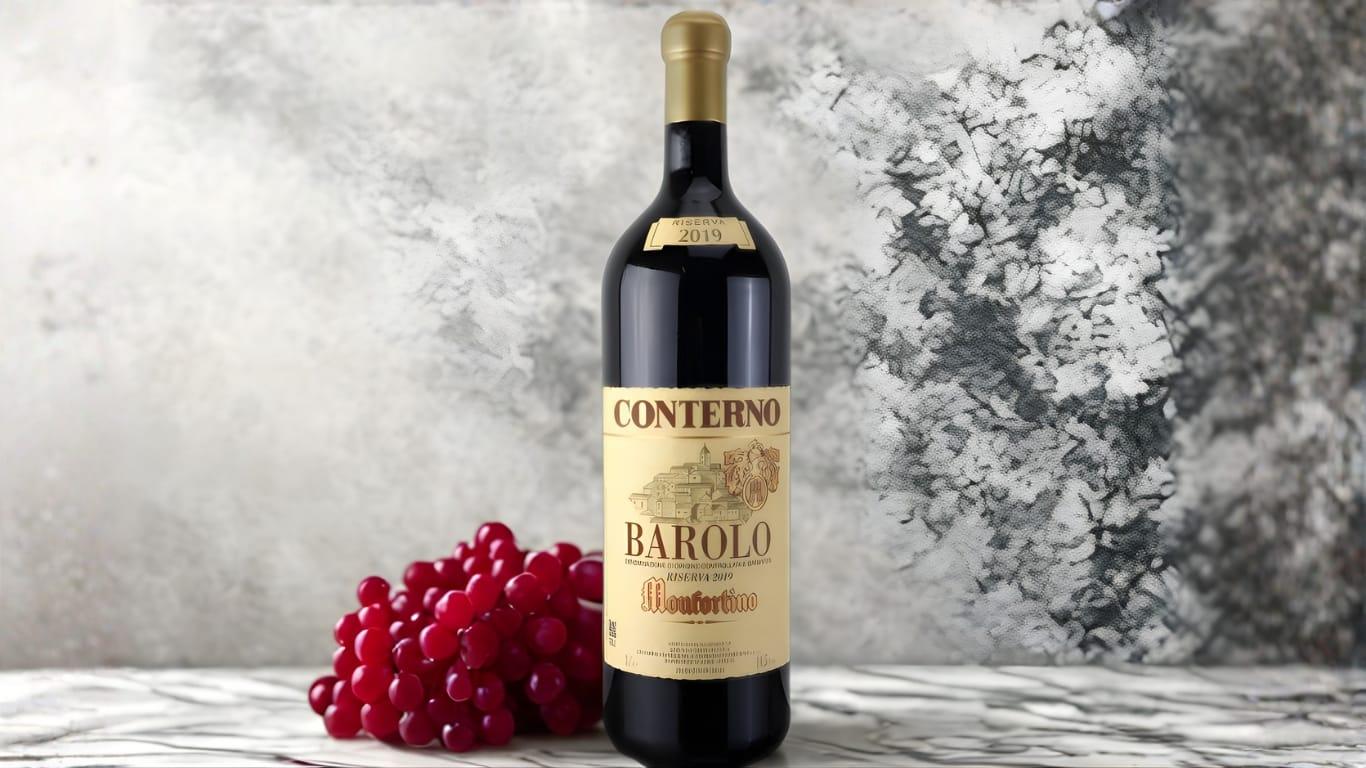
Serious collectors are obsessed with Giacomo Conterno's Monfortino 2019, and the structural reasons are credible. The Barolo Riserva from the Conterno estate is the most coveted single Italian wine in modern collecting, the 2019 vintage has earned the kind of universal critical recognition that defines a generational vintage, and the production volumes are structurally tight enough to ensure that demand significantly outstrips supply.
- Serious collectors are obsessed with Giacomo Conterno's Monfortino 2019, and the structural reasons are credible across multiple measurement lines.
- The Barolo Riserva from the Conterno estate is the most coveted single Italian wine in modern collecting, with structural pricing momentum across the past decade.
- The 2019 vintage has earned the kind of universal critical recognition that defines a generational vintage, with apex critic scores across Vinous, Wine Advocate, and Decanter.
- Production volumes are structurally tight, with the Riserva bottling released only in years Roberto Conterno judges to meet the apex standard.
- The single-vineyard Cascina Francia bottling (and its predecessor Monfortino sources) anchors the structural Conterno house style across the post-1970s cycle.
- For serious cellars the Monfortino 2019 represents the kind of generational Italian apex position that anchors structural Piedmontese depth across decades.
- Who is this for?
- Cellar builders working through Italian fine wine positions, and serious collectors evaluating the apex Piedmontese tier in the contemporary market.
- What is happening?
- We read why serious collectors are obsessed with Monfortino 2019, with the producer, vintage, and structural Italian fine-wine variables as live context.
- When did this emerge?
- The piece reads the post-2019 release through the contemporary 2026 market, with the modern Monfortino secondary-market trajectory as live reference.
- Where is this happening?
- Piedmont, the Conterno estate in Monforte d'Alba, and the broader Italian fine-wine apex tier anchoring serious-collector cellars.
- Why does it matter?
- The Monfortino 2019 represents the structural apex of Italian fine wine, and understanding what drives the obsession matters for serious cellars building Piedmontese depth.
This is our editorial read on why the Monfortino 2019 has built the level of collector attention it has, and what it tells us about the wider Italian fine wine category in 2026.
The story is layered and the structural picture is more interesting than the headline scarcity suggests.
Why Monfortino sits at the apex of Italian fine wine
Giacomo Conterno's Monfortino is the structural apex of Piedmontese fine wine. The Riserva bottling, which Roberto Conterno (and now his son Giacomo Conterno II) only releases in vintages of genuine exceptional quality, is sourced from Cascina Francia (the historic Serralunga d'Alba family vineyard) and now also from the recently acquired Cerretta cru.
Production is structurally tight. The Monfortino release in a declared vintage is around 12,000 bottles. The wine ages for seven years in large oak Botti before release, which means each release is a multi-year cellar production decision.
Roberto Conterno does not release Monfortino every year: 2017, 2018, and 2020 were either skipped or released as standard Barolo rather than Riserva. The discipline is genuinely structural.
The critical record speaks for itself. The 2010, 2013, and 2014 Monfortino releases each earned 100-point scores from multiple critics (Vinous through Antonio Galloni, Wine Advocate through Monica Larner, Decanter, and the wider Italian fine-wine press). The Monfortino has structurally moved from "important Italian wine" to "globally collected apex single-vintage release" across the past decade.
What is specific about the 2019 vintage
The 2019 vintage in Piedmont has drawn one of the strongest universal critical recognitions in modern Italian fine-wine memory. Antonio Galloni at Vinous flagged 2019 as "exceptional and balanced" with the structural quality to define a generation of Barolo. Monica Larner at the Wine Advocate produced similarly strong commentary.
Decanter and the wider trade press converged on the same assessment.
The growing season delivered what Piedmontese vintage hunters consistently look for: warm but not extreme summer conditions, late-season cool weather that extended ripening, and minimal weather stress during harvest. The Nebbiolo fruit harvested in late October 2019 showed exceptional concentration alongside the structural acid retention that defines long-aging Barolo.
The Monfortino 2019 specifically has drawn early commentary from collectors who have tasted barrel samples through the Conterno-trade relationships. The structural reading is that the 2019 Monfortino will release as one of the strongest single Conterno bottlings in the modern record, alongside the canonical 1971, 1978, 1985, 1996, 2004, 2010, and 2014 vintages.
The bottle releases through 2026 and 2027 (the structural release pattern given the seven-year aging discipline), which is why collector attention is already concentrated on the bottling well before it appears on merchant shelves.
How the secondary market is positioning
The Monfortino 2019 has already drawn structural pre-release activity through merchant allocation, the en primeur-equivalent channel that operates through Piedmontese distributor networks, and through Sotheby's and Christie's selective pre-release lots.
Liv-ex tracking on the broader Giacomo Conterno category shows consistent secondary-market gains across the past three years. The 2010 Monfortino now trades at multi-thousand-dollar per bottle pricing on the secondary market, the 2013 Monfortino has built similar pricing trajectory, and the 2014 release is following the same pattern. The structural reading is that the 2019 release will land at pricing that meaningfully exceeds the 2014 baseline.
The auction record for older Monfortino releases (1971, 1978, 1985, 1989) tells the structural story. Single magnums from those vintages have cleared four-figure pricing through Sotheby's and Christie's New York and London sales across recent years. The 1958 Monfortino magnum lots have cleared into the five-figure range.
For the wider story of how Italian fine wine has built structural gains in the post-2020 cycle, our note on whether Burgundy is taking the lead from Bordeaux covers the regional context.
What this tells us about Italian fine wine
The Monfortino 2019 story is a single-bottle expression of a wider structural shift. Italian fine wine has, across the past five years, built genuine international collector recognition at the apex level. The Liv-ex Italy 100 index has been one of the most consistently positive regional indices through the post-2020 cycle.
The apex Italian fine wine list extends across multiple regional and producer categories. Piedmont anchors with Conterno, Bruno Giacosa (Le Rocche del Falletto and Le Rocche del Falletto Riserva Rosso, plus the wider Giacosa range), Bartolo Mascarello, Cappellano, and the wider top tier of Barolo and Barbaresco producers.
Tuscany delivers the Sassicaia, Masseto, Solaia, Tignanello tier, plus serious Brunello di Montalcino from Soldera Case Basse, Gianfranco Soldera (back-vintage stock), Salvioni La Cerbaiola, and Biondi-Santi.
The wider Super Tuscan tier sits alongside the Barolo and Brunello apex. The category's structural argument has built in a way that, ten years ago, would have been hard to imagine. The Italian fine-wine secondary-market depth now genuinely competes with Bordeaux and Burgundy at the apex.
How collectors should engage with the Monfortino 2019
The straightforward read for serious collectors is that direct allocation through Piedmontese merchant relationships is the structurally preferred channel. Roberto Conterno's allocation discipline favors collectors with cellar history at the estate.
Bordeaux Index, Berry Bros & Rudd, Justerini & Brooks, Bordeaux Index's New York and Hong Kong operations, plus the structural Italian fine-wine specialist tier (Vinitaly's international merchant network, Bartolomei in Italy, the named Tuscan-Italian fine-wine merchant tier) all hold allocation discipline that favors established collectors.
For collectors without established allocation, the secondary market through Sotheby's, Christie's, Acker, and HDH is the structural alternative. The 2019 Monfortino will, in our editorial read, command meaningful clearing pricing across the first three years of secondary-market trading. Disciplined bidding through the secondary channel can secure single-bottle or small-case positions, though at structural premium to the original release pricing.
The complement to a Monfortino 2019 position is a serious Piedmontese cellar that anchors around the wider Conterno range (the standard Barolo Cascina Francia, the Cerretta Vigna Rionda, the Barbera) alongside Giacosa, Mascarello, and Cappellano. That broader Piedmontese position is the cellar context within which the Monfortino 2019 lives.
For collectors building wider Italian fine-wine positions, our coverage of Sassicaia and the wider most-coveted Super Tuscan tier sets out the complementary Tuscan picture.
What this means for collectors
The Monfortino 2019 is, in our editorial read, the single most important Italian fine-wine bottling to track across the 2026 and 2027 release cycle. The combination of universal critical recognition, structural production scarcity, deep secondary-market depth, and apex-producer cellar discipline gives the bottle the structural foundation that defines generational releases.
The straightforward strategy is to engage with the bottle through the allocation channel if access is available, and through the secondary market if not. Both paths deliver genuine engagement with a wine that is likely to define the Italian fine-wine collecting conversation for the next decade.
What we will watch next
Three signals. First, the formal release pricing through the Piedmontese merchant channel in 2026 or 2027, which will establish the structural floor for secondary-market activity. Second, the critical recognition pattern (Vinous, Wine Advocate, Decanter, Jancis Robinson) on the released bottle, which will confirm or revise the strong pre-release reading.
Third, the secondary-market clearing depth across the first three years post-release. Each signal will tell us whether the Monfortino 2019 lands as the generational bottling the structural read suggests, or whether the bottle settles at a more measured position in the wider apex Italian fine-wine collecting frame.
We last reviewed this analysis in May 2026.