Yacht fuel consumption depends on a handful of variables working together, from the vessel's size, weight, and hull design to engine type, cruising speed, and the distance you are covering. Smaller pleasure yachts tend to be far more fuel-efficient than their larger counterparts, which can burn through serious quantities of fuel even at a comfortable cruising pace. The good news is that smart fuel management is absolutely within your control.
Thoughtful route planning, maintaining an optimal cruising speed, and keeping up with regular maintenance all make a real difference, letting you spend more time on the water and less money at the fuel dock.
- Yacht fuel capacity and consumption sit at the foundation of practical cruising planning, with vessel size, engine specification and cruising speed all factoring into the operational envelope.
- We see motor yacht consumption typically ranging from 50 to 500 litres per hour at cruising speed across the 30 to 80 metre segment, with displacement hulls materially more efficient than planing hulls.
- Cruising speed selection drives the most consequential consumption variable, with reduced cruising speed often delivering material fuel economy gains across longer passages.
- Range calculations should incorporate reserve capacity, weather contingency and the typical operational deployment pattern across the cruising season.
- Hybrid diesel-electric propulsion materially affects consumption profiles in slow speed and station-keeping modes, with the technology now mature across the upper end of the new build market.
- For most considered yacht owners we view fuel modelling as a foundational dimension of operational planning and ownership cost discipline.
- Who is this for?
- Yacht owners, captains and the naval architects, brokers and yacht management firms framing fuel planning and consumption analysis decisions.
- What is happening?
- A read of yacht fuel capacity and consumption, covering motor yacht consumption ranges, cruising speed dynamics, range calculations and hybrid propulsion effects.
- When did this emerge?
- The article reflects current conditions through 2025 and 2026, with reference to the multi-year evolution of engine technology and consumption efficiency.
- Where is this happening?
- The piece covers the global yacht operating complex, including the Mediterranean, Caribbean, Pacific and Atlantic ocean passage planning contexts.
- Why does it matter?
- Fuel modelling shapes practical cruising viability and ownership economics, which is why understanding consumption matters for serious operational planning.
How Much Fuel Does a Yacht Consume?
Fuel consumption across different yachts varies more than most people expect, and understanding what drives those numbers puts you in a much stronger position when planning any voyage. The figures break down quite clearly by yacht size, so here’s what you need to know.
- Small Yachts (Under 40 feet): Smaller yachts, such as those under 40 feet, typically consume anywhere from 20 to 30 liters per hour at a cruising speed of about 15 to 20 knots.
For example, a 30-foot yacht with a single engine might use 20 liters per hour at 15 knots. However, increase that speed to 25 knots, and the consumption can soar to 40 or even 50 liters per hour. The exact figures depend on the engine’s efficiency, hull design, and load carried.
- Medium Yachts (40 to 60 feet): Medium-sized yachts generally consume around 100 to 150 liters per hour at a cruising speed of 20 knots.
For instance, a 50-foot motor yacht with twin engines might burn 120 liters per hour when cruising comfortably at 20 knots. Push the throttle to 30 knots, and the fuel consumption could increase to around 200 liters per hour or more.
- Large Yachts (60 feet and above): For large yachts or superyachts, fuel consumption is in a league of its own.
A 70-foot yacht might consume anywhere from 250 to 400 liters per hour, depending on speed and sea conditions. Superyachts, particularly those over 200 feet, can consume 900 liters per hour or more at cruising speeds of 25 to 30 knots.
The core takeaway is straightforward. Bigger yacht plus faster speed equals dramatically higher fuel burn.
The relationship is not a straight line. Pushing from 20 to 30 knots might only double your speed, but your fuel usage can easily triple or quadruple in the process. Understanding the true cost of yacht ownership starts with getting this math right before you ever leave the marina.
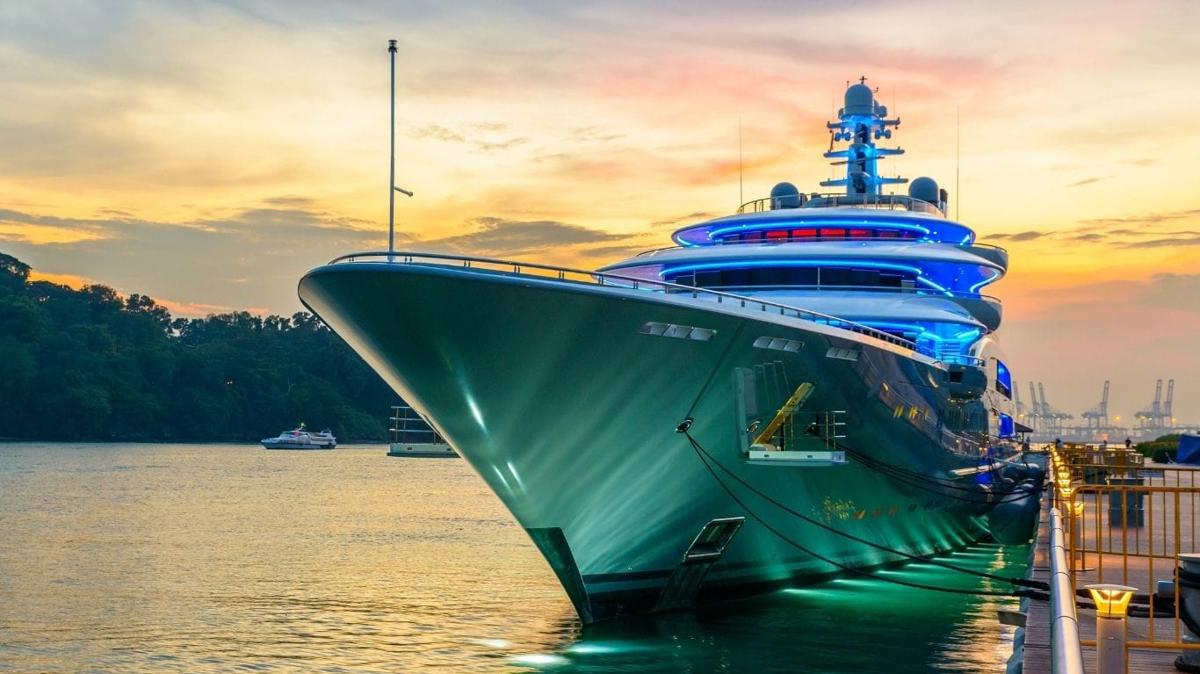
Factors Influencing Yacht Fuel Consumption
Making smart decisions on the water means knowing exactly what’s driving your fuel bill. Several variables come into play, and each one can shift your consumption figures more than you’d expect. Boat International’s superyacht data consistently shows that owners who understand these factors spend significantly less over time.
- Hull Shape and Design: Yachts with displacement hulls are designed to move efficiently at lower speeds and consume more fuel at higher speeds. In contrast, yachts with planing hulls consume more fuel to reach planing speed but are more efficient once they are on plane.
For example, a planing hull may use 50% more fuel than a displacement hull at lower speeds but may become more efficient as speeds increase.
- Engine Type and Configuration: Diesel engines are more fuel-efficient than gasoline engines. A modern diesel engine, for example, may consume about 30% less fuel than a gasoline engine of similar horsepower. Additionally, the number and type of engines also play a role.
Twin-engine setups typically consume more fuel than single-engine yachts, but they provide better handling and redundancy.
- Weight and Load: The weight of the yacht, including everything and everyone onboard, affects fuel consumption. A heavily loaded yacht with extra provisions, water tanks, and equipment will need more power to move, increasing fuel consumption.
For every additional 1,000 kg of weight, a yacht might consume an additional 5 to 10 liters per hour.
- Speed and RPM: The speed at which you cruise has a massive impact on fuel consumption. Most yachts have an optimal cruising speed or “sweet spot,” usually around 70-80% of the engine’s maximum RPM, where fuel efficiency is maximized.
Exceeding this speed, even by a few knots, can result in disproportionately higher fuel consumption.
- Sea and Weather Conditions: Rough seas, strong headwinds, or adverse currents can all increase fuel consumption. For example, a yacht facing a headwind of 15 knots might see fuel consumption rise by 10-20%. Conversely, a tailwind or favorable currents can help save fuel.
How Much Fuel Does a Yacht Hold?
Fueling a yacht goes well beyond topping off a tank before departure. It’s a core part of voyage planning, and getting it wrong can turn a dream trip into a very stressful situation. The amount of fuel any yacht can carry depends heavily on the vessel’s size, its intended purpose, and how the naval architect designed the hull.
Knowing your exact fuel capacity means you can plan legs of a journey with confidence and never find yourself short of fuel in open water.
1. Fuel Capacity for Smaller Yachts
For smaller pleasure yachts built for coastal cruising or weekend escapes, fuel tank capacities typically fall somewhere between 200 and 1,000 gallons. These vessels are designed with shorter trips in mind, and their tanks reflect that reality. A 35-foot yacht, for instance, might carry around 300 gallons, which is perfectly adequate for a few days of cruising at moderate speeds without needing to hunt down a fuel dock every other day.
2. Fuel Capacity for Medium to Large Yachts
Once you move into the superyacht and megayacht category, the numbers scale up fast. Vessels designed for extended blue-water passages can hold anywhere from 10,000 to 50,000 gallons. A 120-foot yacht might carry roughly 15,000 gallons, giving her serious range between fuel stops.
Step up to a 200-foot superyacht and you’re looking at up to 50,000 gallons on board, which opens up transoceanic passages that smaller vessels simply cannot attempt without multiple refueling stops.
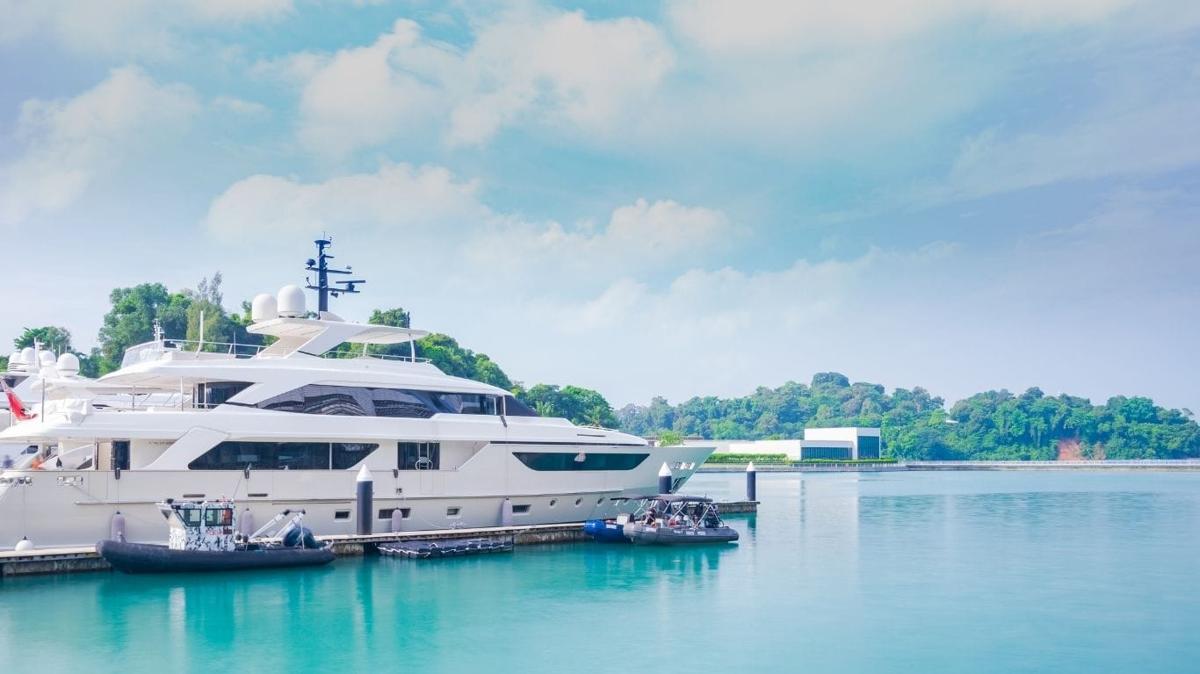
How to Calculate Yacht Fuel Consumption
With the key variables in hand, the actual calculation is more straightforward than it looks. You take your engine’s fuel burn rate in gallons per hour, multiply it by your expected hours underway, then add a safety reserve of at least 10 to 15 percent on top. That gives you your minimum fuel requirement for any given passage.
Bloomberg’s wealth and lifestyle coverage has highlighted how experienced yacht owners treat this calculation as non-negotiable before any offshore trip.
- Determine the Fuel Consumption Rate: Start by checking your yacht’s engine(s) fuel consumption rate, usually provided by the manufacturer in liters per hour (LPH). For example, a yacht with twin diesel engines might consume 100 liters per hour at a cruising speed of 20 knots.
- Estimate the Total Time of Operation: Multiply the fuel consumption rate by the number of hours you expect to run the engine. If you plan a 10-hour trip, multiply 100 liters per hour by 10 hours, resulting in 1,000 liters of fuel required.
- Add a Safety Margin: Always account for an additional 10-20% of fuel for safety to accommodate unexpected changes in weather, route deviations, or emergencies. If your trip requires 1,000 liters, plan to carry 1,100 to 1,200 liters.
Working through this math before you leave the dock gives you a solid estimate of what you need and, more importantly, helps you avoid the one situation no one wants to be in: running low on fuel well out of sight of land. Build the habit of doing it every time and it quickly becomes second nature.
For owners considering longer-run efficiency upgrades, our read on the best fuel alternatives for yachts sits alongside.
Tips for Reducing Yacht Fuel Consumption
Cutting your fuel consumption does not mean sacrificing the experience. A few well-chosen adjustments can make a measurable difference to your running costs without affecting the quality of time you spend on the water.
Robb Report's marine desk regularly covers how today's most sophisticated owners are approaching efficiency, and the strategies that consistently come up are worth knowing. From trimming your hull correctly and keeping the bottom clean to dialing in your cruising RPM and planning routes that use favorable currents, each marginal gain adds up over a season.
And when you consider that fuel can account for a substantial slice of annual running costs, which on a large yacht can run well into six figures, even a 15 to 20 percent reduction goes straight to your bottom line.
- Maintain Optimal Speed: Find your yacht’s most fuel-efficient speed, typically around 70-80% of the engine’s maximum RPM. Avoid pushing the throttle to maximum; even a small increase in speed can cause fuel consumption to surge.
- Regular Hull Cleaning: A clean hull reduces drag, improving fuel efficiency by up to 15-20%. Regularly remove barnacles, algae, and other marine growth to keep your yacht running smoothly.
- Minimize Weight: Keep your yacht light by only carrying what’s necessary. Reducing weight can improve fuel efficiency by as much as 5-10%.
- Keep the Engine Well-Maintained: Regular engine maintenance, such as oil changes, filter replacements, and injector cleanings, can improve fuel efficiency by up to 10-15%.
- Use Trim Tabs Wisely: Properly adjusted trim tabs help reduce drag and improve fuel efficiency. Experiment with different positions to find the most fuel-efficient configuration for your yacht.
- Optimize Your Route: Use modern navigation tools to plan the most efficient route, avoiding headwinds, currents, or rough seas that could increase fuel consumption.
- Consider Upgrading to More Efficient Engines: If your yacht has older engines, consider upgrading to newer, more fuel-efficient models. Modern engines offer better performance and lower fuel consumption, often saving up to 30% on fuel costs.
- Use Fuel Additives: Some fuel additives can improve combustion efficiency, reduce deposits, and lower overall fuel consumption.
We last reviewed this analysis in May 2026.