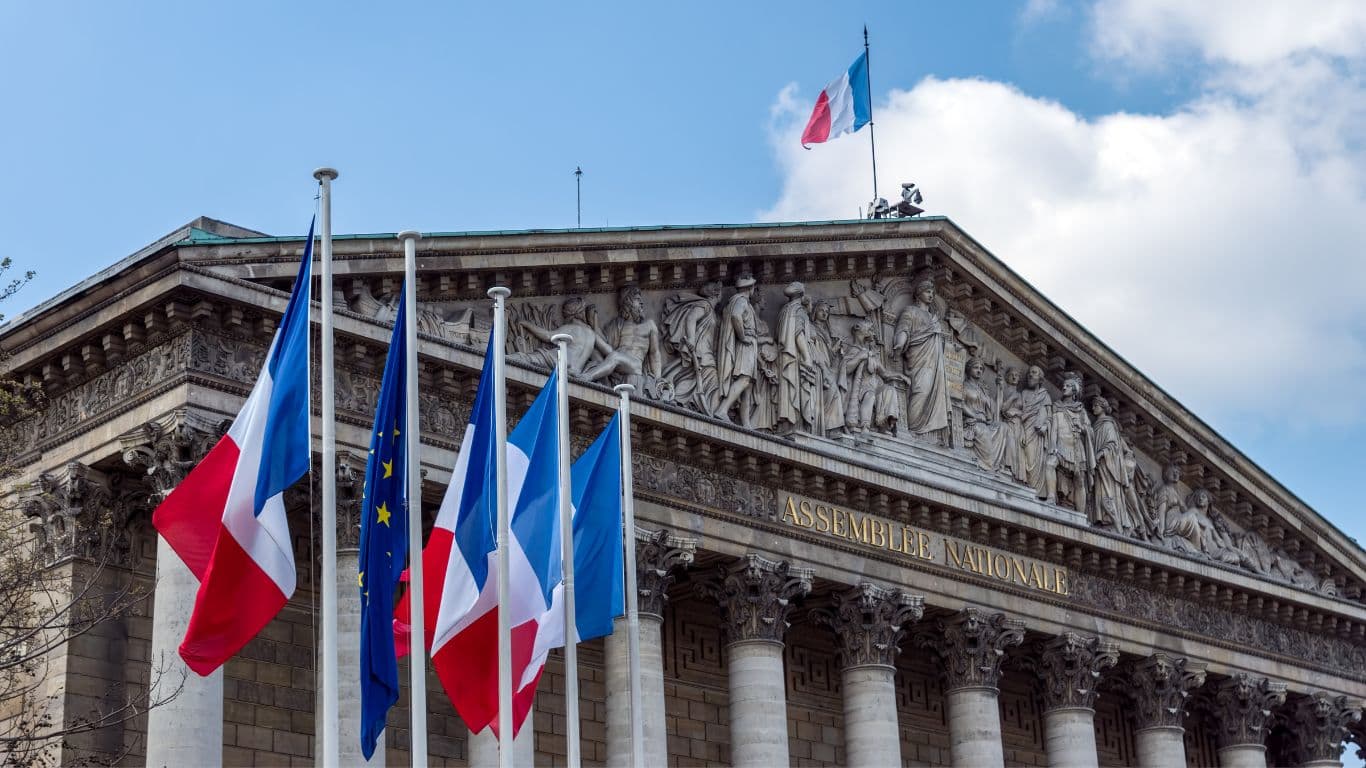
France's prime property markets in 2026 read differently than they did before the pandemic. The Paris of Haussmann boulevards, the Côte d'Azur of villa-and-pool clichés and the Provençal mas have each been recalibrated by a generation of buyers who treat France as a primary residence rather than a holiday play. Knight Frank's 2025 European Wealth Report put France among the four most-bought-into prime property markets in Europe, with Paris reasserting itself as the continent's most international city by transaction count.
Below, the addresses doing the work.
- The most coveted French property markets in 2026 span Paris, the Cote d'Azur, Provence, the French Alps and selected Bordeaux and Loire Valley enclaves.
- We see prime Paris arrondissements including the 7th, 8th and 16th anchoring the urban prime segment, with consistent international buyer interest.
- Knight Frank France reports place the Cote d'Azur, including Cap Ferrat, Cap d'Antibes and Saint-Tropez, at the trophy tier of the European luxury market.
- Provence and the Luberon offer distinctive lifestyle appeal at materially lower pricing than the Cote d'Azur, with sustained international relocation interest.
- The French Alps including Courchevel, Megeve and Val d'Isere anchor the European alpine luxury segment alongside the Swiss and Italian alternatives.
- For most considered French market buyers we view selection as primarily driven by lifestyle priorities and seasonal access patterns rather than abstract investment metrics alone.
- Who is this for?
- International buyers evaluating French prime markets, alongside the advisers, brokers and family office staff framing those decisions across the urban, coastal and alpine complex.
- What is happening?
- A read of France's most coveted property markets in 2026, covering Paris, the Cote d'Azur, Provence, the French Alps and the major regional enclaves.
- When did this emerge?
- The article reflects 2026 market conditions through Knight Frank France and our observations across the major French prime markets.
- Where is this happening?
- The piece covers France broadly, including Paris, the Cote d'Azur, Provence, the French Alps and selected Bordeaux and Loire Valley enclaves.
- Why does it matter?
- French market selection determines the universe of available opportunities, which is why upfront discipline pays back across every subsequent property-level decision.
Paris and the prime arrondissements
The 7th, 8th, 16th, and parts of the 6th are the prime spine of Paris. Avenue Foch, Avenue Montaigne, the Quai d'Orsay and the Boulevard Saint-Germain anchor the high band. The 7th holds the highest concentration of trophy hôtels particuliers.
These are eighteenth-century private mansions with courtyard entrances and garden frontages. They trade thinly enough that off-market transactions through agencies like Daniel Féau, Belles Demeures de France and Barnes International dominate the upper tier. Mansion Global's 2025 Paris dispatch tracked record demand from American buyers, partly tax-driven, partly a generational reset where US owners are buying prime Paris pieds-à-terre as a permanent base rather than a holiday home.
The Marais and the 4th, once a secondary segment, have moved into the prime conversation. Buyers chase the small-block scale and the architectural texture. Saint-Germain-des-Prés, Île Saint-Louis and the Place des Vosges remain the geographically finite trophies.
The Côte d'Azur and the Riviera coast
The Riviera coast runs through Cap Ferrat, Cap d'Antibes, Cap Martin, Mougins, Saint-Jean-Cap-Ferrat, Èze and Villefranche. It is the historic top of the French property market and remains it. Cap Ferrat, the cape that juts south between Beaulieu and Villefranche, holds the most concentrated band of trophy villas in continental Europe.
Mansion Global tracked a 2025 sale at Villa Maryland on the cape that closed above €175 million, among the highest residential transactions in France's recorded history. The texture below the trophy headlines is interesting. Cap d'Antibes holds the architectural high points: Eileen Gray's E-1027, the Villa Eilenroc and the Eden Roc itself.
Mougins, sitting in the hills behind Cannes, is the inland alternative for buyers who want privacy without the seafront price ceiling. Saint-Tropez and Ramatuelle hold the western Riviera demand. The architectural conversation across the coast leans modernist and Mediterranean, with references to Robert Mallet-Stevens, Charlotte Perriand and the Cap Ferrat work of François Spoerry.
Provence and the Luberon
The Luberon and the area around Aix-en-Provence sit one rung below the Côte for prime, but the architectural depth is real. The mas, the traditional Provençal farmhouse, is the local format. Owners commission restoration architects like Bruno & Alexandre Lafourcade and Atelier Vincent Coste, who work in stone, lime and terracotta.
Saint-Rémy-de-Provence, Gordes, Ménerbes and Bonnieux are the named villages. The buyer profile is older Anglo-American second-home owners, French families with regional roots, and a younger wave of Parisian creatives who keep a base in the south. Engel & Völkers and Christie's International Real Estate dominate the upper-tier sales pipeline through Aix and Avignon.
Bordeaux and the Atlantic coast
Bordeaux as a city has done meaningful work in the past decade. The 2007 LGV high-speed rail link to Paris compressed the journey to two hours, and the city's UNESCO-listed center has absorbed a generation of restoration work. The Cap Ferret peninsula on the Atlantic coast holds a quieter trophy market.
The vocabulary is pine-clad villas, oyster huts converted into second homes and a buyer profile that skews French and discreet. Mansion Global's 2024 Bordeaux dispatch tracked record demand from Parisian buyers looking for a coastal alternative to the Mediterranean. Sotheby's International Realty's regional desk runs a separate book on the Cap Ferret villas that almost never reaches the public listings.
The Alps and the chalet trophy
Megève, Courchevel, Méribel, Val d'Isère, Chamonix are France's Alpine prime, a category of its own. Megève holds the architectural top. Henri-Jacques Le Même's chalets from the 1930s through 1950s defined the regional vocabulary, and contemporary practices like Studio Razavi and François Champsaur continue the dialogue.
Courchevel 1850 holds the apartment-and-chalet trophy market. Chalet rental rates during peak season at the upper band cross €100,000 per week. The buyer field is multinational, where Russian buyers were prominent in the 2010s and have been replaced by a more diversified field of British, Swiss and Middle Eastern owners.
Other regions worth a serious read
The Loire Valley holds château architecture at the upper trophy band. The Renaissance and Baroque châteaux come up rarely and trade through specialist agencies like Patrice Besse and Emile Garcin. Brittany's coast, particularly the Côtes-d'Armor and the Morbihan gulf, has emerged as a quieter alternative for buyers who want maritime France without Côte d'Azur prices.
The Île de Ré, off the Atlantic coast near La Rochelle, holds a tightly-held second-home market. Strict planning rules have preserved the regional vernacular. Knight Frank's Île de Ré desk reports that resale on the strongest streets typically runs at a multi-year wait list rather than an open marketing process.
What this means for buyers
Further reading: France sits within a wider European prime conversation. See our reads on Spain's most coveted property markets, where international buyers are looking in 2026 and property taxes in every European country.
The French property map in 2026 reads as a mature continental market with multiple defensible prime addresses. Paris remains the global city. The Côte d'Azur remains the trophy coast, Provence holds the architectural deep end, Bordeaux and the Atlantic offer the quieter alternative, and the Alps cover the snow-and-altitude buyer.
What unites the strongest French addresses is the depth of the architectural and cultural infrastructure. Restoration architects who have spent decades with the regional vernacular, planning rules that have protected the texture and estate agencies that know the off-market segment well enough to walk a buyer through three years of waiting for the right plot. France is not a market for buyers in a hurry.
It is a market for owners willing to wait for the right address and then commit to the house. We last reviewed this analysis in May 2026.


Savvas Agathangelou
Savvas Agathangelou co-founded The Luxury Playbook and has spent years reporting from the prime postcodes the magazine covers — Mayfair, Knightsbridge, the Athens Riviera, Dubai's Palm crescents, and the southern Mediterranean coastlines where the world's wealthy keep coming back. His background is in international hospitality, and that frame shapes how he writes about property: the developer's choices, the architect's signature, the agency's bench of named brokers, the building's service standard once the buyer moves in. He files developer spotlights, agency profiles, and the seasonal "Properties That Defined" listicles, and he hosts the magazine's founder-and-leadership interviews on the Voices side.