In 2026, the fine wine investment market keeps tilting toward rare and age-worthy assets, and few categories have performed as consistently well as the best Super Tuscan wines. Born in the 1970s as rebellious expressions pushing back against Italy’s restrictive DOC regulations, Super Tuscans like Sassicaia, Tignanello, and Masseto have since grown into globally sought-after, investment-grade wines with exceptional financial track records. If you’re building a serious alternative asset portfolio, this is one category you shouldn’t overlook. For a broader view of where fine wine sits right now, the Fine Wine Investment Market Outlook and Forecasts is worth your time.

Unlike standard Chianti or Brunello, Super Tuscans work with non-native grape varietals such as Cabernet Sauvignon, Merlot, and Syrah, often blended with Sangiovese. That freedom in viticulture, combined with meticulous production and limited allocations, produces wines that rival and often outperform top Bordeaux and Napa labels in both quality and return on investment.

From a portfolio diversification angle, Super Tuscans bring several real advantages to the table.

  • Low volatility relative to equities or crypto assets
  • Physical asset-backed value, offering intrinsic scarcity
  • Strong secondary market liquidity via auction houses and private collectors

Growing global demand, especially from Asian and North American collectors, has compressed supply margins and pushed secondary market prices steadily upward. The scarcity dynamic alone is a compelling reason to pay attention.

The average price of top Super Tuscans has climbed by over 40% in the past five years, according to industry indexes. That kind of performance cements their role as stable, high-returning investment vehicles rather than just bottles to enjoy at dinner.

Historical ROI & Market Performance of Super Tuscan Wines

While Burgundy and Bordeaux have traditionally dominated fine wine investment, Super Tuscans have carved out a robust niche in global portfolios, delivering consistently strong returns with relatively low volatility. Produced outside of Italy’s traditional DOCG classifications, these wines have become elite assets in their own right, often surpassing their French counterparts in both critical acclaim and investment-grade performance.

Historical ROI of Super Tuscan Wines

Over the last 20 years, top-tier Super Tuscans have produced annualized returns between 10% and 16%, with flagship labels like Sassicaia, Tignanello, and Masseto outperforming the Liv-ex Italy 100 index on multiple occasions. Well-stored back vintages of Sassicaia and Masseto have appreciated by more than 200% over the past decade, according to historical auction data and private sales.

For example:

  • Sassicaia 2016, released at around $230 per bottle, currently trades at $480+, representing a 108% ROI in under 9 years.

  • Masseto 2006 was priced at $280 upon release but reached $1,000+ by 2024, delivering a 257% ROI for early investors.

  • Tignanello 2010, once obtainable for $90–100, now commands $280–300 in pristine condition—a 3x price increase in just over a decade.

These figures aren’t outliers. The Liv-ex Italy 100, which tracks price performance for the most traded Italian fine wines (most of which are Super Tuscans), climbed 14.1% in 2021 alone and held positive momentum through 2024 despite economic headwinds.

Why Super Tuscans Perform Well as Investments

Super Tuscans benefit from three key value-driving factors worth understanding before you commit capital.

First, limited production volumes. Many of the top wines are made in extremely small quantities, often between 20,000 and 30,000 bottles per vintage. Masseto is a good example. Even more limited formats like magnums or double magnums are highly collectible and trade at meaningful premiums.

Second, global collector demand. Super Tuscans attract buyers from both mature and emerging markets. Asian collectors, especially in Hong Kong and Singapore, have increased their allocations of Sassicaia and Ornellaia by over 30% since 2019, steadily driving up prices on the secondary market.

Third, high critical scores and longevity. With multiple 98 to 100-point ratings from Robert Parker’s Wine Advocate and James Suckling, Super Tuscans combine serious aging potential of 20 to 30 years with critical prestige. That combination makes them ideal for long-term holds.

Super Tuscans vs. Other Fine Wines

Compared to Burgundy, Super Tuscans offer similar upside with lower price volatility and greater accessibility, particularly if you’re newer to wine investing.

Market Outlook for 2026 and Beyond

The outlook for 2026 stays bullish. Wine analysts project that the top 10 Super Tuscans will appreciate by 8% to 12% annually through 2028, barring major macroeconomic shocks. And rising scarcity, particularly for older vintages, is expected to accelerate secondary market activity as supply continues to tighten.

A few key investment trends are shaping the market right now.

  • Growing demand for provenance-tracked bottles, driven by blockchain-based wine storage platforms.

  • Increased institutional interest, with wine funds allocating larger portions to Italy due to Bordeaux fatigue.

  • Premiumization of Tuscan terroir, with Bolgheri wines commanding record-breaking prices.

Sotheby’s and Zachys have both reported increased bidding activity for verticals of Sassicaia and Ornellaia, with hammer prices exceeding high estimates by up to 40% in late 2024. That kind of momentum doesn’t happen by accident.

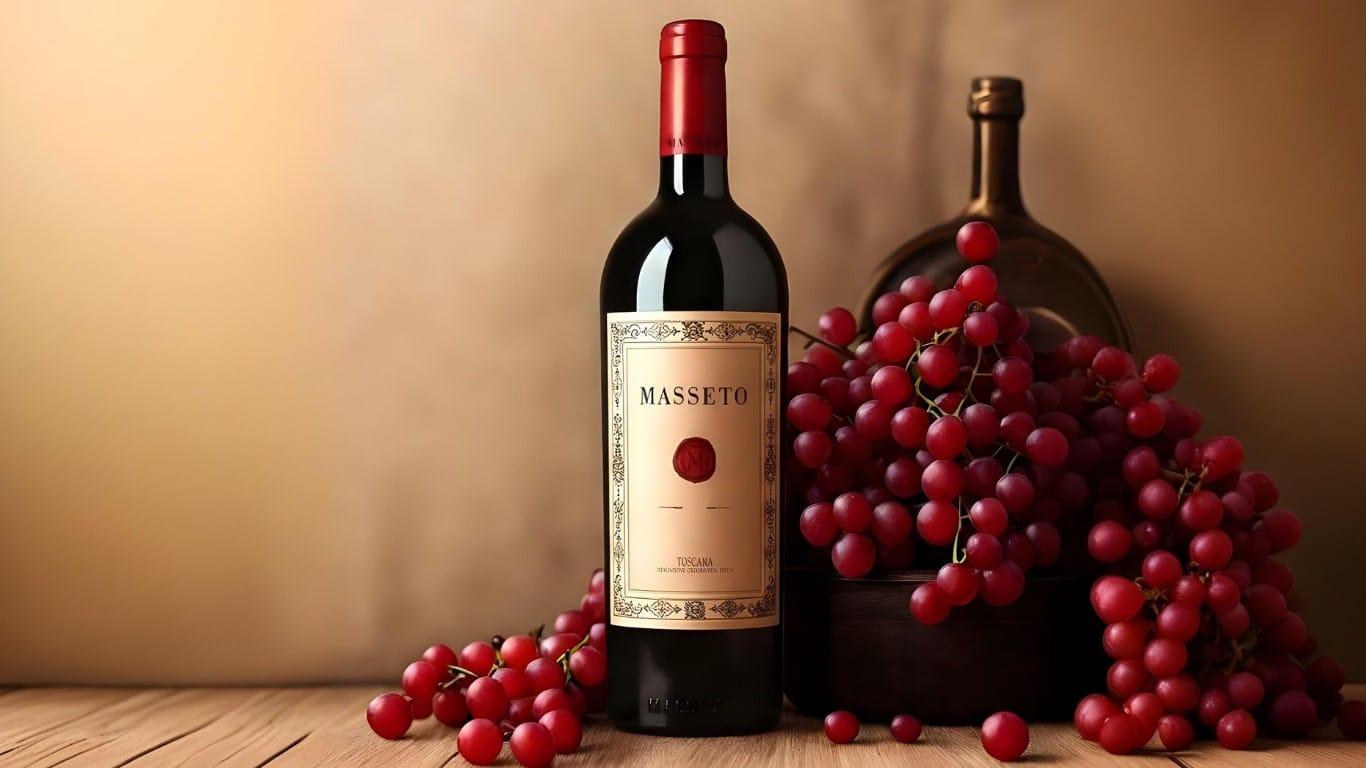
Masseto by Tenuta dell’Ornellaia

Masseto is widely considered one of the most prestigious and investable Super Tuscan wines in the world. Produced in Bolgheri by Tenuta dell’Ornellaia, this 100% Merlot wine has built a cult following among collectors and institutional wine investors thanks to its limited production, critical acclaim, and consistent price appreciation across vintages.

Terroir & Winemaking

Located on the Tuscan coast, the Masseto vineyard sits on a unique terroir dominated by compact blue clay and marine sediments, a rare soil profile that retains moisture and contributes to the wine’s dense structure and long aging potential. The vineyard spans approximately 6.6 hectares, and each micro-plot is harvested and vinified separately, allowing for precision winemaking at every step.

Yields are kept intentionally low to maximize concentration. Masseto ages for 24 months in French oak barriques, followed by 12 months of bottle aging before release.

Annual production rarely exceeds 30,000 bottles, making it one of the most exclusive Italian wines available anywhere on the market.

Investment Performance

From an investment standpoint, Masseto delivers some of the highest historical returns among Italian wines, and the data backs that up.

  • Masseto 2010: Released at approximately $400, it now trades above $1,150, representing a 187% ROI over 13 years.

  • Masseto 2016: Scored 100 points from James Suckling. Prices climbed from $700 at release to over $1,200 in less than five years.

  • Masseto 2006 (Magnum): Sold at Sotheby’s for $4,500 in 2023, up from a retail price of $1,800 just a few years earlier.

Across vintages, the average annualized return on Masseto over a 10-year horizon sits between 11% and 15%, depending on provenance and format. Its inclusion in the Liv-ex Italy 100 Index further reinforces its position as a benchmark investment wine in the Italian fine wine category.

Market Outlook for 2026

The market for Masseto in 2026 stays firmly bullish, and several key drivers are supporting that trajectory.

  • Global scarcity of aged back vintages
  • Growing demand from Asian investors, particularly in Hong Kong and Singapore
  • Institutional allocations from fine wine funds and wealth managers

The newly opened state-of-the-art Masseto winery and cellar vault has elevated the brand’s prestige, enhancing both its story and its value on the secondary market. Buyers respond to narrative, and Masseto has a compelling one.

Masseto combines limited availability, critical acclaim, and a proven return on investment track record, making it one of the best Super Tuscan wines to invest in for 2026.

Masseto by Tenuta dell’Ornellaia

Case Basse di Gianfranco Soldera Toscana IGT and Brunello di Montalcino DOCG

Case Basse di Gianfranco Soldera is one of the most exclusive names in Italian winemaking and one of the best Super Tuscan wines to invest in, known for ultra-premium Sangiovese wines that command serious prices and deliver consistent returns. Located in the heart of Montalcino, this estate ignores commercial production norms entirely.

The focus here is on ultra-limited releases of wines that regularly appear in high-end auctions and private cellars around the world.

Terroir & Production

The estate sits on a 23-hectare property in southern Montalcino, with only around 8 hectares planted to vine. Vineyards are set at elevations of roughly 320 meters, offering an ideal mix of sunlight exposure, altitude, and ventilation. The soils are a complex combination of marl, clay, and limestone, giving Soldera wines their unmistakable structure and minerality.

The winemaking process is pure minimal intervention. Fermentation happens with native yeasts in large Slavonian oak casks. Aging runs up to 6 years before bottling, and every vintage reflects a relentless emphasis on purity, balance, and age-worthiness.

Annual production is extremely small, usually capped between 6,000 and 15,000 bottles depending on vintage conditions.

Investment Performance

Soldera wines consistently outperform market averages for Italian fine wines, and the historical auction and private market data make a strong case.

  • Soldera Brunello di Montalcino Riserva 2006: Initially priced around €200, this wine trades today for €850–€950, reflecting a 325% total return, or an annualized ROI of 16–18% over 12 years.

  • Soldera Toscana IGT 2015: Released at €410, bottles with original provenance now fetch over €650, indicating strong short-term price growth in under 5 years.

  • Rare formats (Magnums, double Magnums) have reached up to €2,500–€3,000 at Sotheby’s and Zachys auctions in the last 24 months.

What makes Soldera so compelling is the combination of critical prestige, severe scarcity, and an absolutely no-compromise production philosophy.

Unlike larger estates, Case Basse often declassifies entire vintages or destroys wine that doesn’t meet its standards. That means every released bottle carries inherent value the moment it leaves the cellar.

2026 Market Outlook

Investor interest in Soldera is expected to stay strong through 2026, with several key drivers keeping demand elevated.

  • Rising demand from Asia and the U.S., where fine wine collecting continues to grow among HNWIs

  • Increasing scarcity of back vintages, especially post-2017, after a cellar sabotage reduced production

  • Strong resale performance at global auctions, with newer vintages quickly reaching maturity in the investment cycle

Soldera’s cult status, combined with its absence from mass retail and its tightly controlled global distribution, gives it a unique position in the fine wine market. The brand is trusted for quality and integrity, and those two things are exactly what drives long-term capital appreciation.

For investors seeking high-performing, ultra-rare wines with proven price appreciation and global prestige, Case Basse di Gianfranco Soldera stands as a top-tier asset heading into 2026.

Case Basse di Gianfranco Soldera Toscana IGT – Brunello di Montalcino DOCG best super tuscan wines

Tenuta San Guido and Sassicaia Bolgheri D.O.C. 2017

The 2017 vintage of Sassicaia by Tenuta San Guido is a standout Super Tuscan with proven investment appeal. Despite being a challenging growing year due to extreme summer heat and lower-than-average yields, Sassicaia 2017 emerged as one of the most critically praised and financially rewarding vintages of the past decade.

Terroir & Winemaking

The Sassicaia estate lies in the Bolgheri region on Tuscany’s coastal Maremma, where maritime breezes and gravel-rich soils create ideal conditions for Bordeaux varietals. The 2017 vintage blends 85% Cabernet Sauvignon and 15% Cabernet Franc, carefully harvested early to avoid overripeness during an intense growing season.

Aging took place over 24 months in French oak barrels, followed by additional bottle aging to enhance integration and longevity.

The result is a structured, refined wine with excellent cellar potential, estimated to peak somewhere between 2027 and 2040.

Investment Performance

Sassicaia 2017 has delivered solid gains since its release, drawing both private collectors and institutional investors into the market.

  • Release Price (2019): ~€135 per bottle

  • 2025 Market Price: Trades for €290–€310, reflecting a 115% increase in just five years

  • Case Price Growth: A 6-bottle case released at ~€810 now retails for over €1,850

The critical endorsements are equally strong.

  • 96 points – James Suckling
  • 94 points – Wine Spectator
  • 93+ points – Robert Parker’s Wine Advocate

Sassicaia 2017 was featured among Liv-ex’s most traded wines by value in both 2021 and 2022, reinforcing its staying power in global investment portfolios.

Market Outlook for 2026

The 2017 Sassicaia still looks undervalued relative to benchmark vintages like 2015 and 2016, which makes it an appealing buy for investors chasing mid-term upside. Its shorter initial yield, estimated at 25% below average, has added a real scarcity premium to the market.

A few key investment drivers are worth keeping in mind as you evaluate this vintage.

For investors looking for a premium Super Tuscan with a strong five-year track record and upside still to unlock, Sassicaia 2017 offers excellent risk-adjusted returns. You can also compare how it stacks up against other fine wine picks in our breakdown of why Lafite Rothschild 2019 could be the best long-term buy of the decade.

Tenuta San Guido – Sassicaia Bolgheri D.O.C. 2017

Biondi Santi’s Brunello di Montalcino Riserva

Biondi Santi’s Brunello di Montalcino Riserva is one of Italy’s most iconic fine wines and a benchmark for age-worthy Sangiovese. Known for its limited production, strict vintage selection, and extraordinary aging potential, this wine anchors long-term wine investment strategies for serious collectors worldwide.

Terroir & Production

The estate, Tenuta Greppo, sits in southern Tuscany at elevations between 300 and 500 meters. The vineyards benefit from a cool, continental climate with excellent diurnal temperature variation, which preserves acidity and enhances aromatic precision in the grapes.

The Riserva is produced only in exceptional vintages and sourced exclusively from vines over 25 years old. Many are planted with the historic BBS11 clone of Sangiovese Grosso, selected and propagated by the Biondi Santi family themselves.

Fermentation takes place in traditional Slavonian oak vats, and the wine undergoes 36 to 48 months of aging in large neutral oak casks, followed by extended bottle aging before release.

This minimal intervention approach produces wines of remarkable purity and structure, capable of evolving for 30 to 50 years in optimal cellaring conditions.

Investment Performance

Biondi Santi Riserva has consistently demonstrated strong returns across both private and public wine markets.

  • 1955 Riserva: Widely regarded as one of Italy’s greatest wines, this vintage has sold for €3,000–€5,000 per bottle at international auctions.

  • 2012 Riserva: Scored 100 points from The Wine Independent and has risen from an initial release price of ~€480 to €850+ in just a few years.

  • Average Vintage ROI: Between 10–12% annually for well-stored bottles from investment-grade vintages.

Collectors prize this wine for its scarcity and its reputation. Production volumes rarely exceed 10,000 bottles, and older vintages are extremely limited on the secondary market, which keeps premium pricing firmly in place.

Market Outlook for 2026

The outlook for Biondi Santi’s Brunello Riserva heading into 2026 is highly favorable. Demand for age-worthy Italian wines has accelerated globally, especially in Asia and North America, where collectors are turning to iconic producers outside Bordeaux and Burgundy for genuine portfolio diversification.

Several factors are supporting future price appreciation for this label.

  • Scarcity of older vintages combined with strong vertical collector demand

  • Limited release schedule, as Riserva is not produced annually

  • Continued global recognition from top critics and auction houses

For serious wine investors, Biondi Santi’s Brunello di Montalcino Riserva delivers the ideal mix of heritage, scarcity, and proven returns. It stands among the best Super Tuscan-style wines to hold long-term in a high-performing wine portfolio. If you’re thinking about how fine wine fits into a broader alternative strategy, our guide on best blue-chip art investments offers a useful parallel for comparing asset classes.

Biondi Santi’s Brunello di Montalcino Riserva

Case Basse di Gianfranco Soldera Brunello di Montalcino Riserva DOCG

The Brunello di Montalcino Riserva DOCG from Case Basse di Gianfranco Soldera is one of the most revered expressions of Sangiovese in the global fine wine market. Known for uncompromising quality standards, extreme scarcity, and long-term aging potential, this wine delivers exceptional returns for high-net-worth collectors and wine investors who know where to look.

Terroir & Production

Located in the southern reaches of Montalcino, the Case Basse estate spans 23 hectares, with only a fraction dedicated to vines. Those vines are planted at 320 to 350 meters elevation, where steady breezes, cool nights, and a diverse mix of limestone and clay soils create ideal conditions for Sangiovese.

Soldera’s winemaking philosophy is rooted in natural viticulture and minimal intervention. Indigenous yeast fermentation takes place in large neutral oak vats, followed by extended aging, often 5 to 6 years in Slavonian oak casks.

Production volumes are extremely limited, typically fewer than 10,000 bottles per vintage, and entire vintages are occasionally declassified or discarded if they fall short of strict quality standards.

That obsessive attention to quality has made the Riserva DOCG a true benchmark for purity and complexity in Brunello.

Investment Performance

Soldera’s Brunello Riserva wines have become highly prized on the secondary market, consistently delivering above-average returns that get the attention of serious collectors.

  • 1990 Vintage: A 6-bottle lot sold for $12,500 at Christie’s in 2022, well above initial estimates.

  • 1999 Vintage: A 12-bottle case reached $15,535 in 2020, showing continued value appreciation for mature stock.

  • 2014 Vintage: Saw a 50.4% increase in market price in 2022 alone, as tracked by Liv-ex.

These prices reflect the wine’s scarcity, consistent critical acclaim, and established legacy. ROI for select vintages has ranged from 12% to 18% annually, especially for wines with original wooden cases and verified provenance.

Market Outlook for 2026

Looking ahead, the investment case for Soldera’s Brunello di Montalcino Riserva stays strong in 2026.

  • Supply-side constraints due to small-batch production
  • Increasing global demand from both collectors and institutional buyers
  • Elevated auction activity for verticals and rare formats

Wines from this estate are rarely discounted or traded on open retail platforms, which helps preserve their price integrity on the secondary market. That’s a meaningful advantage when you’re thinking about long-term capital protection.

For investors seeking a blue-chip Super Tuscan with long-term growth potential, historical price resilience, and unrivaled brand prestige, Case Basse di Gianfranco Soldera Brunello di Montalcino Riserva DOCG stands among the top-tier assets for 2026.

Case Basse di Gianfranco Soldera Brunello di Montalcino Riserva DOCG

Tignanello Toscana IGT 2010 BALT

Tignanello 2010 is one of the most iconic modern vintages from Marchesi Antinori’s Super Tuscan flagship. Blending traditional Sangiovese with international varietals, this vintage has earned a permanent place in fine wine investment portfolios thanks to its impressive track record of value growth and strong critical endorsements. According to Decanter, it ranks among the standout Super Tuscan releases of the past two decades.

Terroir & Production

The Tignanello estate sits in the heart of Chianti Classico, in the hills between the Greve and Pesa river valleys. Its limestone-rich, well-drained soils and southwest-facing slopes provide an ideal terroir for ripening Sangiovese alongside Cabernet Sauvignon and Cabernet Franc.

The 2010 growing season offered near-perfect conditions, with cool early temperatures followed by a long, dry summer that produced small, concentrated berries. The final blend consists of 80% Sangiovese, 15% Cabernet Sauvignon, and 5% Cabernet Franc.

The wine aged for 12 to 14 months in French and Hungarian oak, then matured in bottle for another year before release.

Investment Performance

Tignanello 2010 has delivered a solid performance in the fine wine market and continues to show strong liquidity, which matters when you’re thinking about exit strategies.

  • Original Release Price: ~€70 per bottle upon release in 2013

  • Current Market Price (2025): Trades between €180 and €220, depending on condition and provenance

  • 12-Year ROI: Over 160% growth, with an annualized return of 8–9%

The accolades are equally noteworthy.

  • 96 points – Robert Parker’s Wine Advocate
  • 97 points – James Suckling
  • Considered one of the finest Tignanello vintages ever released

Tignanello’s broad appeal, spanning collectors, drinkers, and institutional investors, has helped maintain stable demand and secondary market visibility, particularly for older benchmark vintages like 2010.

Market Outlook for 2026

Tignanello 2010 is expected to keep appreciating steadily as back-vintage availability declines and collector interest intensifies. The wine is now entering its prime drinking window, which enhances desirability across private clients, retailers, and restaurant lists alike.

A few key drivers of value are worth highlighting as you consider adding this to your portfolio.

  • Mature vintage scarcity with increasing global consumption
  • Strong brand identity as one of the first and most successful Super Tuscans
  • High score pedigree ensures ongoing market relevance

For fine wine investors seeking a highly rated, well-aged Super Tuscan with consistent upward pricing trends and strong brand backing, Tignanello 2010 is a reliable and strategic asset to include in a 2026 portfolio. If you want to understand how wine fits alongside other alternative investments, our piece on luxury yachts gaining ground in the alternative investment market offers a useful perspective on where savvy capital is moving right now.

Tignanello Toscana IGT 2010 BALT


FAQ

Why invest in Super Tuscan wines in 2025?

They offer strong ROI, global demand, and scarcity—ideal for portfolio diversification.


What ROI can I expect?

Top Super Tuscans deliver 10–16% annualized returns, with some vintages exceeding 200% over a decade.


How long should I hold these wines?

Hold for 5–10 years for mid-term growth or 15+ years for peak resale value.


Are older vintages better investments?

Yes—mature vintages with limited supply and high critic scores outperform newer releases.


How do I verify a wine’s provenance?

Buy from trusted sources with full documentation and secure storage history.


Which Super Tuscans are best for investment?

Masseto, Sassicaia, Soldera, Tignanello, and Biondi Santi lead the market.

Is Now The Right Moment To Reinvest In Bordeaux Wine?

Is Now The Right Moment To Reinvest In Bordeaux Wine?

Fine wine markets rarely correct as sharply as Bordeaux did between 2022 and 2024, when…
Is China The Future Of Italian Sparkling Wine?
Is China The Future Of Sparkling Wine?

Is China The Future Of Sparkling Wine?

China imported over 500 million litres of wine in 2026, yet sparkling wine accounted for…
Is Italian Fine Wine The Most Underpriced Category In Europe?

Is Italian Fine Wine The Most Underpriced Category In Europe?

A bottle of 2016 Barolo from a top producer can cost you £80 at retail.…