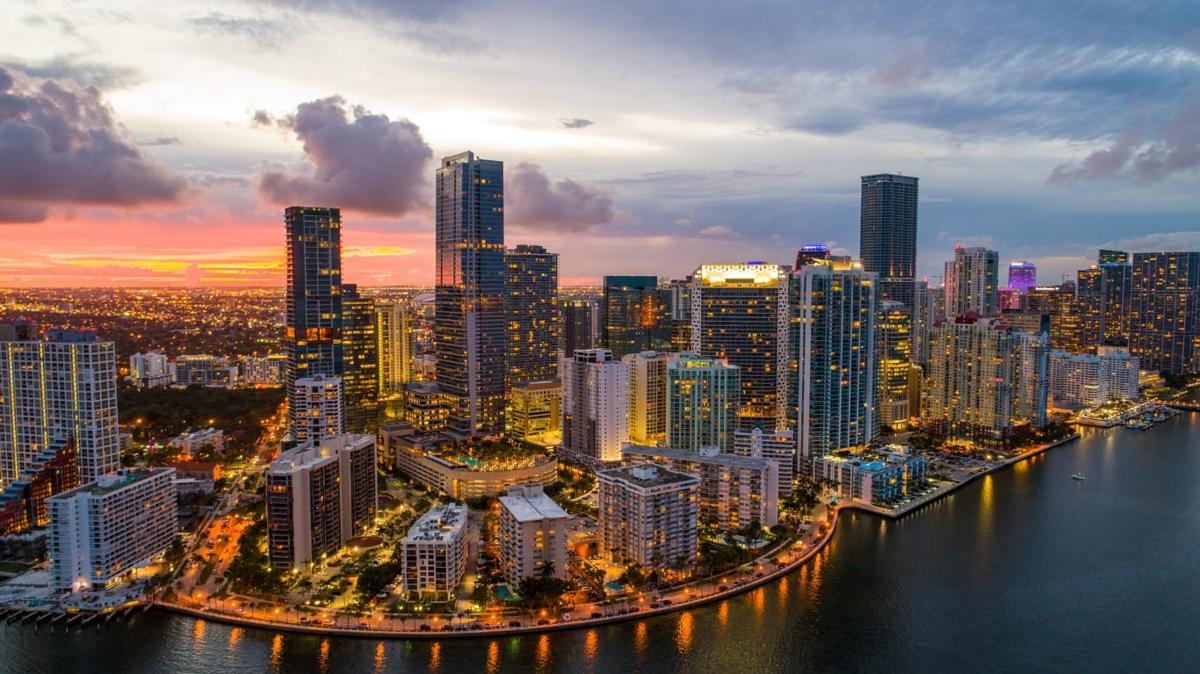

Buying property in the US as an expat is a more clearly-defined process than most international buyers expect, anchored by an established legal framework and a deep transactional infrastructure. Buying property in the United States as a non-resident has become a more clearly-defined process over the past two decades, supported by an established legal framework, a deep mortgage market, and a transactional infrastructure that handles substantial international-buyer flow. For the international buyer reading the American prime-residential market, whether the principal interest is a Manhattan apartment, a Miami second-home, an Aspen mountain residence, or a Hamptons summer property, the practical question is what's actually involved.
This is our editorial overview.
Mansion Global's US prime coverage and Knight Frank's American prime-residential reporting both note the structural shift over recent years toward broader international participation in American prime-residential markets. The buyer cohort has thickened beyond the historical Latin American and European concentration to include meaningful flows from the Middle East, Asia, and the broader global wealth.
- Buying US property as an expat or non-resident foreign national is generally straightforward in transaction mechanics, with no citizenship or residency requirement for most acquisitions.
- We see financing options for non-resident buyers commonly capped at fifty to seventy percent loan-to-value, with foreign national mortgage programmes from specialist lenders filling the gap.
- FIRPTA withholding tax of fifteen percent of gross sale price applies to non-resident sellers on disposition, with implications that warrant tax planning before purchase rather than at exit.
- State-level transfer taxes and recordation fees vary materially by jurisdiction, with New York, California, DC and certain Florida counties imposing among the highest cumulative costs.
- LLC or trust ownership structures are common for non-resident buyers, with privacy, liability and estate planning benefits warranting specialist legal advice on the right structure for each profile.
- For most considered expat buyers we view qualified US tax and legal counsel as foundational to a clean transaction, with the entry structure shaping the entire ownership experience.
- Who is this for?
- Expat and non-resident foreign national buyers acquiring US property, alongside the cross-border tax advisers, lawyers and immigration specialists supporting those transactions.
- What is happening?
- A practical guide to buying property in the US as an expat, covering financing, FIRPTA, transfer taxes, ownership structures and the cross-border considerations for non-resident buyers.
- When did this emerge?
- The article covers current practice through 2025 and 2026, including the latest FIRPTA framework, foreign national mortgage programmes and state transfer tax developments.
- Where is this happening?
- The piece covers the US market broadly, with particular reference to New York, California, DC, Florida and the other jurisdictions most active in non-resident property transactions.
- Why does it matter?
- Expat US property acquisition involves materially more complexity than domestic purchases, which is why specialist tax and legal counsel matters more here than for most other transactions.
The documentation foundation
The principal documents required for an American property purchase by a non-resident:
- A valid foreign passport
- A US visa or, in some cases, a US driver's license
- A Social Security Number (SSN) or Individual Taxpayer Identification Number (ITIN), the SSN if eligible through prior US presence, the ITIN otherwise
- Recent bank statements, typically 6 to 12 months
- Financial records, pay stubs (where applicable), tax returns from the buyer's home jurisdiction, asset and liability statements
- Source-of-funds documentation, for purchases above defined thresholds, source-of-funds evidence has become a structural requirement
The documentation expectations are stricter than for US-resident purchases. Plan timeline accordingly.
The transaction process
The American property transaction process has structural features that distinguish it from European jurisdictions. Title insurance, paid by the buyer in many states, typically a few thousand dollars, protects against title defects. Escrow is the standard structural device for handling deposits and the closing process.
The closing typically takes 30 to 60 days from contract signing, faster than many European jurisdictions. Some states (particularly New York, New Jersey, the broader Northeast) involve attorney representation; others (most of the rest of the country) operate primarily through real-estate-agent and title-company structures.
The financing option
American mortgage financing is available to non-residents but with stricter terms. Loan-to-value ratios for non-resident mortgages typically cap at 50 to 70 percent (versus 80 percent or higher for residents). Documentation requirements are stricter.
The lender's underwriting tends to be more conservative.
For higher-value transactions, international private banks (UK, Swiss, Singaporean) often offer better structures than American mainstream lenders for non-resident buyers, particularly through cross-collateralisation against the buyer's broader holdings. The structural-finance work, comparison of mortgage products, the more advanced ownership and tax structures, sits in our YMYL Wealth coverage rather than this lifestyle-side overview.
The principal American prime-residential markets
Manhattan and broader New York City
The American prime-residential capital. Manhattan's Upper East Side, Upper West Side, the West Village, Tribeca, and the Hudson Yards corridor each represent a different texture of the New York prime market. The condo-versus-co-op distinction matters materially in Manhattan, co-ops are more restrictive on international buyers; condos are more accessible.
The mansion tax and the broader transaction tax layer is materially heavier than most European jurisdictions.
Miami and South Florida
The most-internationally-active American prime market. Miami Beach, Coral Gables, Coconut Grove, Bal Harbour, the Sunny Isles corridor, Fisher Island and Indian Creek anchor the Miami prime tier. Miami has been the principal entry point for Latin American and increasingly broader international buyers into American prime-residential.
Los Angeles and the broader West Coast
Beverly Hills, Bel-Air, Holmby Hills, Malibu, Pacific Palisades, the broader West Side prime corridor. Los Angeles prime-residential combines architectural diversity (mid-century modernist, contemporary, period revival) with the structural draw of the broader Southern California lifestyle.
The Hamptons and broader Northeast
East Hampton, Southampton, Sagaponack, Bridgehampton, the Northeast's principal summer-prime corridor. The Hamptons sit at the structural top of American second-home and prime-resort markets.
The Mountain West
Aspen, Park City, Sun Valley, the Yellowstone Club, Telluride. Mountain prime-residential has produced some of the most-watched American prime-residential transactions of the past decade.
Sun Belt and emerging markets
Austin, Nashville, Charleston, the broader Sun Belt prime corridor. Established and emerging American secondary-prime markets that have drawn international interest as relocation destinations.
The tax and structuring considerations
American property ownership for non-residents involves several tax considerations:
- Annual property tax, varies materially by state and locality. Some states (notably New Jersey, Texas, New York) carry higher property tax burdens. Some states (Florida, Nevada) carry lower burdens.
- Federal income tax on rental income, applies to rental income from US property, with the structural details depending on whether the income is "effectively connected" with US trade or business.
- FIRPTA (Foreign Investment in Real Property Tax Act), applies to disposition of US real property by non-residents. Withholding requirements are structural.
- State-level taxes, vary materially by state.
- Estate tax, non-resident aliens face estate tax on US-situs property at materially lower exemption thresholds than US residents. This is a structural-finance consideration that often shapes the ownership structure.
For higher-value purchases, the structural choice between personal ownership, ownership through a US LLC, ownership through a foreign corporation, or ownership through a trust structure is a meaningful question. The structural-finance work sits in our YMYL Wealth coverage; the principle to take from this lifestyle-side overview is that the ownership-structure question is consequential and merits qualified professional input.
The professional support layer
For a serious American property purchase by a non-resident, professional support typically involves:
- An established real-estate agent with relevant experience in international-buyer transactions and the specific market
- An attorney with property and (where applicable) cross-border tax experience
- A US-jurisdiction tax adviser
- A home-jurisdiction tax adviser to coordinate the cross-border treatment
- Where private-bank financing is used, the relevant private bank
The currency layer
Non-US-dollar buyers face FX exposure between contract and closing. Specialist FX providers (such as those serving the international property market) typically offer better rates than mainstream banks. For high-value cross-currency transactions, the FX layer can add materially to the effective entry cost.
Frequently asked
Can a non-resident buy property in the United States?
Yes, the legal framework is well-established. The principal documentary and tax considerations are different from US-resident purchases but the structural pathway is clear.
Do I need an SSN or can I use an ITIN?
An SSN if eligible. An ITIN (Individual Taxpayer Identification Number) otherwise. The ITIN is available to non-residents who need a US tax identification number and is the standard route for non-resident buyers without prior US presence.
What's the typical mortgage LTV for a non-resident?
50 to 70 percent typically, with stricter documentation than for residents. International private banks may offer better structures.
What about FIRPTA?
The Foreign Investment in Real Property Tax Act applies to disposition of US real property by non-residents and creates withholding requirements at sale. Plan accordingly.
Should I own through an LLC?
This is a structural-finance question that depends on the buyer's broader profile. The ownership structure decision is consequential and merits qualified cross-border tax and legal input.
Editorial reference. Specific tax structures and cost layers vary materially by buyer situation; consult qualified counsel before transacting.
Further reading
What this means for buyers reading buying property in the US as an expat
Buying property in the US as an expat is workable because foreign buyers face few legal restrictions on residential property, but the documentation work is real: SSN or ITIN, US-based bank account, lender-acceptable proof of income, and an experienced US property attorney. Buyers should treat the FIRPTA withholding rules and the state-by-state transfer-tax variation as leading questions.
Knight Frank, Sotheby's International Realty and Christie's International Real Estate all publish US prime reads worth tracking.
We last reviewed this analysis in May 2026.