Few watch lines manage to balance everyday wearability with genuine investment appeal quite like the Omega Seamaster. In 2026, the Seamaster isn’t just another elegant dive watch. It stands as one of the most reliable choices for collectors looking to blend personal enjoyment with long-term value growth.
Rolex typically dominates conversations around watch investing, sure. But the Omega Seamaster has carved out a unique and compelling space all its own. Thanks to its historic ties to professional diving, NASA testing programs, and of course its cinematic fame through James Bond, the Seamaster carries a narrative richness that rivals any competitor in the luxury watch market. If you want to understand how luxury assets are quietly outperforming traditional investments, the Seamaster is a perfect case study.
Beyond brand stories and pop culture, what truly makes the Seamaster worth your attention are its consistently improving technical standards, solid resale figures, and a steady climb in collector interest. This is especially true for models powered by Omega’s Master Chronometer movements or tied to limited series.
From 2020 through early 2026, several key Seamaster references have appreciated between 4% and 7% annually, depending on dial configurations, special editions, and overall condition. That puts the Seamaster ahead of many Swiss competitors in the same price tier, and well above traditional dress watches when it comes to liquidity.

As luxury consumers grow more sophisticated and global markets tighten around high-quality sports watches, the Omega Seamaster finds itself in a near-perfect position. You’d be hard pressed to find another dive watch at this price point with such a well-rounded investment story.
Table of Contents
History of Omega Seamaster
The story of the Omega Seamaster is more than just a timeline of watch releases. It’s a narrative that ties together maritime adventure, technological firsts, and cultural moments spanning nearly eight decades. And if you’re thinking about where to put your money, that kind of depth matters.
Introduced in 1948, the Seamaster was Omega’s response to a growing market of professionals and civilians who needed robust, waterproof watches after World War II. Drawing on experience gained from supplying timepieces to the British military, Omega created the Seamaster as a durable yet refined watch suitable for both professional use and everyday wear.
The real turning point came in 1957 with the launch of the Seamaster 300. This was Omega’s first true professional dive watch, designed to rival Rolex’s early Submariners. It quickly earned the trust of divers and explorers thanks to its excellent visibility, rotating bezel, and superior water resistance. Over the decades, it would accompany COMEX divers and oceanographers on their underwater missions.
The Seamaster also made headlines when NASA chose the Omega Speedmaster for lunar missions in 1969. While not a Seamaster itself, that moment highlighted Omega’s engineering credibility at the highest possible level, and several Seamaster models went through the same rigorous NASA testing programs.
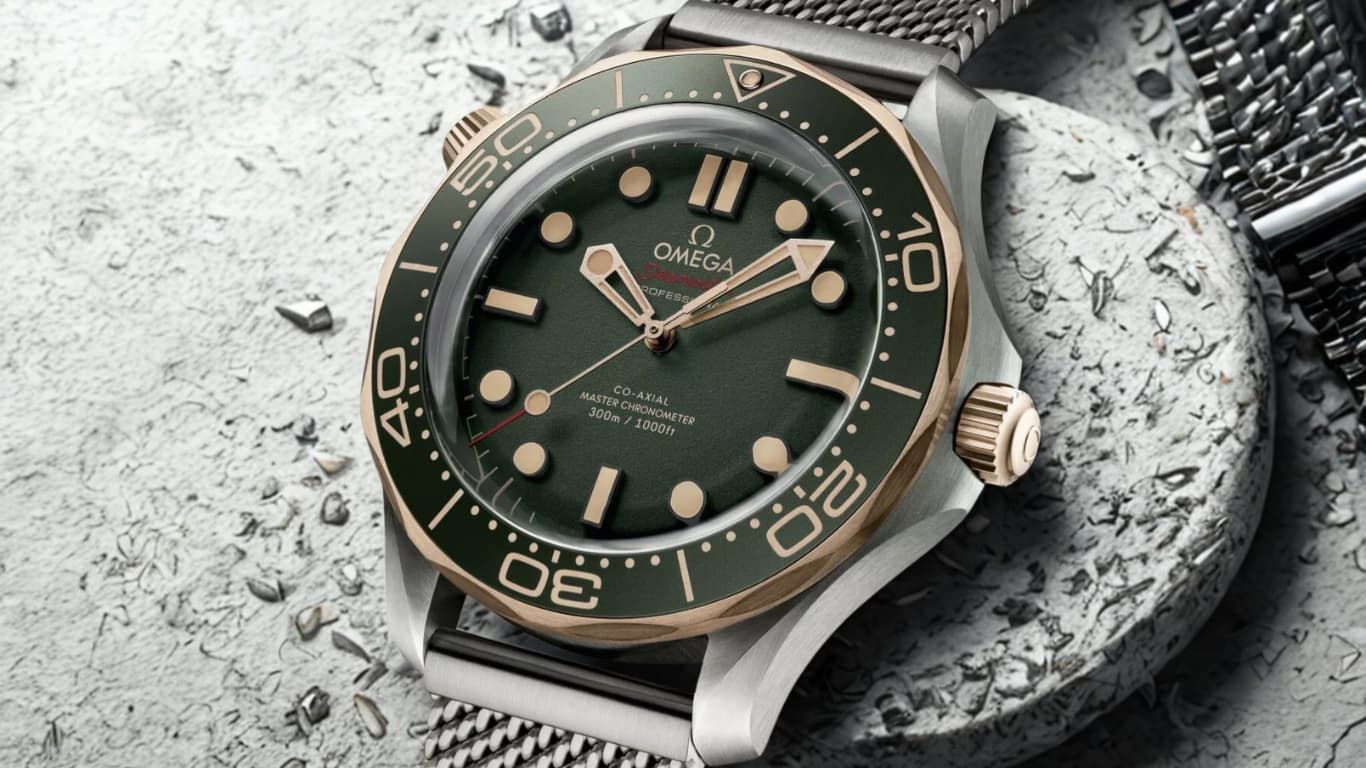
Then came a marketing masterstroke. The Seamaster became the watch of James Bond, starting with GoldenEye in 1995, when Pierce Brosnan strapped on the Seamaster Diver 300M.
That partnership didn’t just elevate the watch’s pop culture cachet. It cemented the Seamaster as a symbol of rugged sophistication. The association carried through Daniel Craig’s run as 007, with various Seamaster editions worn on screen, each model fueling new waves of demand among collectors and casual buyers alike.
Through all these chapters, Omega consistently improved the line. From the early caliber 501 automatic movements to today’s Co-Axial Master Chronometers, the Seamaster has evolved in water resistance, magnetic resistance, and overall mechanical precision, often setting benchmarks in the dive watch category.
This rich blend of military utility, exploration pedigree, and cinematic glamour gives the Seamaster a legacy that is uniquely positioned for long-term collector interest. Few watches can claim all three.

Different Models of Omega Seamaster
The Omega Seamaster may look like a straightforward dive watch line at first glance. But underneath that unified branding lies an impressively diverse portfolio. From heritage-inspired recreations to cutting-edge professional dive instruments and sleek dress divers, the Seamaster family offers something for every taste and for nearly every investment strategy.
The Seamaster lineup spans everyday sport watches, deep-sea professional models, vintage-style reissues, and even luxury hybrid pieces. Each of these plays a distinctly different role in secondary market behavior and long-term collector interest.
Omega_Seamaster_Models.csv
So while every Omega Seamaster carries the DNA of precision dive engineering, each core variant tells a different story when it comes to resale behavior and value growth.
If you want the best balance of future appreciation and market liquidity, focus on models with historical links, mechanical certification like METAS, limited production numbers, or those tied to enduring pop culture associations. The Diver 300M, with its long-standing James Bond partnership, sits at the top of that list. You can also compare this approach with how collectors are thinking about rare Rolex watches for long-term ROI.
Features of Omega Seamaster
The enduring success of the Omega Seamaster comes down to more than its cinematic fame or historic dive pedigree. This collection thrives because it consistently blends cutting-edge engineering with timeless aesthetics, making it equally appealing to divers, collectors, and investors.
Over the decades, the Seamaster has evolved its technical standards and case architecture, steadily incorporating new technologies without abandoning its core identity. What follows is a detailed look at the key features that distinguish the Seamaster line in 2026, both in terms of design and mechanical excellence.
- Master Chronometer Movements: Most Seamaster models today are powered by Omega’s Co-Axial Master Chronometer calibers. Certified by METAS, these movements guarantee exceptional precision (0/+5 seconds per day), high resistance to magnetic fields up to 15,000 gauss, and extended service intervals. Power reserves typically range from 55 to 72 hours depending on the caliber.
- Diverse Case Materials and High-End Finishing: The Seamaster lineup features cases in stainless steel, titanium, Sedna™ gold, and ceramic. Each is meticulously finished, often combining brushed and polished surfaces for a dynamic look. Even utilitarian models like the Planet Ocean use intricate beveling and crisp transitions, a level of detail that elevates their investment profile.
- Ceramic Bezels and Liquidmetal™ Inserts: Omega was one of the pioneers of integrating ceramic into dive bezels, improving scratch resistance and long-term color retention. Many modern Seamaster bezels also incorporate Liquidmetal™ or Ceragold™ numerals, seamlessly bonded to the ceramic—ensuring the scales remain sharp and won’t fade over decades.
- Advanced Water Resistance & Helium Escape Valves: While the Diver 300M is rated for 300 meters, the Planet Ocean line doubles this with 600-meter resistance and includes manual helium escape valves for saturation diving. This level of overengineering, even if most owners won’t dive that deep, reinforces confidence in long-term durability.
- Transparent Casebacks (Select Models): Unlike older tool divers that hid their mechanics, many Seamaster models now showcase their movements through sapphire casebacks. This reveals Geneva waves, rhodium-plated bridges, and the signature Omega arabesque finishing—adding both aesthetic and collector value.
- Dial Craftsmanship & Lume: Whether it’s the laser-engraved wave dials of the Diver 300M or the vintage-inspired sandwich dials of the Seamaster 300, Omega puts immense effort into dial depth and detail. Generous Super-LumiNova ensures legibility in all conditions, a crucial factor for functional dive credibility.
- Comfortable Case Profiles: Despite their robust specs, most Seamaster models manage to sit comfortably under a shirt cuff. Case heights generally range from 12–14mm, striking a smart balance between durability and daily wearability.
- Versatile Straps & Micro-Adjustment Clasps: Omega offers Seamaster variants on metal bracelets with sophisticated micro-adjust clasps, rubber straps molded to match case lines, and even NATO options. This flexibility not only suits style preferences but also helps preserve resale interest by catering to diverse buyer tastes.

Omega Seamaster Pricing
The Omega Seamaster occupies a genuinely intriguing spot in the luxury sports watch segment. It sits firmly below Rolex in pricing but often offers similar or even superior technical specs. Unlike hype-driven markets where values can swing dramatically, the Seamaster’s pricing story is steadier, built on consistent brand credibility, expanding Master Chronometer certification, and a deep collector base that spans generations.
As of 2026, retail prices for key Seamaster references have increased modestly in line with inflation and Omega’s steady push toward higher-end finishing. The secondary market is growing more competitive too, with most sought-after references trading close to retail, and certain limited editions or ceramic and titanium variants commanding clear premiums. Bloomberg’s luxury market coverage has tracked this tightening of premium watch resale values across multiple Swiss brands.
Models like the Diver 300M, Planet Ocean GMT, and vintage-styled Seamaster 300 are especially active on the secondary market, underlining just how well the line has balanced mainstream desirability with genuine enthusiast demand.
Recent Production Models
| Model Variant | Production Years | Retail Price (2025) | Secondary Market Price (2025) | Annual Appreciation Rate |
|---|---|---|---|---|
| Diver 300M Master Chronometer | 2018–Present | $5,500 | $5,400 – $6,200 | 2–4% |
| Planet Ocean 600M | 2016–Present | $6,800 | $6,800 – $7,400 | 3–6% |
| Seamaster 300 Heritage | 2021–Present | $7,000 | $7,200 – $8,000 | 3–5% |
| Aqua Terra | 2017–Present | $6,100 | $5,800 – $6,500 | 1–3% |
| Seamaster Diver 300M Chronograph | 2020–Present | $7,400 | $7,200 – $8,100 | 2–4% |
Discontinued and Collector-Focused Omega Seamaster Models
| Model Variant | Production Years | Original Retail Price | Secondary Market Price (2025) | Annual Appreciation Rate |
|---|---|---|---|---|
| Seamaster 2254.50 (“Sword Hands”) | 2000–2008 | ~$2,200 | $3,500 – $4,200 | 6–8% |
| Seamaster “Bond 40th” Limited | 2002 | ~$2,600 | $5,200 – $6,000 | 7–9% |
| Planet Ocean Liquidmetal LE | 2010 | ~$5,500 | $9,000 – $10,500 | 8–10% |
| Vintage Seamaster 300 Ref. 165.024 | 1960s | ~$250 (originally) | $12,000 – $18,000+ | Highly Variable |
Market Trends and Global Resale Insights
In the U.S. and across European markets, the Diver 300M continues to act as the gateway luxury dive watch, popular with first-time buyers who later upgrade to more specialized Seamasters. Meanwhile, Japan and Singapore are seeing intensified demand for the Seamaster 300 Heritage line, thanks to its clean nod to Omega’s 1957 designs.
Auction houses in Geneva and Hong Kong have begun placing greater emphasis on vintage Seamaster 300 references and early Planet Oceans, with limited Liquidmetal editions and older Bond tie-ins consistently exceeding conservative pre-auction estimates. Christie’s auction results bear this out across recent watch sale seasons.
Full box sets, original warranty cards, and unpolished cases play an outsized role in achieving top-tier resale. Buyers in 2026 are far more educated than previous generations, and they’re willing to pay a clear premium for complete, well-preserved examples. Condition is no longer just a detail. It’s a pricing variable.
Reasons why the Omega Seamaster is a smart investment
- Mechanical & Brand Authority: Omega’s Master Chronometer calibres rival Rolex’s in anti-magnetism and durability. This engineering depth translates into stable, long-term demand.
- Pop Culture & Historical Cachet: The James Bond connection isn’t just marketing fluff—it has kept the Diver 300M front-of-mind for collectors globally, feeding multi-decade interest.
- Controlled Price Growth: Unlike brands with aggressive price hikes, Omega maintains incremental increases. This allows the market to mature naturally without overheating, supporting resale stability.
- Collector-Driven Limited Editions: References like the Planet Ocean Liquidmetal or Seamaster “Bond 40th” have become mini blue-chip assets, consistently outperforming retail by significant margins.
- Accessible Entry & Upside: Starting around $5,500 new, the Seamaster gives investors a relatively approachable entry point into serious Swiss mechanicals—paired with enough model depth to move up-market over time.
Omega Seamaster Historical ROI and Performance
The Omega Seamaster might not carry the sky-high auction buzz of a Daytona or Nautilus. But it stands out as one of the most consistently appreciating dive watch families, anchored by rock-solid engineering, enduring brand prestige, and a genuine story that collectors find credible. If you’re thinking about how the Vacheron Constantin Overseas compares as an investment, the Seamaster offers a notably different but equally compelling value proposition.
For many years, the Seamaster was primarily seen as a rugged enthusiast’s watch, built for underwater missions, professional tool use, and a subtle style statement. But over the last decade, it has quietly evolved into a dependable investment asset within the mid-luxury segment.
Recent trends confirm that special editions like the Planet Ocean Liquidmetal and vintage 1960s Seamaster 300s have not only held their value but significantly surpassed original retail. The returns on the best examples put them alongside more aggressively hyped watches in terms of performance.
And modern references equipped with METAS-certified calibres and tied to the James Bond franchise are delivering steady, low-volatility gains. That’s exactly the kind of performance serious investors appreciate, especially in an environment where the Financial Times has noted growing appetite for tangible, passion-driven assets among high-net-worth individuals.
Auction Statistics and Market Trends
Between 2020 and 2026, the Omega Seamaster has shown reliable growth across both new and legacy references. The data paints a picture of steady, compounding appreciation rather than volatile spikes, which is exactly what disciplined investors want to see.
- At a 2024 Phillips auction in Geneva, a Seamaster Planet Ocean Liquidmetal Limited Edition sold for $10,200, more than 80% above its original ~$5,500 retail back in 2010, underlining a robust long-term CAGR of around 8–10%.
- A well-documented vintage Seamaster 300 Ref. 165.024 from the late 1960s with original dial and bezel realized $16,800 at a New York auction in 2023, more than quadrupling values typically seen a decade earlier.
- On Chrono24, Diver 300M models tied to James Bond limited series have traded hands at $6,500–$7,200, often exceeding their retail by 5–8%, especially when in mint condition and accompanied by full box and papers.
- Meanwhile, core modern Seamasters like the Seamaster 300 Heritage line are showing annualized appreciation of 3–5%, driven by rising interest in vintage-inspired designs and Omega’s impressive technical guarantees.
The overall secondary market for Seamasters stays healthy and increasingly liquid, with sellers able to move pieces quickly. This is especially true in Asia and Northern Europe, where Omega’s brand presence is particularly strong and buyer depth is high.
Current Market Behavior and Forecast
In 2026, the Omega Seamaster’s investment case looks more solid than it has in years. Buyers aren’t just hobbyists hunting for desk divers. They’re informed collectors and emerging investors who value both mechanical substance and a globally recognized name. The watch investment community has taken note of this shift in buyer profile.
- Entry-Level (Aqua Terra & Basic Diver 300M): These references maintain between 85–95% of retail, offering mild appreciation. Their real value comes in long-term wear plus minimal depreciation—ideal for cautious investors.
- Mid-Tier (Seamaster 300 Heritage, Planet Ocean Standard): This segment is seeing the strongest momentum, with most pieces reselling at 95–110% of retail, especially in popular dial or bezel configurations. It’s a sweet spot combining accessibility with genuine upside.
- High-End (Liquidmetal Editions, Vintage Seamaster 300, Rare Bond Models): These watches are increasingly treated as micro blue-chips within Omega’s lineup. With annualized gains ranging from 6–10%, they offer the kind of steady trajectory that appeals to strategic collectors. Full provenance, unpolished cases, and original straps or bracelets significantly amplify results.
If Omega keeps balancing innovation, like expanding METAS certification and adding subtle design evolutions, with its disciplined pricing approach, the Seamaster is likely to keep rewarding patient investors. Its appeal isn’t driven by flash or fleeting hype. It’s anchored in engineering credibility, a broad collector ecosystem, and a brand narrative that has stayed remarkably stable over time.

Who Should Invest In An Omega Seamaster In 2026
The Omega Seamaster isn’t built for investors chasing quick flips. And that’s exactly what makes it such a solid proposition in 2026 for those with a more strategic mindset. Unlike watches that ride short-term hype, the Seamaster rewards buyers who care about proven engineering, a respected legacy, and steady, realistic value growth.
It doesn’t hinge on celebrity endorsements or social media frenzy. The Seamaster’s appeal rests on decades of quality, a robust resale ecosystem, and a versatile style that transitions effortlessly from professional life to weekend adventures. That combination is rarer than you might think. And if you want to understand how recent US-Switzerland tariff developments affect your watch investment strategy, it’s worth reading before you buy.
Here’s who should seriously consider adding an Omega Seamaster to their portfolio this year
- Buyers priced out of top-tier Rolex sports watches: Models like the Submariner or Sea-Dweller have surged well above the $10K–$15K mark on secondary markets. The Seamaster offers a gateway into serious Swiss dive watch territory, often at 40–50% less—while still delivering METAS-certified movements, 300m+ water resistance, and the kind of brand prestige that signals long-term security.
- Collectors who value balanced design and technical credibility: The Seamaster sits at a sweet intersection of classic and modern. Whether you choose the Diver 300M with its iconic wave dial or a Planet Ocean with serious diving chops, you’re getting a watch that respects its historical blueprint yet fully embraces contemporary innovation.
- Investors looking for stable, moderate growth: Seamasters tend to appreciate slowly but steadily—typically 3–6% annually on sought-after references. They’re not the kind of watch that skyrockets overnight, but over a 5- to 10-year horizon, they’re dependable assets that rarely see sharp declines.
- Those who want utility alongside appreciation: With robust screw-down crowns, ceramic bezels, and anti-magnetic calibers, the Seamaster is truly built to be worn, not just stored. Unlike more delicate investments, it stands up to daily life, whether that’s under a suit cuff or on a dive trip.
- Collectors diversifying beyond hype-driven models: If your watch box is already full of flashy chronographs or big-case pilots’ watches, a Seamaster adds dimension—both in function and financial profile. It’s a watch equally at home in an active rotation or as a long-hold insurance policy in your collection.
FAQ
Is the Omega Seamaster a good investment watch in 2025?
Yes, the Omega Seamaster is a solid investment in 2025. It doesn’t promise explosive short-term gains, but popular references like the Diver 300M and Planet Ocean have shown consistent annual appreciation of 3–6%, especially when kept in excellent condition with full box and papers.
What makes the Omega Seamaster different from a Rolex Submariner?
The Seamaster often offers higher anti-magnetic protection (up to 15,000 gauss vs. Rolex’s ~1,000 gauss) and is generally more affordably priced. Many collectors see it as the more technically advanced yet understated alternative to the Submariner.
Is the Seamaster a good daily wear watch?
Absolutely. It’s built for daily use with robust steel or ceramic cases, METAS-certified movements for top-level precision, and thoughtful features like micro-adjust clasps and long-lasting lume.