Impressionism is the bridge between the academic tradition and modernism, and the secondary market still treats it that way. The named artists of the period (Monet, Renoir, Degas, Pissarro, Manet, Morisot, Cassatt) continue to anchor evening sales at Christie's, Sotheby's, and Phillips each season, and the headline lots still set reference points the broader market uses.
Cézanne's Mont Sainte-Victoire and other Cézanne examples have cleared eight and nine figures repeatedly through the past two decades; Monet's Meules series passed $110 million at Sotheby's New York in May 2019.
For collectors building serious 19th-century depth, the period remains the structural centre.
In our coverage we keep returning to the same observation. Impressionism is not a fashion category. The auction market has treated it as foundational since the late 1990s, and the cultural authority of the period at MoMA, the Musée d'Orsay, the National Gallery, and the Met provides the institutional anchor the secondary market prices in.
- Impressionism remains the most institutionally collected segment of modern painting, with Monet, Manet, Renoir and Degas at the structural top of the market.
- The movement emerged in Paris in the 1860s and 1870s in deliberate opposition to academic Salon painting, and that origin still shapes how the canon trades.
- Top-tier Monet water lilies and Pissarro views regularly clear tens of millions at evening sale, while later works and lesser series trade in a much wider range.
- Provenance is unusually deep for Impressionism, with most major works passing through known dealer chains from Durand-Ruel onward.
- Post-Impressionist names such as Cezanne, Van Gogh and Gauguin sit immediately above the Impressionist tier and define what serious modern collectors pay at the top.
- For collectors building a modern sleeve, Impressionism remains the safest single entry point into nineteenth-century painting at meaningful scale.
- Who is this for?
- Modern art collectors, family offices and advisors building positions in Impressionist and post-Impressionist painting at the museum-quality tier of the market.
- What is happening?
- A collector field guide to Impressionism, covering the canonical names, the structure of evening sales, provenance research and the relative price tiers across the period.
- When did this emerge?
- Most active around the May and November evening sales at Christie’s and Sotheby’s in New York, and the equivalent Impressionist and Modern auctions in London and Paris.
- Where is this happening?
- Anchored in Paris historically, with auction activity concentrated in New York, London and Paris and major institutional holdings across the Musee d’Orsay, the National Gallery and the Met.
- Why does it matter?
- Impressionism remains the bedrock of the modern market, and a clear field guide protects collectors from overpaying for lesser works while reading the top tier correctly.
What we mean by Impressionism
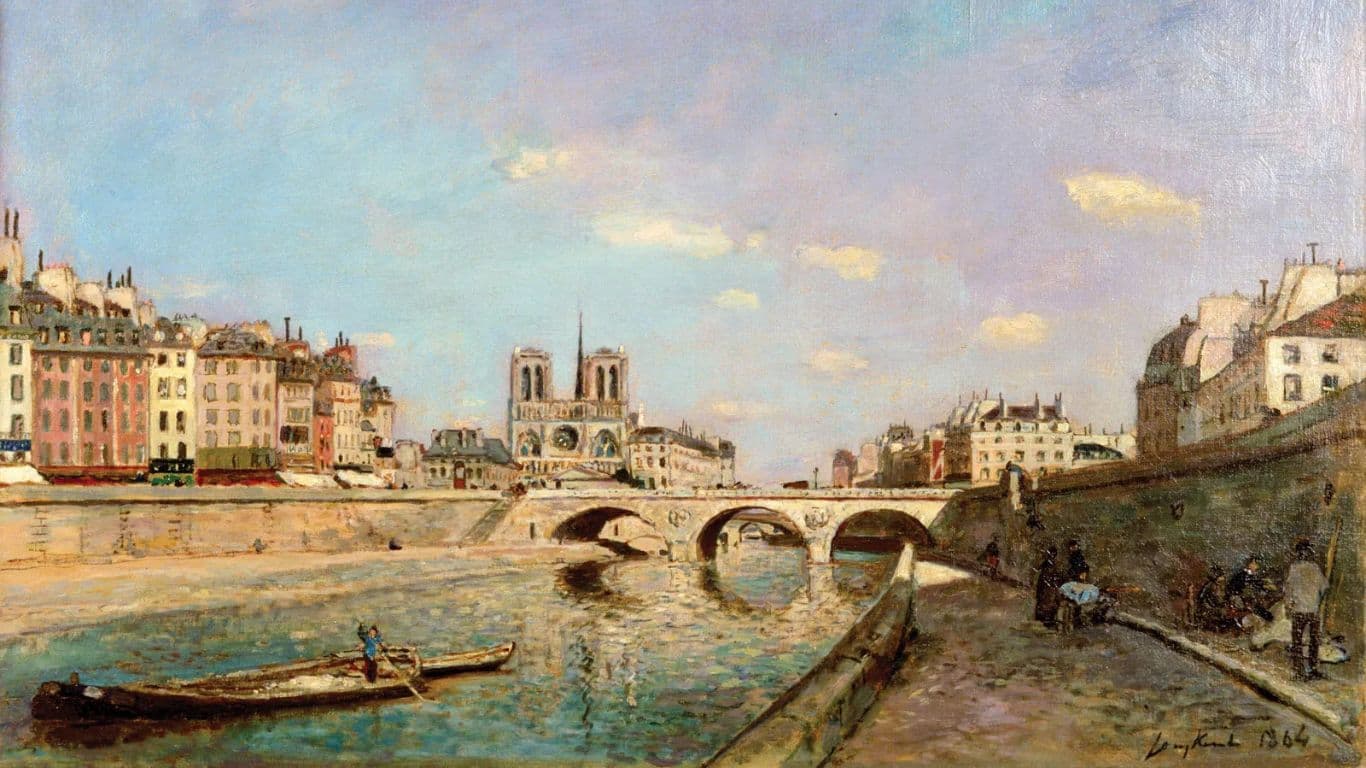
Impressionism emerged in Paris in the 1860s and crystallised through the eight Impressionist exhibitions held between 1874 and 1886. The 1874 first exhibition at the studio of the photographer Nadar gave the movement its name, via Louis Leroy's mocking review of Monet's Impression, Sunrise. The mockery stuck, but as a description rather than a criticism.
The structural marks of the period are familiar to anyone who has spent time in the Musée d'Orsay galleries.
Broken brushwork that captures the way light actually behaves rather than the smooth finish of academic painting; bright, prismatic colour palettes that abandoned the brown undertones of the Salon tradition; landscape and contemporary urban life as primary subjects rather than the historical and mythological scenes the Academy preferred; and the practice of working en plein air, outside in front of the subject rather than back in the studio.
The period sat in direct opposition to the Salon system that controlled official French art through the second half of the 19th century. The eight Impressionist exhibitions were independent commercial events, organised outside the Salon, and that independence shaped both the visual vocabulary of the period and the market structure that grew up to support it.
The artists who anchor the canon
Claude Monet (1840 to 1926) sits at the structural centre. The Water Lilies series, the Haystacks, the Rouen Cathedral series, and the late Giverny work collectively define what Impressionism looks like when it works at the highest level. Monet has cleared more than two dozen lots above $50 million at auction over the past two decades.
Meules from Sotheby's New York in May 2019 at $110. 7 million remains the high-water mark.
Pierre-Auguste Renoir (1841 to 1919), Edgar Degas (1834 to 1917), Camille Pissarro (1830 to 1903), Édouard Manet (1832 to 1883), Berthe Morisot (1841 to 1895), and Mary Cassatt (1844 to 1926) round out the structural top tier. Each has cleared eight figures repeatedly through the past two decades, with Degas's ballet dancers, Manet's later figure paintings, and Cassatt's domestic interiors all anchoring particular collector communities.
Paul Cézanne (1839 to 1906) sits structurally adjacent. The market often groups him with the Impressionists, though his late career pushed past them into what art historians call Post-Impressionism. Cézanne's bridging position between Impressionism and modern markets drives some of the strongest auction-record stretches of the past decade. The Card Players from a 2011 private sale to Qatar reportedly cleared above $250 million, the highest publicly acknowledged price for any single painting at the time.
The Post-Impressionist circle (Gauguin, Van Gogh, Toulouse-Lautrec, Seurat) trades with its own dynamics. Van Gogh in particular sits at the very top of any modern-era auction conversation, with Portrait of Dr. Gachet clearing $82.5 million at Christie's New York in May 1990, a benchmark that defined the modern art market for a generation.
What the secondary market actually shows
Impressionist work trades on a structurally clear basis. The named artists hold robust pricing when works surface with secure attribution, clean provenance, and meaningful exhibition history. Auction records over the past decade demonstrate the consistency.
Monet at the top tier clears $40 million to over $100 million for the canonical series works. Renoir, Degas, and Manet at the major-example tier clear in the $20 million to $60 million range. Pissarro, Morisot, Cassatt, and the broader circle at the major-example tier clear in the $5 million to $20 million range with the strongest reaching higher.
The drawings, pastels, and prints market provides the accessible entry into the period. Degas pastels, Pissarro drawings, and Cassatt prints all trade actively at the major houses with pricing in the low five figures to low six figures depending on subject and quality. For collectors who want the period without the painting-tier pricing, this is the structural route.
Where the category sits today
The Impressionist market remains the structural anchor of the modern art conversation. Three factors explain the durability. First, museum demand is genuine and continuing.
The Musée d'Orsay's renovation programme, the Met's Impressionist galleries, MoMA, the National Gallery in London, and the Pushkin Museum all continue to engage seriously with the period. Second, the named artists at the top of the canon are stable. Scholarship is settled and the catalogues raisonnés are mature.
Third, the visual vocabulary of the period translates better to contemporary display than almost any other historical category.
The Christie's, Sotheby's, and Phillips Impressionist and Modern evening sales each November and May in New York and June in London continue to define what the market actually does. The dedicated works on paper sales provide the accessible entry. The Impressionist artists defining the market in 2026 remain largely the names this field guide identifies, which is itself a marker of the period's stability.
What this means for collectors
For collectors approaching the period, the lessons are familiar. Buy through the major houses or the specialist Impressionist and Modern dealers. Treat condition as central.
The Impressionists worked outdoors with experimental materials, and condition reports for these works require serious scrutiny.
Provenance matters more for Impressionist work than for almost any other category, given the World War II restitution claims that continue to surface periodically. Reputable houses run those checks; serious collectors do too.
For collectors thinking about how Impressionism fits into a wider modern art programme, the structural answer is clear. The period is the foundational tier. It anchors the modern-era canon, provides the reference points that the post-war and contemporary markets price against, and continues to deliver the institutional stability that serious-collector communities require.
The presence of these names alongside the records they set, including the most expensive paintings ever sold, is the strongest argument for treating the period as the structural starting point of any serious modern collection.
We last reviewed this analysis in May 2026.

Frequently Asked Questions
- What is Impressionism in art?
- Impressionism is a 19th-century art movement characterized by visible brushstrokes, open composition, emphasis on light, and capturing fleeting moments. It broke away from academic realism and focused on how light and color defined perception.<br><br>
- Why is Impressionism important in art history?
- Impressionism is crucial because it revolutionized modern art, introducing new techniques that valued subjective experience over objective representation. It paved the way for movements like Post-Impressionism, Fauvism, and Modernism.<br><br>
- Who are the most famous Impressionist artists?
- Key Impressionist artists include Claude Monet, Pierre-Auguste Renoir, Edgar Degas, Camille Pissarro, Berthe Morisot, and Alfred Sisley. Their works remain highly prized by collectors and institutions worldwide.<br><br>
- How much can an Impressionist painting sell for?
- Blue-chip Impressionist paintings can sell for $10 million to over $100 million, depending on artist, provenance, condition, and historical significance. Monet's <em>Meules</em> achieved $110.7 million at Sotheby’s in 2019.<br><br>
- Are Impressionist paintings appreciating in value?
- Yes. Despite generational shifts in collecting tastes, Impressionist works continue to appreciate steadily, supported by museum acquisition, private sales, and institutional demand, particularly in North America, Europe, and Asia.<br><br>
- What are the main characteristics of Impressionism?
- Impressionism is known for loose brushwork, bright colors, focus on natural light, and everyday subject matter. Artists often painted outdoors to capture transient atmospheric effects.<br><br>
- Can new collectors invest in Impressionist art?
- Yes, though entry points for blue-chip pieces are high. New collectors can access works by lesser-known Impressionists or participate in fractional ownership vehicles targeting museum-quality paintings.

Stefanos Moschopoulos
Stefanos Moschopoulos founded The Luxury Playbook in Athens and has spent the better part of a decade following the auction calendar, the en primeur releases, and the watchmakers, gallerists, and shipyards the magazine covers. He writes the field guides and listicles that anchor the Connoisseur section — pieces built on Phillips and Christie's results, Liv-ex movements, and conversations with collectors he has met across Geneva, Bordeaux, Basel, and Monaco. His own collecting habits sit closer to watches and wine than art, and it shows in the level of detail in the magazine's coverage of those categories. Under his direction, The Luxury Playbook now publishes long-form field guides, market-defining year-end listicles, and the Voices interview series with the founders behind the houses and the brands.