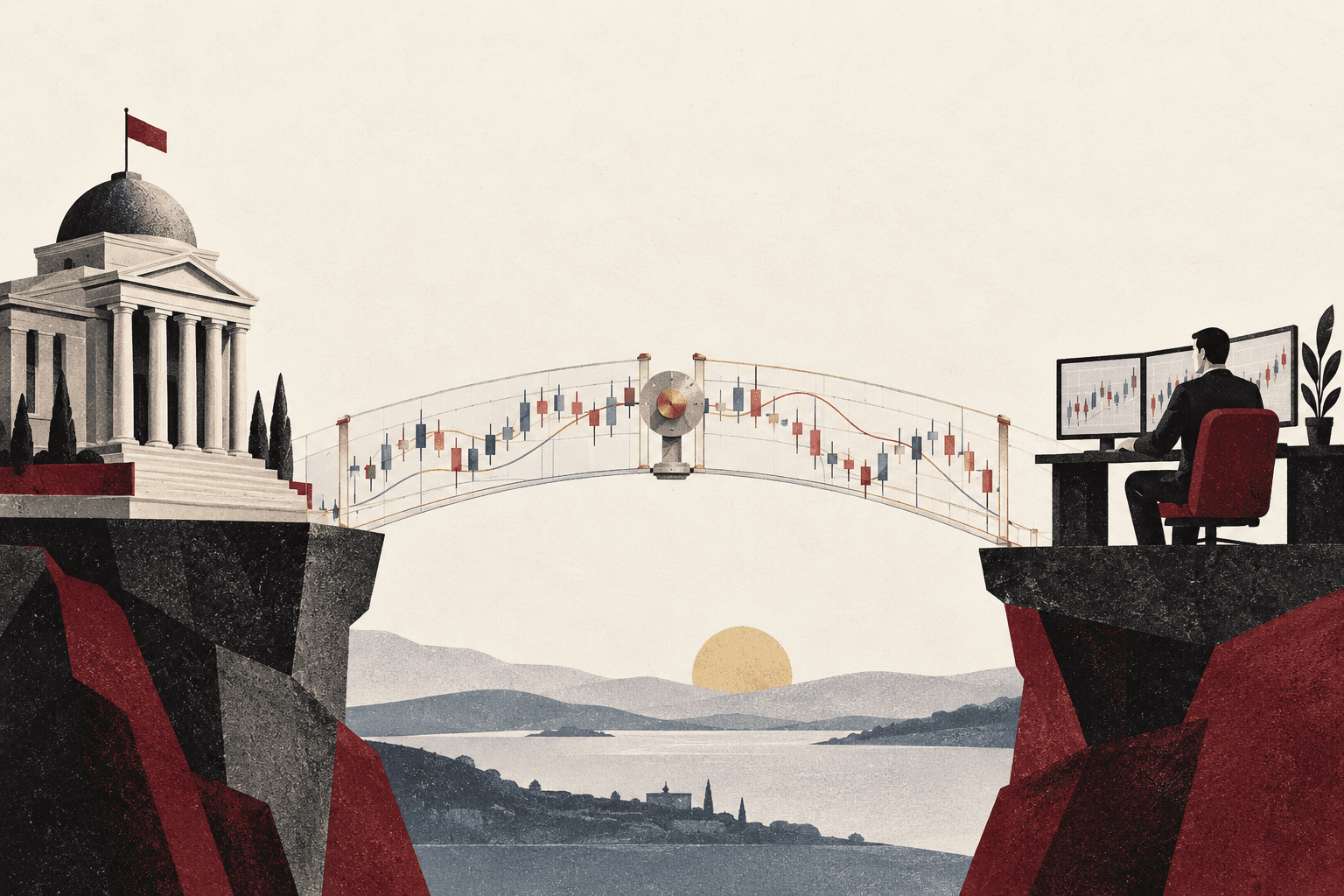

A billionaire and a salaried professional can stay in the same hotel suite, fly on the same aircraft and dine at the same restaurant. From the outside the two experiences look almost identical. The reasons behind them are usually not.
One is buying the experience. The other is buying something far less visible: the confidence that everything surrounding the experience has already been handled.
That difference is the most misunderstood thing about the luxury economy. Wealth changes what people buy. It changes why they buy it far more.
Key Takeaways
- Luxury is usually explained through exclusivity, status and access. Across nearly two decades with affluent and ultra wealthy clients, the most valuable things they buy have consistently been invisible ones.
- In our own onboarding data across 30 clients between 2025 and 2026, time savings, certainty of execution and trusted recommendations together accounted for 63.3% of stated reasons for engaging a concierge. Access and exclusivity accounted for 15%.
- Academic work points the same way. Philipp Klaus found that purchase and repurchase behaviour among ultra wealthy individuals is driven by expectation management, personal relationships and convenience led time savings rather than by the object acquired.
- Most purchasing is optimisation. The variable changes with wealth. Price gives way to value, and at the highest level value gives way to certainty.
- Money can be earned, invested and recovered. Time cannot, and complexity grows faster than wealth does. Private aviation, family offices and concierge firms all exist to protect the same finite resource.
- The word that quietly commands a premium across every luxury sector is confirmed. In many transactions the premium is not paid for a better product. It is paid for the removal of risk.
- Who: Ultra high net worth individuals and the advisers, family offices, private banks and luxury operators serving them.
- What: Why the most valuable things wealthy clients buy are time, trust and certainty rather than access, status or the product itself.
- When: Drawing on client onboarding data gathered between 2025 and 2026, alongside published research into ultra wealthy consumer behaviour.
- Where: Across private aviation, luxury hospitality, family offices, concierge services and every long standing advisory relationship.
- Why: Because businesses that misread the motivation compete on product and price, while those that read it correctly command a premium for reliability.
Table of Contents
- What the Data Actually Says
- What Changes as Wealth Grows
- Why Time Outranks Money
- Trust Is the Scarce Resource Now
- The Most Expensive Word in Luxury
- Certainty Is the Product
- Frequently Asked Questions
What the Data Actually Says
Observation is useful. Data is better.
Every client at Nuvō Concierge completes an onboarding process designed to establish their priorities, their expectations and their reasons for engaging the service in the first place. Reviewing those responses across 30 clients between 2025 and 2026 produced a result that runs against how the category markets itself.
Luxury concierge is sold on exclusive access, VIP experiences and reservations nobody else can secure. Those were not the reasons clients gave. Time savings was cited most frequently, followed by certainty of execution and trusted recommendations. Together those three accounted for 63.3% of all stated reasons. Access and exclusivity, the supposed defining feature of the category, accounted for 15%.
Source: Nuvō Concierge client onboarding survey, 2025 to 2026, n=30. Figures are shares of stated reasons rather than of clients. The 21.7% residual is derived from the two reported figures. A single firm sample of this size is indicative rather than representative of the wider market.
The finding is narrow, and I would not present one firm’s onboarding data as an industry study. What makes it worth reporting is that it points the same way as published research. In the Journal of Product & Brand Management, Philipp Klaus examined the luxury customer experience of ultra high net worth individuals and found purchase and repurchase behaviour driven by expectation management, personal relationships with staff and convenience led time savings. His follow on work in the International Marketing Review went further, treating time as the ultra wealthy individual’s most precious possession.
The common assumption is that wealthy clients want more access. What they generally want is less uncertainty.
What Changes as Wealth Grows
Almost every purchase is an optimisation. The only question is what is being optimised.
For most consumers the answer is price. As income rises the variable shifts toward value and quality. At the highest levels of wealth another priority takes over, and it is certainty.
An entrepreneur running several businesses, a portfolio, multiple residences and a family rarely asks which option is cheapest. They rarely ask which offers the best value either. The question is almost always some version of: who can take care of this?
That reframing matters commercially. The client is often willing to pay a premium not for a different product but for a smoother process and a more predictable outcome. The product still matters. The process around it frequently matters as much, which is why the least discussed asset in luxury is rarely the object on the counter.
Why Time Outranks Money
Contrary to the usual assumption, wealthy individuals do not think differently about money. They think differently about time.
Money can be earned, invested, multiplied and recovered. Time cannot. And as wealth grows, so does complexity. More responsibilities, more decisions, more claims on the same finite hours.
That single fact explains a surprising amount of the luxury economy. Private aviation exists because waiting has a cost. Family offices exist because administration has a cost. Executive assistants exist because coordination has a cost. Concierge firms exist because complexity has a cost. Different products, one objective.
The most common misconception about concierge services is that clients use them because they cannot do the task themselves. In almost every case they can. They choose not to. A client perfectly capable of arranging a complex multi country itinerary may still delegate it, not from any lack of ability, but because the hours required to coordinate flights, hotels, ground transport and reservations are worth more somewhere else.
What is being purchased is not the booking. It is the time the booking would have consumed.
Trust Is the Scarce Resource Now
Twenty years ago information was valuable because it was hard to obtain. That scarcity has gone. A traveller researching hotels can read thousands of reviews. An investor can consume unlimited market commentary. Recommendations from experts, influencers and AI systems arrive within seconds.
Demand for trusted advisers has grown anyway, and the reason is straightforward. The bottleneck moved. It is no longer finding an answer. It is knowing which answer to act on.
Trust converts uncertainty into confidence, and confidence is what allows a decision to be made quickly and with conviction. That is why family offices retain the same advisers for decades, why successful founders keep a small circle of people they consult, and why the wealthiest buyers operate through private networks rather than through the channels built to reach them. It is also why the quality of a firm’s information has become a competitive question rather than a technical one.
Access can be bought. Trust has to be earned, and that asymmetry is the whole business.
The Most Expensive Word in Luxury
There is one word that quietly commands a premium across almost every luxury sector.
Confirmed.
A suite, a table, an aircraft, a ticket. Clients routinely pay significantly more for the confidence that something will happen exactly as arranged, and the logic is simple. Uncertainty carries a cost. Sometimes financial, sometimes emotional, often both.
When the occasion is a major sporting event, a decisive business meeting or a once in a lifetime family celebration, the cost of something going wrong can dwarf the price difference between the available options. The premium is not being paid for a better product. It is being paid for the elimination of risk.
That single mechanism explains why private aviation, luxury hospitality, family offices and concierge services all sustain margins that look difficult to justify on product specification alone. Judged on the product they look expensive. Judged on the risk removed they look priced correctly, and the businesses that misunderstand this end up competing on the wrong axis entirely.
Certainty Is the Product
Luxury has traditionally been explained through exclusivity, access and exceptional products. For many wealthy clients the greatest luxury is considerably less visible than any of those.
It is the confidence that a reservation is secured, that a journey is properly planned, that an investment is professionally managed, and that a problem was resolved before it ever reached them.
The luxury industry spends most of its attention on what clients buy. The more useful question is why. At the highest levels of wealth, the answer is rarely status. It is the protection of resources that cannot be replaced: time, trust and confidence in an outcome. That is also why the wealthiest clients are so unforgiving of a supplier who gets it wrong once, and why judgement in a client relationship compounds in a way marketing spend never does.
Some of the most successful luxury businesses in the world are not really selling products at all. They are selling certainty. Perhaps that, rather than access or exclusivity, is the ultimate luxury.
Frequently Asked Questions
What do ultra high net worth clients actually buy?
Predominantly time, trust and certainty rather than the product itself. In onboarding data across 30 clients between 2025 and 2026, time savings, certainty of execution and trusted recommendations together made up 63.3% of stated reasons for engaging a concierge, while access and exclusivity made up 15%. Published research into ultra wealthy consumer behaviour points in the same direction.
Why do wealthy clients delegate tasks they are capable of doing themselves?
Because capability is not the constraint. Complexity grows faster than wealth does, and the hours required to coordinate travel, logistics and administration carry a higher opportunity cost at that level than the fee charged to remove them. What is being bought is not the task. It is the time the task would have consumed.
Why does certainty command a premium in luxury markets?
Because uncertainty carries a cost that is often larger than the price gap between the available options. When the occasion is a decisive meeting, a major event or a once in a lifetime celebration, the consequence of a failure far exceeds the saving. The premium therefore prices risk removal rather than product quality, which is why guaranteed outcomes sustain margins that specification alone would not support.
Is exclusive access still a differentiator in luxury services?
It remains a component but it is no longer the primary one. Access is increasingly replicable, and clients who already have it place a higher value on reliability of execution and on advisers whose judgement they trust. A business competing purely on access is competing on the feature easiest for a rival to match.
References
- Philipp Klaus, What matters most to ultra high net worth individuals? Exploring the UHNWI luxury customer experience, Journal of Product & Brand Management.
- Philipp Klaus, Priceless time, the UHNWI’s most precious possession, International Marketing Review.
- UBS Global Wealth Report.
- Knight Frank Wealth Report.
- Nuvō Concierge client onboarding survey, 2025 to 2026, n=30.
We last reviewed this analysis in August 2026.


Mahmoud Ewidah
Mahmoud Ewidah is a luxury concierge entrepreneur specializing in ultra-high-net-worth (UHNW) lifestyle management, luxury travel, exclusive access, and bespoke experiences. He is the Founder and CEO of Nuvō Concierge, an ultra-luxury concierge and lifestyle management company serving affluent individuals, family offices, private banks, and premium card programs worldwide. His background spans luxury client experience, concierge operations, and service excellence, with more than 16 years of international leadership experience across the Middle East, Europe, Russia & CIS, APAC, and North America. Prior to founding Nuvō Concierge, he held senior leadership positions at FARFETCH, where he led customer experience and operations across multiple international markets. At The Luxury Playbook, he contributes insights on UHNW consumer behavior, luxury travel, concierge services, luxury hospitality, wealth-adjacent lifestyle trends, and the evolving expectations of affluent clients. His writing explores how time, trust, certainty, personalization, and meaningful experiences influence decision-making among high-net-worth individuals.