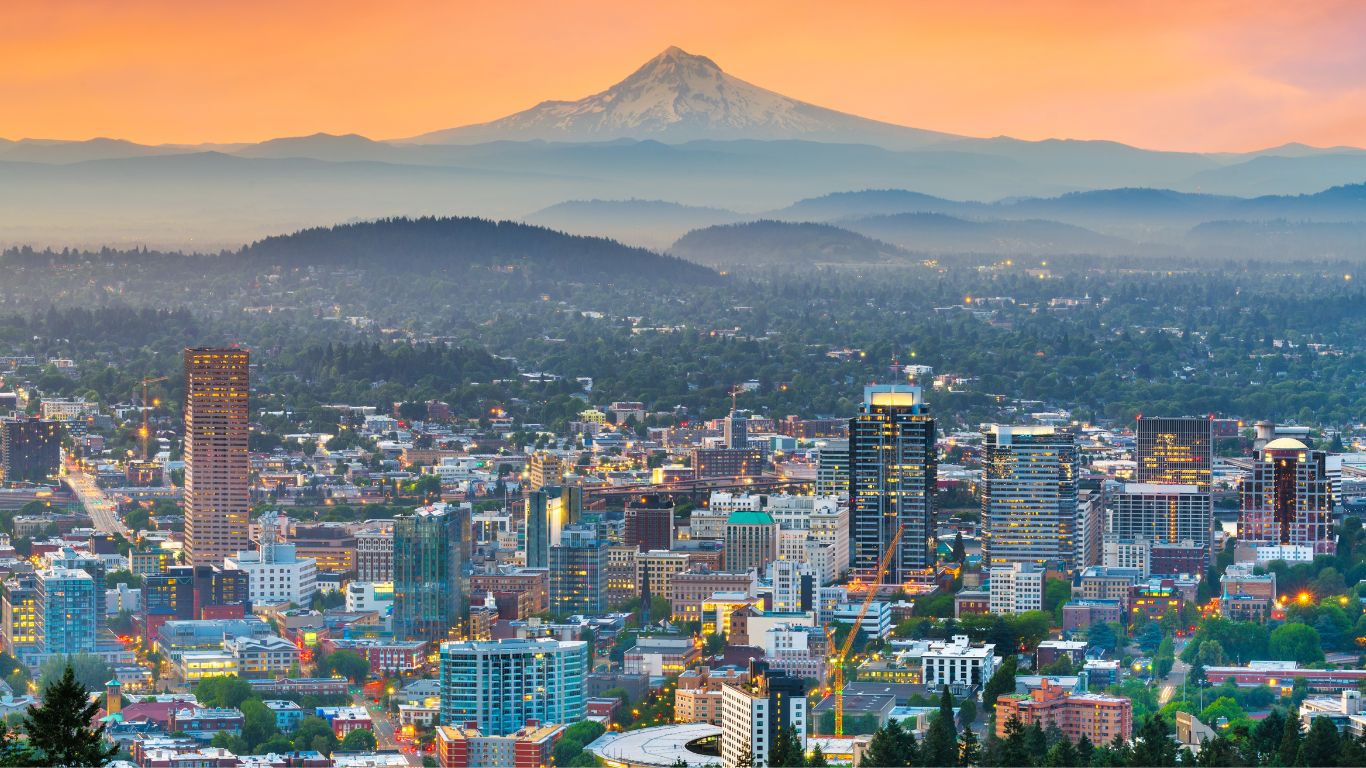

The Portland housing market stands out for its blend of growth potential, sustainability initiatives, and vibrant community life.
Renowned for its diverse neighborhoods, expansive green spaces, and progressive urban planning, Portland has become a top choice for homebuyers seeking quality of life and investors looking for long-term value.
As we move into 2026, several key trends and economic factors, including housing supply, affordability challenges, and sustainable development projects, are set to shape Portland’s real estate trajectory.
In this comprehensive analysis, you’ll find current market dynamics, crucial statistics, and forward-looking forecasts to help you make smart decisions whether you’re buying, selling, or investing in this ever-evolving market.
Table of Contents
Article Summary
Portland’s housing market is forecast for steady growth through 2026, driven by strong demand, limited supply, and economic resilience. Home prices are expected to keep rising, albeit more moderately, with the current median price sitting around $540,000. Key neighborhoods like Pearl District and Alberta Arts District stay highly desirable, with robust appreciation and quick sales. The rental market is thriving too, with average rents climbing to $1,750 per month and vacancy rates staying low. Despite challenges like high interest rates and limited new construction, Portland offers you solid opportunities as both a buyer and an investor.
Overview of the Portland Housing Market
Portland’s housing market in 2024 is competitive, driven by strong demand, limited supply, and a dynamic economy that makes it one of the top US cities to invest in real estate right now. Home prices keep climbing, though at a more moderate pace than in previous years, while inventory stays tight, sparking bidding wars in some neighborhoods. If you’re a seller, conditions are largely in your favor. If you’re a buyer, especially in high-demand areas, you’ll need to move fast and come prepared.
Median Home Prices
As of December 2024, Portland’s housing market has seen a modest uptick in home prices compared to the year before.
- Median Sale Price: Approximately $509,000, reflecting a 1.8% increase year-over-year.
- Median Home Value: Around $527,584, marking a 0.4% rise over the past year.
- Median Home Sold Price: Approximately $542,392, indicating a 1.9% increase from the same period last year.
That modest appreciation, paired with a slight increase in the time properties sit on the market, points to a more balanced environment overall. Buyers may find more room to negotiate than in recent years, though sellers will want to calibrate their expectations accordingly.

This growth rate sits well below the double-digit surges that followed the COVID-19 pandemic, but it still signals a stable market. Certain neighborhoods are outpacing the average thanks to strong demand and desirable amenities that keep buyers coming back.
- Northeast Portland: The median home price in Northeast Portland has reached around $620,000, up 3.2% from the previous year. This area attracts buyers with its mix of historic homes, walkability, and proximity to downtown.
- Southeast Portland: In Southeast Portland, the median home price is about $580,000, reflecting a 3% year-over-year increase. The neighborhood’s eclectic vibe, diverse community, and access to local shops and restaurants continue to make it a popular choice for both new and seasoned buyers.
- Southwest Portland: Southwest Portland, known for its family-friendly environment and larger lots, has a median home price of approximately $650,000, marking a 2% rise over the past year. This area remains attractive to families looking for suburban amenities within city limits.
Inventory Levels
Portland keeps running short on available homes. Active listings sit at around 3,200 properties, down 5% from last year. That tight supply keeps competition fierce, and if you’re shopping in a high-demand neighborhood, expect to face multiple-offer scenarios.
The lack of new construction, especially in affordable housing segments, makes the inventory crunch worse. Builders are up against rising material costs, labor shortages, and regulatory hurdles that slow new development to a crawl. The result is a wide demand-supply gap, hitting hardest for homes priced between $400,000 and $600,000.
Days on Market
As of December 2024, homes in Portland are spending slightly more time on the market than they did a year ago.
Key Market Indicators
Median Days on Market (DOM): Homes are typically selling after 31 days, up from 27 days last year, pointing to a modest slowdown in overall market activity.
That rise in DOM suggests a more balanced market, giving you a bit more breathing room to make informed decisions. Still, well-priced homes in desirable neighborhoods continue to attract serious interest and often move quickly.

Neighborhoods like Pearl District and Hawthorne Boulevard are seeing even faster turnover, with many homes selling in under 30 days. Buyers in those areas are acting fast, often going over asking price to edge out the competition. That urgency reflects how tight supply and rising prices are pushing buyers to commit quickly.
Neighborhood Analysis
Portland’s neighborhoods each carry their own character, price points, and market rhythm. If you want to navigate this market well, understanding those differences gives you a real edge, whether you’re buying, selling, or building a portfolio.
Pearl District
The Pearl District stays one of Portland’s most desirable and upscale addresses. Known for its modern condos, loft-style apartments, and a vibrant cultural scene, it draws a mix of professionals, retirees, and affluent families. The median home price here sits at around $800,000, up 3.5% from the previous year.
The neighborhood’s appeal comes from its proximity to downtown, high-end shopping, fine dining, and art galleries. Demand for Pearl District properties stays strong, with many homes selling above asking. Investors keep coming back here for a reason: steady appreciation and a robust rental market make it a reliable long-term play.
Alberta Arts District
The Alberta Arts District is another high-demand pocket of the city, especially popular for its artistic energy and community-driven culture. The median home price here sits at around $550,000, reflecting a 4% year-over-year increase. That growth is fueled by the area’s unique appeal, including art galleries, boutique shops, and a diverse dining scene.
Homes in the Alberta Arts District regularly attract multiple offers and sell fast. Buyers are drawn to the neighborhood’s creative spirit, walkability, and tight-knit community. It continues to pull in young professionals, families, and artists, holding its place as one of Portland’s most coveted locales.
Hawthorne Boulevard
Hawthorne Boulevard blends vintage charm with modern conveniences, making it a compelling choice if you’re after eclectic, characterful living. The median home price here is around $610,000, up 3% from last year. The area is known for its historic Craftsman homes, independent shops, and a thriving local business scene.
Hawthorne’s central location and lively atmosphere make it a magnet for young professionals and families. Strong demand keeps the market competitive, with homes often selling within days of hitting the market. If you’re targeting this neighborhood, you’ll want to move decisively, especially on move-in-ready properties.
Sellwood-Moreland
Sellwood-Moreland, tucked along the Willamette River, is a family-friendly neighborhood celebrated for its historic homes, parks, and easy access to outdoor activities. The median home price here sits at around $630,000, up 2.8% from the previous year.
This area appeals to buyers who want a quieter, more suburban feel without leaving the city behind. Demand stays strong, especially among families prioritizing good schools and green space. Limited inventory has pushed prices up, making Sellwood-Moreland one of the more competitive corners of the Portland market.
| Neighborhood | Median Listing Home Price | Listing $/SqFt |
|---|---|---|
| Southwest Hills | $1.1M | $357 |
| Hazelwood | $405K | $277 |
| Downtown Portland | $475K | $436 |
| Lents | $437.5K | $300 |
| Pearl | $800K | $470 |
| Centennial | $413.5K | $290 |
| Montavilla | $424.9K | $317 |
| South Portland | $627.5K | $382 |
| Pleasant Valley | $568.9K | $301 |
| Powellhurst-Gilbert | $419K | $262 |
| Northwest District | $427.5K | $401 |
| St. Johns | $454.9K | $325 |
| Cully | $427.5K | $308 |
| Northwest Heights | $985K | $294 |
| Sellwood-Moreland | $630K | $369 |
| Hillsdale | $804.5K | $319 |
| Brentwood-Darlington | $430K | $356 |
| Wilkes | $464K | $258 |
| Hillside | $1.2M | $400 |
| Goose Hollow | $324K | $356 |
Portland Rental Market Overview
Portland’s rental market is shifting too, shaped by rising home prices, changing demographics, and broader economic pressures. As buying a home gets harder for many residents, more people are choosing to rent, and that surge in demand is reshaping the rental landscape across the city.
Average Rent Prices
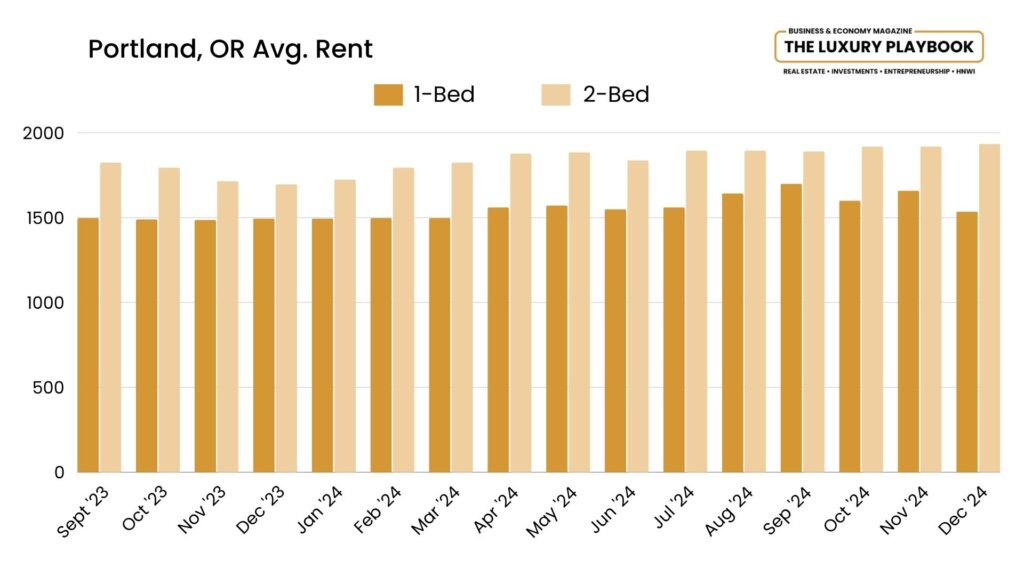
As of December 2024, average rent prices across Portland have shifted across apartment sizes in ways worth paying attention to.
- Studio Apartments: Approximately $1,272 per month, reflecting a 3% increase from the previous year.
- One-Bedroom Apartments: Around $1,535 per month, marking a 3% increase year-over-year
- Two-Bedroom Apartments: About $1,936 per month, indicating a significant 14% increase compared to the same period last year.
- Overall Median Rent: The median rent for all property types and bedroom counts is $1,550, which is 4% higher than the previous year and 18% lower than the national average.
Rents are trending upward across the board, with two-bedroom apartments seeing some of the steepest increases over the past year. Limited housing inventory, sustained demand, and economic conditions are all pushing rents higher.
Oregon has put rent control measures in place to protect tenants from steep hikes. For calendar year 2024, the maximum allowable rent increase is capped at 10%, combining a base increase of 7% with the Consumer Price Index.
Landlords can only raise rent once within any 12-month period, which gives renters a meaningful level of predictability in their housing costs.
Rent prices vary widely depending on the neighborhood, property type, and what amenities come with the unit.
- Downtown Portland: In the downtown area, the average rent for a one-bedroom apartment is about $2,100 per month, driven by high demand for urban living.
Proximity to employment centers, public transportation, and entertainment options make downtown a popular choice for young professionals. - Pearl District: In the Pearl District, the average rent for a two-bedroom apartment is around $3,000 per month. The area’s upscale reputation, coupled with its amenities and vibrant nightlife, commands a premium rent rate.
- Alberta Arts District: The Alberta Arts District offers slightly more affordable rentals, with average rents for a one-bedroom apartment around $1,800 per month. The neighborhood’s creative atmosphere and community feel attract a diverse range of renters, including artists, young families, and students.
Vacancy Rates
Portland’s rental market is running tight right now, with the vacancy rate sitting at roughly 4.5%, down from 5% the prior year. Available units get snapped up quickly, often drawing multiple applications at once.
A few key factors are driving those low vacancy rates.
- Limited New Rental Construction: New rental developments in Portland have not kept pace with demand, particularly in affordable and mid-range segments. This shortage has led to increased competition for existing rental properties, keeping vacancy rates low and driving rent prices higher.
- Increased Demand from Homebuyers: Rising home prices and mortgage rates are pushing more individuals and families to rent rather than buy. This trend is especially common among younger professionals who may not have the financial means for a down payment or prefer the flexibility of renting.
Additionally, some potential homebuyers delay purchasing homes, expecting possible market corrections or further interest rate increases, further increasing demand for rental housing. - Economic and Demographic Shifts: Portland’s strong economy, anchored by sectors like technology, healthcare, and green industries, continues to attract new residents. Many of these newcomers, particularly younger workers and families, choose to rent before deciding to buy a home.
This influx of residents further boosts demand for rental housing, especially in neighborhoods near employment centers and public transportation.
Factors Influencing the Portland Housing Market
Several forces are shaping Portland’s housing market right now, and understanding them will help you read where the market is headed over the next few years.
Economic Conditions
Portland’s economy is holding up well, backed by diverse sectors including technology, healthcare, manufacturing, and green industries. The city has built a strong reputation as a hub for innovation and sustainability, which keeps attracting both businesses and talent. As of August 2024, Portland’s unemployment rate sits at around 4.3%, slightly below the national average, pointing to a healthy job market that supports housing demand.
But inflation and rising interest rates are creating real headwinds. The Federal Reserve’s moves to rein in inflation have pushed mortgage costs higher, squeezing affordability for many buyers. Inflation peaked around 8% in 2022 and has since come down, but elevated costs for food, energy, and housing are still putting pressure on household budgets and tempering buyer and renter activity.
Population Growth and Demographics
Portland’s population has been growing steadily, and that keeps housing demand elevated. The city’s population stands at around 660,000, while the broader metro area is home to over 2.5 million residents. Quality of life, outdoor recreation, and a strong job market are consistently drawing new residents to the area.
Younger professionals, particularly millennials and Gen Z, are fueling demand in the mid-range and affordable segments. They’re coming for Portland’s progressive culture, walkable neighborhoods, and emphasis on sustainability. Families are drawn by good schools, green spaces, and safe communities, keeping demand strong in more suburban pockets of the city too.
Interest Rates and Mortgage Availability
Interest rates have had a real impact on Portland’s housing market, reshaping both buyer behavior and broader market dynamics. The average rate for a 30-year fixed mortgage sits at around 6.5%, a sharp jump from the pandemic-era lows of 3% to 3.5%. That increase has made borrowing meaningfully more expensive and cut into the purchasing power of many potential buyers.
To put that in perspective, a $500,000 mortgage at 3% would run you around $2,108 per month, not counting taxes and insurance. At 6.5%, that same loan costs roughly $3,160 per month. That’s over $1,000 more every month, and it has pushed some buyers out of the market entirely or steered them toward smaller, less expensive homes.
Higher rates have also tightened lending standards, as lenders reassess their risk exposure. If you’re coming in with a lower credit score or a smaller down payment, qualifying for a loan has gotten harder. That shrinking pool of eligible buyers could take some of the heat off home price growth as the market finds its footing.
New Construction and Development
New construction in Portland has not kept up with the city’s growing appetite for housing, especially in the affordable and mid-range segments. Around 5,500 new housing units were completed across the Portland metro area in 2023, but that figure still falls well short of what demand actually requires as the population keeps growing.
Most new development has skewed toward higher-end properties, including luxury condos and townhomes in neighborhoods like Pearl District and Southwest Waterfront. Those projects serve higher-income buyers well enough, but they do nothing to close the gap for buyers and renters who need affordable or mid-range options.
The affordable housing shortfall is one of Portland’s most pressing real estate challenges. Many buyers priced out of high-demand neighborhoods are being pushed further from the city core or into less expensive areas. And as more residents opt to rent rather than buy, rental demand and prices keep climbing, adding another layer of pressure.
To make a real dent in the inventory shortage, Portland needs a substantial acceleration in new construction, especially at affordable and mid-range price points. Policymakers and developers are exploring zoning changes, density bonuses, and public-private partnerships as potential solutions. But given current construction trends, the inventory crunch is likely to stretch well into 2026.
Portland Housing Market Forecast for 2026
Several trends are poised to define Portland’s housing market in 2026. The market will likely stay competitive, but growth could moderate as economic conditions evolve and new construction initiatives begin to take effect.
Home Price Growth
Home prices in Portland are expected to keep climbing, though at a slower pace than in recent years. Analysts project median home prices could grow by 2% to 3% annually over the next two years. That moderated pace reflects cooling market conditions shaped by higher interest rates, lingering inflation, and broader economic uncertainty.
With a current median home price around $509,000, a 2% annual increase would bring that figure to roughly $518,800 by 2026. At 3% growth, you’re looking at a median closer to $526,200. Those numbers reflect slower growth than what Portland has seen in the past, but they still point to a healthy market worth paying attention to as a buyer or investor.
Inventory and Market Conditions
The inventory shortage in Portland is likely to stick around, keeping upward pressure on prices. Active listings stand at around 3,200 homes, down 5% from the prior year. That gap is most acute in the mid-range and affordable segments, where demand shows no signs of easing.
If new construction picks up speed, particularly in affordable housing, it could take some pressure off supply. But given current construction rates and ongoing regulatory challenges, a meaningful inventory boost in the near term looks unlikely. The market will probably keep favoring sellers, with quick sales and multiple-offer situations staying common in high-demand neighborhoods like Pearl District, Hawthorne Boulevard, and Alberta Arts District.
Rental Market Outlook
Portland’s rental market is expected to stay strong through 2026, with rents continuing their upward trend. As home prices and mortgage rates climb higher, more would-be buyers are likely to stay in the rental market instead, pushing demand even further. That dynamic is especially visible among younger professionals, students, and those who simply prefer the flexibility of renting.
Average rents across Portland sit at around $1,750 per month right now, with projected annual increases of 3% to 4%. By 2026, average rents could reach somewhere between $1,800 and $1,820 per month. In sought-after areas like downtown Portland and Pearl District, rents are expected to run well above those averages thanks to sustained demand for well-located units.
Vacancy rates are forecast to hold near 4.5%, as rental demand stays elevated. Limited new rental supply and a steady flow of new residents coming into the city will keep the market tight. If you own rental property in Portland right now, high occupancy and rising rents are likely to work in your favor for the foreseeable future.
Economic and Demographic Trends
Portland’s economy is expected to hold its own through 2026, backed by a diverse job market and a strategic position on the West Coast. Technology, healthcare, green energy, and education will keep driving growth, pulling in new residents and sustaining demand for both rental and owner-occupied housing.
That said, broader economic uncertainty, including potential recessions, shifts in federal policy, or further interest rate moves, could create turbulence in the local market. But Portland’s quality of life, sustainability focus, and strong employment base give it a level of resilience that many other cities lack. The steady influx of younger professionals, families, and retirees will keep demand alive across housing segments, from entry-level homes right up to high-end condos. You can also see similar dynamics playing out in Houston’s real estate market, where demographic shifts are reshaping buyer demand in comparable ways.
Is It Worth Buying A Property In Portland?
Yes, buying property in Portland is worth serious consideration. The market is set for steady growth through 2026, with home prices rising on the back of strong demand, limited inventory, and a healthy economy. The rental market also stays robust, with climbing rents and low vacancy rates making Portland an attractive option whether you’re buying a home to live in or building a portfolio with an eye on stable returns and future appreciation.
Other Market Forecasts and Overviews
San Diego Housing Market Forecast & Analysis
Dallas Housing Market Forecast & Analysis
Austin Housing Market Forecast & Analysis
San Jose Housing Market Forecast & Analysis
Indianapolis Housing Market Forecast & Analysis
San Francisco Housing Market Forecast & Analysis
San Antonio Housing Market Forecast & Analysis
Seattle Housing Market Forecast & Analysis
Philadelphia Housing Market Forecast & Analysis
Denver Housing Market Forecast & Analysis
Phoenix Housing Market Forecast & Analysis
Oklahoma Housing Market Forecast & Analysis
Nashville Housing Market Forecast & Analysis
El Paso Housing Market Forecast & Analysis
Houston Housing Market Forecast & Analysis
Columbus Housing Market Forecast & Analysis
Las Vegas Housing Market Forecast & Analysis
Sacramento Housing Market Forecast & Analysis
Baltimore Housing Market Forecast & Analysis
Boston Housing Market Forecast & Analysis