Spend five minutes with a serious watch collector and you quickly discover something rather unexpected. Very little of the conversation is actually about telling the time. Instead, it revolves around reference numbers, production years, original dials, movement calibres, service histories and whether somebody made the unforgivable decision to polish the case twenty years ago. Entire friendships have probably been tested over replacement bezels and faded lume.
It is a wonderfully obsessive world, and I mean that as a compliment, because collectors understand something that extends far beyond watches. Details matter.
Key Takeaways
- Luxury watches have moved from expressions of craftsmanship to recognised financial assets, and the secondary market has become a sophisticated international ecosystem in the process.
- The qualities that make exceptional watches attractive to legitimate collectors are the same qualities that attract financial criminals. They are portable, internationally recognised, relatively liquid and capable of holding considerable value. That does not make watches suspicious. It makes them significant.
- Collectors were asking sophisticated verification questions long before regulators arrived. Original dial, correct service history, complete box and papers, trustworthy provenance. Every answer reduces uncertainty and increases confidence.
- Compliance simply extends that thinking beyond the watch. Beneficial ownership, source of wealth and source of funds are becoming as important as certificates of authenticity, and they pursue the same objective.
- For family offices the logic is familiar, because watches rarely sit in isolation. They belong alongside art, jewellery, classic cars, wine and property in a strategy for preserving wealth across generations.
- Two outwardly identical watches can command dramatically different prices because one has a complete ownership history and the other has an interesting anecdote. Documentation was never bureaucracy. It is part of the asset.
- Who: Collectors, dealers, auction houses, advisers and family offices operating in the secondary watch market.
- What: Why anti money laundering expectations have reached watch transactions, and why the discipline it demands is one collectors already practise.
- When: Now, as high value dealers and auction intermediaries fall under registration and reporting regimes in the major markets.
- Where: Across the international secondary market, from auction rooms and established dealers to private sales between collectors.
- Why: Because the market has stopped asking only whether the watch is authentic and started asking whether the ownership and the transaction are authentic too.
Table of Contents
- A Watch Became a Financial Asset
- Why Regulators Started Paying Attention
- Collectors Were Already Asking
- What Compliance Actually Asks For
- Why Family Offices Recognise the Logic
- Compliance Does Not Remove the Romance
- The Paperwork Tells the Story
- Frequently Asked Questions
A Watch Became a Financial Asset
Luxury watches have quietly undergone one of the most remarkable transformations in modern private wealth. Once regarded primarily as expressions of craftsmanship and personal taste, they are now recognised as significant financial assets capable of preserving, and in many cases increasing, wealth over time.
Waiting lists stretch into years, auction records continue to surprise even seasoned collectors, and certain references command prices capable of purchasing homes in many parts of the world. Unlike property, they require little space. Unlike art, they do not require climate controlled walls. Yet they can represent extraordinary value while sitting quietly inside a safe or beneath a shirt cuff.
That evolution has transformed the secondary market into a sophisticated international ecosystem. Collectors, dealers, auction houses and family offices increasingly view exceptional watches alongside art, jewellery, wine, classic cars and property as part of broader wealth portfolios. The brands driving that secondary market are now tracked with the same attention an equity analyst gives a listed sector, and price movements across the major references are reported as market news rather than as enthusiast gossip.
Why Regulators Started Paying Attention
Perhaps that explains why regulators have started paying closer attention.
The qualities that make exceptional watches attractive to legitimate collectors are, unfortunately, the same qualities that can attract financial criminals. They are portable, internationally recognised, relatively liquid and capable of preserving considerable value. That does not make luxury watches suspicious. It simply makes them significant.
The regulatory architecture has followed accordingly. The standards published by the Financial Action Task Force bring dealers in high value goods into scope, and the major markets have implemented that in their own way. In the United Kingdom, businesses trading in high value goods above the cash threshold must complete high value dealer registration with HMRC. In the United States, FinCEN administers the equivalent reporting obligations.
None of this is unique to watches. It is the same pressure that reached the art market and, more recently, yacht ownership structures. Watches simply happen to be the most portable member of the category.
Collectors Were Already Asking
Interestingly, serious collectors have always understood that confidence is built rather than assumed. Long before regulators became interested in the secondary market, collectors were already asking remarkably sophisticated questions.
Is the dial original? Has the movement been serviced correctly? Are the box and papers complete? Can the provenance be trusted?
Every answer reduces uncertainty and increases confidence. Two outwardly identical watches can command dramatically different prices simply because one has a complete ownership history while the other relies on little more than an interesting anecdote. The infrastructure supporting those questions has grown accordingly, and databases such as The Watch Register now allow a serial number to be checked against recorded thefts before money changes hands.
Collectors have always understood that documentation is not bureaucracy. It is part of the asset itself. The same conclusion has been reached independently in adjacent markets, where origin has replaced quality as the opening question.
What Compliance Actually Asks For
Compliance simply asks us to extend that same thinking beyond the watch.
Increasingly, dealers, auction houses, advisers and family offices are expected to understand not only the authenticity of the timepiece but also the legitimacy of the transaction surrounding it. Questions surrounding beneficial ownership, source of wealth and source of funds are becoming every bit as important as service histories and certificates of authenticity.
They are different questions, but they pursue exactly the same objective. Confidence.
In practice this means the established auction route, where houses such as Phillips already operate full onboarding procedures, now carries an advantage it did not obviously have a decade ago. The checks that once looked like friction have become part of what a buyer is paying for.
Why Family Offices Recognise the Logic
For family offices, that evolution feels entirely logical, because watches rarely exist in isolation. They often sit alongside collections of art, jewellery, classic cars, wine and property as part of a broader strategy for preserving wealth across generations.
A carefully assembled collection may represent personal achievement today, but tomorrow it may become part of a family’s legacy, a charitable donation, collateral for lending or an asset transferred to the next generation. Anyone who has taken a collection to market knows how quickly incomplete records translate into a discount.
Stewardship therefore extends well beyond protecting the watch itself. It includes preserving documentation, maintaining valuations, recording acquisitions and ensuring ownership can be understood decades after the original purchase. Increasingly, the information accompanying the collection is becoming almost as valuable as the collection itself, which is the same shift now visible in how firms are being judged on the quality of their records.
Compliance Does Not Remove the Romance
One of the biggest misconceptions I encounter is that compliance somehow removes the romance from collecting. I have never believed that. If anything, it protects it.
Collectors have always paid a premium for certainty. Original papers matter. Service histories matter. Auction records matter. Provenance matters. Those documents do not diminish the pleasure of owning an exceptional watch. They strengthen confidence in the story it tells.
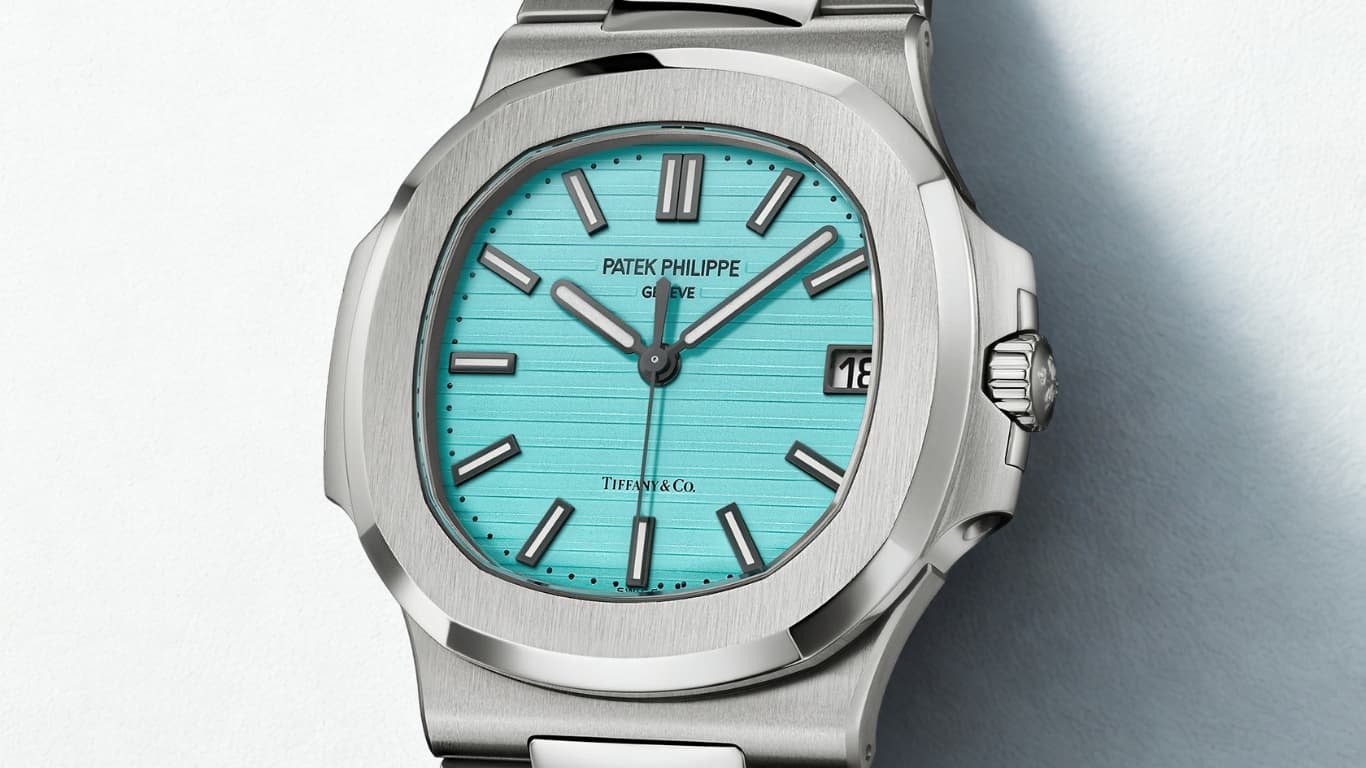
Governance simply applies that same thinking to the ownership journey itself, ensuring future owners, insurers, lenders and advisers can have the same confidence as today’s collector. It is why the pre owned market has held its position so firmly, and why the best documented examples of a reference such as the Nautilus 5711 consistently outperform their less well recorded siblings.
The Paperwork Tells the Story
Perhaps that is why I have never viewed governance as the opposite of collecting. The finest collectors are already exceptional custodians. They preserve history, value authenticity, document provenance and think in generations rather than transactions. That sounds remarkably like stewardship to me.
The finest watches will always be admired for their engineering, craftsmanship and enduring beauty. What has changed is our understanding of what creates lasting value. It is no longer enough to know that the watch itself is authentic. Increasingly, the market expects the ownership, the documentation and the transaction to be every bit as authentic as the movement beating beneath the dial.
After all, a watch tells the time. The paperwork tells the story. In a market where confidence has become every bit as valuable as craftsmanship, that story may prove to be the most valuable asset of all.
Frequently Asked Questions
Why do anti money laundering rules apply to luxury watches?
Because watches share the characteristics regulators watch for in any store of value. They are portable, internationally recognised, relatively liquid and capable of holding substantial value in a very small object. Financial Action Task Force standards bring dealers in high value goods into scope, and the major markets implement that through registration and reporting duties, such as high value dealer registration with HMRC in the United Kingdom and FinCEN reporting in the United States.
What documentation should accompany a luxury watch at sale?
The original box and papers, the warranty or certificate of authenticity, the full service history with dated records from an authorised service centre, any auction or dealer invoices establishing the chain of ownership, and current valuations for insurance. Where the reference is significant, exhibition or publication records add further weight. Two identical watches routinely price differently on the strength of this file alone.
What do dealers mean by source of wealth and source of funds?
Source of wealth explains how the buyer’s overall wealth was generated, such as a business sale, professional income or inheritance. Source of funds explains where the specific money for this purchase came from and how it reached the account being used. They are separate questions, and a compliant dealer or auction house is expected to satisfy itself on both, alongside identifying the beneficial owner behind any company or trust involved.
Does compliance reduce the value of a watch collection?
The opposite, in practice. A collection with clean, complete records moves faster, reaches a wider buyer pool, supports lending against it, and transfers between generations without the delays that undocumented ownership creates. The cost falls on collections assembled without records, where a future sale, insurance claim or estate transfer becomes considerably harder to evidence.
We last reviewed this analysis in August 2026.


Mitzi Danielson-Kaslik
Mitzi Danielson-Kaslik is a governance, risk, and compliance consultant specialising in financial crime, operational resilience, and organisational risk culture. She is the recipient of an Outstanding Achievement Award in AML and currently serves as Chair of the IoD Isle of Man Emerging Leaders group. Her work focuses particularly on the intersection between governance, human behaviour, and decision-making under pressure, with a strong interest in how modern institutions manage ambiguity, scrutiny, and trust. Alongside her consultancy work, Mitzi writes and speaks on private wealth, leadership, systems thinking, and the invisible operational structures that underpin high-performing organisations. Her writing combines regulatory and governance insight with a broader perspective on credibility, resilience, and institutional behaviour in increasingly transparent environments.