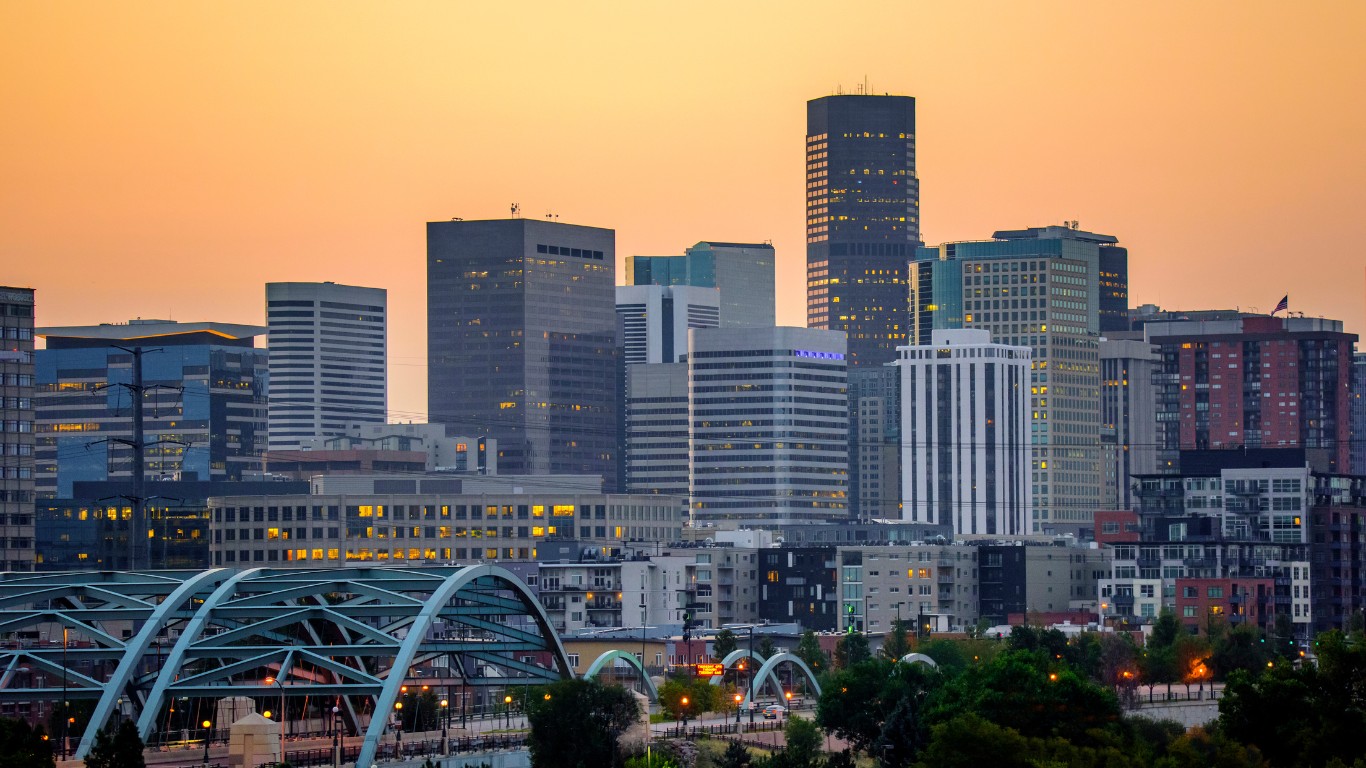

The Denver real estate market in 2026 reflects the city’s identity as a dynamic and fast-evolving urban center. After a stretch of real volatility driven by rising interest rates and shifting buyer behavior, Denver is now entering a period of recalibration — and for the right buyer, that spells opportunity.
Affordability is still a genuine concern for first-time buyers. But the market’s fundamentals are solid, backed by strong job growth, population expansion, and a lifestyle that keeps pulling in remote workers, young families, and entrepreneurs from across the country.
Denver has long stood apart from other U.S. metros with its rare mix of urban energy and outdoor access. As of Q1 2026, the market is showing clear signs of renewed momentum.
Home values are stabilizing. Buyer confidence is recovering. And rental demand? Still running hot.
Denver real estate is no longer overheating, but its resilience is hard to ignore. If you’re a strategic buyer with a long-term view, the current environment offers genuine buying opportunities that align with broader economic stabilization and Denver’s enduring lifestyle appeal. You can also explore how global real estate markets compare if you’re weighing your options across borders.
Table of Contents
Overview of The Denver Real Estate Market
As of Q1 2026, Denver’s housing market is in a stabilization phase following a cooling period that kicked off in late 2022. The double-digit annual price gains of the pandemic era are gone, but the market underneath is still fundamentally strong.
Moderate appreciation, tight inventory, and resilient demand are the defining traits heading deeper into 2026.
The current median home price in Denver sits at approximately $561,000, reflecting a 1.8% year-over-year increase.
That kind of moderate growth signals a healthier, more sustainable market. For long-term investors and buyers looking to enter at a point of relative balance, the timing is more favorable than it’s been in years.
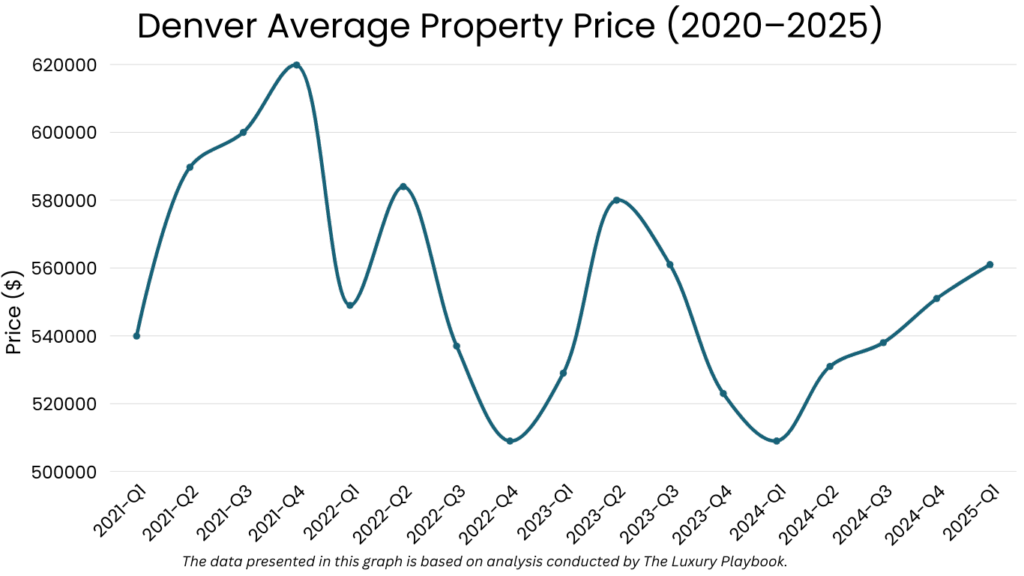
Homes are selling at an average of $370 per square foot, with neighborhoods close to downtown or transit hubs commanding noticeably higher premiums. Properties are typically staying on the market for around 35 days, a modest improvement from early 2025 that points to growing buyer engagement.
About 28% of Denver homes are selling above listing price. That tells you the market isn’t frenzied like it was a few years ago, but demand is still steady in the areas people actually want to live. Inventory stays constrained, with active listings running roughly 22% below pre-pandemic norms, which continues to put upward pressure on prices.
Here’s what defines the Denver market as of 2026
- Moderate Price Growth: Healthy appreciation in the 1.5%–3% range.
- Inventory Constraints: New listings remain below demand.
- Buyer Opportunity: Less competition compared to 2021–2022 peaks.
- Investment Viability: Rental demand and limited housing supply support long-term ROI.
Overall, Denver real estate offers a more balanced environment than anything you’ve seen in recent years. For investors, this phase is worth paying attention to. You can acquire properties with real long-term appreciation potential and strong rental performance, especially in transit-oriented and revitalizing neighborhoods. London’s wealthiest investors are already making similar moves in their own market.

Neighborhood Analysis
Denver’s housing market is defined by the sheer diversity of its neighborhoods. You’re looking at a range that runs from upscale historic districts to rapidly developing urban hubs, and each one carries a distinct investment profile, lifestyle draw, and price point.
Cherry Creek
Cherry Creek stands out as one of Denver’s most luxurious and sought-after neighborhoods. Its blend of high-end shopping, dining, and modern residential properties draws affluent buyers and investors focused on luxury rentals. The median home price in Cherry Creek sits at around $1.2 million, reflecting a 3.2% increase year-over-year.
Demand is high here, especially for new developments and townhomes. Many of these properties attract cash buyers and second-home purchasers who aren’t waiting around for mortgage rates to drop.
Capitol Hill
Capitol Hill offers a more accessible entry point, with a dense mix of condos, historic homes, and multifamily buildings. Its proximity to downtown and cultural amenities makes it a go-to for young professionals. The median home price in Capitol Hill is approximately $470,000, up 1.7% from 2025.
Highlands
Highlands is one of Denver’s trendiest neighborhoods, known for its walkability, restaurant scene, and renovated bungalows. The median home price here is about $820,000, with prices rising 2.5% year-over-year.
Listings in Highlands frequently draw multiple offers, especially those that blend historic charm with modern updates. If you’re looking for a neighborhood with both lifestyle and investment appeal, Highlands delivers on both.
Sloan’s Lake
Sloan’s Lake has seen rapid development in recent years, with new condos and townhomes rising along the lakefront. The median home price is around $735,000, up 2.2% from the previous year. Investor interest here is growing fast thanks to the scenic setting, recreation access, and real appreciation potential.
Park Hill
Park Hill blends suburban calm with city proximity, making it a favorite for families seeking larger lots and traditional homes. The median home price in Park Hill is $775,000, up 1.9% year-over-year. Investor interest is rising here too, driven by strong rental demand and steady value growth.
Neighborhood Median Prices and Price per SqFt
Denver_Neighborhood_Home_Prices_2025.csv
Denver Rental Market Overview
Denver’s rental market in 2026 is competitive and landlord-favorable. Affordability constraints in the for-sale market, a steady stream of young professionals, and limited rental inventory are all doing the heavy lifting. Rising mortgage rates have kept many would-be buyers renting longer, pushing demand higher across both multifamily units and single-family rentals throughout the metro.
Average Rent Prices in Denver
As of Q1 2026, here’s where average rent prices in Denver stand
- Studio Apartments: Approximately $1,585/month
- One-Bedroom Apartments: Around $1,935/month
- Two-Bedroom Apartments: About $2,480/month
- Three-Bedroom Apartments: Roughly $3,290/month
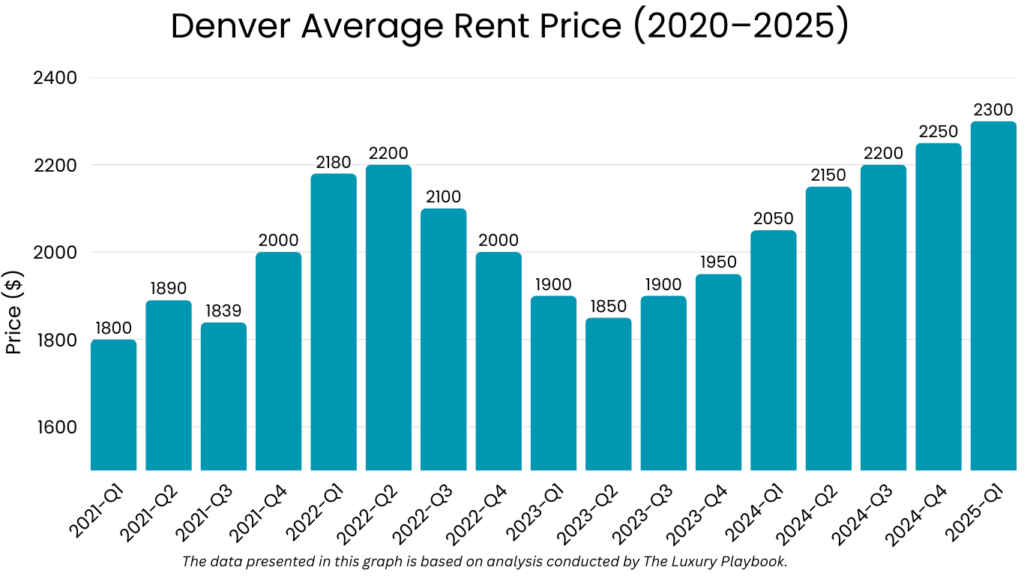
These figures reflect an overall 3.4% year-over-year increase, driven by inflationary pressures, limited rental construction, and sustained demand across all unit types. Rent growth is sharpest in neighborhoods with proximity to employment hubs, public transportation, and lifestyle amenities. Bloomberg’s coverage of U.S. rent trends puts Denver’s performance in useful national context.
Rent by Neighborhood
- Downtown Denver: One-bedroom apartments average $2,400/month, due to proximity to business centers, nightlife, and transit.
- Capitol Hill: Rent for one-bedrooms averages $1,850/month, attracting students and young professionals seeking walkability and culture.
- Highlands: Two-bedroom units rent for about $2,700/month, reflecting the area’s popularity among professionals and families.
- Five Points: One-bedroom apartments average $2,050/month, benefiting from redevelopment and proximity to downtown.
- University Hills: More affordable, with one-bedroom rents averaging $1,645/month, appealing to students and remote workers.
Vacancy Rates
The vacancy rate in Denver as of Q1 2026 sits at 4.2%, slightly down from 4.5% the year before. That drop reflects steady absorption, especially in desirable neighborhoods with limited new development. Rents are expected to keep climbing modestly through the rest of 2026 as inventory stays tight and demand from relocating professionals and renters priced out of homeownership holds firm.
Drivers of Rental Demand
A few core factors are keeping Denver’s rental market strong
- High Home Prices: With median home values above $560,000, many households opt to rent rather than buy.
- Tech and Healthcare Employment Growth: Influx of skilled workers fuels demand for well-located rentals.
- Lifestyle Flexibility: Renters prioritize urban convenience, amenities, and flexibility, especially in transitional job markets.
- Slow Rental Construction: Regulatory hurdles and rising construction costs continue to limit the pace of new rental supply.
Overall, Denver ranks as a top-tier market for rental investment. Rising rents, low vacancies, and a young, mobile population all support solid landlord performance year after year.
Factors Influencing the Denver Housing Market
A set of interlinked factors is shaping where the Denver housing market goes from here. From macroeconomic conditions to regional demographic trends and city-specific policies, these elements collectively drive buyer behavior, investment appetite, and price stability across the metro.
- Elevated Mortgage Rates: Mortgage rates remain one of the most significant influences on buyer sentiment. As of Q1 2025, the average 30-year fixed rate sits around 6.6%, down slightly from late 2024 but still considerably higher than pandemic-era lows. This environment limits affordability, particularly for first-time buyers, and contributes to the growing rental population.
- Limited Housing Inventory: Supply remains constrained across much of Denver. Active listings are down by approximately 20% compared to pre-pandemic levels. Permitting and zoning challenges, along with rising construction costs, have slowed the development pipeline. This supply shortage is especially acute for entry-level homes priced under $500,000, keeping prices firm despite moderate demand.
- Tech and Healthcare Job Growth: Denver’s economy continues to benefit from its robust job market, particularly in tech, aerospace, energy, and healthcare sectors. Major employers such as Lockheed Martin, Oracle, and UCHealth support local wage growth and attract skilled professionals. This steady employment base provides a strong foundation for housing demand in both ownership and rental segments.
- Population Growth and Migration: Although population growth has slowed slightly from its 2010s peak, Denver continues to attract newcomers from high-cost cities like San Francisco, Los Angeles, and Chicago. Many new residents are drawn by the city’s quality of life, outdoor amenities, and relatively affordable home prices compared to West Coast metros. This inward migration fuels steady demand across a range of housing types.
- Urban Redevelopment and Transit Expansion: Infrastructure investments—such as light rail expansions and urban redevelopment initiatives in RiNo, Five Points, and Broadway—are enhancing accessibility and livability across the city. These projects are transforming underutilized neighborhoods into desirable live-work-play environments, driving both homebuyer interest and investor activity.
- Local Regulation and Zoning: Denver’s approach to zoning reform and density initiatives continues to evolve. Policies encouraging Accessory Dwelling Units (ADUs) and mixed-use development are gaining traction, particularly in high-demand areas. However, ongoing regulatory hurdles still limit large-scale multifamily construction, adding pressure to both home prices and rents.
Denver Housing Market Forecast for 2026
As Denver’s housing market moves deeper into 2026, the key indicators point toward moderate, sustainable growth. After a period of correction and stabilization, you can expect a balanced market shaped by gradual price appreciation, tight inventory, and steady rental demand.
Home prices in Denver are expected to keep rising modestly over the next 12 months. Current forecasts put the increase at 2.5% to 3.2% in median home values by early 2027. With a current median price of $561,000, that translates to a projected range of $575,000 to $579,950 within the next year. This kind of growth marks a return to normalized appreciation, well below the rapid spikes of 2021 to 2022, but still healthy enough to support long-term equity gains.
Buyer demand will likely be strongest in neighborhoods with access to transit, good schools, and mixed-use amenities. If you’re shopping in those zones, be ready to move decisively.
Denver’s inventory is expected to stay tight throughout 2026, driven by limited new construction, restrictive zoning, and high land costs. As of Q1 2026, active listings are still roughly 20% below pre-2020 levels, and that shortage isn’t getting resolved anytime soon.
Homes will keep moving quickly in competitive neighborhoods, with average days on market hovering between 30 and 35 days. Sellers may gain leverage as buyer activity picks up in spring and summer, though higher mortgage rates will likely cap the most extreme bidding wars.
Expect buyer-friendly conditions in less central neighborhoods, while high-demand zones like Highlands, Washington Park, and Cherry Creek stay competitive and premium-priced.
Denver’s rental market looks strong through 2026, underpinned by sustained demand and minimal new supply. Rental prices are projected to increase by 3.5% to 4.0%, especially in areas close to downtown, universities, or transit corridors. With current average rents at $1,935 for one-bedroom and $2,480 for two-bedroom units, you’re looking at rents potentially rising to approximately $2,010 to $2,020 and $2,570 to $2,580 respectively over the coming year.
Vacancy rates are expected to stay low, between 4.0% and 4.3%, as limited construction of mid-tier and affordable rentals keeps demand elevated. If you’re invested in well-positioned multifamily or single-family rentals, strong occupancy and year-over-year income growth are very much within reach.
Denver’s pull on remote workers, millennials, and transplants from higher-cost cities will stay one of the market’s defining strengths through 2026. Forbes has flagged Denver as one of America’s most resilient real estate markets, and job creation in tech, aerospace, energy, and healthcare continues to bolster housing demand, especially among young professionals and relocating families.
Affordability constraints and interest rate sensitivity are real headwinds. But the underlying fundamentals of the Denver real estate market are solid. Investment in infrastructure and transit connectivity will further support value appreciation, particularly in emerging neighborhoods undergoing redevelopment.
Is It Worth Buying a Property in Denver?
Yes. Buying property in Denver in 2026 is still a solid long-term investment, especially if you’re seeking capital appreciation, rental income, and portfolio diversification in a stable, growing metro.
Home prices have risen a lot over the past decade, but the pace has moderated, and that creates real openings for strategic buyers. With the median home price at approximately $561,000 and projected to increase by up to 3.2% over the next year, Denver real estate offers healthy appreciation potential without the overheating risk of previous years. Comparing Denver to other growing markets like Zaragoza gives you a useful sense of how different cities are performing right now.
Limited housing supply and robust population growth, driven by young professionals and remote workers relocating from pricier markets, keep fueling demand across both ownership and rental segments. High interest rates have pushed out speculative buyers, which actually works in your favor. Qualified buyers can negotiate better terms and position for long-term gains in a way that wasn’t possible during the frenzy years.
For real estate investors, Denver’s rental market is where the real action is. One-bedroom apartments rent for an average of $1,935 per month, and with rents expected to grow 3.5% to 4.0% over the next year, income-producing properties offer consistent returns. The Financial Times has outlined why income-producing real estate in supply-constrained metros tends to outperform over time, and Denver fits that profile well. Vacancy rates, currently around 4.2%, are projected to stay low, especially in central and transit-accessible neighborhoods.
Denver’s diversified economy, led by tech, aerospace, energy, and healthcare, gives you long-term economic stability as a foundation. Infrastructure improvements, green space expansion, and continued redevelopment of urban areas like Five Points, RiNo, and Sun Valley are all enhancing the city’s appeal for both homeowners and tenants. Urban redevelopment programs in Denver are actively reshaping the investment calculus in these neighborhoods. If you want to understand how long-term investment thinking applies across asset classes, the same principles that drive equity returns apply directly to real estate in markets like this.
Other Market Forecasts and Overviews
New York City Real Estate Market Overview & Forecast
Chicago Real Estate Market Overview & Forecast
Phoenix Real Estate Market Overview & Forecast
San Antonio Real Estate Market Overview & Forecast
Dallas Real Estate Market Overview & Forecast
Jacksonville Real Estate Market Overview & Forecast
Columbus Real Estate Market Overview & Forecast
Indianapolis Real Estate Market Overview & Forecast
Seattle Real Estate Market Overview & Forecast
Oklahoma Real Estate Market Overview & Forecast
Los Angeles Real Estate Market Overview & Forecast
Houston Real Estate Market Overview & Forecast
Philadelphia Real Estate Market Overview & Forecast
San Diego Real Estate Market Overview & Forecast
Austin Real Estate Market Overview & Forecast
San Jose Real Estate Market Overview & Forecast
Charlotte Real Estate Market Overview & Forecast
San Francisco Real Estate Market Overview & Forecast
Nashville Real Estate Market Overview & Forecast
FAQ
Are home prices in Denver expected to rise in 2026?
Yes. Forecasts suggest home prices could rise by 2.5% to 3.2% over the next 12 months, depending on interest rates and inventory levels.
Is Denver a buyer’s or seller’s market right now?
Denver is currently a balanced market, leaning slightly toward sellers due to low inventory. However, buyers still have opportunities, particularly in less competitive neighborhoods.
What are the best neighborhoods in Denver for investment?
High-potential areas include Five Points, Highlands, Capitol Hill, Park Hill, and Sloan’s Lake, all offering solid appreciation and rental demand.
How competitive is the Denver housing market in 2025?
Roughly 28% of homes are selling above asking price. While the market is not overheated, desirable listings still attract strong interest.
Is it a good time to invest in Denver rental properties?
Yes. Low vacancy rates, rising rents, and consistent demand make Denver one of the top-performing rental markets in the western U.S.